Laser Cutting Machine Safety Guide for Industrial Workshops and Operators


Technical Overview of Laser Cutting Machine Safety
In the modern metal fabrication landscape, the integration of high-power fiber lasers has revolutionized production speeds and precision. However, with the transition from traditional CO2 lasers to high-intensity fiber lasers (typically operating at the 1064nm to 1080nm wavelength), the safety requirements for industrial workshops and operators have become significantly more complex. A laser cutting machine is classified as a Class 4 laser product, meaning the beam is hazardous to the eyes and skin from direct exposure, specular reflections, and even diffuse reflections. Understanding the physics of the laser beam is the first step in establishing a robust safety culture.
Fiber lasers are particularly dangerous because their wavelength is easily absorbed by the human retina, yet the beam is often invisible to the naked eye. Unlike CO2 lasers, which are absorbed by the cornea (causing surface burns), fiber laser radiation passes through the ocular media to focus directly on the retina, potentially causing permanent blindness in a fraction of a second. This technical reality necessitates the use of specialized enclosures and viewing windows that are rated specifically for the laser’s wavelength and power output. At HARSLE, we emphasize that safety is not merely a feature but the foundational architecture of the machine.
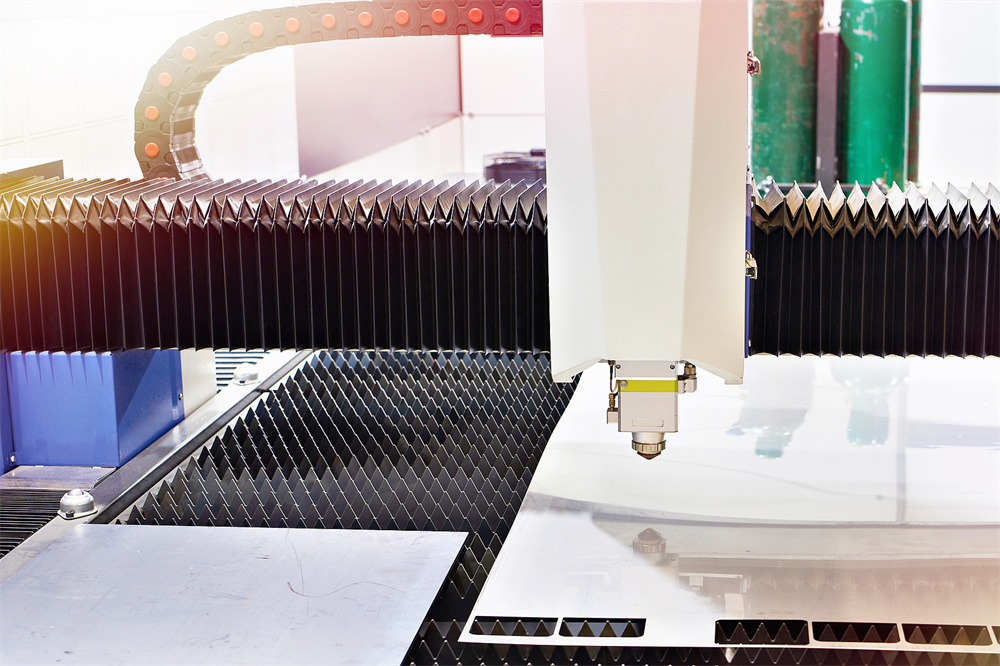
Beyond the optical hazards, industrial workshops must contend with the thermal and mechanical risks associated with high-speed motion systems. Modern laser cutters utilize linear motors or high-precision rack-and-pinion systems that move the cutting head at speeds exceeding 100 meters per minute. The kinetic energy involved in these movements, combined with the high-pressure assist gases (Oxygen or Nitrogen), creates a multi-hazard environment. Effective safety management involves a layered approach: engineering controls (enclosures, interlocks), administrative controls (training, signage), and Personal Protective Equipment (PPE).
Furthermore, the material interaction during the cutting process generates hazardous byproducts. When a laser vaporizes metal, it creates sub-micron particulate matter and toxic fumes. The composition of these fumes depends on the material being cut; for instance, cutting stainless steel releases hexavalent chromium, a known carcinogen. Therefore, a technical overview of safety must include the chemical and respiratory risks inherent in the thermal cutting process, necessitating advanced filtration and ventilation strategies.
Core Parameters for Laser Safety Evaluation
To maintain a safe environment, operators and workshop managers must understand the core parameters that define the hazard level of a laser cutting system. These parameters dictate the type of PPE required and the design of the workshop layout. The most critical parameter is the Optical Density (OD) of protective eyewear and viewing windows. OD is a logarithmic measurement of the attenuation of light passing through an optical filter. For a 10kW fiber laser, an OD of 7+ at the specific wavelength is typically required to reduce the beam’s intensity to a safe level for the human eye.
Another vital parameter is the Maximum Permissible Exposure (MPE). This is the level of laser radiation to which a person may be exposed without hazardous effects or adverse biological changes in the eyes or skin. MPE levels are determined by the laser wavelength, exposure duration, and the tissue at risk. In an industrial setting, safety systems are designed to ensure that even in a fault condition, the exposure to personnel remains well below the MPE. This is achieved through rapid-response electronic interlocks that can shut down the laser source in milliseconds if a cabinet door is opened during operation.
The Nominal Ocular Hazard Distance (NOHD) is the distance along the axis of the unobstructed beam beyond which the irradiance or radiant exposure does not exceed the MPE. For high-power fiber lasers, the NOHD can extend for hundreds of meters if the beam is not contained. This is why open-table laser cutters require a strictly controlled “Laser Controlled Area” (LCA) with restricted access and specialized wall coatings to prevent reflections. In contrast, fully enclosed machines reduce the NOHD to the exterior of the cabinet, making them much safer for general workshop environments.
Finally, the Assist Gas Pressure and Fume Extraction Flow Rate are mechanical parameters that directly impact safety. High-pressure oxygen (up to 20 bar) used in carbon steel cutting presents a fire hazard if the workshop is not properly cleaned of metal dust and slag. Simultaneously, the fume extraction system must maintain a minimum face velocity at the cutting point to ensure that 99.9% of particulates are captured before they enter the operator’s breathing zone. Monitoring these parameters through integrated sensors is a hallmark of high-end HARSLE laser systems.
Calculation Method for Laser Safety Zones
Calculating the safety requirements for a laser cutting machine involves several mathematical formulas used by Laser Safety Officers (LSOs). The most common calculation is for the Nominal Ocular Hazard Distance (NOHD). The formula for a circular beam is: NOHD = (1/φ) * [sqrt(4P / (π * MPE)) – a], where ‘φ’ is the beam divergence in radians, ‘P’ is the laser power in Watts, ‘MPE’ is the maximum permissible exposure, and ‘a’ is the initial beam diameter. This calculation helps workshops determine the size of the exclusion zone required if the machine is not fully enclosed.
Another essential calculation is the Required Optical Density (OD) for protective eyewear. The formula is: OD = log10(I0 / MPE), where ‘I0’ is the worst-case power density (irradiance) of the laser. For example, if a laser has an irradiance of 1,000,000 W/cm² and the MPE is 0.001 W/cm², the required OD would be 9. This ensures that the light reaching the eye is reduced by a factor of one billion. Operators must always verify that their glasses are rated for the specific OD calculated for their machine’s maximum power output.
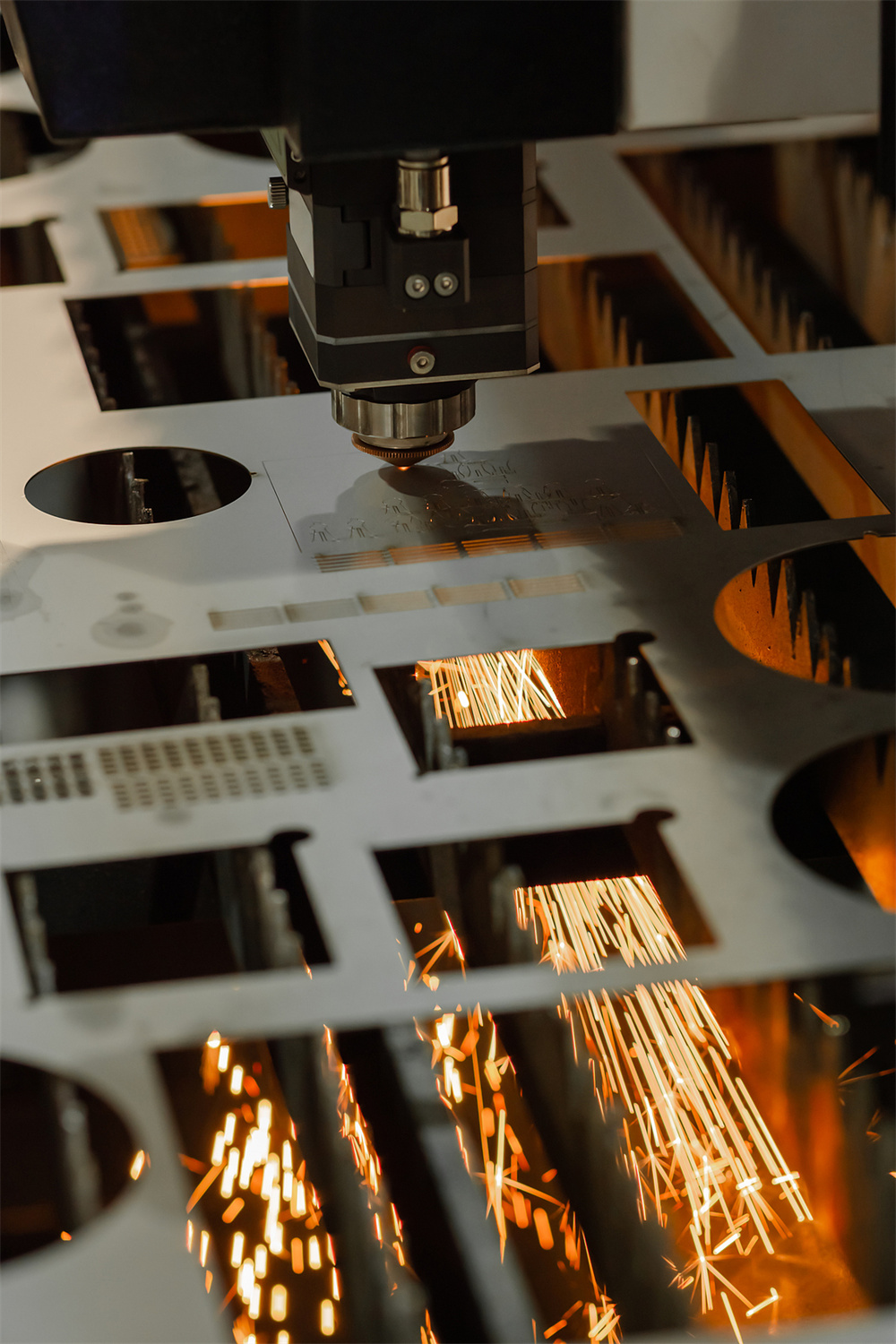
Ventilation requirements are calculated based on the Air Exchange Rate and the volume of the machine’s enclosure. For a standard industrial laser, the extraction system should provide at least 6 to 10 air changes per minute within the cutting cabinet. The calculation is: Required CFM = Cabinet Volume (ft³) * Air Changes Per Minute. If a cabinet is 10ft x 10ft x 5ft (500 ft³), the extraction fan must move at least 3,000 to 5,000 Cubic Feet per Minute (CFM) to prevent smoke buildup that could interfere with the laser beam or escape into the workshop.
Laser Safety Parameter Table
| Laser Power (kW) | Wavelength (nm) | Min. Optical Density (OD) | NOHD (Enclosed) | NOHD (Open Beam) | Recommended PPE |
|---|---|---|---|---|---|
| 1.5kW – 3kW | 1064 – 1080 | OD 6+ | 0m (Safe) | 150m – 300m | OD6+ Glasses, Fire-resistant clothing |
| 4kW – 8kW | 1064 – 1080 | OD 7+ | 0m (Safe) | 300m – 600m | OD7+ Glasses, Leather gloves, Apron |
| 10kW – 20kW | 1064 – 1080 | OD 8+ | 0m (Safe) | 600m – 1.2km | OD8+ Glasses, Full skin protection |
| 30kW+ | 1064 – 1080 | OD 9+ | 0m (Safe) | >1.5km | Specialized laser barriers, OD9+ PPE |
Common Engineering and Operational Mistakes
One of the most frequent mistakes in industrial workshops is the improper grounding of the laser machine. Laser sources and CNC controllers are highly sensitive to electrical noise and surges. Without a dedicated, low-resistance ground (usually less than 4 ohms), static electricity can build up, leading to erratic behavior of the cutting head or even catastrophic failure of the laser source. Furthermore, poor grounding poses a significant risk of electric shock to the operator, especially when handling the high-voltage components of the chiller or the power supply unit.
Another critical error is neglecting the maintenance of the fume extraction filters. Many operators continue to run the machine even when the extraction efficiency has dropped due to clogged HEPA or carbon filters. This leads to the accumulation of fine metallic dust (swarf) inside the machine and the workshop. This dust is not only a respiratory hazard but also highly flammable. In some cases, if the dust contains high concentrations of aluminum or magnesium, it can become explosive. Regular pulse-cleaning of filters and scheduled waste bin emptying are non-negotiable safety tasks.
Bypassing safety interlocks is perhaps the most dangerous mistake made by experienced operators. In an effort to troubleshoot a cutting issue or to speed up material loading, some may use magnets or jumpers to trick the machine into thinking the doors are closed. This exposes everyone in the vicinity to reflected Class 4 laser radiation. Modern HARSLE machines utilize dual-channel safety circuits that are difficult to bypass, but the culture of the workshop must strictly forbid any tampering with safety mechanisms.
Finally, inadequate gas cylinder management often leads to accidents. Using high-pressure Oxygen requires specialized regulators and hoses that are free of oil and grease. If oil comes into contact with high-pressure oxygen, it can spontaneously combust, leading to a localized explosion. Additionally, Nitrogen cylinders must be secured to prevent tipping, and the workshop must have adequate oxygen-depletion sensors if large quantities of Nitrogen are used in a confined space, as a leak could lead to asphyxiation.
Selection Checklist for Safe Laser Cutting Machines
- Full Enclosure: Does the machine have a CE-certified full enclosure with laser-safe viewing glass (OD6+ or higher)?
- Safety Interlocks: Are all access doors equipped with redundant, fail-safe interlock switches that kill the laser beam instantly?
- Fume Extraction: Is the system equipped with a high-capacity dust collector and a multi-stage filtration system?
- Shuttle Table Safety: Does the machine feature light curtains or pressure mats around the pallet changer to prevent crushing injuries?
- Software Limits: Does the CNC software (like CypCut) include virtual limit switches and anti-collision technology for the cutting head?
- Emergency Stop Buttons: Are there at least three E-stop buttons located at the front, rear, and controller of the machine?
- Automatic Lubrication: Does the machine have an auto-lube system to prevent mechanical binding and friction-related fires?
- Beam Path Protection: Is the entire fiber optic cable encased in a protective conduit to prevent accidental damage and beam leakage?
- Chiller Alarms: Does the cooling system have flow and temperature sensors integrated into the laser’s emergency stop circuit?
- Operator Training: Does the manufacturer provide comprehensive safety training and certification for all operators?
- Fire Suppression: Is there a dedicated CO2 or dry powder fire extinguisher rated for electrical and metal fires within 3 meters of the machine?
- Reflection Protection: Does the machine have a back-reflection absorption module to protect the laser source when cutting highly reflective materials like brass or copper?
Frequently Asked Questions (FAQ)
1. Can I use standard welding goggles for laser cutting?
No. Standard welding goggles are designed to protect against UV and visible light from an arc, but they do not provide the specific Optical Density (OD) required to block the infrared wavelength of a fiber laser. You must use certified laser safety glasses that match the specific wavelength (1064-1080nm) and power of your machine.
2. How often should I inspect the laser safety windows?
Safety windows should be inspected daily for cracks, pits, or discoloration. Even a small scratch can compromise the integrity of the window. If the window is hit by a direct or reflected beam, it must be replaced immediately, even if no visible damage is apparent, as the internal structure may have been weakened.
3. What is the biggest fire risk in a laser workshop?
The accumulation of “laser dust” or slag in the collection trays is the most significant fire risk. This fine metallic dust can ignite easily, especially when cutting with Oxygen. Regular cleaning of the machine’s interior and the area around the pallet changer is essential to prevent fires.
4. Is it safe to cut galvanized steel with a laser?
Cutting galvanized steel is safe only if you have a high-performance fume extraction system. The process releases zinc oxide fumes, which can cause “metal fume fever.” Ensure your extraction system is functioning correctly and that the operator is wearing a respirator if the workshop ventilation is suboptimal.
5. Why does my machine have a “Laser On” warning light?
The warning light is a mandatory safety feature that alerts everyone in the workshop that the laser is energized and capable of firing. It serves as a visual administrative control to ensure that personnel do not enter the controlled area without proper PPE.
6. Can the laser beam bounce off the metal and hit me?
Yes, this is called a specular reflection. Highly reflective materials like aluminum, copper, and brass are particularly prone to reflecting the beam. This is why a full enclosure and proper beam-dump technology are critical for modern fiber lasers.
7. What should I do if the emergency stop is triggered?
First, identify the cause of the E-stop. Once the hazard is cleared, you must reset the safety circuit through the software and perform a visual inspection of the machine before resuming operation. Never simply restart the machine without investigating why the E-stop was activated.
8. Does HARSLE provide safety training for new machines?
Yes, HARSLE provides comprehensive technical and safety training for all our laser cutting machines. This includes operator certification, maintenance safety protocols, and guidance on setting up a safe workshop environment according to international standards.