
Laser Cutting Machine Material Thickness Guide for Different Metal Types


Technical Overview: The Physics of Laser Cutting and Material Interaction
In the modern industrial landscape, the laser cutting machine has become the cornerstone of precision metal fabrication. Understanding the Laser Cutting Machine Material Thickness Different Metal Types is not merely about knowing the maximum capacity of a machine; it is about understanding the complex interplay between light energy, material properties, and thermodynamic reactions. At HARSLE, we emphasize that the efficiency of a laser cutter is dictated by how effectively the material absorbs the laser’s wavelength and how the assist gas manages the molten pool.
Fiber laser technology, which operates at a wavelength of approximately 1.06 microns, is the industry standard for metal processing. This wavelength is highly absorbed by most metals, particularly carbon steel, stainless steel, and even highly reflective materials like aluminum and copper. When the laser beam hits the metal surface, the energy is converted into heat, melting or vaporizing the material almost instantaneously. The thickness that can be cut is a direct function of the laser’s power density and the beam’s ability to maintain focus through the depth of the material.
Material thickness limitations are also influenced by the thermal conductivity of the metal. For instance, aluminum dissipates heat much faster than carbon steel, requiring higher power densities to maintain a consistent melt. Furthermore, the viscosity of the molten metal plays a role; thicker materials require more kinetic energy from the assist gas to clear the dross from the kerf. As we delve into this guide, we will explore how different wattages—ranging from 1kW to over 30kW—redefine what is possible in industrial metal fabrication.
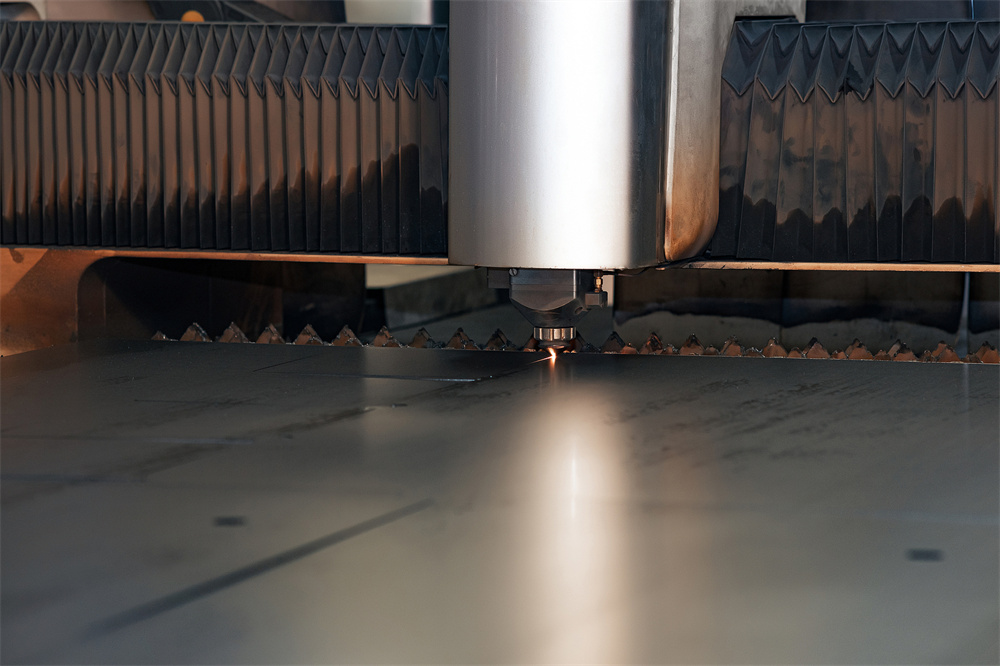
Core Parameters Influencing Cutting Thickness
To master the Laser Cutting Machine Material Thickness Different Metal Types, one must understand the core parameters that dictate the quality and depth of the cut. These parameters are not independent; they work in a synergistic relationship to determine the final output.
1. Laser Power (Wattage)
Wattage is the primary driver of cutting capacity. A higher wattage allows for a deeper penetration of the laser beam and faster cutting speeds. For example, a 3kW fiber laser might comfortably cut 20mm carbon steel, but a 12kW machine can process the same thickness at significantly higher speeds with a much cleaner edge. As power increases, the ‘sweet spot’ for thickness also shifts, allowing for the processing of heavy plates that were previously the domain of plasma cutting.
2. Beam Quality and Focal Point
The Beam Parameter Product (BPP) defines how well a laser can be focused. A lower BPP means a tighter focus, which is essential for cutting thicker materials where the beam must remain narrow through the entire depth of the plate. The focal point position—whether it is on the surface, above it, or deep within the material—must be adjusted based on the metal type and thickness to ensure the kerf is wide enough for the assist gas to remove the melt.
3. Assist Gas Selection
The choice of assist gas is critical. Oxygen (O2) is typically used for carbon steel, where it triggers an exothermic reaction, adding heat to the process and allowing for thicker cuts at lower power. Nitrogen (N2), on the other hand, is used for stainless steel and aluminum to provide a clean, oxidation-free edge. Compressed air is increasingly popular for medium thicknesses as a cost-effective alternative, though it requires high pressure and sophisticated filtration.
Calculation Method: Estimating Power Requirements
Determining the necessary power for a specific Laser Cutting Machine Material Thickness Different Metal Types involves both empirical data and theoretical calculation. While manufacturers provide charts, understanding the underlying logic helps in optimizing production.
A general rule of thumb for fiber lasers is that for every 1kW of power, you can cut approximately 2-3mm of carbon steel with high quality, or up to 4-5mm at maximum capacity. However, this is not a linear relationship. As thickness increases, the energy required to remove the molten material increases exponentially due to heat dissipation and the difficulty of gas penetration.
The formula for cutting speed (V) can be simplified as V = P / (h * w * ρ * C), where P is power, h is thickness, w is kerf width, ρ is density, and C is a constant related to the material’s thermal properties. In practical engineering, we often use ‘Power Density’ (Watts per square centimeter) to determine if the laser can reach the melting point of the metal fast enough to prevent excessive heat-affected zones (HAZ). For thicker plates, the focus is shifted deeper into the material to maintain a consistent kerf width from top to bottom.
Comprehensive Parameter Table for Different Metal Types
The following table provides a technical guideline for the maximum thickness and optimal thickness for various fiber laser power levels. Note that ‘Maximum’ refers to the limit of the machine’s capability, while ‘Optimal’ refers to the thickness where the best edge quality and production speed are achieved.
| Laser Power (kW) | Carbon Steel (O2) – Max mm | Stainless Steel (N2) – Max mm | Aluminum (N2) – Max mm | Brass/Copper – Max mm |
|---|---|---|---|---|
| 1kW | 12mm | 5mm | 3mm | 2mm |
| 2kW | 16mm | 8mm | 6mm | 4mm |
| 3kW | 20mm | 10mm | 8mm | 6mm |
| 4kW | 22mm | 12mm | 10mm | 8mm |
| 6kW | 25mm | 16mm | 16mm | 10mm |
| 12kW | 40mm | 40mm | 30mm | 15mm |
| 20kW | 50mm+ | 50mm+ | 50mm | 20mm |
| 30kW+ | 80mm+ | 80mm+ | 80mm+ | 30mm+ |
It is important to note that these values can vary based on the specific alloy grade, the purity of the assist gas, and the condition of the machine’s optics. For instance, 6061 aluminum cuts differently than 5052 aluminum due to the magnesium and silicon content affecting the melt viscosity.
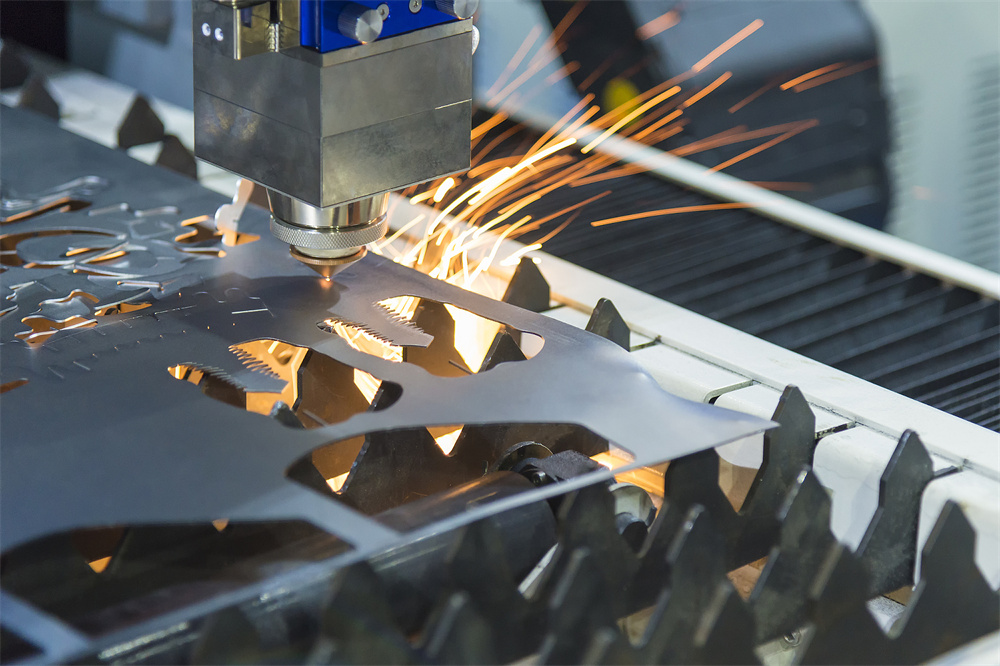
Common Engineering Mistakes in Thickness Management
Even with the best equipment, errors in managing Laser Cutting Machine Material Thickness Different Metal Types can lead to wasted material and machine downtime. Here are the most frequent pitfalls encountered in industrial settings:
1. Incorrect Nozzle Selection
Using a nozzle with a diameter that is too small for thick plates restricts the flow of assist gas, leading to poor dross removal and a rough edge. Conversely, a nozzle that is too large for thin sheets can cause turbulence, resulting in an unstable cut. The nozzle must be matched to both the material thickness and the gas pressure.
2. Ignoring Material Grade and Surface Condition
Not all carbon steel is created equal. High-carbon steel or steel with a heavy layer of rust or scale will react differently to the laser. Rust acts as an insulator and can cause the laser to ‘pop’ or lose focus. Similarly, protective films on stainless steel must be laser-compatible; otherwise, they can bubble and interfere with the nozzle’s height sensor.
3. Over-reliance on Maximum Capacity
Running a machine at its absolute maximum thickness capacity for extended periods increases wear on the optics and the laser source. It also results in slower production speeds. For a sustainable operation, it is recommended to purchase a machine where your primary production thickness is within 70% of the machine’s maximum rated capacity.
4. Poor Gas Pressure Regulation
For thick stainless steel cutting, nitrogen pressure is paramount. If the pressure drops even slightly, the molten metal will not be cleared, resulting in ‘heavy dross’ that requires manual grinding. Investing in high-quality gas delivery systems is as important as the laser itself.
Selection Checklist: Choosing the Right Machine for Your Needs
When selecting a HARSLE laser cutting machine, use this checklist to ensure the equipment matches your Laser Cutting Machine Material Thickness Different Metal Types requirements:
- Identify Primary Material: Do you process mostly carbon steel (requiring O2) or stainless/aluminum (requiring high-pressure N2)?
- Determine Maximum Thickness: What is the thickest plate you will cut more than once a week? Ensure the machine’s ‘Optimal’ range covers this.
- Evaluate Production Volume: If you cut 10mm plate all day, a 6kW machine will be significantly more profitable than a 3kW machine due to speed and lower gas consumption per meter.
- Check Optical Protection: For reflective metals like copper, ensure the laser source has back-reflection protection to prevent damage to the fiber cable.
- Assess Table Size: Thick plates are heavy. Ensure the machine frame and pallet changer are rated for the weight of the maximum thickness sheets.
- Software Capabilities: Does the CNC system include ‘Power Ramping’ and ‘Lead-in’ optimization for thick materials to prevent piercing blowouts?
Frequently Asked Questions (FAQ)
What is the maximum thickness a 12kW fiber laser can cut?
A 12kW fiber laser can cut up to 40mm of carbon steel and stainless steel. However, for high-quality production, it is most efficient on materials up to 25-30mm. Beyond this, the cutting speed drops, and the edge quality may require more post-processing.
Why is aluminum harder to cut than carbon steel of the same thickness?
Aluminum has high thermal conductivity and high reflectivity. It reflects a portion of the laser energy and quickly dissipates the heat that is absorbed. This requires a higher power density to maintain a stable melt pool compared to carbon steel, which benefits from the exothermic reaction with oxygen.
Can I use compressed air to cut thick metals?
Compressed air can be used for cutting stainless steel and carbon steel up to about 10-12mm, provided you have a high-pressure compressor (20-30 bar) and a high-quality filtration system to remove oil and moisture. It is a cost-effective alternative to nitrogen but may leave a slight oxide layer.
How does the focal point change with thickness?
For thin materials, the focal point is usually on or slightly above the surface. As thickness increases, the focal point is moved deeper into the material (negative focus) to ensure the beam’s energy is distributed through the kerf, helping to maintain a straight edge and facilitate dross removal.
Does the grade of stainless steel affect cutting thickness?
Yes. Austenitic stainless steels (like 304 and 316) cut very well with nitrogen. However, certain martensitic or ferritic grades may have different thermal properties that slightly alter the maximum effective thickness and the required gas pressure.
What is the ‘Heat Affected Zone’ (HAZ) in thick laser cutting?
The HAZ is the area of the metal that did not melt but had its microstructure altered by the heat of the laser. In thicker materials, the laser moves slower, which can increase the HAZ. High-power lasers (20kW+) actually reduce the HAZ in thick plates because they cut so much faster, leaving less time for heat to conduct into the surrounding metal.












