The Ultimate Laser Cutting Machine Maintenance Checklist for Longer Service Life


The Critical Importance of Laser Cutting Machine Maintenance
In the competitive landscape of modern metal fabrication, a fiber laser cutting machine represents a significant capital investment. To ensure this investment yields the highest possible return, implementing a rigorous Laser Cutting Machine Maintenance Checklist for Longer Service Life is not just a recommendation—it is a necessity. Proper maintenance directly correlates with the precision of the cuts, the speed of production, and the overall safety of the workshop environment. When a machine is neglected, the accumulation of dust, debris, and wear can lead to catastrophic failures that result in expensive downtime and lost revenue.
Beyond simple mechanical longevity, consistent maintenance ensures that the optical components remain in peak condition. Fiber lasers rely on high-precision optics to focus energy into a beam capable of slicing through thick steel. Even microscopic contaminants on a protective lens can cause thermal deformation, leading to poor cut quality or permanent damage to the laser head. By following a structured maintenance routine, operators can identify these minor issues before they escalate into major repairs, effectively extending the operational life of the machine by years.
Furthermore, a well-maintained machine operates more efficiently. Friction in the motion system, caused by lack of lubrication or debris on the guide rails, forces servo motors to work harder, increasing energy consumption and heat generation. This extra heat can degrade electronic components over time. Therefore, a comprehensive maintenance strategy is an essential component of any lean manufacturing process, focusing on preventative measures rather than reactive fixes.
Daily Inspection: The Foundation of Machine Health
The first step in any Laser Cutting Machine Maintenance Checklist for Longer Service Life is the daily inspection. This routine should be performed at the start of every shift to ensure the machine is in a safe and functional state. Operators should begin by checking the gas pressures. Whether using Oxygen, Nitrogen, or Compressed Air, the pressure must be within the manufacturer’s specified range to ensure clean cuts and prevent damage to the cutting head. Low pressure can lead to dross formation, while excessive pressure can cause turbulence that affects the beam’s stability.
Next, the condition of the nozzle must be examined. The nozzle is the final point of contact for the gas and the laser beam; any deformation, slag buildup, or eccentricity will immediately degrade the cut quality. Operators should clean the nozzle with a specialized tool or replace it if the orifice is no longer perfectly circular. Simultaneously, the centering of the laser beam through the nozzle should be verified using the “tape test” method. A misaligned beam will hit the side of the nozzle, causing overheating and potential damage to the internal optics.
The water chiller is perhaps the most critical auxiliary component. Daily checks should include verifying the water level and ensuring the temperature is set correctly. Most fiber lasers require the cooling water to be within a specific range (usually 20-25°C) to prevent condensation on the optics while effectively removing heat from the laser source. Any alarms on the chiller unit should be addressed immediately, as operating a laser without proper cooling can lead to the rapid degradation of the laser diodes.
Hydraulic, Electrical, and Mechanical System Checks
While fiber lasers are primarily electrical and mechanical, many systems utilize pneumatic or hydraulic components for sheet loading or specialized clamping. These systems require regular inspection for leaks or pressure drops. In the electrical domain, the control cabinet is the brain of the machine. Over time, the cooling fans in the cabinet can pull in fine metallic dust, which is conductive. If this dust settles on circuit boards, it can cause short circuits. Monthly cleaning of the electrical cabinet with a vacuum (never compressed air, which can push dust deeper) is a vital part of the Laser Cutting Machine Maintenance Checklist for Longer Service Life.
Mechanically, the focus shifts to the motion system. The X, Y, and Z axes rely on high-precision linear guides and rack-and-pinion systems. These components must be inspected for signs of wear, such as pitting or uneven surfaces. Any unusual vibration during high-speed movement often indicates that the mechanical components are out of alignment or that the mounting bolts have loosened due to the high accelerations typical of fiber laser cutting. Checking the tension of the bellows that protect the guide rails is also essential; if a bellow is torn, dust will contaminate the lubricant and act as an abrasive, rapidly wearing down the rails.
The exhaust system is another mechanical area that is frequently overlooked. Laser cutting generates significant amounts of fumes and fine particulate matter. If the dust extraction system is not functioning at full capacity, these particles will settle on the machine’s sensitive components. Operators should check the filters in the dust collector and ensure the ductwork is clear of obstructions. A clean exhaust system not only protects the machine but also ensures a healthy breathing environment for the staff.
Comprehensive Lubrication Plan
Lubrication is the lifeblood of the mechanical motion system. Without a proper lubrication plan, the friction generated during high-speed cutting will lead to thermal expansion of the guide rails, resulting in a loss of accuracy. Most modern HARSLE machines feature automatic lubrication systems, but these still require human oversight. The operator must ensure the lubricant reservoir is filled with the correct grade of oil or grease as specified by the manufacturer. Using the wrong lubricant can lead to gumming, which actually increases friction rather than reducing it.
For machines with manual lubrication points, a strict schedule must be followed. Typically, the linear guides and ball screws should be wiped clean of old grease before applying new lubricant. This prevents the buildup of a “grinding paste” made of old oil and metallic dust. The frequency of lubrication depends on the workload; a machine running 24/7 will require much more frequent attention than one used for occasional prototyping. A good rule of thumb is to inspect the film of oil on the rails daily; they should feel slightly oily to the touch but not dripping.
In addition to the main axes, do not forget the smaller moving parts. The height sensor mechanism in the cutting head, the pallet changer chains, and the scrap conveyor bearings all require periodic lubrication. Neglecting these smaller components can lead to annoying squeaks at best and complete mechanical jams at worst, halting production just as surely as a failure in the main laser source.
Troubleshooting Signals: What to Watch For
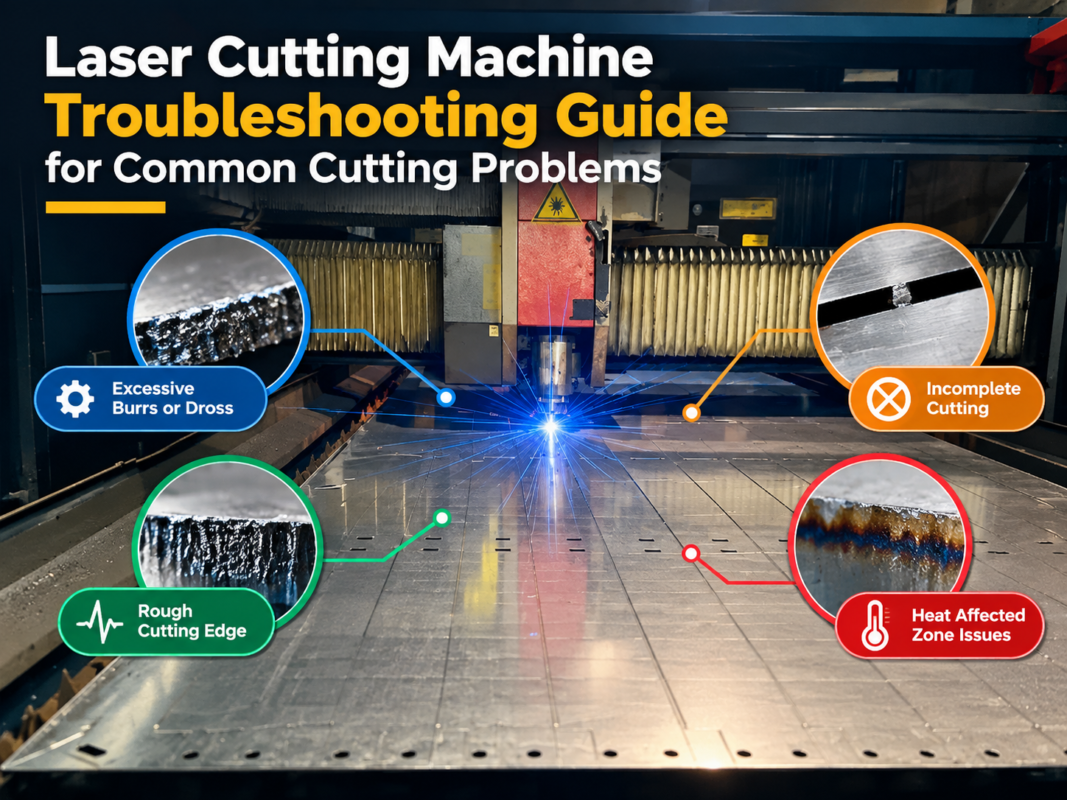
A key aspect of the Laser Cutting Machine Maintenance Checklist for Longer Service Life is the ability to recognize early warning signs of trouble. One of the most common signals is a change in the “sound” of the machine. An experienced operator will notice a change in the pitch of the cutting process or a new grinding noise from the gantry. These sounds often precede a mechanical failure. Similarly, if the machine starts to produce parts with excessive dross or a rougher surface finish than usual, it is a clear indicator that something in the optical or gas delivery system is suboptimal.
Visual cues on the cut edge are incredibly telling. For example, if the dross is only on one side of the cut, it usually indicates a nozzle centering issue. If the cut edge shows vertical lines or “striations” that are deeper than normal, it may suggest a vibration in the motion system or an issue with the laser pulse frequency. Monitoring the “Heat Affected Zone” (HAZ) is also important; an unusually wide HAZ suggests that the beam is out of focus or the cutting speed is too slow for the power level being used.
Electronic signals should also be monitored. Most CNC controllers provide a log of minor errors or warnings. While these might not stop the machine immediately, they often point toward a developing problem, such as a servo motor drawing slightly more current than normal or a temperature sensor in the cutting head reaching its upper limit. Addressing these warnings during scheduled maintenance prevents them from becoming “Hard Alarms” that shut down the production line during a critical job.
Comprehensive Maintenance Schedule Table
To simplify the management of these tasks, use the following table as a quick reference for your maintenance team. Consistency is the key to achieving a longer service life for your laser cutting equipment.
| Frequency | Component | Action Required |
|---|---|---|
| Daily | Nozzle & Protective Lens | Clean and check for damage/centering. |
| Daily | Water Chiller | Check water level and temperature settings. |
| Daily | Gas Supply | Verify pressure and check for leaks in hoses. |
| Weekly | Guide Rails & Racks | Clean debris and check lubrication film. |
| Weekly | Dust Collector | Empty dust bin and check filter status. |
| Monthly | Electrical Cabinet | Vacuum dust and check cooling fans. |
| Monthly | External Optics | Inspect and clean (if applicable to the model). |
| Quarterly | Chiller Water | Drain and replace with deionized water/additive. |
| Quarterly | Mechanical Alignment | Check squareness of X/Y axes and tighten bolts. |
| Yearly | Professional Service | Full system calibration by a HARSLE technician. |
Frequently Asked Questions (FAQ)
1. How often should I change the water in my laser chiller?
For most industrial environments, the water in the chiller should be replaced every 3 to 6 months. It is crucial to use deionized or distilled water to prevent mineral buildup in the cooling channels. Additionally, a specialized algaecide or anti-corrosion additive should be used as recommended by the manufacturer to prevent biological growth and internal oxidation.
2. Why is my protective lens burning out so frequently?
Frequent lens failure is usually caused by contamination. This can happen if the cutting gas is not clean (containing oil or moisture) or if the nozzle is damaged, allowing sparks to fly back into the head. Ensure your air compressors have high-quality dryers and filters, and always handle lenses in a clean, dust-free environment using gloves.
3. Can I use any grease for the linear guides?
No. You must use the specific type of grease recommended in your machine manual. Some greases use lithium bases, while others are synthetic. Mixing different types of grease can cause a chemical reaction that hardens the lubricant, leading to mechanical failure. Always clean off the old grease before applying a new brand.
4. What is the most common cause of laser cutting machine downtime?
The most common cause is a lack of basic cleanliness. Dust on the optics, slag on the slats, and metallic powder in the electrical cabinet account for the majority of service calls. A clean machine is a reliable machine.
5. Do I need to update the CNC software regularly?
Yes. Software updates often include optimizations for cutting parameters, bug fixes for the motion control system, and new features that can improve efficiency. However, always back up your current parameters before performing an update to ensure you can revert if necessary.
Conclusion: Investing in Longevity
Following a Laser Cutting Machine Maintenance Checklist for Longer Service Life is the most effective way to protect your investment and ensure the long-term success of your fabrication business. By dedicating a small amount of time each day to inspection and cleaning, you prevent the compounding effects of wear and tear that lead to expensive repairs. At HARSLE, we design our machines for durability, but the ultimate lifespan of any industrial tool is determined by the care it receives on the shop floor. Treat your laser cutting machine with the precision it provides, and it will serve your business reliably for many years to come.