Complete Laser Cutting Machine Maintenance Routine for Fabricators: Ensuring Peak Performance and Longevity


The Critical Role of Maintenance in Modern Metal Fabrication
In the competitive landscape of industrial manufacturing, the efficiency of your equipment directly correlates with your bottom line. For fabricators utilizing high-precision technology, implementing a Complete Laser Cutting Machine Maintenance Routine Fabricators can rely on is not just a recommendation—it is a necessity. Laser cutting machines, particularly fiber lasers, are sophisticated pieces of engineering that combine optics, high-speed motion control, and complex gas delivery systems. When these components are neglected, the precision that makes laser cutting so desirable begins to degrade, leading to increased scrap rates and costly downtime.
A well-structured maintenance routine serves several purposes. First, it ensures the safety of the operators. High-power lasers and high-pressure gas systems pose significant risks if components fail unexpectedly. Second, it preserves the quality of the cut. Issues like dross, burrs, and heat-affected zones are often the result of poor maintenance rather than machine defects. Finally, a consistent routine extends the lifespan of the machine. A HARSLE laser cutting machine is a significant investment; protecting that investment through proactive care ensures that the machine remains a productive asset for decades rather than years.
Fabricators often overlook the cumulative effect of minor issues. A slightly dusty lens or a minor misalignment in the slat bed might not stop production today, but it forces the laser source to work harder, increases gas consumption, and puts unnecessary strain on the servo motors. Over time, these small inefficiencies lead to major component failures. By following a Complete Laser Cutting Machine Maintenance Routine Fabricators can identify these issues in their infancy, allowing for scheduled repairs rather than emergency shutdowns.
Daily Inspection: The First Line of Defense
The daily inspection is the most critical part of any maintenance program. It should be performed at the start of every shift to ensure the machine is in optimal condition before production begins. The primary focus of daily checks is the cutting head and the immediate environment of the laser beam. Fabricators must inspect the protective window (cover glass) for any signs of dust, pits, or burn marks. Even a microscopic speck of dust can absorb laser energy, heat up, and eventually crack the lens or damage the entire cutting head assembly.
Beyond the optics, daily checks must include the gas supply system. Whether you are using Oxygen, Nitrogen, or Compressed Air, ensuring that the pressures are correct and that there are no leaks in the hoses is vital. Leaks not only waste expensive gas but can also introduce contaminants into the cutting path, affecting the edge quality of the metal. Operators should also check the nozzle for any buildup of slag or damage to the orifice. A deformed nozzle will disrupt the coaxial flow of gas and the laser beam, leading to inconsistent cutting results across the sheet.
The cooling system, or chiller, also requires daily monitoring. The water level should be checked, and the temperature settings should be verified against the ambient room temperature. Most modern fiber lasers require the cooling water to be within a very specific temperature range to prevent condensation on the optical components. If the chiller fails to maintain this temperature, the risk of permanent damage to the laser source increases significantly. Lastly, the work area and the slat bed should be cleared of any scrap metal or heavy slag buildup that could interfere with the material positioning or the movement of the cutting head.
Hydraulic, Electrical, and Mechanical System Checks
While fiber lasers are primarily electrical and mechanical, many systems incorporate hydraulic components for shuttle tables or material handling. These systems must be checked for fluid levels and potential leaks. Hydraulic fluid that is contaminated or low can lead to jerky movements of the exchange table, which may cause the material to shift during the cutting process. Ensuring the hydraulic pumps are operating quietly and without excessive vibration is a key indicator of system health.
Electrical systems in a laser cutting machine are the “brain” and “nervous system” of the operation. Monthly or quarterly, fabricators should inspect the electrical cabinet. Dust is the primary enemy here; it can cause short circuits or lead to overheating of the servo drives and PLC units. Using a vacuum (never compressed air, which can push dust deeper into components) to clean the cabinet is essential. Additionally, check for loose wiring connections caused by the constant vibration of the machine. Loose terminals can lead to intermittent signals, causing the machine to stop unexpectedly or perform erratic movements.
Mechanical checks focus on the drive system, which includes the rack and pinion, linear guides, and ball screws. These components are responsible for the high-speed positioning of the laser head. Fabricators should look for signs of wear on the gear teeth and ensure that the linear rails are smooth and free of debris. Any “play” or backlash in the mechanical system will manifest as dimensional inaccuracies in the finished parts. Checking the tension of the bellows that protect these mechanical parts is also important; if a bellow is torn, metal dust can enter the precision guides and cause rapid abrasive wear.
Comprehensive Lubrication Plan
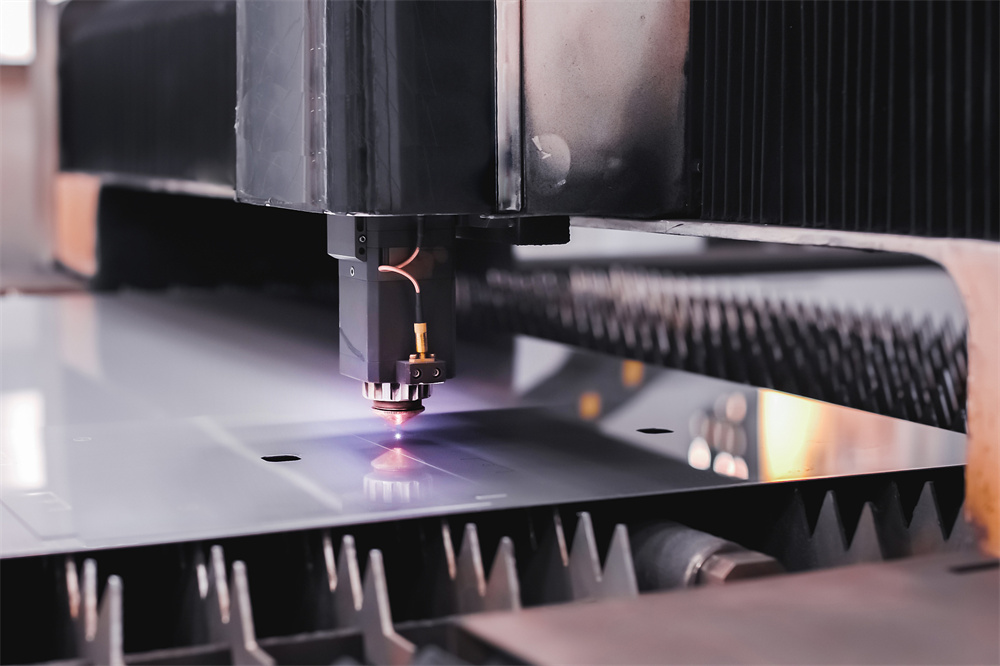
A Complete Laser Cutting Machine Maintenance Routine Fabricators must include a detailed lubrication plan. Proper lubrication reduces friction, prevents rust, and dissipates heat in moving parts. Most HARSLE machines feature an automatic lubrication system, but this does not mean it can be ignored. Fabricators must regularly check the lubricant reservoir and ensure that the correct type of oil or grease is being used. Using the wrong lubricant can be as damaging as using none at all, as it may gum up the lines or fail to provide the necessary film strength under high loads.
For machines with manual lubrication points, a strict schedule must be followed. The X, Y, and Z axes each have specific requirements. The Z-axis, which controls the height of the cutting head, often requires more frequent lubrication because it performs many small, rapid movements (sensing the plate height). The linear guides should be wiped clean of old, dirty grease before new lubricant is applied. This prevents the buildup of a grinding paste made of grease and metal dust, which can quickly score the precision surfaces of the rails.
It is also important to lubricate the bearings in the motor couplings and any pivot points on the exchange table. During the lubrication process, take the opportunity to inspect the seals on the bearing blocks. If a seal is damaged, it will allow lubricant to leak out and contaminants to enter. A proactive approach to lubrication not only keeps the machine running quietly but also ensures that the high acceleration rates of the fiber laser do not lead to premature mechanical failure.
Identifying Troubleshooting Signals
Even with a Complete Laser Cutting Machine Maintenance Routine Fabricators in place, components will eventually wear out. The key is to recognize the signals of impending failure before a breakdown occurs. One of the most common signals is a change in the “sound” of the machine. Experienced operators can often hear a slight hum or grind that indicates a bearing is failing or a motor is struggling. Any unusual vibration felt through the machine frame should be investigated immediately.
The quality of the cut is the most visible indicator of machine health. If you notice an increase in dross (the residue on the bottom of the cut) or if the kerf width becomes inconsistent, it usually points to an issue with the optics or the gas pressure. If the laser fails to cut through the material at speeds that were previously successful, the laser source power may be dropping, or the protective window may be contaminated. Another troubleshooting signal is the “out of round” circle. If the machine cannot cut a perfect circle, there is likely backlash in the mechanical drive system or an issue with the servo motor tuning.
Modern CNC controllers provide a wealth of diagnostic information. Fabricators should pay close attention to error codes and warning messages. Many systems will track the hours of use for specific components, such as the laser source or the chiller pump. Ignoring these warnings is a recipe for disaster. If the controller indicates a “high temperature” warning for the laser head, stop the machine immediately. Continuing to run under these conditions can lead to the total destruction of the internal lenses and sensors, turning a minor maintenance task into a multi-thousand-dollar repair.
Maintenance Schedule Table
To help manage the Complete Laser Cutting Machine Maintenance Routine Fabricators should follow, the following table outlines the frequency of essential tasks:
| Frequency | Component | Action Required |
|---|---|---|
| Daily | Protective Window | Inspect for dust/burns; clean or replace if necessary. |
| Daily | Nozzle & Ceramic Ring | Check for slag buildup and centering; clean as needed. |
| Daily | Chiller Unit | Check water level, temperature, and for any leaks. |
| Weekly | Slat Bed | Remove slag and scrap to ensure flat material support. |
| Weekly | X/Y/Z Rails | Wipe down and check for smooth movement. |
| Monthly | Electrical Cabinet | Vacuum dust and check for loose wire connections. |
| Monthly | Gas Filters | Inspect and replace filters in the gas delivery line. |
| Quarterly | Chiller Water | Drain and replace with fresh distilled water; check conductivity. |
| Quarterly | Rack & Pinion | Clean thoroughly and apply fresh high-pressure grease. |
| Bi-Annually | Laser Source | Professional inspection of power stability and fiber cable. |
| Yearly | Full Calibration | Check squareness of axes and recalibrate the CNC system. |
Frequently Asked Questions (FAQ)
1. Why is the protective window so important in a fiber laser?
The protective window is the final barrier between the expensive internal optics of the cutting head and the harsh environment of the cutting process. It prevents sparks, dust, and metal vapors from reaching the focusing lens. Because it is a consumable, it is designed to be replaced easily. If it is dirty, it absorbs laser energy, which can cause the beam to defocus or even shatter the window, potentially damaging the lenses above it.
2. Can I use tap water in my laser’s chiller?
No, you should never use tap water. Tap water contains minerals and impurities that can cause scale buildup inside the laser source and the cooling lines, reducing heat transfer efficiency. Furthermore, tap water can be conductive, which poses a risk to the electrical components of the laser. Always use distilled or deionized water as specified by the manufacturer, and add the recommended algaecide to prevent biological growth.
3. How often should I replace the cutting nozzle?
There is no fixed timeframe for nozzle replacement; it depends on the volume of cutting and the material type. A nozzle should be replaced if it is physically deformed, if the orifice is no longer perfectly round, or if there is significant slag buildup that cannot be cleaned. A damaged nozzle will cause the assist gas to flow turbulently, which ruins the cut quality and can cause the laser beam to clip the side of the nozzle.
4. What are the signs that my laser needs a mechanical recalibration?
Signs that your machine needs recalibration include parts not being dimensionally accurate (e.g., a 100mm square measuring 99.8mm), circles appearing as ovals, or the laser failing to return to the exact same “home” position. These issues often stem from wear in the rack and pinion or the linear guides. A professional technician should use a laser interferometer or ball-bar test to restore the machine’s precision.
5. Is it necessary to clean the slats on the cutting bed?
Yes, cleaning the slats is vital. Excessive slag buildup on the slats can cause the sheet metal to sit unevenly, leading to focus issues. Furthermore, the laser beam can reflect off the accumulated slag and damage the underside of the material being cut. Regularly removing slag or replacing the slats entirely ensures a stable cutting environment and better part quality.
6. How does dust affect the electrical components?
Dust acts as an insulator, preventing heat from escaping from sensitive electronic components like servo drives and power supplies. This can lead to overheating and premature failure. In some cases, industrial dust can be conductive (especially if you are cutting a lot of carbon steel), which can cause short circuits on circuit boards. Regular cleaning of the electrical cabinet with a vacuum is a simple way to prevent these major issues.