Hydraulic Press Sale: Price Guide for Small Shops and Large Production Lines


Introduction to Hydraulic Press Acquisition
In the world of metal fabrication, the hydraulic press remains a cornerstone of production. Whether you are a boutique custom shop or a high-volume automotive supplier, understanding the financial landscape of a Hydraulic Press Sale: Price Small Shops Large Production Lines is essential for making a sustainable investment. A hydraulic press uses a hydraulic cylinder to generate a compressive force, allowing for operations such as forging, punching, deep drawing, and molding. However, the price gap between a basic 20-ton workshop press and a 2,000-ton automated production line is vast, often spanning from a few thousand dollars to several million.
For small shops, the focus is typically on versatility and footprint. These businesses need a machine that can handle various tasks—from straightening shafts to pressing bearings—without requiring a massive capital outlay or specialized foundation. Conversely, large production lines prioritize cycle speed, repeatability, and integration with Industry 4.0 standards. For these entities, the initial purchase price is often secondary to the long-term operational efficiency and the machine’s ability to minimize downtime. This guide aims to demystify the pricing structures and technical variables that dictate the cost of hydraulic presses in today’s market.
As technology advances, the line between “standard” and “custom” machinery continues to blur. Modern hydraulic presses now feature sophisticated CNC controls, energy-saving servo motors, and enhanced safety protocols that were once reserved for the highest-end models. Navigating these options requires a deep understanding of your specific production needs. By the end of this guide, you will have a clear roadmap for evaluating a Hydraulic Press Sale: Price Small Shops Large Production Lines, ensuring that your investment aligns with both your current budget and your future growth trajectory.
Price Range Overview: From Entry-Level to Industrial Giants
The pricing of hydraulic presses is primarily categorized by tonnage and frame design. For small shops, entry-level hydraulic presses (often referred to as H-frame or C-frame workshop presses) typically range from 10 to 100 tons. These machines are often manually operated or utilize a simple electric pump. Prices in this bracket generally fall between $2,500 and $15,000. While these machines lack the speed of industrial models, they offer the necessary force for low-volume repair and fabrication work.
Moving into the mid-range category, which serves medium-sized fabrication businesses, we see tonnages between 100 and 500 tons. These presses are designed for more consistent duty cycles and often include semi-automatic controls. A 200-ton four-column hydraulic press, for instance, might be priced between $30,000 and $85,000 depending on the manufacturer and the inclusion of features like PLC controls or light curtains. This segment is where most “value-driven” industrial machines reside, balancing performance with affordability.
For large-scale production lines, the requirements shift toward high tonnage (500 to 5,000+ tons) and high-speed automation. These machines are engineered for 24/7 operation and are often integrated into larger manufacturing cells. A 1,000-ton deep drawing hydraulic press with a die cushion and automated material handling can easily exceed $250,000, with custom-engineered solutions for the aerospace or automotive sectors reaching well into the seven-figure range. At this level, the price is a reflection of the engineering complexity and the high-grade components required to maintain precision under extreme force.
| Shop Size | Typical Tonnage | Estimated Price Range (USD) | Primary Applications |
|---|---|---|---|
| Small/Boutique Shop | 10 – 60 Tons | $2,000 – $10,000 | Bearings, Bushings, Light Straightening |
| Medium Fabrication | 100 – 300 Tons | $25,000 – $75,000 | Punching, Bending, Shallow Drawing |
| Large Production | 500 – 2000+ Tons | $150,000 – $1M+ | Automotive Body Panels, Heavy Forging |
Main Cost Drivers in Hydraulic Press Manufacturing
The most significant driver of cost in any Hydraulic Press Sale: Price Small Shops Large Production Lines is the tonnage, or the maximum force the machine can exert. Increasing tonnage requires larger hydraulic cylinders, thicker steel frames to resist deflection, and more powerful motor-pump groups. For example, doubling the tonnage of a press doesn’t just double the cost; it often increases it exponentially due to the structural reinforcements needed to maintain safety and precision under higher loads.
Frame design is the second most critical factor. C-frame (or Gap Frame) presses are generally more affordable because they provide three-sided access to the work area, but they are prone to “yawning” or deflection under high pressure. H-frame and Four-Column presses are more expensive because they offer superior rigidity and bed parallelism. A four-column design ensures that the pressure is distributed evenly across the die, which is essential for high-precision tasks like deep drawing or molding. The complexity of the frame’s weldment and the subsequent stress-relieving heat treatments also add to the manufacturing cost.
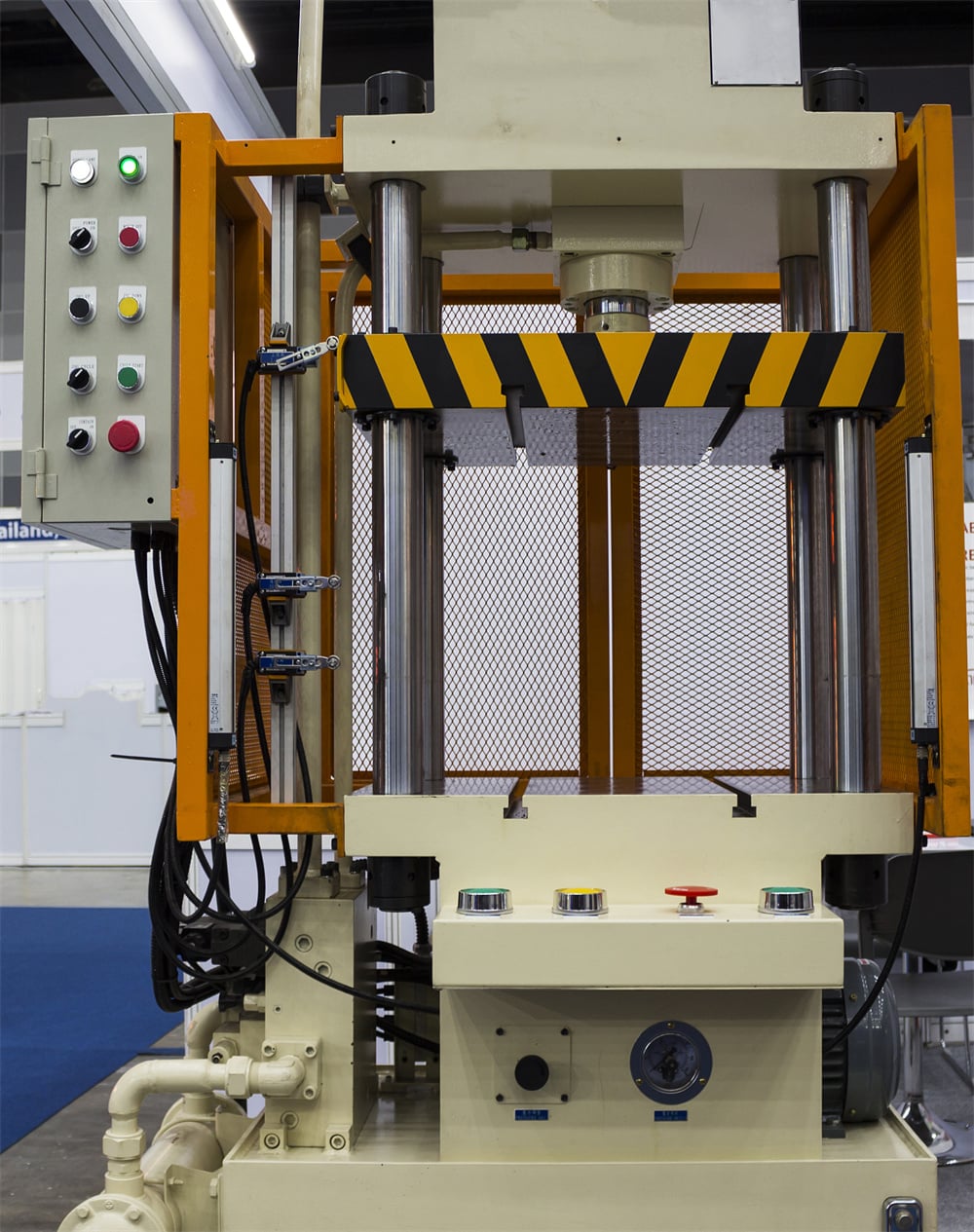
The hydraulic system itself—comprising pumps, valves, and manifolds—varies greatly in quality and price. High-end machines utilize components from reputable brands like Rexroth, Vickers, or Parker. These components offer better reliability, faster response times, and easier sourcing of spare parts. Furthermore, the inclusion of servo-hydraulic systems, which use servo motors to drive the pumps, can increase the initial price by 20-30% but significantly reduce energy consumption and noise levels, providing a lower total cost of ownership over time.
Configuration Impact: Customization and Technical Specs
When evaluating a Hydraulic Press Sale: Price Small Shops Large Production Lines, the “standard” configuration is rarely the final price. Customization plays a massive role in the final quote. For instance, the stroke length and daylight (the distance between the bolster and the slide) can be modified to accommodate specific tooling. Increasing these dimensions requires longer cylinders and taller frames, which adds to the material and shipping costs. Similarly, the bolster size—the working surface area—directly impacts the amount of steel used in construction.
Control systems are another area where costs can escalate. A basic manual valve system is inexpensive but limits the machine to simple tasks. Upgrading to a PLC (Programmable Logic Controller) with a Touch Screen HMI (Human Machine Interface) allows for precise control over pressing speed, dwell time, and pressure settings. For large production lines, CNC integration is often required to synchronize the press with robotic loaders or transfer systems. These electronic upgrades can add anywhere from $5,000 to $50,000 to the machine’s price tag.
Speed requirements also dictate the price. Standard hydraulic presses have relatively slow approach and return speeds. If your production line requires high-speed cycling (e.g., 20-30 strokes per minute), the machine must be equipped with larger pumps, high-flow valves, and often an accumulator system. These “high-speed” packages are essential for maintaining throughput in competitive industries but represent a significant jump in the initial investment compared to standard utility presses.
Hidden Costs: Beyond the Sticker Price
One of the most common mistakes buyers make when looking at a Hydraulic Press Sale: Price Small Shops Large Production Lines is failing to account for hidden costs. Shipping and logistics are major factors, especially for heavy machinery. A 500-ton press can weigh upwards of 20,000 kg, requiring specialized heavy-haul trucking and potentially oversized load permits. If the machine is imported, customs duties, port fees, and inland drayage can add 10-15% to the total cost.
Installation and commissioning are also significant expenses. For large presses, a specialized foundation may be required to handle the dynamic loads and vibrations. This involves excavating the shop floor, reinforcing it with rebar, and pouring high-strength concrete. Additionally, you will need a rigger with a heavy-duty crane or gantry system to move the machine into place. Professional commissioning by the manufacturer’s technicians ensures the machine is leveled, calibrated, and safe to operate, but this service usually carries a daily rate plus travel expenses.
Operational costs, such as hydraulic oil and electricity, should be budgeted from day one. A large press might require 500 to 2,000 liters of high-quality hydraulic oil, which is a significant initial and recurring expense. Furthermore, the power consumption of a 50HP or 100HP motor can drastically increase your monthly utility bill. Finally, don’t overlook training. Even the best machine is only as productive as its operator. Investing in professional training for your staff can prevent costly accidents and premature wear on the machine’s components.
ROI Calculation: Justifying the Investment
Calculating the Return on Investment (ROI) for a hydraulic press involves more than just looking at the purchase price. For a small shop, the ROI might be measured in the ability to take on new types of work that were previously outsourced. If you spend $5,000 a year on outside pressing services, a $15,000 press pays for itself in three years, not including the value of the time saved by keeping the work in-house.
For large production lines, ROI is calculated through cycle time reduction and scrap reduction. A modern hydraulic press with precise pressure control and repeatable stroke depth can significantly reduce the number of rejected parts. If a new press reduces the scrap rate by 2% on a high-volume line, the material savings alone can amount to tens of thousands of dollars annually. Additionally, energy-efficient servo-hydraulic systems can reduce power costs by up to 50%, providing a clear path to recouping the higher initial cost of the technology.
Another factor in ROI is tool life. A rigid, well-aligned press (like a four-column model) ensures that the upper and lower dies meet perfectly every time. This reduces uneven wear on expensive tooling, extending the time between sharpenings or replacements. When you factor in the reduced downtime for tool maintenance and the increased speed of a modern machine, the “expensive” high-end press often proves to be the more economical choice over a five-to-ten-year period.
Buying Advice: Choosing the Right Partner
When searching for a Hydraulic Press Sale: Price Small Shops Large Production Lines, the choice of manufacturer is as important as the machine’s specs. Look for a company like HARSLE that has a proven track record in metal fabrication machinery. A reputable manufacturer provides not just the hardware, but also the engineering support to ensure the machine meets your specific application needs. Ask for references and, if possible, visit a facility where their machines are currently in operation.
Before signing a contract, verify the warranty terms and the availability of spare parts. A machine that is down for three weeks waiting for a proprietary valve from overseas is a liability, no matter how cheap the initial price was. Ensure the manufacturer uses “off-the-shelf” components for wear items like seals, filters, and electrical relays, as this makes local maintenance much easier. Also, consider the resale value; well-known brands tend to hold their value much better on the used market than obscure, low-cost imports.
Finally, perform a thorough needs analysis. It is tempting to buy a machine with more tonnage than you currently need to “future-proof” your shop. However, an oversized press is more expensive to buy, more expensive to run, and often slower than a correctly sized machine. Work with the manufacturer’s application engineers to determine the optimal tonnage and bed size for your most common tasks, allowing for a reasonable 20% buffer for occasional heavier jobs.
Frequently Asked Questions (FAQ)
How long does a typical industrial hydraulic press last?
With proper maintenance, a high-quality hydraulic press can last 20 to 30 years or more. The frame itself is virtually indestructible if not overloaded. The primary maintenance items are the hydraulic seals, pumps, and electrical components, which may need refurbishment or replacement every 7 to 10 years depending on the duty cycle.
Can I use a hydraulic press for both metal and plastic?
Yes, many hydraulic presses are versatile enough to handle metal forming, plastic compression molding, and even composite bonding. However, different materials may require specific features, such as heated platens for plastics or high-speed approach for certain metal alloys. Always consult with the manufacturer if you plan to use the press for multiple material types.
What is the difference between a hydraulic press and a mechanical press?
A hydraulic press uses fluid pressure to generate force and provides full tonnage throughout the entire stroke. It is generally slower but more versatile and easier to set up. A mechanical press uses a flywheel and crankshaft to deliver force, which is highest at the bottom of the stroke. Mechanical presses are much faster and are preferred for high-volume blanking and simple stamping, but they lack the flexibility of hydraulic systems.
Is it better to buy new or used?
For small shops on a tight budget, a used name-brand press can be a great value. However, for large production lines, new machines are almost always preferred due to the inclusion of modern safety features, CNC controls, and the manufacturer’s warranty. Used machines often come with hidden wear and tear that can lead to expensive repairs shortly after purchase.
What safety features should I look for?
At a minimum, any industrial hydraulic press should have dual-hand “tie-down” controls to ensure the operator’s hands are away from the pinch point. For high-production environments, light curtains (optical barriers) are essential. Other important features include emergency stop buttons, hydraulic interlocks to prevent the ram from falling in the event of a power failure, and protective guarding around the work area.