Punching Machine Safety Guide: Essential Operating Procedures for Fabrication Shops


Technical Overview of Punching Machine Safety
In the modern metal fabrication landscape, the punching machine remains a cornerstone of productivity. However, the sheer force required to pierce through heavy-gauge steel necessitates a rigorous approach to safety. Punching machine safety: essential operating procedures fabrication shops must implement are not merely suggestions; they are the foundation of a sustainable manufacturing environment. At HARSLE, we emphasize that a safe machine is an efficient machine. The technical evolution of these machines—from mechanical flywheels to sophisticated CNC hydraulic systems—has introduced new safety layers, but the fundamental risks of high-pressure mechanical movement remain.
A punching machine operates by converting energy into a concentrated force delivered through a punch and die set. Whether it is a mechanical press using a crankshaft or a hydraulic press utilizing fluid dynamics, the point of operation is the most hazardous zone. Modern safety systems integrate light curtains, which use infrared beams to detect any obstruction in the working area, instantly halting the machine. Furthermore, dual-hand control stations ensure that the operator’s hands are physically removed from the danger zone during the stroke cycle. Understanding these technical safeguards is the first step in developing a comprehensive safety protocol.
Beyond the point of operation, the structural integrity of the machine itself plays a role in safety. Frame deflection, if not properly managed, can lead to tool misalignment, causing catastrophic tool failure and flying debris. High-quality machines like those from HARSLE are designed with rigid C-frames or O-frames to minimize this deflection. Additionally, the integration of overload protection—either through shear plates in mechanical presses or relief valves in hydraulic systems—prevents the machine from exceeding its rated tonnage, which could otherwise lead to structural failure.
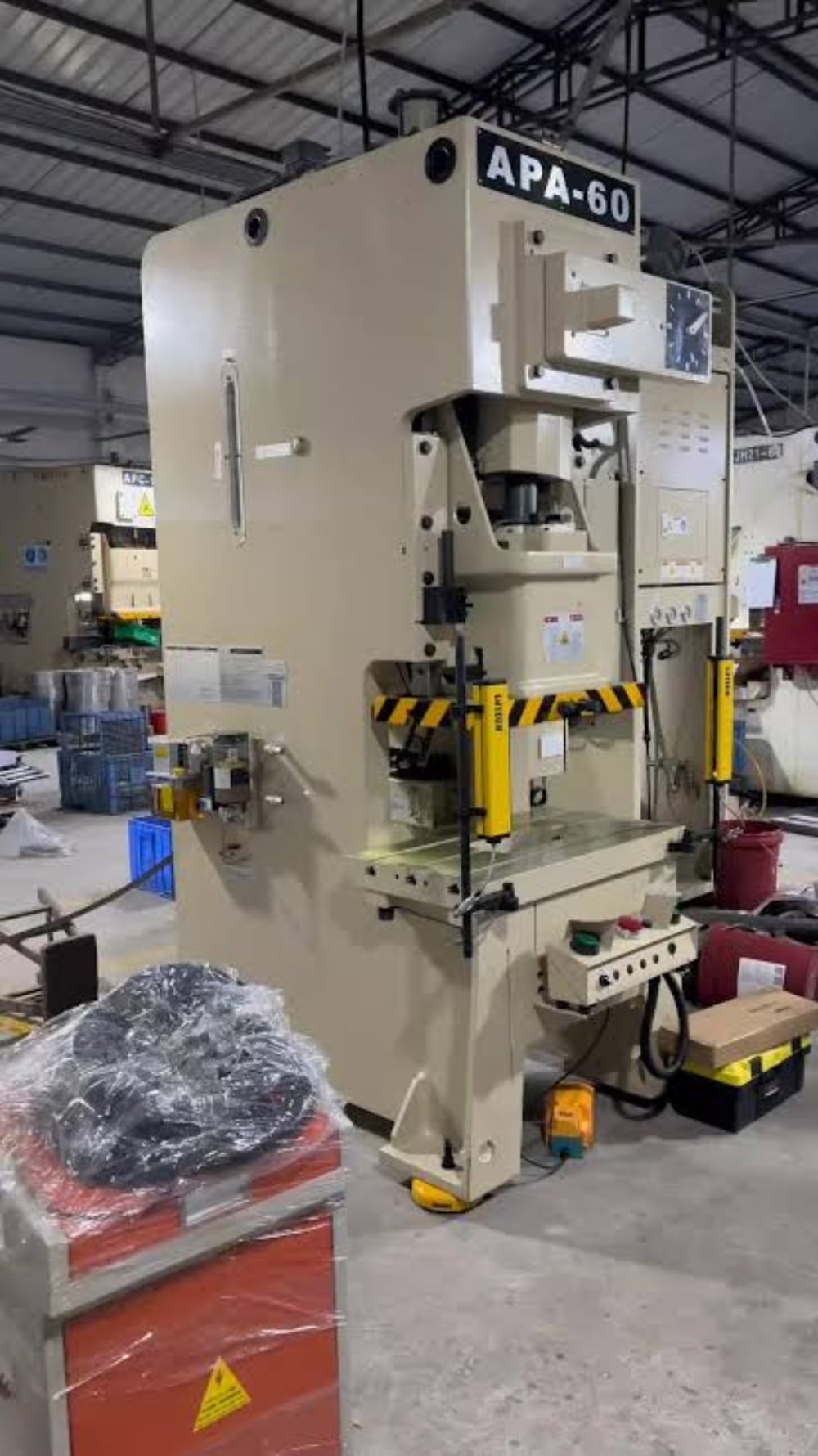
Finally, the software aspect of punching machine safety cannot be overlooked. In CNC-controlled environments, software limits and collision detection algorithms provide a digital safety net. These systems can simulate the punching sequence before the first hit, identifying potential interference between the clamps, the tool turret, and the workpiece. By combining physical guarding, mechanical integrity, and digital oversight, fabrication shops can create a multi-layered defense against workplace accidents.
Core Parameters Influencing Operational Safety
To operate a punching machine safely, one must understand the core technical parameters that govern its performance. The most critical parameter is Tonnage, which represents the maximum force the machine can exert. Exceeding this limit is a primary cause of machine damage and operator injury. Operators must always verify that the required punching force for a specific material and thickness does not exceed 80% of the machine’s rated capacity, providing a 20% safety buffer for material variations and tool wear.
Stroke Length and Strokes Per Minute (SPM) are equally vital. The stroke length determines how far the ram travels, while SPM dictates the speed of the operation. In high-speed punching, the kinetic energy involved increases significantly. Safety procedures must account for the vibration and heat generated during high-SPM tasks. If a machine is run at its maximum SPM for extended periods without proper cooling or lubrication, the risk of mechanical seizure or tool breakage increases, posing a direct threat to the operator.
Throat Depth and Table Size also influence safety, particularly regarding material handling. A machine with an insufficient throat depth for a large workpiece may require the operator to support the material manually, which is a dangerous practice. Proper material support systems, such as ball transfer tables or brush tables, should be used to ensure the workpiece remains stable and level during the punching process. This prevents the material from “kicking up” or shifting unexpectedly, which could lead to hand injuries or tool damage.
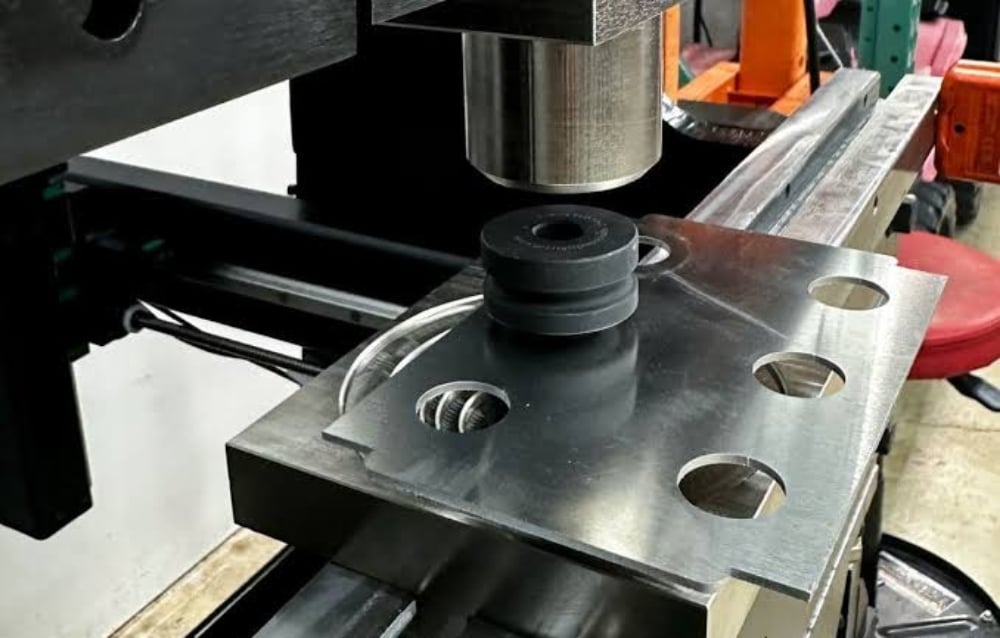
Lastly, Die Clearance is a technical parameter that directly impacts the safety of the punching action. Incorrect clearance—the gap between the punch and the die—can cause excessive burring, increased punching force, and even tool shattering. For instance, if the clearance is too tight for a thick material, the pressure build-up can cause the punch to snap. Conversely, too much clearance can lead to the material being drawn into the die, causing a jam. Maintaining precise die clearance according to material specifications is a fundamental safety requirement.
Calculation Method for Punching Force and Safety Margins
Calculating the required punching force is a non-negotiable step in punching machine safety: essential operating procedures fabrication shops must follow. The formula for calculating the punching force (P) in kilonewtons (kN) is generally expressed as:
P = L × t × τ
Where:
– L is the perimeter of the hole to be punched (mm). For a round hole, L = π × d.
– t is the thickness of the material (mm).
– τ is the shear strength of the material (N/mm²).
For example, if you are punching a 20mm diameter hole in a 3mm thick stainless steel plate with a shear strength of 500 N/mm², the calculation would be: P = (3.14159 × 20) × 3 × 500 = 94,247.7 N, or approximately 94.25 kN. To convert this to tons, you divide by 9.81 (approx. 9.6 tons). If your machine is rated for 10 tons, you are operating too close to the limit. A safer choice would be a 15-ton or 20-ton machine.
It is also important to consider the “Stripping Force.” This is the force required to retract the punch from the material after the hole is made. Typically, stripping force is estimated at 10% to 20% of the punching force. If the stripping force is insufficient, the material may lift with the punch, leading to jams or accidents. Ensuring the machine’s clamping and stripping mechanisms are robust enough to handle this force is a key safety consideration during the setup phase.
Furthermore, when using multiple punches simultaneously (gang punching), the total force is the sum of the individual forces. Operators must be trained to calculate the cumulative tonnage and ensure it remains within the machine’s “center of loading.” Off-center loading can cause the ram to tilt, leading to premature wear on the gibs and potential catastrophic failure of the guide system. Always balance the load across the ram whenever possible.
Parameter Table for Industrial Punching Machines
The following table provides a reference for standard parameters across various classes of punching machines typically found in fabrication shops. These values are indicative and should be verified against the specific HARSLE model manual.
| Machine Class | Nominal Force (Tons) | Max Material Thickness (mm) | Stroke Adjustment (mm) | Max Strokes Per Minute (SPM) | Safety Feature Level |
|---|---|---|---|---|---|
| Light Duty Mechanical | 10 – 25 | 3.0 | 10 – 50 | 120 – 150 | Basic Guards / Dual Hand |
| Medium Duty Hydraulic | 40 – 80 | 6.0 | 20 – 100 | 40 – 80 | Light Curtains / Overload Valve |
| Heavy Duty CNC Turret | 100 – 300 | 12.0+ | Programmable | 300 – 600 | Full Enclosure / Laser Sensors |
| High-Speed Precision | 30 – 60 | 2.0 | 5 – 30 | 800+ | Vibration Monitoring / Auto-Stop |
When selecting a machine, the “Safety Feature Level” should be matched to the skill level of the operators and the complexity of the tasks. For instance, high-speed precision machines require advanced vibration monitoring to prevent tool disintegration at high frequencies.
Common Engineering Mistakes in Punching Operations
One of the most frequent engineering mistakes in fabrication shops is the neglect of tool sharpening. As a punch becomes dull, the force required to penetrate the material increases exponentially. This not only strains the machine’s hydraulic or mechanical components but also creates excessive heat and larger burrs. From a safety perspective, a dull tool is more likely to fracture under pressure. Establishing a strict regrinding schedule based on hit counts is a vital operating procedure.
Another common error is the improper use of lubricants. Many shops either over-lubricate, leading to messy work areas and slip hazards, or under-lubricate, which causes “galling” (material welding itself to the punch). Galling increases stripping force and can cause the workpiece to be jerked upward during the return stroke, potentially injuring the operator or damaging the machine’s turret. Using the correct type of lubricant for the specific material (e.g., specialized oils for aluminum vs. stainless steel) is essential for smooth, safe operation.
Bypassing safety interlocks is perhaps the most dangerous mistake. In an effort to increase production speed, some operators may attempt to disable light curtains or tie down one of the dual-hand start buttons. This removes the primary defense against amputation. Engineering management must foster a culture where safety is never sacrificed for speed, and machines should be equipped with tamper-resistant safety controllers that log any attempts to bypass protection systems.
Finally, failing to account for material properties can lead to unexpected hazards. For example, punching high-strength alloys or tempered steels requires different considerations than mild steel. If an operator treats a high-carbon steel plate the same as a mild steel plate of the same thickness, the sudden release of energy (the “snap-through” effect) can cause significant shockwaves through the machine, leading to bolt loosening or component fatigue over time. Always verify material specs before beginning a production run.
Selection Checklist for Safe Fabrication Equipment
When purchasing a new punching machine, use this checklist to ensure the equipment meets the highest safety standards for your fabrication shop:
- Certification: Does the machine carry CE, UL, or OSHA-compliant certifications? This ensures the design meets international safety benchmarks.
- Emergency Stop Accessibility: Are there multiple E-stop buttons located at the front, rear, and sides of the machine? They should be easily reachable from any operating position.
- Interlocked Guarding: Are all access panels and doors equipped with interlock switches that prevent the machine from running while open?
- Light Curtains and Laser Guards: Does the machine include high-quality optical guards to protect the point of operation?
- Hydraulic Safety: For hydraulic machines, are there dual-monitored safety valves and pressure relief systems to prevent unintended ram descent?
- Tonnage Monitor: Does the machine have a real-time tonnage display or an automatic overload shut-off?
- Ergonomics: Is the work table height adjustable or designed to reduce operator fatigue? Fatigue is a leading cause of operational errors.
- Tooling Security: Does the machine feature a secure locking mechanism for punches and dies to prevent them from loosening during high-vibration tasks?
- Noise Reduction: Does the machine design include features to dampen noise, such as hydraulic shock absorbers or acoustic enclosures? Prolonged exposure to high-decibel punching can lead to operator hearing loss.
Frequently Asked Questions (FAQ)
1. How often should safety light curtains be tested?
Safety light curtains should be tested at the beginning of every shift. Operators should use a test object (provided by the manufacturer) to ensure the machine stops instantly when the beam is interrupted at various points. This “trip test” ensures the sensors are aligned and the braking system is responsive.
2. What is the safest way to clear a jammed workpiece?
Never attempt to clear a jam while the machine is powered on. Follow the Lockout/Tagout (LOTO) procedure: shut down the power, bleed any residual hydraulic pressure, and lock the main isolator. Use long-handled tools rather than your hands to remove the jammed material once the machine is in a zero-energy state.
3. Can I punch material that is thicker than the punch diameter?
Generally, no. This is a major safety risk. The rule of thumb is that the punch diameter should be at least equal to or greater than the material thickness (1:1 ratio). Punching a small hole in very thick material puts immense compressive stress on the punch, which can cause it to shatter like glass.
4. Why does my machine make a loud “bang” when punching?
A loud bang often indicates high “snap-through” energy, which occurs when the material finally yields. While some noise is normal, an excessively loud bang can indicate that the machine is near its tonnage limit or that the die clearance is incorrect. Using shear-angled punches can help reduce this noise and the associated mechanical shock.
5. How does lubrication affect operator safety?
Proper lubrication reduces the friction and heat generated during the punch. This prevents tool breakage and ensures the material strips cleanly. Without it, the risk of “slug pulling” or material jamming increases, which often leads to operators reaching into the machine to fix the issue—a high-risk activity.
6. What PPE is required for punching machine operation?
At a minimum, operators should wear ANSI-approved safety glasses with side shields, hearing protection (earplugs or muffs), and steel-toed boots. Cut-resistant gloves are also essential when handling raw metal sheets, but they should be removed if there is any risk of them being caught in moving parts (depending on the specific machine’s guarding).