How to Optimize Punching Machine Speed Without Sacrificing Accuracy


Technical Overview: The Physics of Speed and Precision
In the competitive landscape of metal fabrication, the drive to increase throughput often leads operators to push their equipment to the limit. However, the primary challenge remains: how to optimize punching machine speed without sacrificing accuracy. This balance is not merely a matter of turning a dial; it involves a deep understanding of the mechanical, thermal, and electronic variables that govern the punching process. At HARSLE, we recognize that high-speed operation introduces dynamic forces that can compromise the structural integrity of the workpiece and the longevity of the tooling if not managed correctly.
When a punching machine operates at high strokes per minute (SPM), the kinetic energy involved increases exponentially. This energy must be precisely controlled to ensure that the punch enters and exits the material at the exact coordinates required. Any deviation, even by a fraction of a millimeter, can lead to scrapped parts and increased production costs. The optimization process involves synchronizing the feed rate of the material with the ram’s cycle time, ensuring that the sheet is stationary and stable at the moment of impact.
Furthermore, the vibration generated during high-speed cycles can resonate through the machine frame, leading to ‘ghosting’ or slight shifts in hole placement. Modern CNC punching machines utilize advanced damping systems and rigid frame designs—such as the O-frame or closed-bridge design—to mitigate these vibrations. Understanding the harmonic frequency of your specific machine is the first step toward achieving maximum speed without losing the tight tolerances required for high-quality industrial components.
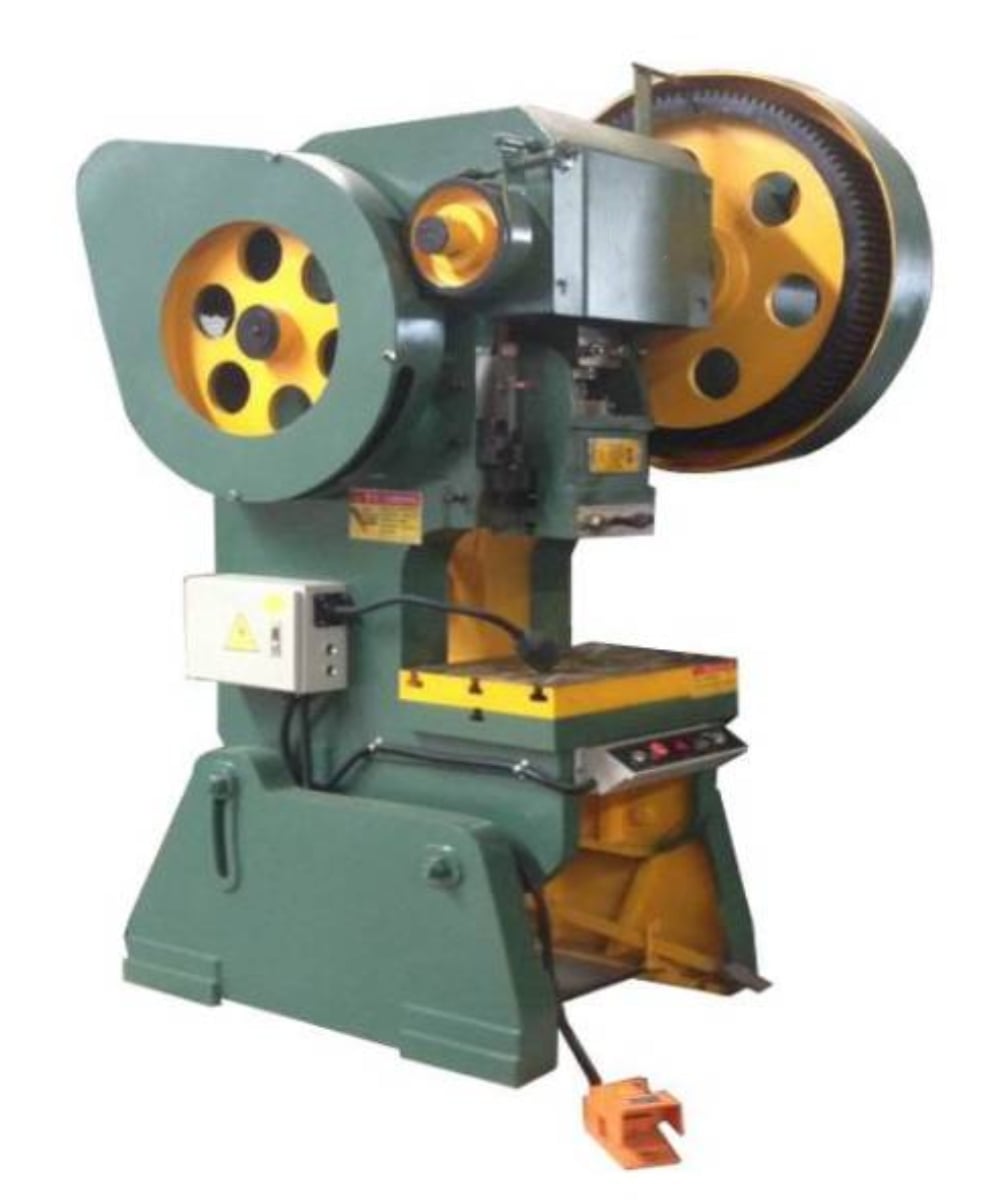
Core Parameters Influencing Speed and Accuracy
To effectively optimize punching machine speed without sacrificing accuracy, one must master several core parameters. The first is the Stroke Length. A shorter stroke length naturally allows for higher SPM, but it must be sufficient to clear the material and allow for proper stripping. Adjusting the stroke to the minimum necessary height for the specific material thickness is a fundamental technique for increasing speed.
The second parameter is Tool Clearance. While often associated with the quality of the cut, clearance significantly impacts speed. Incorrect clearance can cause the punch to ‘stick’ or require more force to strip, which slows down the cycle and generates excess heat. Heat expansion in the tool can lead to dimensional inaccuracies over long production runs. Therefore, selecting the optimal clearance for the material type and thickness is critical for maintaining precision at high velocities.
Thirdly, the Feed Rate and Acceleration of the worktable play a vital role. It is not just about how fast the table moves, but how quickly it can accelerate and decelerate (G-code optimization). If the acceleration is too aggressive, the inertia of the metal sheet can cause it to slip under the clamps, leading to positional errors. Conversely, if it is too slow, the machine’s high SPM capability is wasted. Balancing these factors requires a sophisticated CNC controller that can calculate the optimal ramp-up and ramp-down times for every move.
Lastly, Lubrication Systems are often overlooked. At high speeds, friction between the punch and the material increases dramatically. Automatic lubrication systems that deliver a precise mist of oil to the tool tip not only extend tool life but also ensure a cleaner shear, reducing the mechanical resistance that can slow down the ram or cause micro-deflections in the machine’s alignment.
Calculation Method for Optimal Throughput
Calculating the ideal balance between speed and accuracy involves several mathematical formulas. The most basic is the Cycle Time Calculation. Total cycle time is the sum of the move time, the punch time, and the dwell time. To optimize, you must minimize each component without exceeding the physical limits of the material or the machine.
The Punching Force (P) must also be calculated to ensure the machine is not operating at its maximum tonnage, which can cause frame deflection. The formula is: P = L × t × τ
Where L is the perimeter of the hole, t is the material thickness, and τ is the shear strength of the material. Operating at 60-80% of the machine’s rated capacity is generally the ‘sweet spot’ for maintaining accuracy at high speeds.
Another critical calculation is the Stripping Force, which is typically 10-20% of the punching force. If the stripping force is too high due to poor lubrication or tight clearance, the ram will slow down during the upward stroke, reducing the overall SPM. By calculating and optimizing these forces, engineers can program the machine to operate at the highest possible frequency that the mechanical structure can support without vibrating out of tolerance.
Parameter Table: Material vs. Speed vs. Clearance
The following table provides a general guideline for optimizing settings across various common materials. Note that these values should be adjusted based on specific machine capabilities and tool coatings.
| Material Type | Thickness (mm) | Optimal Clearance (%) | Recommended Speed (SPM) | Accuracy Tolerance (mm) |
|---|---|---|---|---|
| Mild Steel | 1.0 – 2.0 | 15% – 20% | 600 – 900 | ± 0.1 |
| Mild Steel | 3.0 – 5.0 | 20% – 25% | 300 – 500 | ± 0.15 |
| Stainless Steel | 1.0 – 2.0 | 20% – 25% | 400 – 600 | ± 0.1 |
| Stainless Steel | 3.0 – 4.0 | 25% – 30% | 200 – 350 | ± 0.2 |
| Aluminum | 1.0 – 3.0 | 10% – 15% | 700 – 1000 | ± 0.05 |
| Galvanized Steel | 1.0 – 2.0 | 15% – 18% | 550 – 850 | ± 0.1 |
Common Engineering Mistakes in High-Speed Punching
One of the most frequent mistakes when trying to optimize punching machine speed without sacrificing accuracy is neglecting Tool Alignment. Even a high-end HARSLE machine cannot compensate for a punch and die that are not perfectly centered. At high speeds, misalignment causes uneven wear and lateral forces that push the ram out of its vertical path, leading to ‘slanted’ holes and premature tool failure.
Another common error is Over-clamping or Under-clamping. If the hydraulic clamps hold the sheet too tightly without considering material deformation, the sheet may bow, causing the punch to hit at an angle. If the clamps are too loose, the sheet will vibrate or shift during high-speed table movements. Proper clamp pressure must be calibrated based on the material’s weight and the speed of the X and Y axes.
Furthermore, many shops fail to account for Slug Pulling. When operating at high speeds, the vacuum created by the retreating punch can pull the slug back up into the die. This can lead to ‘double punching,’ where the machine attempts to punch through the material and a loose slug simultaneously. This not only ruins the part but can cause catastrophic damage to the tooling and the turret. Implementing slug-retention dies or vacuum systems is essential for high-speed reliability.
Finally, ignoring Thermal Expansion is a critical oversight. As the machine runs at high speeds for hours, the hydraulic oil and the mechanical components heat up. This can cause the frame to expand slightly, shifting the zero-point of the axes. High-precision operations should include periodic ‘re-homing’ or utilize machines with integrated thermal compensation sensors to maintain accuracy throughout a full shift.
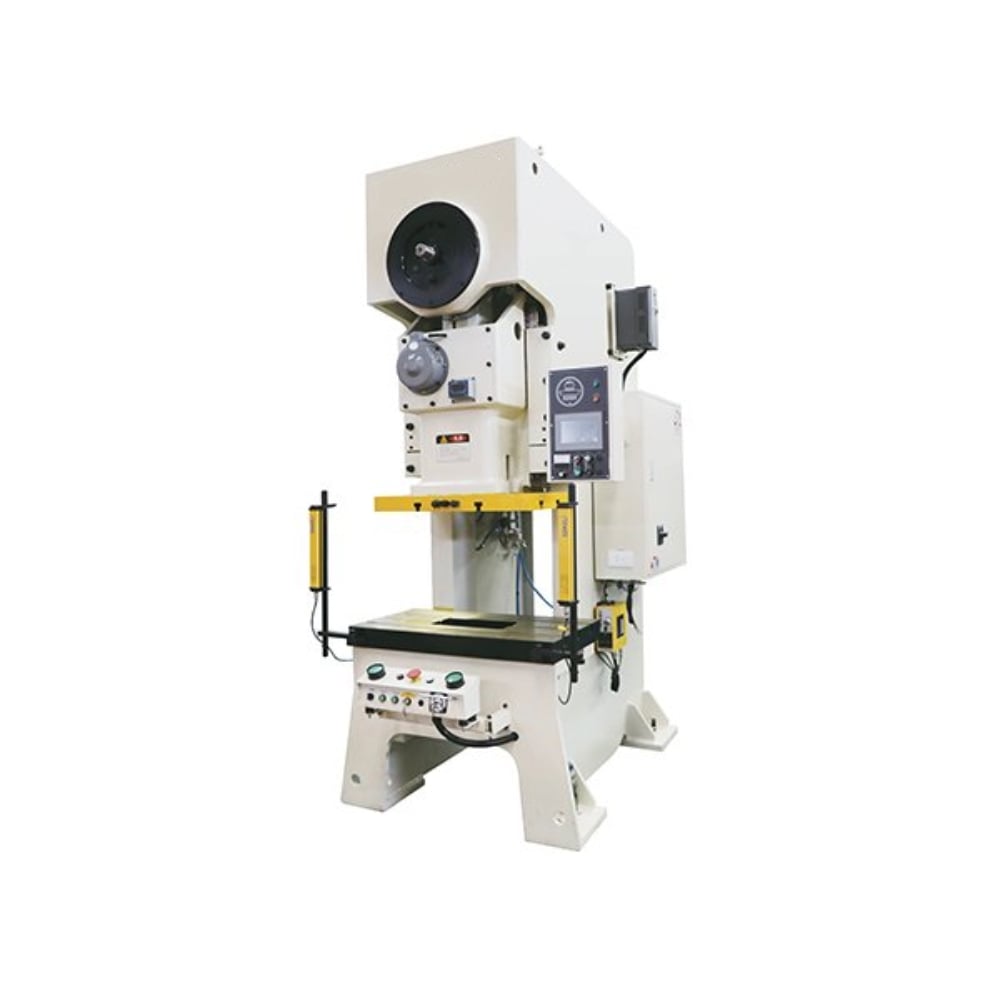
Selection Checklist: Choosing the Right Machine for Speed and Precision
When looking to upgrade your facility, choosing a machine designed for the rigors of high-speed precision is paramount. Use this checklist to evaluate your options:
- Frame Rigidity: Does the machine feature a heavy-duty O-frame or a reinforced C-frame to minimize deflection under load?
- Drive System: Is it a high-speed hydraulic system or a servo-electric drive? Servo-electric systems often offer better control over the ram’s position and speed profile.
- CNC Controller: Does the controller support advanced look-ahead features and high-speed processing to handle complex hole patterns without pausing?
- Tooling Style: Does the machine use Thick Turret or Trumpf-style tooling? Ensure the tooling system is compatible with high-speed, long-life coatings.
- Auto-Index Capability: Can the machine rotate tools quickly and accurately? This reduces the need for multiple tools and speeds up complex geometries.
- Vibration Damping: Are there integrated damping pads or a foundation design that isolates the machine from floor vibrations?
- Software Integration: Does the nesting software optimize the tool path for the shortest travel distance and minimum tool changes?
Frequently Asked Questions (FAQ)
How does material thickness affect the maximum speed?
Thicker materials require more force and longer dwell times for the punch to penetrate and the slug to clear. As thickness increases, the SPM must be reduced to prevent excessive heat buildup and to ensure the stripping mechanism has enough time to release the sheet without distorting it.
Can I use standard tooling for high-speed punching?
While standard tooling works, it is not ideal. For high-speed optimization, we recommend tools with specialized coatings (like TiCN) and enhanced cooling features. High-speed tooling is designed to dissipate heat faster and resist the abrasive wear associated with rapid cycles.
What is the role of the CNC software in speed optimization?
The software is critical. It determines the ‘path of least resistance.’ Efficient nesting and pathing reduce the total distance the table travels. Advanced software also manages the ‘hit rate’ by grouping similar holes together, minimizing turret rotation and tool changes, which are the biggest time-wasters in punching operations.
How often should I calibrate my machine for accuracy?
For high-speed environments, a quick daily check of the clamp positioning and tool alignment is recommended. A full calibration of the X and Y axes should be performed monthly or after any significant mechanical event (like a tool crash) to ensure that the ‘optimize punching machine speed without sacrificing accuracy’ goal remains achievable.
Does the type of hydraulic oil matter?
Yes. High-speed hydraulic punching machines generate significant heat. Using a high-quality hydraulic oil with the correct viscosity and anti-foaming properties ensures that the valves respond consistently. Inconsistent valve response leads to variations in the ram’s stroke depth, which directly impacts accuracy.
What is the benefit of a servo-electric punching machine over a hydraulic one?
Servo-electric machines offer much finer control over the ram’s movement. You can program the exact speed of entry, the dwell time at the bottom of the stroke, and the speed of the retreat. This level of control is the ultimate way to optimize punching machine speed without sacrificing accuracy, as it allows for ‘soft punching’ which reduces noise and vibration.