Comprehensive Guide: How Ton Capacity Affects Press Brake Performance and Material Forming Results


Technical Overview: The Role of Tonnage in Modern Metal Fabrication
In the realm of metal fabrication, the press brake stands as a cornerstone of production, and its most defining characteristic is its ton capacity. Understanding how ton capacity affects press brake performance and material forming results is essential for any workshop aiming for precision, efficiency, and longevity of their equipment. Tonnage, in its simplest form, refers to the maximum pressure or force that the press brake can exert on the workpiece during a bending operation. This force is generated by hydraulic cylinders or electric motors and is transmitted through the ram to the tooling and finally to the metal sheet.
HARSLE, a leader in the manufacturing of high-quality press brakes, emphasizes that tonnage is not merely a maximum limit but a dynamic variable that dictates the boundaries of what a machine can achieve. When a machine operates within its optimal tonnage range, it maintains structural integrity and delivers consistent results. However, when the required force for a bend approaches or exceeds the machine’s rated capacity, several physical phenomena occur, including frame deflection, hydraulic heat buildup, and potential tool deformation. These factors directly influence the final quality of the formed part.
The physics of bending involves overcoming the material’s yield strength to achieve permanent plastic deformation. The amount of force required depends on the material’s thickness, its tensile strength, the length of the bend, and the width of the V-die opening. If the ton capacity is insufficient, the machine may stall, or worse, suffer from ‘ram drift’ or frame fatigue. Conversely, using a high-tonnage machine for very light work without proper control can lead to over-bending or damage to delicate tooling. Therefore, the relationship between tonnage and performance is a delicate balance of mechanical capability and material science.
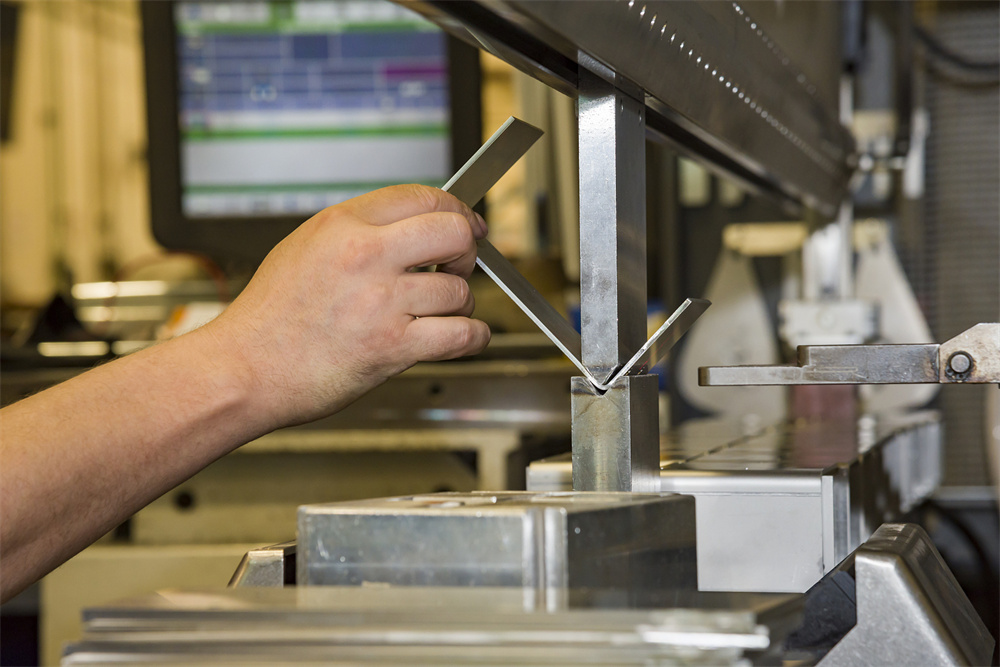
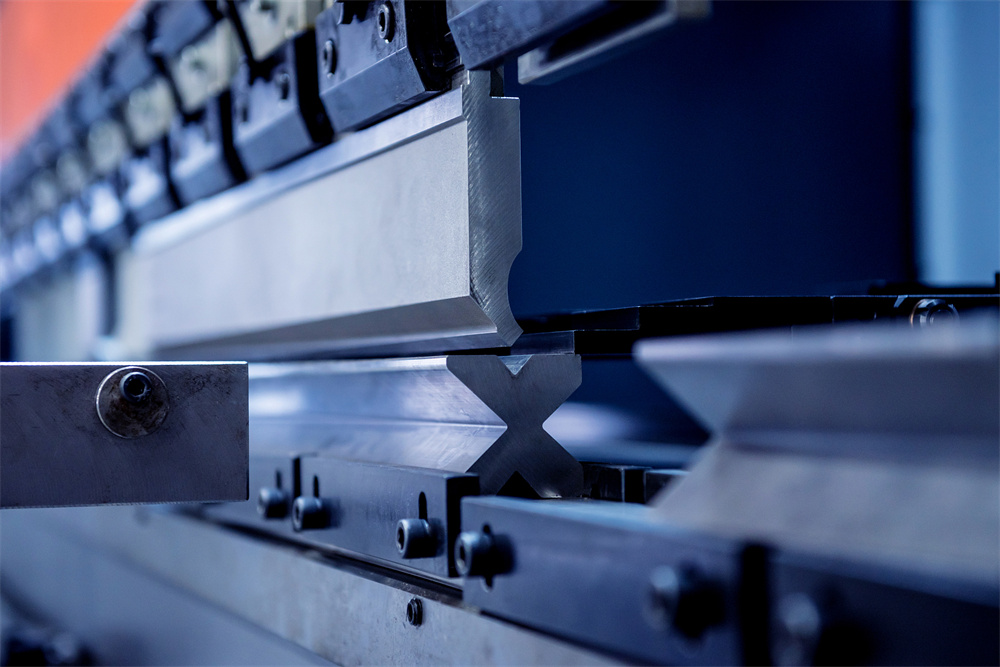
The Impact of Frame Deflection and Crowning
One of the most critical technical aspects of how ton capacity affects press brake performance is frame deflection. No machine is perfectly rigid; when thousands of tons of pressure are applied, the side frames and the bed of the press brake will flex slightly. This deflection is usually most pronounced in the center of the machine. If not compensated for, this results in a ‘canoe effect’ where the bend angle in the middle of the workpiece is wider than at the ends.
High-performance HARSLE press brakes utilize advanced crowning systems—either hydraulic or mechanical—to counteract this deflection. The crowning system applies an opposing force or adjusts the bed’s profile to ensure that the punch and die remain parallel under load. The effectiveness of this compensation is directly tied to the machine’s tonnage rating. A machine with a higher ton capacity often features a more robust frame and a more sophisticated crowning system to handle the increased stresses associated with heavy-duty forming.
Core Parameters Influencing Tonnage Requirements
To understand how ton capacity affects press brake performance and material forming results, one must analyze the core parameters that dictate the force required for any given job. These parameters are the variables in the bending equation and must be carefully evaluated during the planning phase of production.
- Material Thickness (S): This is the most significant factor. The force required to bend a material increases with the square of its thickness. For example, doubling the thickness of a sheet requires four times the tonnage.
- Material Tensile Strength (σb): Different metals offer different levels of resistance. Stainless steel, with its high tensile strength, requires significantly more tonnage than mild steel or aluminum for the same thickness and length.
- Bend Length (L): Tonnage is calculated per unit of length (usually tons per meter or tons per foot). The longer the part, the higher the total tonnage required.
- V-Die Opening (V): The width of the bottom die opening inversely affects the tonnage. A wider V-die reduces the force required but increases the minimum flange length and the inside bend radius.
Beyond these primary factors, the method of bending also plays a role. Air bending requires the least amount of tonnage because the material only touches the tooling at three points. Bottoming requires significantly more force (often 3 to 5 times more than air bending) to force the material into full contact with the die. Coining, the most extreme method, requires even higher tonnage to actually thin the material at the bend point to eliminate springback entirely. Understanding these methods is vital to determining if your machine’s ton capacity is sufficient for your specific forming goals.
Calculation Method: Determining the Required Tonnage
Calculating the required tonnage is a fundamental skill for any press brake operator or engineer. The standard formula used in the industry for air bending mild steel (with a tensile strength of approximately 450 MPa) is:
P = (650 * S² * L) / V
Where:
- P = Tonnage (kN)
- S = Material thickness (mm)
- L = Length of the sheet (m)
- V = V-die opening (mm)
To convert kilonewtons (kN) to tons, you divide by approximately 9.8. It is important to note that this formula is a baseline. If you are bending stainless steel, you typically need to multiply the result by 1.5 to 2.0 due to the higher tensile strength. For aluminum, the multiplier might be 0.5 to 0.8 depending on the alloy.
Another critical calculation involves the ‘Tonnage Limit’ of your tooling. Every punch and die has a maximum rated tonnage per meter. Exceeding this limit can cause the tool to shatter, posing a significant safety risk and damaging the machine. Therefore, when considering how ton capacity affects press brake performance, you must also consider the capacity of the interface between the machine and the material.
Tonnage Parameter Table for Common Materials
The following table provides an estimate of the tonnage required per meter (T/m) for air bending mild steel using a standard V-die opening (V = 8 * S). Note: For stainless steel, increase these values by 50-100%.
| Material Thickness (mm) | V-Die Opening (mm) | Inside Radius (mm) | Tonnage per Meter (T/m) |
|---|---|---|---|
| 1.0 | 8 | 1.3 | 8 |
| 1.5 | 12 | 2.0 | 12 |
| 2.0 | 16 | 2.6 | 17 |
| 3.0 | 24 | 4.0 | 25 |
| 4.0 | 32 | 5.3 | 33 |
| 6.0 | 48 | 8.0 | 50 |
| 8.0 | 64 | 10.7 | 67 |
| 10.0 | 80 | 13.3 | 83 |
| 12.0 | 96 | 16.0 | 100 |
This table serves as a quick reference guide. However, always consult your HARSLE machine manual and tooling specifications before performing a bend, as variations in material composition and die geometry can significantly alter these requirements.
Common Engineering Mistakes in Tonnage Management
Even experienced fabricators can make errors when managing tonnage, which can lead to poor material forming results or machine damage. One of the most common mistakes is underestimating the tonnage required for small V-die openings. Operators often try to achieve a very tight inside radius by using a narrow V-die on thick material. This exponentially increases the pressure and can easily exceed the machine’s capacity or ‘sink’ the punch into the die.
Another frequent error is ignoring the ‘Center Load’ rule. Press brakes are designed to handle their full tonnage when the load is distributed across the length of the bed. If a high-tonnage bend is performed over a very short distance (e.g., 100 tons over 100mm), the concentrated force can cause localized deformation of the ram or the bed, known as ‘upsetting.’ This permanently damages the machine’s accuracy.
Furthermore, many fail to account for material hardening and springback. When bending high-strength alloys, the material resists deformation more aggressively. If the machine’s ton capacity is right at the limit, it may not be able to provide the extra force needed to ‘over-bend’ the part to compensate for springback, resulting in inconsistent angles across a production run. Finally, neglecting to maintain the hydraulic system can lead to a loss of effective tonnage, as worn seals or contaminated oil prevent the cylinders from reaching their full pressure potential.
Selection Checklist: Choosing the Right Tonnage for Your Needs
When purchasing a HARSLE press brake, selecting the correct ton capacity is the most important decision you will make. Use this checklist to ensure you choose a machine that meets your current and future needs:
- Identify your thickest material: Determine the maximum thickness and tensile strength of the materials you plan to work with.
- Determine your maximum bend length: Ensure the machine’s tonnage is sufficient for your longest parts.
- Calculate the ‘Worst Case’ scenario: Use the tonnage formula for your most demanding job (thickest material + shortest V-die + longest length).
- Add a Safety Margin: It is industry standard to add a 20-25% safety margin to your calculated tonnage. This prevents the machine from running at 100% capacity constantly, which extends its lifespan.
- Consider Bending Methods: If you plan to do bottoming or coining, ensure the machine has significantly more tonnage than required for air bending.
- Evaluate Tooling Compatibility: Ensure the machine’s ton capacity does not exceed the limits of the tooling you intend to use, or plan to invest in heavy-duty tooling.
- Check Crowning Options: For high-tonnage machines or long bend lengths, ensure the machine is equipped with an automatic crowning system to maintain accuracy.
- Future-Proofing: Consider if your business might take on heavier projects in the next 3-5 years. It is often more cost-effective to buy a higher-capacity machine now than to replace it later.
Frequently Asked Questions (FAQ)
1. Can I bend a short piece of thick metal if it’s within the machine’s total tonnage?
While the total tonnage might be within limits, you must be careful about ‘concentrated loads.’ Bending a very thick, short piece puts immense pressure on a small area of the ram and bed. Always check the machine’s ‘tons-per-inch’ limit to avoid permanent structural damage.
2. How does ton capacity affect the accuracy of the bend angle?
Ton capacity affects accuracy primarily through frame deflection. If a machine is working near its limit, the frame will flex more. Without a high-quality crowning system to compensate for this deflection, the bend angle will be inconsistent along the length of the part.
3. Why does stainless steel require more tonnage than mild steel?
Stainless steel has a higher carbon content and a different crystalline structure, resulting in higher tensile strength and work-hardening properties. It resists deformation more than mild steel, requiring roughly 50% to 100% more force to achieve the same bend.
4. What happens if I exceed the press brake’s ton capacity?
Most modern HARSLE press brakes have hydraulic relief valves to prevent catastrophic failure. However, repeatedly hitting the limit can cause hydraulic overheating, seal failure, and structural fatigue. In extreme cases, it can crack the side frames or the bed.
5. Does the V-die opening really change the tonnage that much?
Yes, absolutely. The tonnage required is inversely proportional to the V-die opening. If you halve the V-die width, you double the tonnage required. This is why selecting the correct die is just as important as selecting the right machine capacity.
6. How do I know if my machine’s crowning system is working correctly under high tonnage?
The best way is to perform a test bend on a long sheet of material. Measure the angle at the ends and in the middle. If the middle is more ‘open’ (wider angle) than the ends, the crowning system is either not engaged sufficiently or the machine is deflecting beyond its compensation range.
7. Is an electric press brake better than a hydraulic one for tonnage control?
Electric press brakes offer extremely precise control over the ram position and force, making them excellent for lower-tonnage, high-speed applications. However, for very high tonnage requirements (above 250-300 tons), hydraulic systems remain the industry standard due to their ability to generate massive force efficiently.