Press Brake Automation Buying Guide: Is Backgauge and Robot Integration Worth It?


Introduction to Press Brake Automation
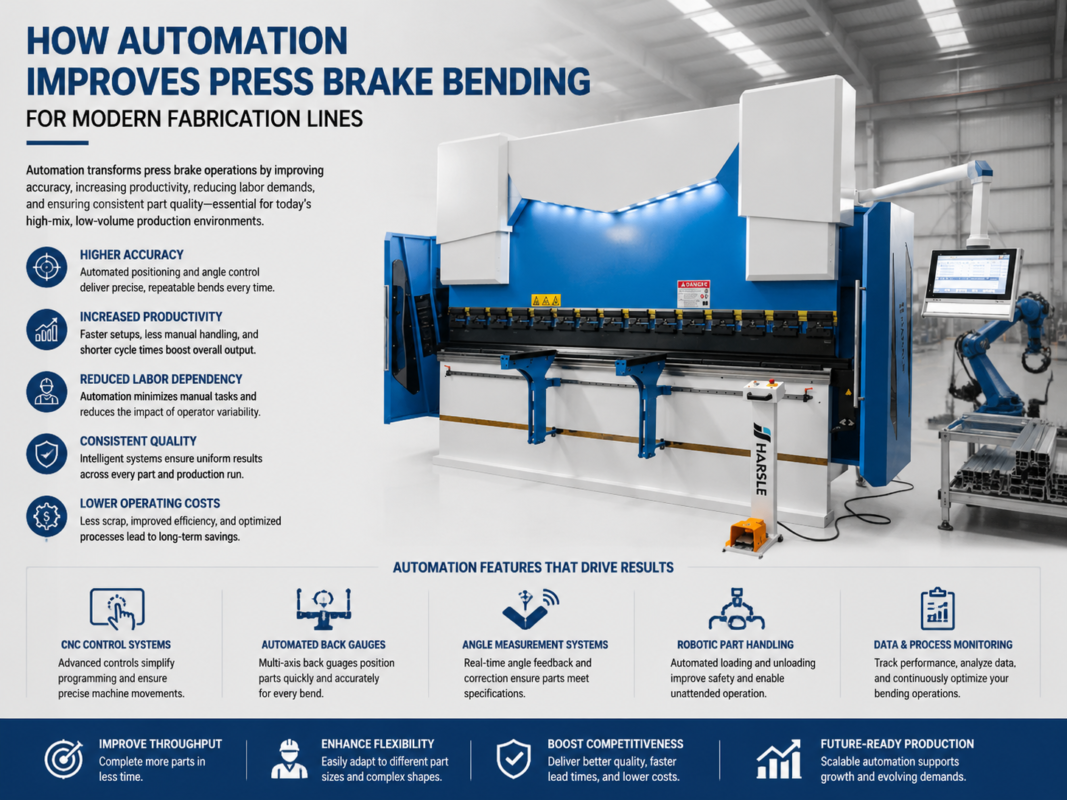
In the modern metal fabrication landscape, the question is no longer whether to automate, but when and how. As labor shortages continue to squeeze production schedules and the demand for high-precision components rises, shop owners are increasingly looking at Press Brake Automation Buying : Is Backgauge Robot Integration Worth It? as a central strategy for growth. Automation in press brakes typically falls into two categories: advanced multi-axis backgauge systems and fully integrated robotic tending cells. Both offer significant advantages, but they represent vastly different levels of investment and operational philosophy.
HARSLE has observed a shift in the market where even small-to-medium enterprises (SMEs) are exploring robotic integration. This guide aims to demystify the costs, configurations, and return on investment (ROI) associated with automating your bending processes. Whether you are looking to upgrade a single machine with a more capable backgauge or invest in a lights-out robotic cell, understanding the technical and financial implications is critical for making an informed decision.
Price Range Overview: From Manual to Fully Autonomous
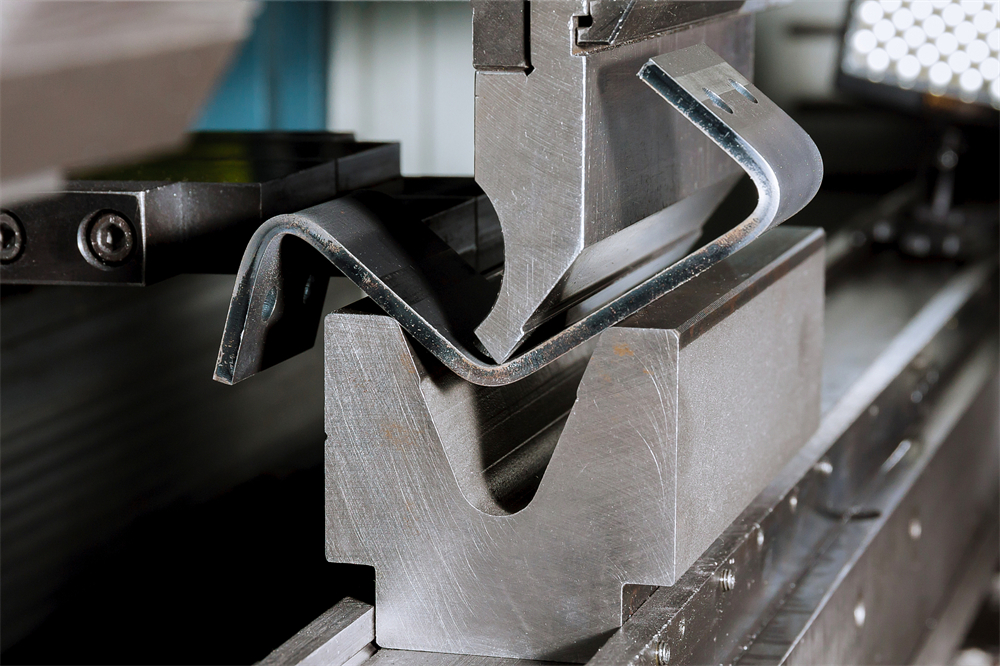
The cost of press brake equipment varies wildly based on the level of automation. A standard entry-level CNC press brake with a simple 2-axis backgauge (X, R) might start in the $30,000 to $50,000 range. These machines are excellent for simple jobs but require a skilled operator to handle every part, flip the sheet, and ensure accuracy. While the initial capital expenditure (CAPEX) is low, the long-term labor cost is high.
Moving into the mid-range, a high-precision CNC press brake equipped with a 4-axis to 6-axis backgauge (X1, X2, R1, R2, Z1, Z2) typically costs between $70,000 and $150,000. This level of automation focuses on the machine’s internal mechanics, allowing for complex part positioning without manual adjustment of the fingers. This significantly reduces setup time and increases the variety of parts a single operator can produce in a shift.
The high end of the spectrum involves full robotic integration. A complete robotic bending cell—including the press brake, a 6-axis industrial robot, end-of-arm tooling (EOAT), centering stations, and safety fencing—usually starts at $200,000 and can exceed $500,000 for large-scale or high-speed systems. While the price tag is substantial, these systems are designed for high-volume production or complex, repetitive tasks where human fatigue would lead to errors and scrap.
Main Cost Drivers in Press Brake Automation
When evaluating Press Brake Automation Buying : Is Backgauge Robot Integration Worth It?, it is essential to identify what exactly you are paying for. The first major driver is the CNC controller. High-end controllers from brands like Delem, Cybelec, or ESA provide the computing power necessary to sync the robot’s movements with the press brake’s ram. These controllers often feature 3D visualization and offline programming capabilities, which are essential for reducing downtime during part changeovers.
The second driver is the backgauge system itself. A backgauge is the “heart” of the press brake’s accuracy. Each additional axis adds cost but also adds capability. For example, independent Z1 and Z2 axes allow for the bending of asymmetrical parts, while an X-Prime axis allows for tapered bends. The precision of the ball screws, the speed of the servo motors, and the rigidity of the gauge bar all contribute to the final price.
Thirdly, the robot and its peripherals represent a massive portion of the investment. The robot’s payload capacity (how much weight it can lift) and its reach (how far it can move the part) are primary factors. Furthermore, the End-of-Arm Tooling (EOAT)—the grippers or vacuum pads that hold the metal—must be engineered for the specific range of parts you intend to produce. Custom grippers or automatic tool changers for the robot add layers of complexity and cost.
Configuration Impact: Backgauge vs. Robot Integration
The configuration you choose should align with your specific production mix. If your shop handles a high volume of different parts in small batches (High-Mix, Low-Volume), a highly advanced 6-axis backgauge might be more “worth it” than a robot. An advanced backgauge allows a human operator to quickly set up and execute complex sequences. Modern CNC systems can store thousands of programs, making the transition from one job to the next nearly instantaneous.
Conversely, if you have long production runs of the same or similar parts (Low-Mix, High-Volume), robot integration is the clear winner. A robot does not get tired, does not require breaks, and maintains the exact same precision on the 1,000th bend as it did on the first. In this configuration, the backgauge serves as a reference point for the robot. The robot places the part against the backgauge fingers, and the machine’s sensors confirm the position before the bend is initiated.
Another configuration to consider is the “Cobot” (Collaborative Robot) solution. Cobots are smaller, easier to program, and can work alongside humans without extensive safety fencing. They are a middle-ground solution for shops that want to dip their toes into automation without the massive footprint and cost of a traditional industrial robot. However, they generally have lower payload capacities and slower cycle times.
Hidden Costs of Press Brake Automation
Beyond the sticker price of the machine and the robot, several hidden costs can impact your budget. One of the most overlooked is software and training. To truly benefit from a robotic cell, you need offline programming (OLP) software. This allows your engineers to program the robot and the press brake on a computer while the machine is still running another job. The software licenses and the time required to train a technician to use them can cost tens of thousands of dollars.
Tooling compatibility is another factor. Automated systems require high-precision, ground tooling. If your current tools are worn or inconsistent, the robot will struggle to achieve repeatable results. You may need to invest in a completely new set of precision-hardened tools. Additionally, automated tool changers (ATC) for the press brake itself are becoming popular, but they add significant cost and require specific tool styles.
Finally, consider facility requirements and safety. A robotic cell requires a significant amount of floor space, often three to four times the footprint of a manual machine. You will also need to invest in safety infrastructure, such as light curtains, laser scanners, and physical fencing, to comply with local industrial safety standards (like OSHA or CE). Maintenance costs also rise; robots require periodic calibration and specialized servicing that your in-house team might not be equipped to handle initially.
ROI Calculation: Is It Worth It?
To determine if Press Brake Automation Buying : Is Backgauge Robot Integration Worth It?, you must perform a detailed ROI calculation. The simplest formula is: ROI = (Total Investment) / (Annual Savings). Annual savings come from several sources. The most obvious is labor. If a robotic cell can replace two shifts of manual labor, the savings in wages, benefits, and insurance can be $100,000 to $150,000 per year in many regions.
However, the calculation should also include scrap reduction and throughput increase. Human error is the leading cause of scrap in bending operations. A robot eliminates “flipped” parts or incorrect positioning. If you currently have a 5% scrap rate on high-value materials like stainless steel or aluminum, reducing that to 0.5% provides immediate bottom-line impact. Furthermore, a robot can often run during lunch breaks or even “lights-out” after hours, effectively increasing your shop’s capacity without adding headcount.
Consider this example: A $250,000 robotic cell that saves $100,000 in labor and $20,000 in scrap/rework per year will pay for itself in roughly 2.1 years. Given that a high-quality HARSLE press brake and a reputable industrial robot can last 10-15 years with proper maintenance, the long-term profitability is immense. For many shops, the “worth” isn’t just in the dollars, but in the ability to take on larger contracts that require a level of consistency and volume that manual labor simply cannot provide.
Buying Advice for Metal Fabricators
If you are considering an investment in automation, start by auditing your current part library. Identify the “80/20″—the 20% of parts that make up 80% of your volume. If these parts are suitable for robotic handling (i.e., they aren’t excessively heavy or oddly shaped), then robot integration is a strong candidate. If your work is almost entirely custom, one-off prototypes, focus your investment on the best possible CNC backgauge and a high-end controller to maximize manual efficiency.
When choosing a vendor, look for a partner like HARSLE that offers integrated solutions. It is much easier to troubleshoot a system where the press brake and the automation were designed to work together, rather than trying to “bolt on” a third-party robot to an old machine. Ask for a simulation; most modern manufacturers can take your CAD files and run a digital simulation of the robotic cell to prove cycle times and feasibility before you spend a single dollar.
Lastly, don’t ignore the human element. Automation doesn’t necessarily mean firing staff; it means upskilling them. Your best manual operators often make the best robotic cell managers because they understand the nuances of metal spring-back and grain direction. Investing in their training is just as important as investing in the hardware.
Frequently Asked Questions (FAQ)
1. Can I add a robot to my existing press brake?
Yes, it is possible to retrofit a robot to an existing CNC press brake, but it requires the machine to have a compatible controller that can communicate with the robot (usually via I/O signals or a dedicated bus system). It is often more cost-effective and reliable to purchase a pre-integrated cell.
2. How many axes do I really need in a backgauge?
For most standard work, a 4-axis backgauge (X, R, Z1, Z2) is the sweet spot for value and capability. If you do complex, multi-stage bending or parts with non-parallel flanges, a 6-axis system becomes necessary to ensure accuracy and safety for the operator.
3. Is robotic bending slower than manual bending?
In terms of raw “bend-per-minute” speed, a skilled human can sometimes outpace a robot on a single part. However, the robot wins on consistency and endurance. A robot doesn’t slow down at the end of an 8-hour shift, and it doesn’t need to stop to check the drawing, leading to higher total daily output.
4. What is the maintenance like for an automated press brake?
Maintenance involves standard hydraulic checks for the press brake (oil changes, seal inspections) and mechanical checks for the backgauge (lubricating ball screws). The robot requires periodic grease changes and battery replacements for its encoders. Overall, the maintenance is manageable but must be disciplined to prevent costly downtime.
5. What materials are best suited for automated bending?
Standard cold-rolled steel, stainless steel, and aluminum are all excellent candidates. The most important factor for automation is material consistency. If the sheet thickness varies significantly from batch to batch, you may need to invest in an automatic angle-measuring system to ensure the robot doesn’t produce out-of-tolerance parts.