CNC Hydraulic Press Brake Cost Guide: Key Features That Drive Price | HARSLE


Introduction to CNC Hydraulic Press Brake Investment
In the modern metal fabrication industry, the CNC hydraulic press brake stands as a cornerstone of production efficiency and precision. Whether you are a small job shop or a large-scale industrial manufacturer, understanding the CNC Hydraulic Press Brake Cost : Key Features That Drive Price is essential for making an informed capital investment. A press brake is not merely a purchase; it is a long-term asset that dictates your capability to handle complex geometries, maintain tight tolerances, and meet demanding production schedules.
The price of a CNC hydraulic press brake can vary significantly, ranging from tens of thousands to several hundreds of thousands of dollars. This price volatility is not arbitrary; it is driven by a complex interplay of mechanical engineering, electronic control sophistication, and structural integrity. As technology evolves, features that were once considered premium—such as multi-axis backgauges and automatic crowning—are becoming standard requirements for competitive shops. This guide aims to deconstruct these costs, providing you with a clear roadmap to navigate the market and select a machine that offers the best value for your specific applications.
At HARSLE, we recognize that every fabrication environment has unique needs. By analyzing the core components that influence the final invoice, we help our clients move beyond the sticker price to understand the total cost of ownership and the potential for return on investment (ROI). From the thickness of the steel plates used in the frame to the brand of the hydraulic valves, every detail contributes to the machine’s performance and, consequently, its price tag.
Price Range Overview: Categorizing the Market
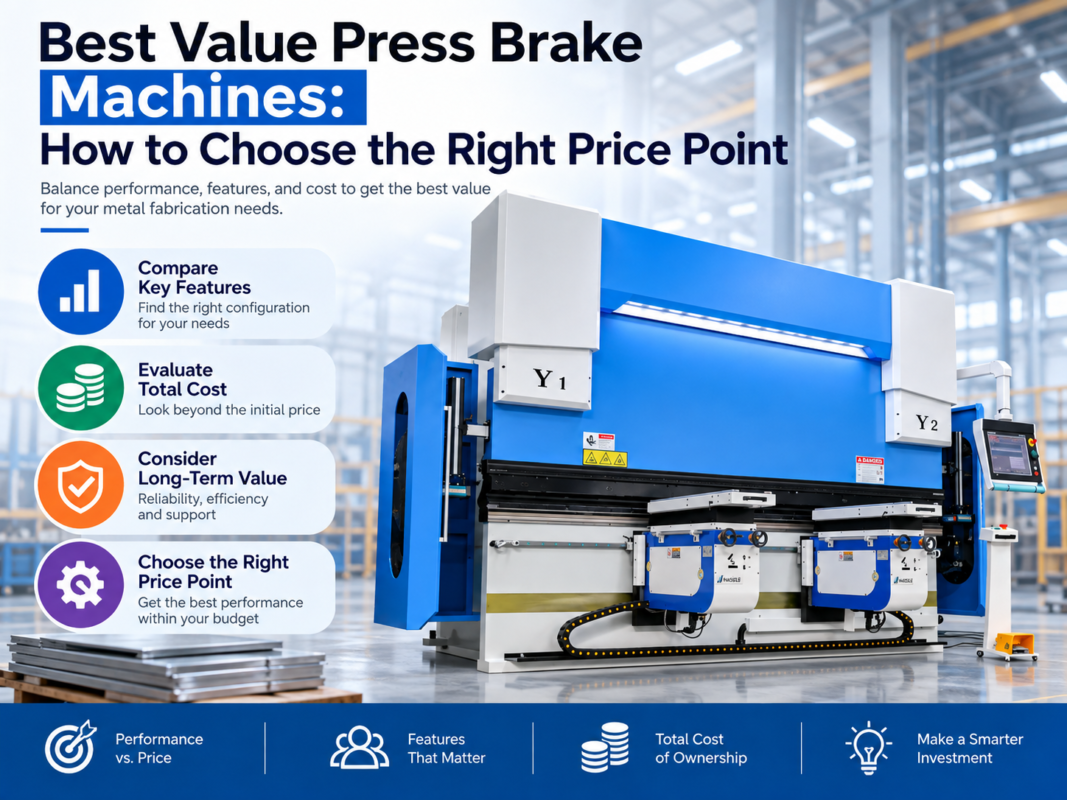
When researching the CNC Hydraulic Press Brake Cost Guide Key Features That Drive Price, it is helpful to categorize machines into three primary tiers. These tiers are generally defined by their tonnage, length, and level of automation. Understanding where your needs fall within these categories will help you set a realistic budget and avoid overpaying for unnecessary features or under-investing in a machine that cannot meet your production demands.
Entry-Level CNC Press Brakes ($20,000 – $50,000)
Entry-level machines are typically designed for smaller shops or those transitioning from manual or NC (Numerical Control) machines to CNC. These units usually offer 2 to 3 axes of control (Y1, Y2, and X). They are ideal for simple bending tasks and thinner materials. While they lack the high-speed performance of premium models, they provide a significant step up in accuracy compared to manual equipment. These machines often utilize simplified controllers and standard hydraulic systems, making them an affordable entry point into CNC technology.
Mid-Range Performance Machines ($50,000 – $120,000)
The mid-range category is the most popular for professional fabrication shops. These machines typically feature 4 to 6 axes (Y1, Y2, X, R, Z1, Z2) and are equipped with more sophisticated CNC controllers like the Delem DA-50 series or ESA systems. They offer better speed, higher precision, and features like hydraulic or mechanical crowning to ensure consistent bends over long lengths. These machines are built for multi-shift operations and can handle a wider variety of material thicknesses and complex part designs.
High-End and Specialized Industrial Systems ($120,000 – $300,000+)
High-end press brakes are characterized by extreme precision, high-speed hydraulics, and advanced automation. These machines often feature 8 or more axes, integrated robotic interfaces, and 3D graphical controllers. They are built with heavy-duty frames to minimize deflection and are equipped with premium components from brands like Hoerbiger or Rexroth. Specialized systems, such as tandem press brakes for extra-long parts or high-tonnage machines (400T and above), fall into this category. The investment here is driven by the need for maximum throughput and the ability to handle the most challenging fabrication tasks.
| Machine Category | Typical Tonnage | Number of Axes | Estimated Price Range (USD) |
|---|---|---|---|
| Entry-Level | 30T – 100T | 2 – 3 Axes | $20,000 – $50,000 |
| Mid-Range | 100T – 250T | 4 – 6 Axes | $50,000 – $120,000 |
| High-End | 250T – 1000T+ | 8+ Axes | $120,000 – $300,000+ |
Main Cost Drivers: What Are You Really Paying For?
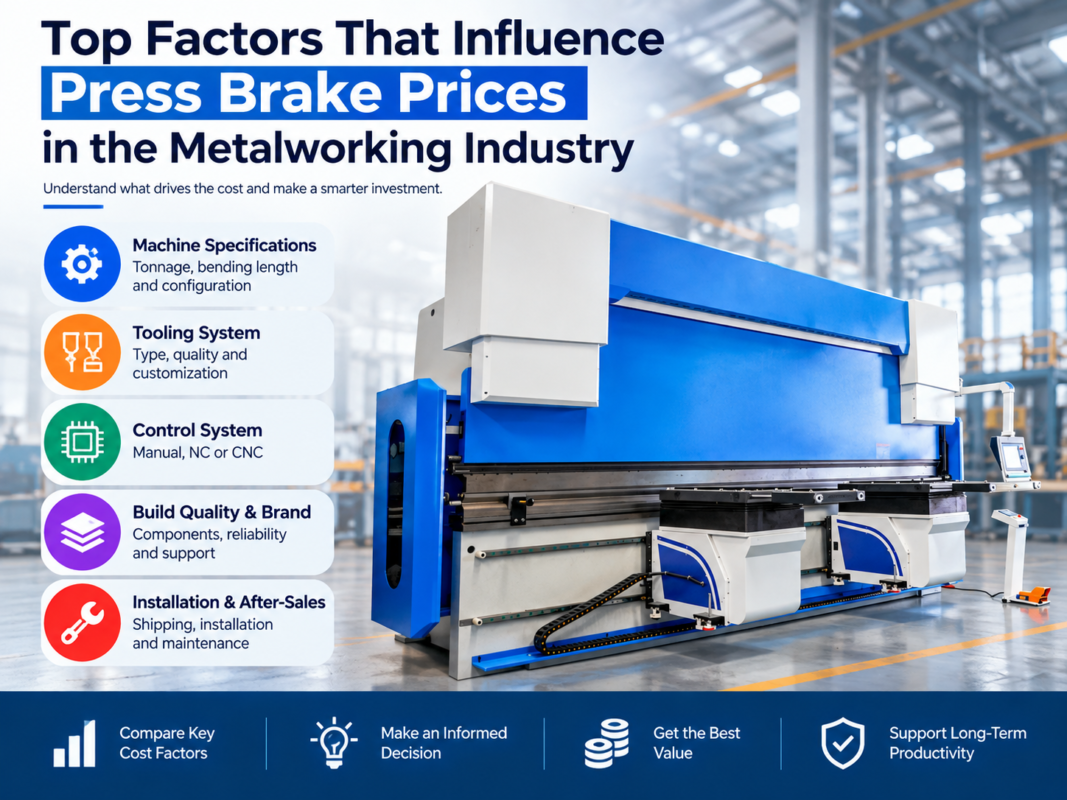
The core of the CNC Hydraulic Press Brake Cost : Key Features That Drive Price lies in the technical specifications. Several primary factors dictate the manufacturing cost and, ultimately, the retail price of the machine. Understanding these drivers allows you to prioritize features that will actually impact your bottom line.
Tonnage and Bending Length
Tonnage refers to the pressing force the machine can exert. Higher tonnage requires larger hydraulic cylinders, a more robust frame, and more powerful motors. Similarly, the bending length dictates the size of the bed and the ram. A 4-meter machine requires significantly more steel and more precise machining than a 2-meter machine to ensure that the frame does not flex under pressure. The cost increases exponentially as you move into high-tonnage (300T+) and long-bed (4m+) configurations because the structural requirements to maintain accuracy become much more stringent.
The CNC Controller: The Brain of the Machine
The controller is one of the most significant cost variables. Basic controllers offer 2D programming and limited memory. In contrast, high-end controllers like the Delem DA-66T or DA-69T offer 3D visualization, automatic bend sequencing, and collision detection. These advanced systems reduce setup time and minimize operator error, but they can add $10,000 to $20,000 to the machine’s price. The choice of controller should be based on the complexity of the parts you produce; if you are doing simple 90-degree bends, a 3D controller might be overkill, but for complex multi-bend parts, it is indispensable.
Hydraulic and Electrical Components
The reliability of a press brake depends on its internal components. Machines equipped with world-class hydraulics (such as Bosch Rexroth or Hoerbiger) and electrical components (such as Schneider or Siemens) command a higher price. These components offer better duty cycles, faster response times, and easier sourcing of spare parts. Cheaper machines may use generic components that are prone to leaks or electrical failures, leading to higher maintenance costs and downtime in the long run.
Number of Controlled Axes
Every additional axis adds cost in the form of servo motors, drive systems, and software integration. A standard 3-axis machine (Y1, Y2, X) is sufficient for many tasks. However, adding an R-axis (vertical movement of the backgauge) or Z1/Z2 axes (lateral movement of the fingers) significantly increases the machine’s versatility and speed. For high-volume production where every second counts, a 6-axis or 8-axis backgauge is a worthwhile investment despite the higher initial cost.
Configuration Impact: Enhancing Precision and Versatility
Beyond the basic specs, specific configurations and optional features play a major role in the CNC Hydraulic Press Brake Cost Guide Key Features That Drive Price. These features are often what separate a standard machine from a high-performance production tool.
Crowning Systems: Ensuring Straight Bends
When a press brake bends a long piece of metal, the center of the machine tends to deflect upward, resulting in a “canoe effect” where the angle in the middle is different from the ends. To counteract this, machines use crowning systems. Manual crowning is the cheapest option but requires the operator to make adjustments. Hydraulic or motorized mechanical crowning is controlled by the CNC and automatically adjusts for each bend based on material thickness and length. Motorized mechanical crowning is generally considered more precise and durable, but it adds several thousand dollars to the price.
Backgauge Complexity and Speed
The backgauge is responsible for positioning the workpiece accurately. High-speed backgauges with precision ball screws and linear guides ensure that every part is identical. The complexity of the backgauge—whether it is a simple T-shape or a sophisticated multi-axis system with independent fingers—directly impacts the machine’s price. For shops handling varied part geometries, a versatile backgauge is essential for reducing setup times and increasing throughput.
Tooling Clamping Systems
How tools are held in the machine affects both speed and safety. Standard manual clamping is cost-effective but slow. Quick-change clamping systems, such as those from Wila or specialized hydraulic clamps, allow operators to swap tools in seconds. While these systems increase the upfront cost, they are vital for shops that perform frequent tool changes throughout the day. The time saved on setups can often pay for the clamping system within the first year of operation.
Hidden Costs: Beyond the Initial Purchase Price
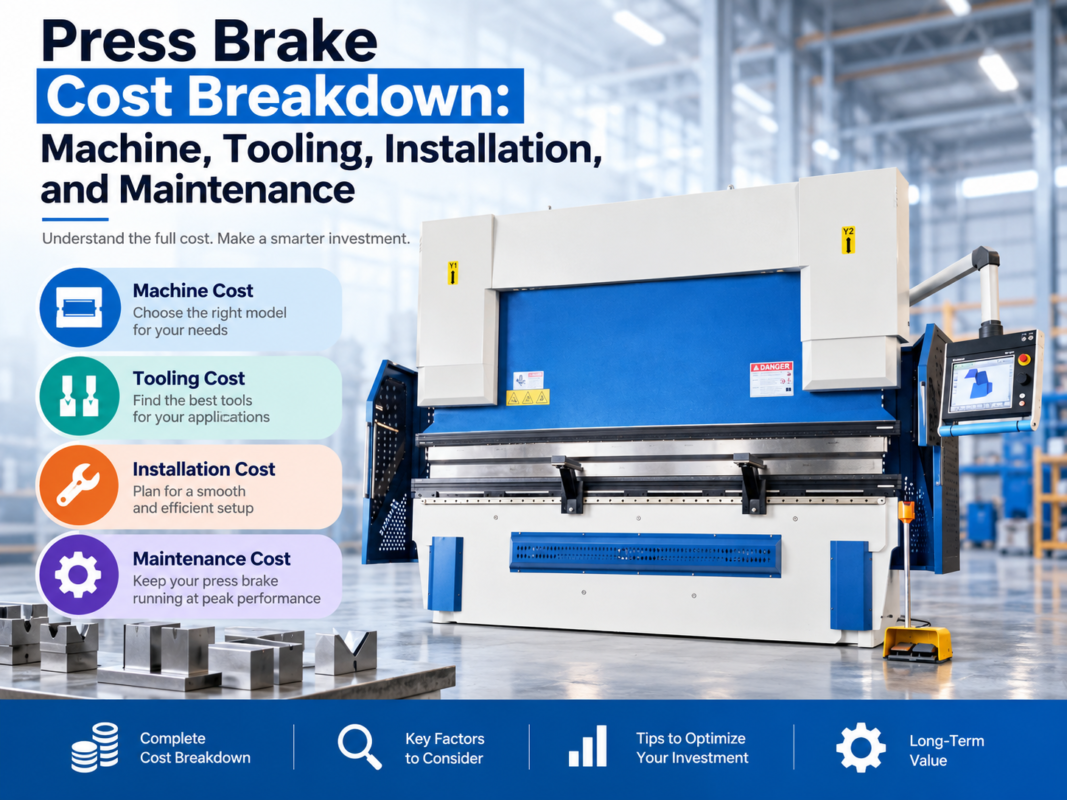
When budgeting for a CNC hydraulic press brake, the purchase price is only part of the equation. To truly understand the CNC Hydraulic Press Brake Cost : Key Features That Drive Price, you must account for the “hidden” costs associated with bringing the machine into production and maintaining it over its lifespan.
- Shipping and Logistics: Press brakes are heavy, oversized pieces of equipment. Shipping costs can range from $2,000 to over $10,000 depending on the distance and the need for specialized trailers or ocean freight.
- Installation and Commissioning: Most manufacturers require a certified technician to install the machine and calibrate the CNC system. This often involves travel expenses and daily service fees.
- Operator Training: A sophisticated CNC machine is only as good as its operator. Investing in professional training ensures that your team can utilize all the features of the controller, reducing waste and preventing accidental damage to the machine.
- Tooling Investment: A press brake is useless without high-quality punches and dies. Depending on your needs, a starter set of precision-ground tooling can cost between $5,000 and $20,000. Specialized tooling for unique profiles will add to this cost.
- Foundation Requirements: Large, high-tonnage machines may require a reinforced concrete foundation to prevent the floor from cracking and to ensure the machine remains level. This site preparation can be a significant additional expense.
- Maintenance and Spare Parts: Regular oil changes, filter replacements, and seal inspections are necessary. Using high-quality components initially reduces these costs, but they must still be factored into the annual budget.
ROI Calculation: Justifying the Investment
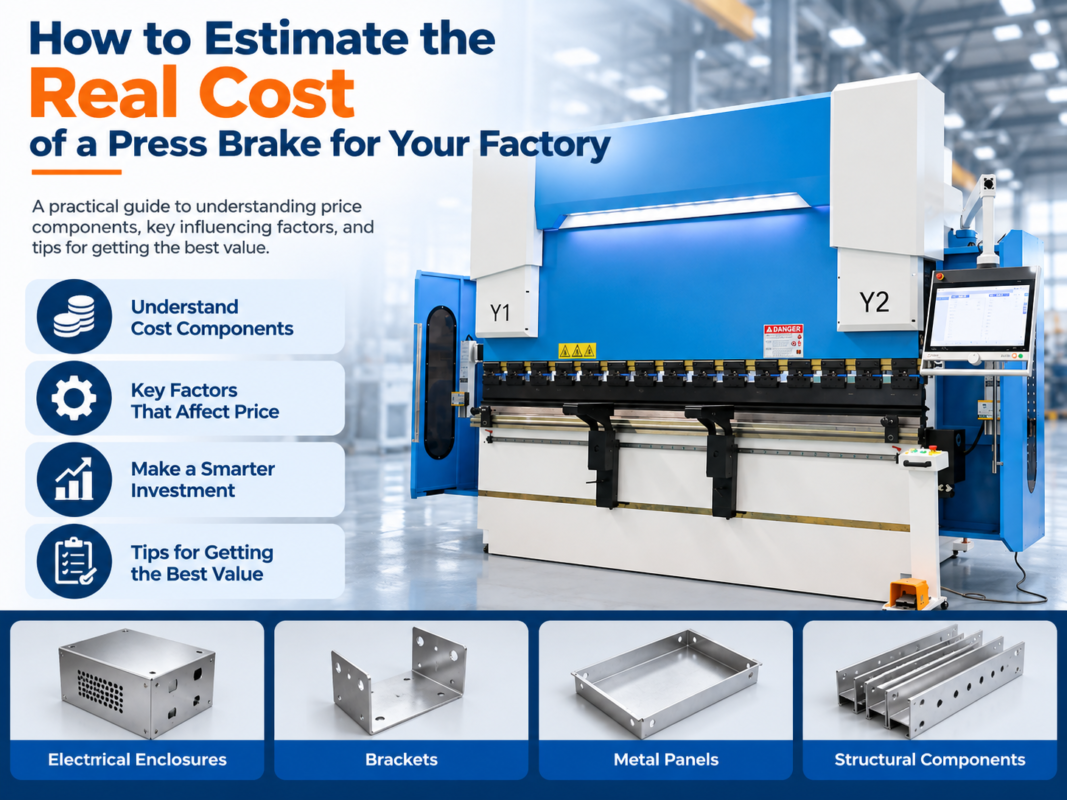
The goal of understanding the CNC Hydraulic Press Brake Cost Guide Key Features That Drive Price is to determine the Return on Investment (ROI). A more expensive machine with advanced features often provides a faster ROI than a cheaper, basic model due to increased efficiency and reduced labor costs.
Consider the impact of setup time. On a manual or basic NC machine, setting up a complex part might take 30 to 45 minutes. On a high-end CNC machine with 3D programming and quick-change tooling, that same setup might take less than 5 minutes. If your shop performs five setups a day, you are saving over 3 hours of labor daily. Over a year, this equates to hundreds of hours of additional production time.
Furthermore, CNC precision reduces scrap. In high-value materials like stainless steel or aluminum, reducing the scrap rate by even 2-3% can result in thousands of dollars in savings annually. When you factor in the ability to take on more complex, higher-margin work that a basic machine couldn’t handle, the justification for a higher-priced, feature-rich machine becomes clear. At HARSLE, we often help our customers run these numbers to see which machine configuration will pay for itself the fastest based on their specific production volume.
Buying Advice: How to Choose the Right Machine
Choosing the right CNC hydraulic press brake requires a balance between your current needs and your future growth. Here are several tips to help you navigate the buying process:
- Analyze Your Material Mix: What is the thickest and longest material you bend? Always buy a machine with about 20% more capacity than your current maximum requirement to avoid overworking the hydraulics and frame.
- Prioritize the Controller: If you have high operator turnover or complex parts, invest in a more intuitive, graphical controller. It will shorten the learning curve and reduce errors.
- Don’t Skimp on Safety: Laser safety systems (like DSP or LazerSafe) are an additional cost but are essential for protecting your operators and complying with OSHA or CE standards. They also allow the machine to operate at higher speeds safely.
- Evaluate the Manufacturer’s Support: A cheap machine from a company with no local service or parts support will eventually become the most expensive machine in your shop when it breaks down. Choose a reputable brand like HARSLE that offers comprehensive support.
- Consider the Resale Value: Well-known brands with high-quality components hold their value much better on the used market. This is an important consideration if you plan to upgrade your equipment in 5 to 10 years.
Frequently Asked Questions (FAQ)
How long does a CNC hydraulic press brake typically last?
With proper maintenance, a high-quality CNC hydraulic press brake can last 15 to 20 years or more. The mechanical frame is often durable enough to last even longer, though the CNC controller and hydraulic seals may need upgrading or replacement after 10-12 years of heavy use.
Is a mechanical crowning system better than a hydraulic one?
Both have their merits. Hydraulic crowning is integrated into the cylinders and is very responsive. Mechanical crowning (using a series of wedges) is often preferred for its extreme precision and consistency over time, as it is less affected by temperature changes in the hydraulic oil. Mechanical crowning usually adds more to the initial cost.
Can I upgrade my press brake with more axes later?
It is generally very difficult and expensive to add axes (like moving from a 3-axis to a 6-axis backgauge) after the machine has been built. It is almost always more cost-effective to purchase the axes you need at the time of the initial order.
What is the difference between a torsion bar and an electro-hydraulic sync machine?
Torsion bar machines use a physical steel bar to keep the ram level, which is cheaper but less precise. Electro-hydraulic machines (Y1, Y2) use independent hydraulic valves and linear encoders to monitor and adjust the position of each side of the ram hundreds of times per second. Electro-hydraulic machines are the standard for modern CNC fabrication due to their superior accuracy.
How much should I budget for annual maintenance?
A good rule of thumb is to budget 1-3% of the machine’s purchase price for annual maintenance, including oil, filters, and minor wear parts. This does not include the cost of new tooling.
Conclusion
Understanding the CNC Hydraulic Press Brake Cost : Key Features That Drive Price is the first step toward a successful equipment acquisition. By focusing on the features that directly impact your production—such as tonnage, controller sophistication, and crowning systems—you can ensure that your investment delivers maximum value. While the initial price tag is important, the long-term benefits of precision, speed, and reliability are what truly define the success of your fabrication business. At HARSLE, we are committed to providing high-performance machinery that fits your budget and exceeds your expectations. Contact us today to discuss your specific needs and get a tailored quote for your next CNC hydraulic press brake.