Press Brake Buying Guide: How Price Changes with Tonnage and Length


Introduction to Press Brake Investment
Investing in a press brake is one of the most significant decisions a metal fabrication shop can make. Whether you are upgrading from manual folding or expanding a high-volume production line, understanding the financial landscape is crucial. The core of the Press Brake Buying : Price Changes Tonnage Length relationship lies in the physics of metal deformation. As the material gets thicker or the bend gets longer, the machine must be exponentially more robust, precise, and powerful. This guide explores how these variables—tonnage and length—dictate the market price and what you should expect when requesting a quote from manufacturers like HARSLE.
The modern press brake is no longer just a simple hydraulic ram. It is a sophisticated piece of CNC equipment integrating high-speed hydraulics, precision electronics, and complex software. Consequently, the price is not just a reflection of raw steel weight but of the technology required to keep that steel from deflecting under hundreds of tons of pressure. For buyers, the challenge is finding the ‘sweet spot’ where the machine’s capabilities meet current production needs while allowing for future growth without overpaying for unnecessary capacity.
Price Range Overview: From Entry-Level to Industrial Powerhouses
When we look at the market, press brake prices can range from $10,000 for small, basic NC models to well over $500,000 for large-scale, multi-axis CNC tandem systems. To navigate this, it is helpful to categorize machines into three primary tiers based on their technological sophistication and physical size.
1. Entry-Level NC and Basic CNC Machines
These machines typically range from 30 to 100 tons with lengths up to 2.5 meters. They often utilize simple torsion bar synchronization and basic controllers (like the E21 or TP10S). These are ideal for small workshops or simple bending tasks where high-speed repetition and complex multi-step programs are not required. Prices in this category are the most competitive, often serving as the gateway for shops moving into hydraulic bending.
2. Mid-Range High-Precision CNC Press Brakes
This is the most popular segment for professional fabricators. These machines, such as the HARSLE WE67K series, feature electro-hydraulic proportional valves for Y1 and Y2 synchronization. They usually offer 100 to 250 tons of force and lengths between 3 and 4 meters. Equipped with advanced controllers like Delem DA-53T or DA-66T, these machines provide the accuracy needed for complex parts. Prices here reflect the cost of high-end components like linear encoders, specialized valving, and sophisticated backgauge systems.
3. Heavy-Duty and Custom Configurations
Once you exceed 300 tons or 4 meters in length, the engineering requirements change drastically. These machines require reinforced frames, massive hydraulic reservoirs, and often specialized foundations. Prices scale rapidly here because the logistics of manufacturing and shipping such large components are significantly higher. This category also includes tandem press brakes, where two machines work in sync to bend extremely long poles or structural components.
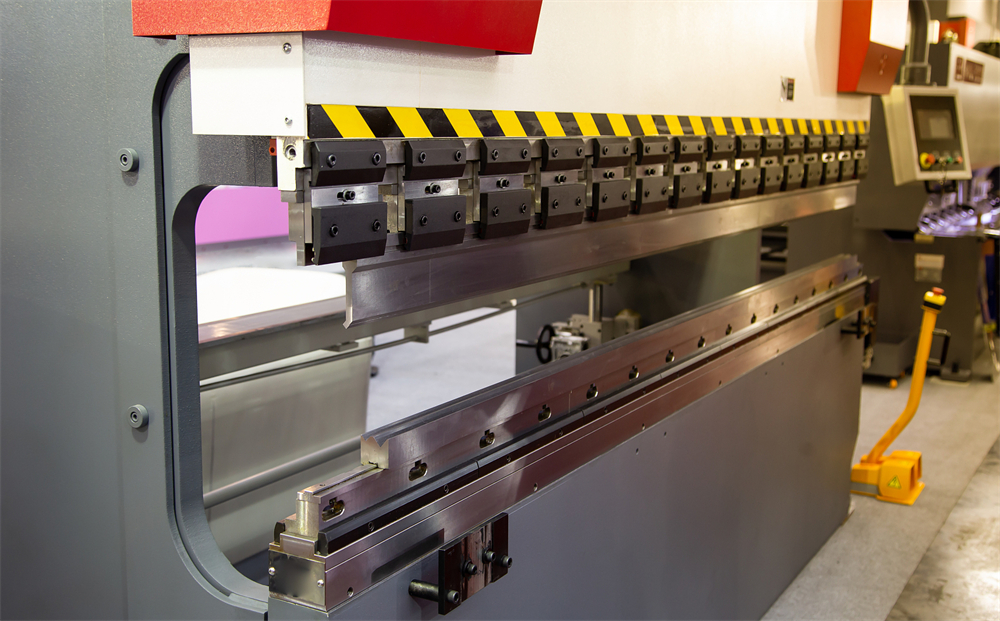
Main Cost Drivers: The Tonnage Factor
Tonnage is the measure of the pressing force a machine can exert. It is the primary determinant of the machine’s frame thickness and hydraulic cylinder size. In the context of Press Brake Buying : Price Changes Tonnage Length, tonnage is often the first variable a salesperson will ask about. But why does more tonnage cost more?
Firstly, the frame must be able to withstand the force without permanent deformation. A 40-ton machine uses relatively thin side plates, whereas a 400-ton machine requires massive, heat-treated steel plates that are several inches thick. The cost of the raw steel and the machining time to ensure these frames are perfectly parallel adds significantly to the base price. Furthermore, higher tonnage requires larger hydraulic pumps, motors, and cylinders, all of which carry a premium price tag.
It is also important to consider the “V-opening” of your dies. Bending a 6mm plate over a small V-opening requires significantly more tonnage than bending it over a large V-opening. If your shop consistently works with thick materials but tries to save money by buying a lower-tonnage machine, you will be forced to use larger V-openings, which increases the minimum flange length you can produce. Therefore, buying the correct tonnage is not just about price; it is about the geometric capability of your shop.
The Impact of Bed Length on Pricing
While tonnage handles the thickness, the length of the press brake handles the size of the part. Length is a major cost driver because of a phenomenon called “deflection.” When you apply 100 tons of pressure in the middle of a 4-meter beam, that beam wants to bow upward. To counter this, the machine must be built with a much deeper and heavier bed and ram to maintain rigidity.
As the length increases, the cost of the backgauge system also rises. A 2-meter backgauge is relatively simple to keep stable. A 6-meter backgauge requires precision-ground ball screws and heavy-duty linear guides to ensure that the gauge fingers remain accurate across the entire width of the machine. Additionally, shipping a machine that is 4 meters or longer often requires special flat-rack containers or oversized trucking permits, which can add thousands of dollars to the final delivered price.
For many buyers, the choice between a 3-meter and a 4-meter machine is a critical decision point. A 3-meter machine usually fits in a standard container, making it much more affordable to ship internationally. Once you move to 4 meters, the logistics and the structural reinforcement required for the longer span cause a noticeable jump in the price-to-length ratio.
Configuration Impact: Beyond the Iron
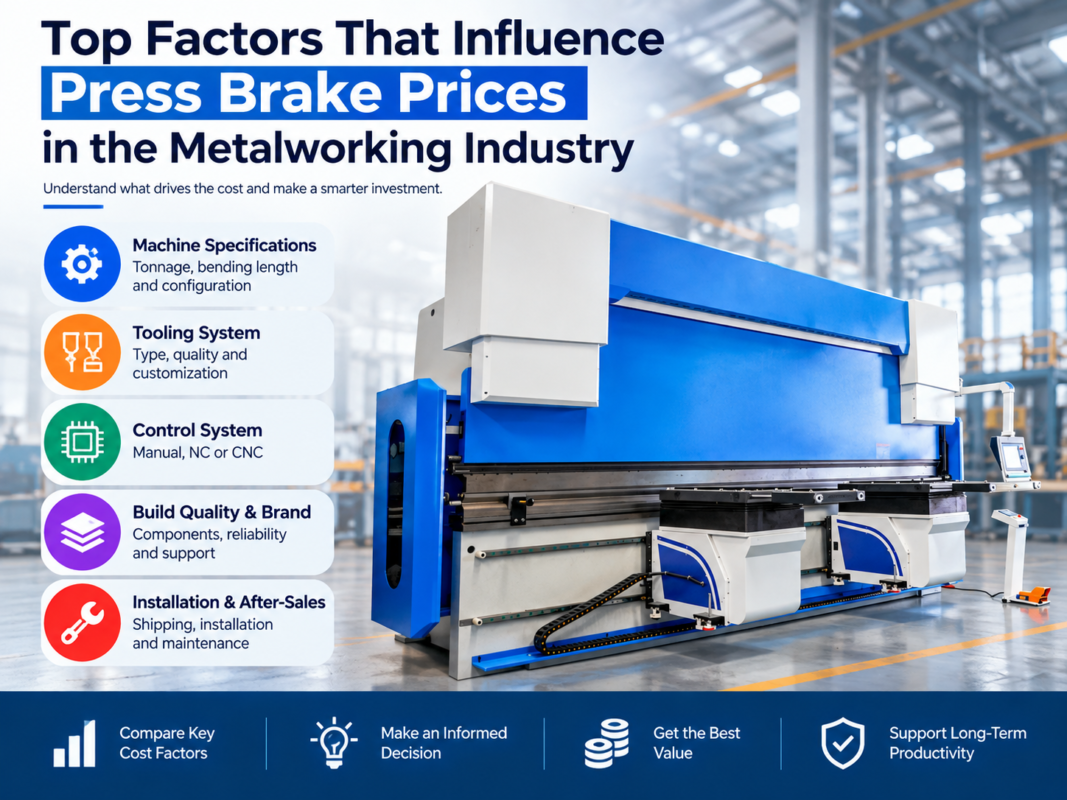
While the physical size of the machine sets the floor for the price, the configuration and optional features set the ceiling. When discussing Press Brake Buying : Price Changes Tonnage Length, one must account for the “brains” and “limbs” of the machine.
- Control Systems: A basic NC controller might cost a few hundred dollars, while a high-end Delem DA-69T with 3D visualization and offline software can add $10,000 to $20,000 to the price. The choice depends on the complexity of your parts and the skill level of your operators.
- Backgauge Axes: A standard machine comes with 2 axes (X and R). Adding Z1, Z2 (lateral movement), or X-Prime (for tapered bends) increases the mechanical complexity and the number of servo motors required, driving up the cost.
- Crowning Systems: Essential for long machines, crowning compensates for bed deflection. Manual crowning is cheaper but requires the operator to adjust it for every bend. Automatic hydraulic or motorized crowning, controlled by the CNC, ensures consistent angles across the entire length but adds to the initial investment.
- Clamping Systems: Standard manual clamps are included, but hydraulic or pneumatic quick-change clamping systems can significantly reduce setup times, though they represent a significant add-on cost.
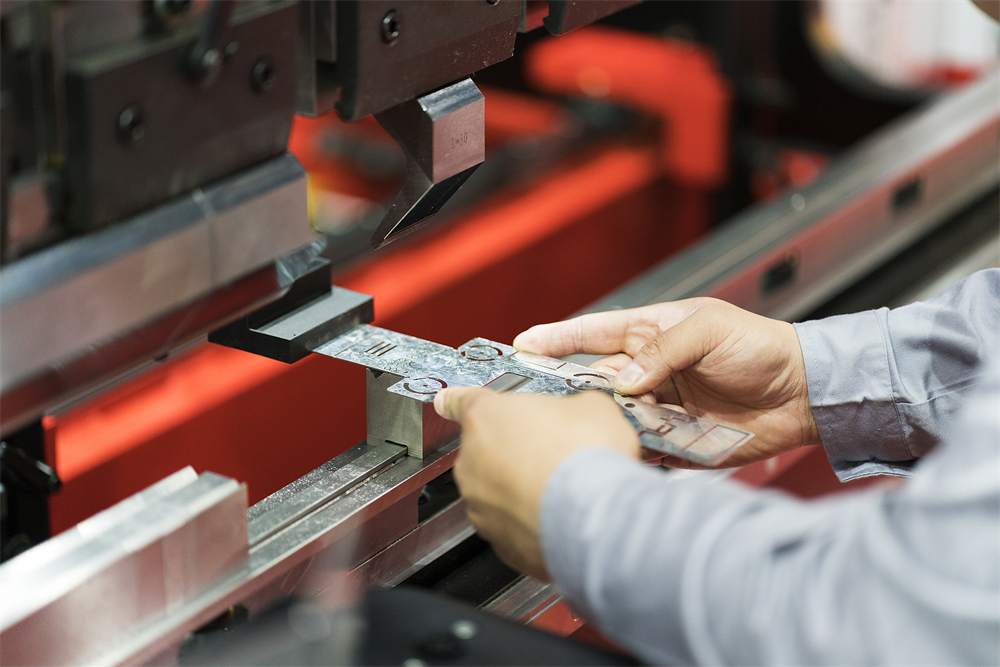
Hidden Costs of Purchasing a Press Brake
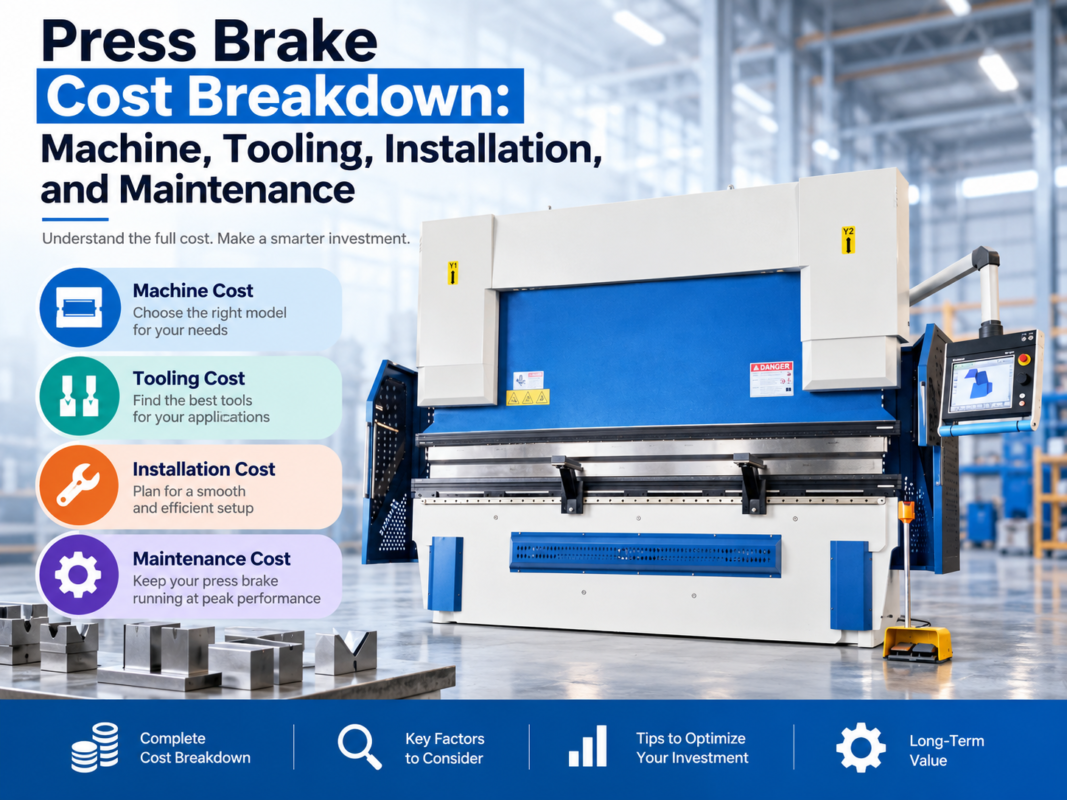
The sticker price of the machine is rarely the total cost of ownership. Buyers must budget for several “hidden” expenses that can impact the overall ROI. First among these is tooling. A press brake is useless without high-quality punches and dies. Depending on the variety of materials you work with, a starter set of precision-ground tooling can cost anywhere from $3,000 to $15,000.
Installation and Training are also critical. While HARSLE provides comprehensive manuals and remote support, having a technician on-site to level the machine, calibrate the axes, and train your staff is an investment in the machine’s longevity. Furthermore, consider the electrical infrastructure. A large hydraulic press brake requires a significant amount of power. You may need to upgrade your shop’s electrical panel or install specialized breakers to handle the motor’s start-up current.
Finally, don’t forget maintenance and consumables. Hydraulic oil (which can be hundreds of liters for large machines), filter replacements, and the cost of electricity are ongoing expenses. High-efficiency servo-hybrid models have a higher upfront cost but can reduce electricity bills by up to 50%, illustrating how the initial price is only one part of the financial equation.
ROI Calculation: Justifying the Price
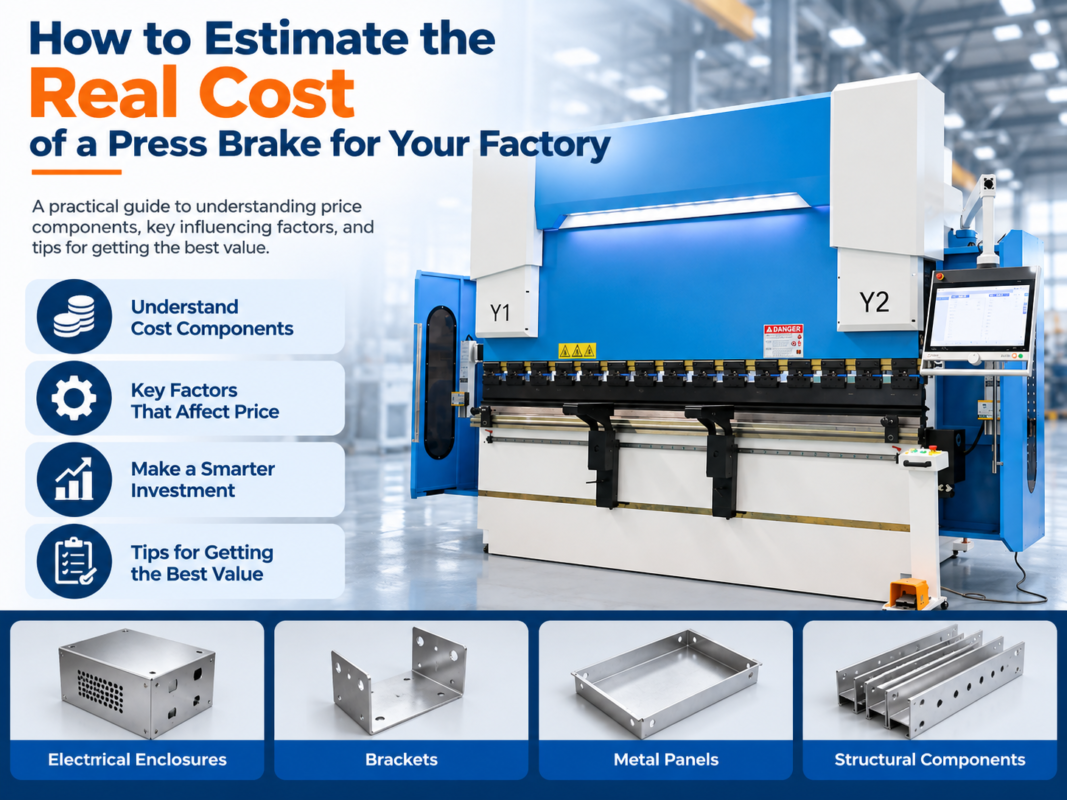
To determine if the Press Brake Buying : Price Changes Tonnage Length trade-off is worth it, you must calculate the Return on Investment (ROI). A more expensive CNC machine with automatic crowning and a 4-axis backgauge might cost $15,000 more than a basic model, but if it reduces setup time by 30 minutes per shift and eliminates scrap caused by manual errors, it can pay for itself in less than a year.
Consider the following table for a hypothetical ROI comparison:
| Feature | Basic NC Model | Advanced CNC Model | Impact on ROI |
|---|---|---|---|
| Setup Time | 20-30 mins | 2-5 mins | Higher throughput |
| Accuracy | +/- 0.5mm | +/- 0.01mm | Less scrap/rework |
| Operator Skill | High skill required | Lower skill (CNC guided) | Easier hiring |
| Energy Use | Constant pump run | Variable speed/Servo | Lower utility costs |
By analyzing your daily production volume and the complexity of your bends, you can see that the “cheaper” machine often ends up being more expensive in the long run due to labor costs and material waste.
Buying Advice: How to Choose the Right HARSLE Machine
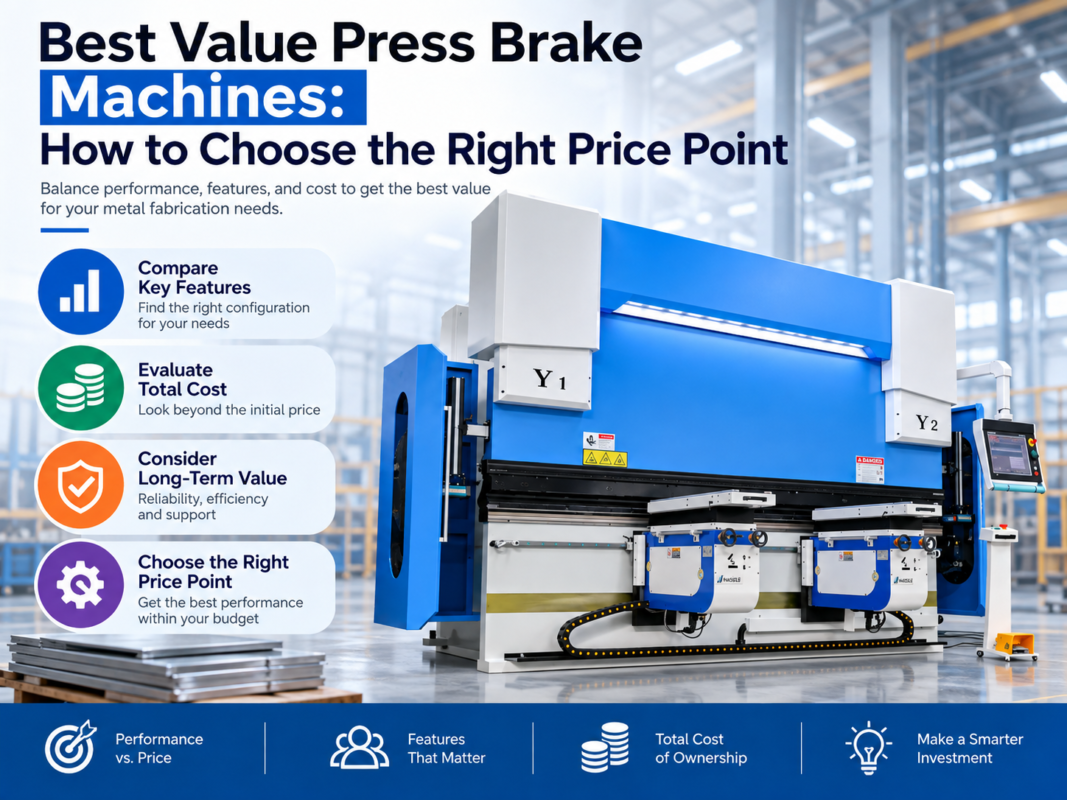
When you are ready to buy, follow these steps to ensure you get the best value for your investment:
- Define Your Maximums: What is the thickest material you will bend, and what is the longest part? Always add a 20% safety margin to your tonnage calculations to avoid running the machine at its absolute limit, which can cause premature wear.
- Evaluate Your Part Complexity: If you are making simple brackets, a 2-axis backgauge is plenty. If you are making complex enclosures with multiple flange lengths, a 4-axis or 6-axis backgauge is essential.
- Consider the Future: It is much cheaper to buy a machine with an extra meter of length now than to replace the entire machine in two years when a new contract requires longer parts.
- Check the Components: Ensure the machine uses reputable brands for its critical components (e.g., Schneider electronics, Rexroth hydraulics, Delem controllers). This ensures that spare parts will be available for years to come.
HARSLE offers a wide range of machines tailored to different budget levels. From the cost-effective Easy-Bend series to the high-performance Genius series, our engineers can help you navigate the complexities of tonnage and length to find the perfect fit for your workshop.
Frequently Asked Questions (FAQ)
How do I calculate the tonnage I need?
Tonnage depends on material thickness, material type (stainless steel requires about 50% more force than mild steel), and the V-opening of the die. A general rule for mild steel is: Tonnage = (650 x thickness^2 x length) / V-opening. Most manufacturers provide a tonnage chart to simplify this calculation.
Why is a 4-meter machine so much more expensive than a 3-meter machine?
The jump from 3 to 4 meters often crosses a threshold in structural engineering and logistics. The frame must be significantly deeper to prevent deflection, and the machine often requires specialized shipping methods, both of which drive up the price.
Is CNC crowning worth the extra cost?
If you are bending parts longer than 2 meters and require high precision, yes. Without crowning, the center of your bend will have a wider angle than the ends. CNC crowning automates the correction, saving time and ensuring part consistency.
Can I upgrade the tonnage of my machine later?
No. The tonnage is limited by the physical strength of the steel frame and the capacity of the hydraulic cylinders. It is impossible to “upgrade” tonnage without replacing the entire machine. Always buy slightly more capacity than you currently need.
What is the difference between NC and CNC press brakes?
NC (Numerical Control) machines usually control only the depth of the ram and the backgauge position with limited memory. CNC (Computer Numerical Control) machines offer full synchronization of the cylinders, multi-axis backgauges, and graphical interfaces that can calculate bend sequences and handle complex 3D files.