Sheet Metal Press Brake Price Guide: What You Should Expect to Pay


Introduction to Press Brake Investment
Investing in a press brake is one of the most significant decisions a metal fabrication shop can make. Whether you are a small startup or a large-scale industrial facility, understanding the Sheet Metal Press Brake Price : You Should Expect Pay is crucial for budgeting and long-term financial planning. A press brake is not just a piece of machinery; it is the heart of the bending process, determining the precision, speed, and versatility of your production line.
HARSLE, a leader in the metalworking machinery industry, understands that price is often the primary concern for buyers. However, the initial sticker price is only one part of the equation. To make an informed decision, you must look at the technology, the components, and the long-term value the machine brings to your workshop. In this guide, we will break down the various price tiers, the factors that drive costs upward, and how to calculate the return on investment for your next purchase.
Price Range Overview: From Entry-Level to High-End
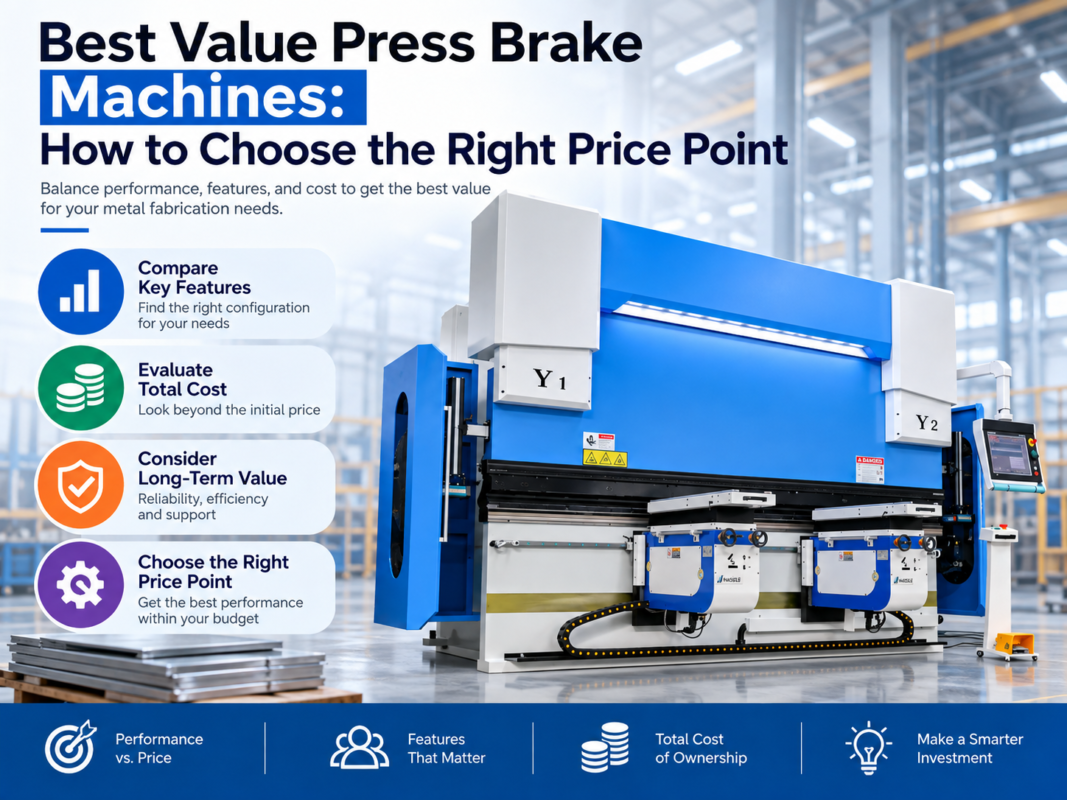
The market for press brakes is vast, with prices ranging from as low as $8,000 for basic manual or NC models to well over $250,000 for high-precision, large-tonnage CNC systems. Understanding where your needs fall within this spectrum is the first step in your purchasing journey.
Entry-Level NC Press Brakes ($8,000 – $20,000)
Entry-level machines are typically NC (Numerical Control) torsion bar press brakes. These machines use a mechanical link to ensure the parallelism of the ram. They are ideal for simple bending tasks where high precision across long lengths is not the primary concern. Most NC machines come with basic controllers like the E21, which manages the backgauge (X-axis) and the stroke (Y-axis). While affordable, they require more manual setup and are less efficient for complex, multi-bend parts.
Mid-Range CNC Press Brakes ($25,000 – $65,000)
This is the most popular category for professional fabrication shops. These are typically electro-hydraulic synchronous CNC press brakes. Unlike NC models, these use proportional valves and linear encoders to monitor and adjust the position of the ram in real-time. Prices in this range usually include a 3-axis or 4-axis configuration (Y1, Y2, X, R) and a mid-level controller like the Delem DA-53T or Cybelec CybTouch series. These machines offer significantly higher precision and faster setup times.
High-End and Large Tonnage Systems ($80,000 – $250,000+)
When you move into high-end territory, you are paying for advanced automation, extreme tonnage (300T to 1000T+), and specialized features. These machines often feature 6 to 8 axes, high-speed hydraulics, and premium controllers like the Delem DA-66T or DA-69T, which offer 3D visualization and offline programming. This category also includes electric press brakes, which, while having a higher upfront cost, offer incredible speed and energy efficiency for thin-gauge high-volume work.
Main Cost Drivers: What Influences the Price?
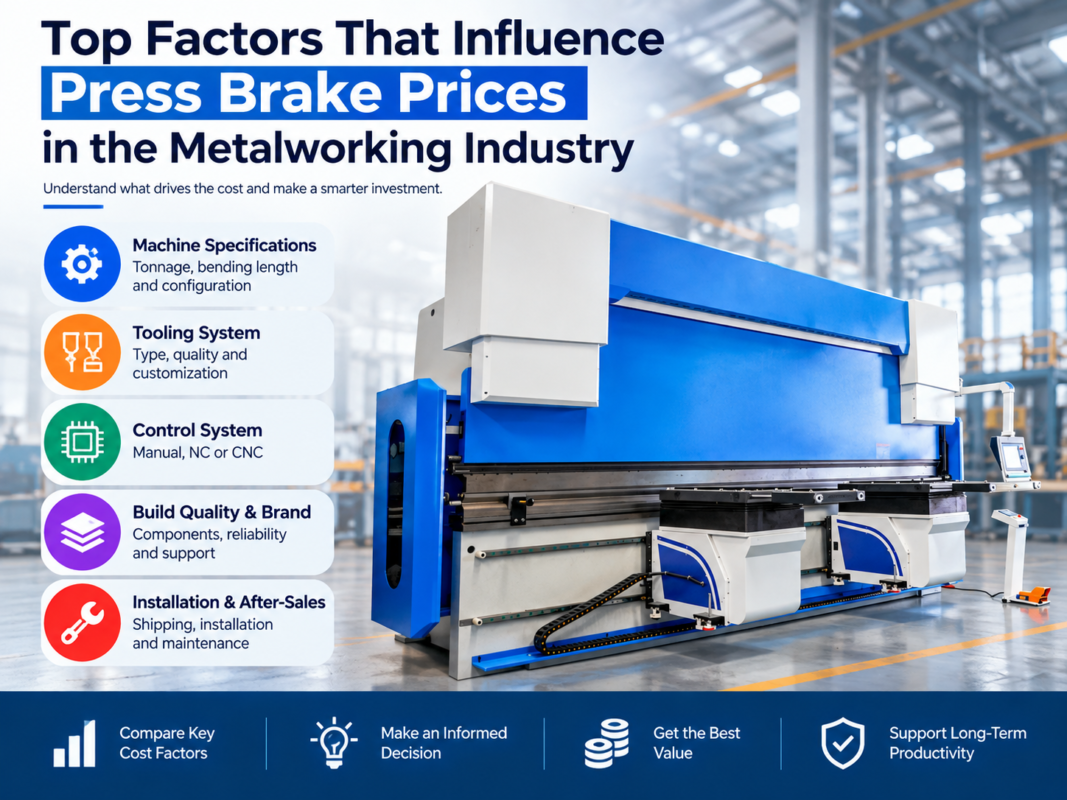
When evaluating a Sheet Metal Press Brake Price : You Should Expect Pay, several technical factors play a dominant role in the final quote. Understanding these will help you decide where to invest and where to save.
Tonnage and Bending Length
The most obvious cost drivers are the machine’s capacity. Tonnage refers to the amount of pressure the machine can apply. A 40-ton machine is significantly cheaper than a 400-ton machine because the latter requires a much heavier frame, larger hydraulic cylinders, and more robust components. Similarly, the bending length (e.g., 2500mm vs. 6000mm) dictates the size of the bed and the ram, directly impacting material costs and shipping logistics.
The Control System (The Brain)
The CNC controller is a major price variable. A basic NC controller might cost a few hundred dollars, whereas a high-end Delem DA-69T with 3D graphics and touchscreen capabilities can add $10,000 to $15,000 to the machine’s price. The choice of controller affects not just the price, but the ease of use, the speed of programming, and the ability to handle complex geometries.
Hydraulic and Electrical Components
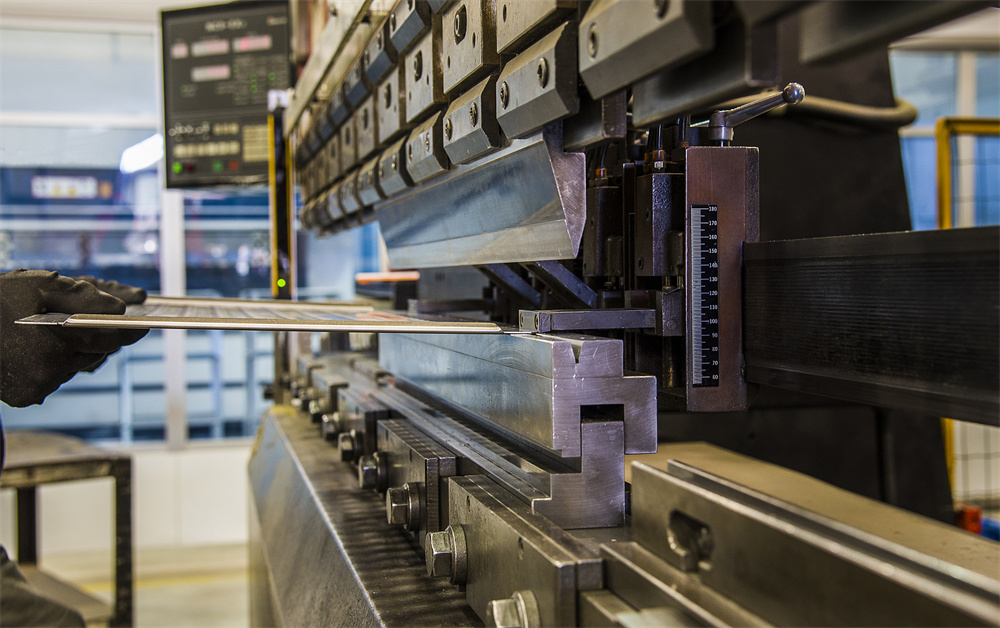
Quality matters. Machines equipped with Bosch-Rexroth or Hoerbiger hydraulics and Schneider or Siemens electrical components command a higher price because they offer better reliability and easier access to spare parts globally. Cheap, no-name components might lower the initial price but often lead to higher maintenance costs and downtime in the future.
Configuration Impact: Axes, Crowning, and Safety
Beyond the basic specs, the configuration of the machine can swing the price by thousands of dollars. Customizing a press brake to your specific workflow is essential for efficiency.
- Backgauge Axes: A standard CNC machine usually has 3 or 4 axes. Adding more axes (Z1, Z2 for lateral movement, or Delta-X for staggered bending) increases the price but allows for much more complex part production without manual repositioning.
- Crowning Systems: To prevent the “canoe effect” (where the middle of a long bend is not as deep as the ends), a crowning system is necessary. Manual crowning is cheaper, but motorized CNC crowning, which adjusts automatically based on the material and thickness, is a highly recommended upgrade for precision work.
- Safety Features: Safety is paramount. Basic light curtains are standard, but advanced laser protection systems (like DSP or Fiessler) that allow the ram to move at high speeds closer to the workpiece can add $3,000 to $6,000 to the cost.
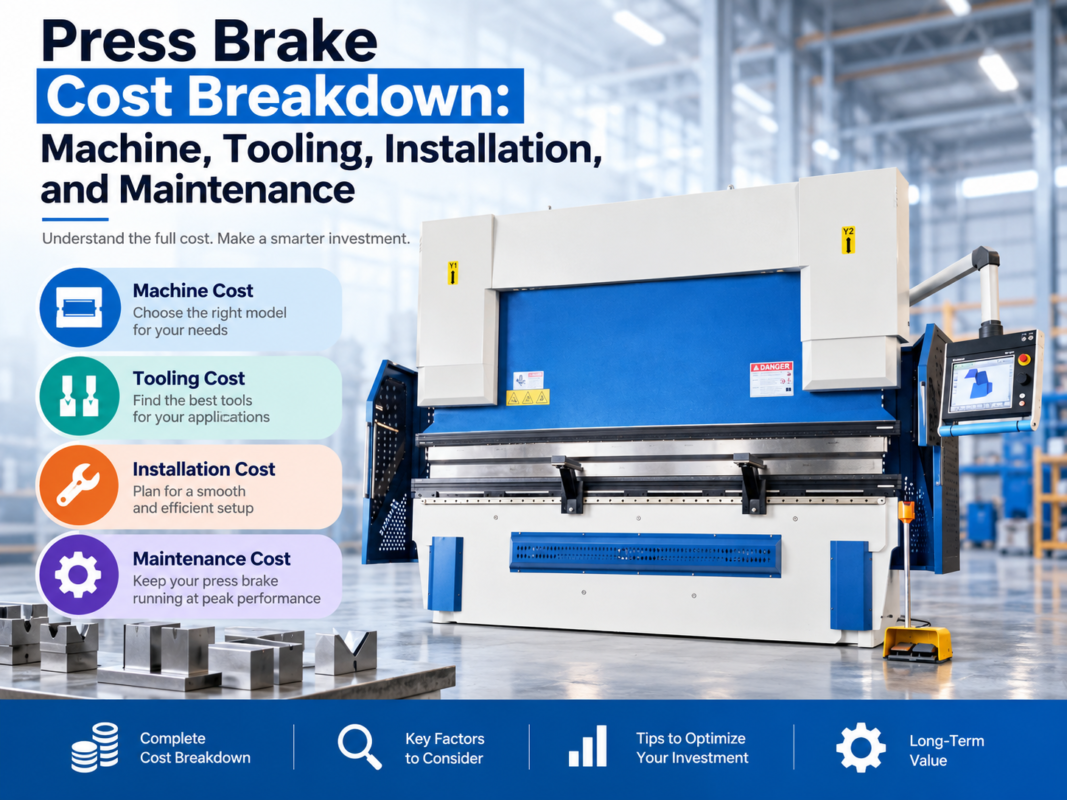
Hidden Costs: Beyond the Machine Price
When calculating the Sheet Metal Press Brake Price : You Should Expect Pay, many buyers forget to include the “hidden” costs associated with bringing a new machine into the shop.
Shipping and Logistics
Press brakes are heavy. Shipping a 10-ton machine across the ocean or even across the country requires specialized freight and rigging. You must also consider the cost of a crane or heavy-duty forklift to move the machine from the truck to its final position on your floor.
Installation and Training
While some experienced shops can set up a machine themselves, most benefit from professional installation and training. Having a technician from HARSLE or a local distributor ensure the machine is leveled, calibrated, and that your operators know how to use the CNC software is an investment that prevents costly mistakes early on.
Tooling (Punches and Dies)
A press brake is useless without tooling. While most machines come with a standard set of “starter” tools, high-precision or specialized bending requires specific punches and dies. Depending on your needs, a full set of precision-ground, hardened tooling can cost anywhere from $2,000 to $10,000.
Foundation and Power
Large tonnage machines may require a reinforced concrete foundation to prevent the floor from cracking or the machine from shifting. Additionally, you must ensure your facility has the electrical capacity to run the machine’s motor, which may require upgrading your shop’s power supply.
ROI Calculation: Justifying the Investment
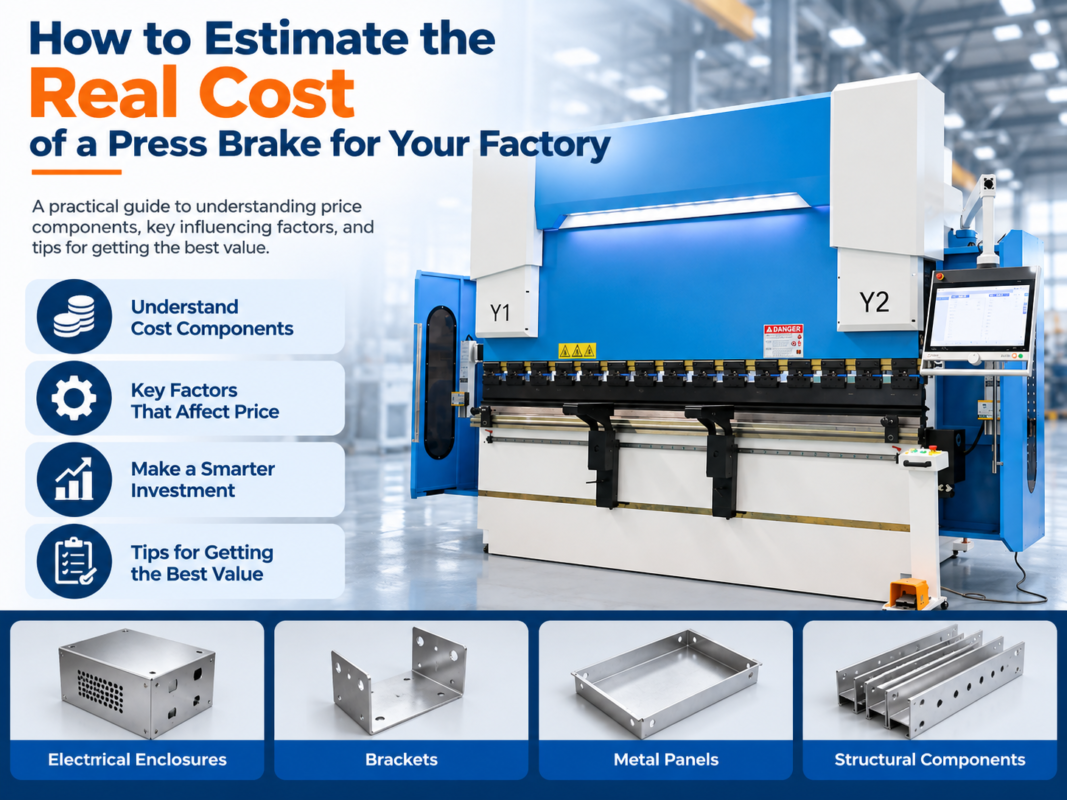
A higher price tag is often justified by a faster Return on Investment (ROI). If a $50,000 CNC machine allows you to produce parts 30% faster than a $20,000 NC machine, the labor savings alone could pay for the difference within a year.
Consider the following factors in your ROI calculation:
- Reduced Scrap: CNC precision means fewer wasted parts during setup.
- Labor Efficiency: Faster setup times and automated backgauges allow one operator to do the work of two.
- Capability Expansion: A more advanced machine allows you to take on complex jobs that your competitors cannot, allowing for higher profit margins.
- Energy Savings: Modern hydraulic systems and electric press brakes use significantly less power, reducing monthly utility bills.
Buying Advice: How to Choose the Right Machine
Choosing the right press brake involves balancing your current needs with your future growth. Here are some tips from the experts at HARSLE:
Don’t Under-Spec: It is tempting to buy a machine that just barely meets your current requirements to save money. However, if you anticipate needing to bend thicker material or longer parts in the next two years, it is cheaper to buy the larger machine now than to replace it later.
Focus on Support: A cheap machine with no technical support is a liability. Ensure the manufacturer or dealer has a solid reputation for after-sales service and parts availability. HARSLE prides itself on providing comprehensive support to ensure our customers’ machines stay operational for decades.
Test Before You Buy: If possible, send samples of your most difficult parts to the manufacturer for test bends. This ensures the machine and the proposed tooling are capable of meeting your tolerances.
Frequently Asked Questions (FAQ)
1. Why is there such a big price difference between NC and CNC press brakes?
The difference lies in the technology. NC machines use mechanical stops and basic electronics, whereas CNC machines use sophisticated hydraulics, linear encoders, and powerful computers to achieve high precision and automation. The increased productivity of CNC usually justifies the higher price.
2. How much should I budget for tooling?
For a standard 100-ton machine, a basic set of multi-V dies and a standard punch might cost around $1,500. However, for a versatile shop, you should budget between $3,000 and $5,000 for a variety of tools to handle different thicknesses and bend radii.
3. Are electric press brakes worth the extra cost?
Electric press brakes are generally 20-40% more expensive than hydraulic ones. However, they are much faster, more accurate, and use no oil. If you are doing high-volume, thin-gauge bending, the speed and energy savings often provide a very fast ROI.
4. Can I save money by buying a used press brake?
Used machines can be a bargain, but they come with risks. Older machines may have worn-out hydraulics, outdated controllers that are hard to find parts for, or hidden structural damage. Always inspect a used machine under power before purchasing, or buy from a reputable refurbisher.
5. What is the typical lead time for a new press brake?
Lead times vary based on the machine’s complexity. Standard models might be in stock or take 30-45 days, while large, custom-built machines can take 3 to 6 months for manufacturing and shipping.
6. Does HARSLE offer financing for press brakes?
Many distributors and manufacturers, including HARSLE partners, offer financing or leasing options. This allows shops to acquire the technology they need while preserving cash flow for other operational expenses.
Conclusion
Understanding the Sheet Metal Press Brake Price : You Should Expect Pay requires a deep dive into your specific production needs. While the initial investment can be significant, the right machine will serve as a cornerstone of your business’s success, providing precision, efficiency, and the ability to tackle a wide range of fabrication challenges. By considering the tonnage, control systems, and hidden costs, and by choosing a reliable partner like HARSLE, you can ensure that your investment delivers value for many years to come.