Press Brake Price Guide by Capacity: 40 Ton to 400 Ton Explained


Introduction to Press Brake Pricing and Capacity
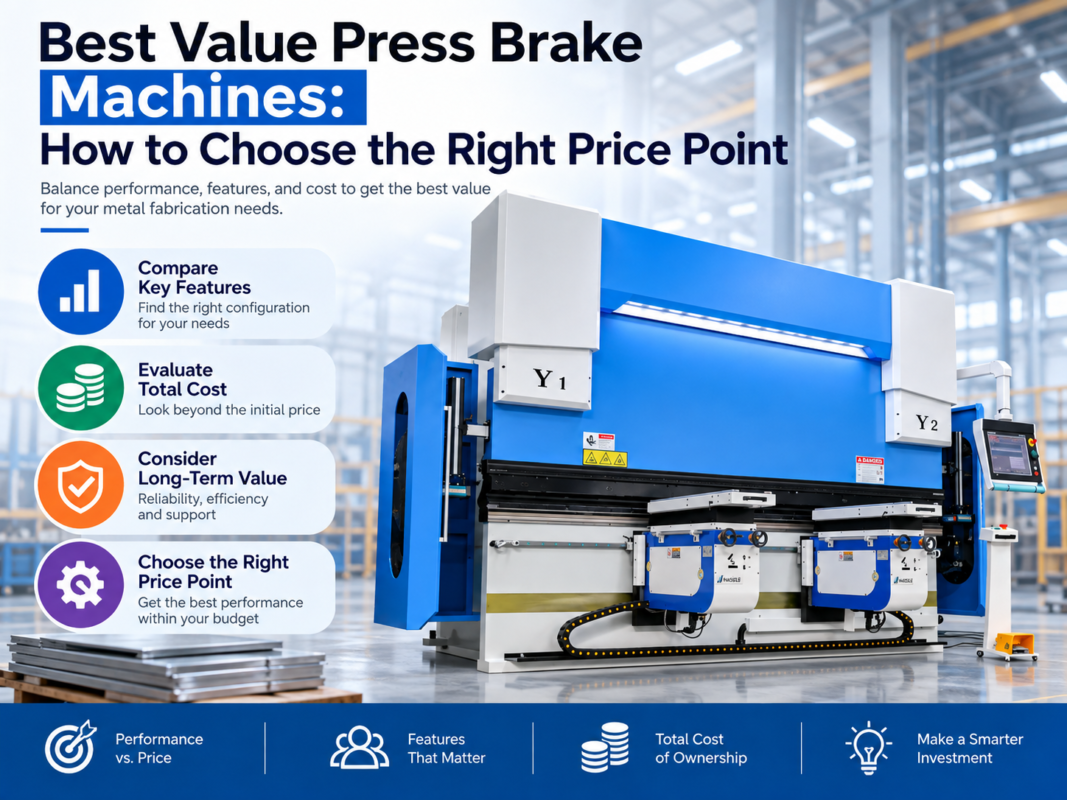
In the world of metal fabrication, the press brake is an indispensable tool. Whether you are a small job shop or a large-scale industrial manufacturer, understanding the financial commitment required for this machinery is crucial for long-term success. The most significant factor influencing the cost of a press brake is its capacity, measured in tonnage. This guide, titled Press Brake Price By Capacity: 40 Ton 400 Ton Explained, aims to demystify the pricing structures associated with different machine sizes, helping you make an informed investment decision.
Capacity refers to the maximum pressure the machine can exert on the workpiece. A 40-ton machine is designed for precision and light-duty work, while a 400-ton behemoth is built for heavy structural components. However, price is not determined by tonnage alone; factors such as bending length, control systems, and automation features play a massive role. At HARSLE, we believe that transparency in pricing helps our clients align their production needs with their budgetary constraints.
As you navigate this guide, you will learn why a 100-ton machine might cost significantly more than a 40-ton model, and why the jump to 400 tons represents a major shift in both capability and capital expenditure. We will also explore the nuances of CNC versus NC controls and how these technologies impact the final invoice. By the end of this article, you will have a clear roadmap for selecting a press brake that offers the best value for your specific application.
Price Range Overview: From 40 Ton to 400 Ton
The price of a press brake scales with its capacity, but the relationship is not always linear. Below is a breakdown of the typical price ranges you can expect in the current market for various tonnages. Note that these are estimates for new, high-quality industrial machines like those offered by HARSLE.
40 Ton to 60 Ton: The Precision Entry Level
Machines in the 40-60 ton range are typically used for thin sheet metal, electronics enclosures, and small brackets. These machines are prized for their speed and accuracy. A basic NC (Torsion Bar) 40-ton press brake might start around $12,000 to $18,000. However, a high-precision CNC electro-hydraulic model with advanced controllers can easily reach $25,000 to $35,000. These are ideal for shops focusing on high-volume, small-part production where cycle time is critical.
100 Ton to 160 Ton: The Industry Workhorse
The 100-ton press brake is perhaps the most common size in the industry. It offers the versatility to bend 3mm to 6mm mild steel over reasonable lengths (typically 2500mm to 3200mm). For a standard 100-ton CNC press brake, prices generally range from $28,000 to $55,000. The wide price gap is due to the choice of controller (e.g., Delem DA-53T vs. DA-66T) and the number of backgauge axes. This capacity is the “sweet spot” for many general fabrication shops.
200 Ton to 250 Ton: Heavy-Duty Fabrication
When you move into the 200-ton range, the machine’s frame becomes significantly heavier and more robust. These machines are designed for thicker plates (8mm to 12mm) and longer bending lengths (4000mm+). Expect to pay between $55,000 and $95,000. At this level, features like hydraulic crowning systems become essential to ensure bending accuracy across the entire length of the bed, which adds to the base cost.
300 Ton to 400 Ton: Industrial Powerhouses
Machines with 300 to 400 tons of capacity are specialized for heavy industry, such as shipbuilding, construction equipment, and large-scale infrastructure. These machines often feature massive throat depths and wide table widths. Prices for a 400-ton CNC press brake typically start at $110,000 and can exceed $250,000 depending on customization, tandem configurations, and heavy-duty material handling accessories. These are long-term capital investments designed for 24/7 operation.
Main Cost Drivers in Press Brake Acquisition
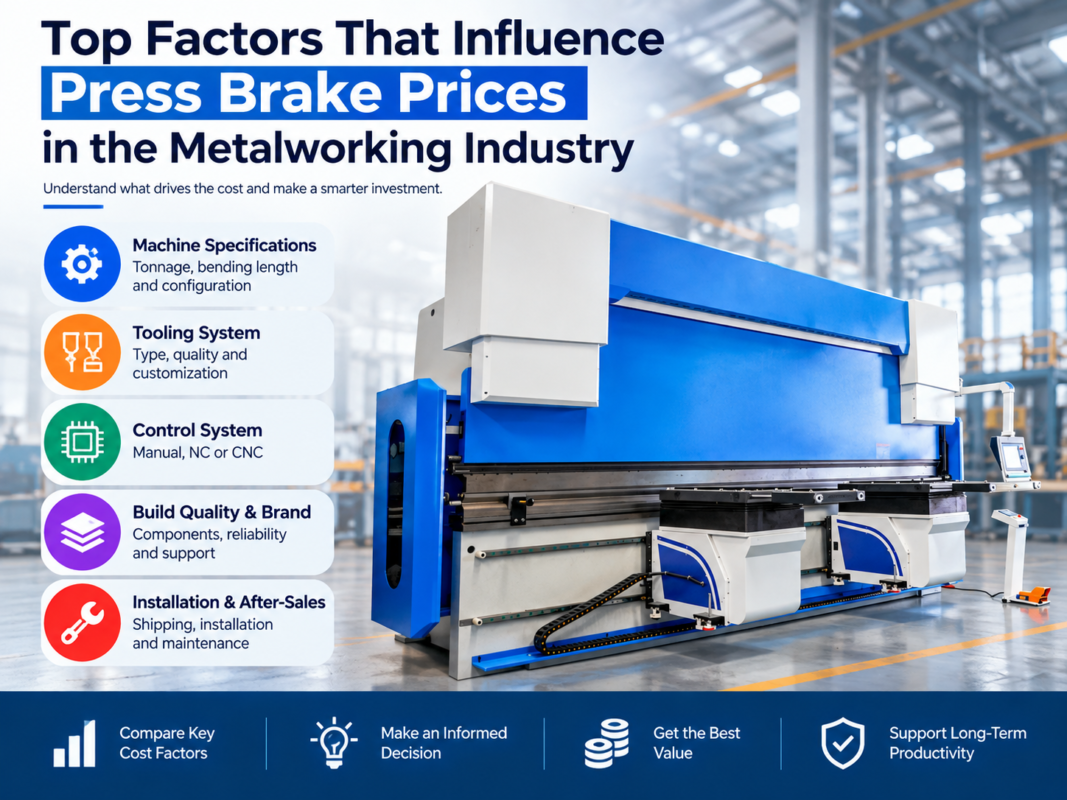
While tonnage is the primary headline, several underlying factors drive the final price of a press brake. Understanding these will help you decide where to invest and where to save.
- Bending Length: A 100-ton machine with a 2-meter bed is cheaper than a 100-ton machine with a 4-meter bed. Longer beds require more steel for the frame and more complex hydraulic synchronization.
- Control System (NC vs. CNC): NC machines use a torsion bar for synchronization and are much cheaper but require manual setup. CNC machines use electro-hydraulic valves and sophisticated software for high-precision, automated bending, significantly increasing the price.
- Hydraulic Components: The brand and quality of valves and pumps (e.g., Bosch Rexroth, Hoerbiger) impact both the price and the long-term reliability of the machine.
- Backgauge Complexity: A simple 2-axis backgauge (X, R) is standard. Adding Z1, Z2, X-Prime, or Delta-X axes for complex part geometries can add thousands of dollars to the cost.
- Frame Construction: High-quality machines use annealed and stress-relieved steel frames. The thickness of the side plates and the quality of the welding contribute to the machine’s longevity and price.
Another critical driver is the “Throat Depth.” A deeper throat allows for larger flanges to be bent, but it requires a much stronger (and more expensive) frame to prevent deflection under load. When comparing quotes, always check the throat depth and the distance between housings, as these physical dimensions directly impact the machine’s utility.
Configuration Impact: Customizing for Performance
The configuration of your press brake can turn a standard machine into a high-performance production center. However, each upgrade comes with a price tag. One of the most significant configuration choices is the crowning system. In machines over 2 meters, the bed and ram naturally deflect under pressure. A mechanical or hydraulic crowning system compensates for this, ensuring a consistent angle across the entire bend. While a manual crowning system is affordable, a CNC-controlled hydraulic crowning system is preferred for high-accuracy work, adding roughly $2,000 to $5,000 to the cost.
Tooling is another area where configuration impacts price. Standard machines often come with a basic set of multi-V dies and a standard punch. However, if you require specialized gooseneck punches, acute angle dies, or heavy-duty hardened tooling for stainless steel, your initial investment will rise. High-end clamping systems, such as Wila or hydraulic quick-change clamps, can also add significant cost but greatly reduce setup times.
Safety systems are no longer optional in many regions. Laser safety guards (like DSP or LazerSafe) protect the operator by stopping the ram if an obstruction is detected. These systems are highly recommended and often required by law, adding between $3,000 and $7,000 to the machine’s price. While it increases the upfront cost, it prevents workplace accidents and potential legal liabilities.
Hidden Costs: Beyond the Sticker Price
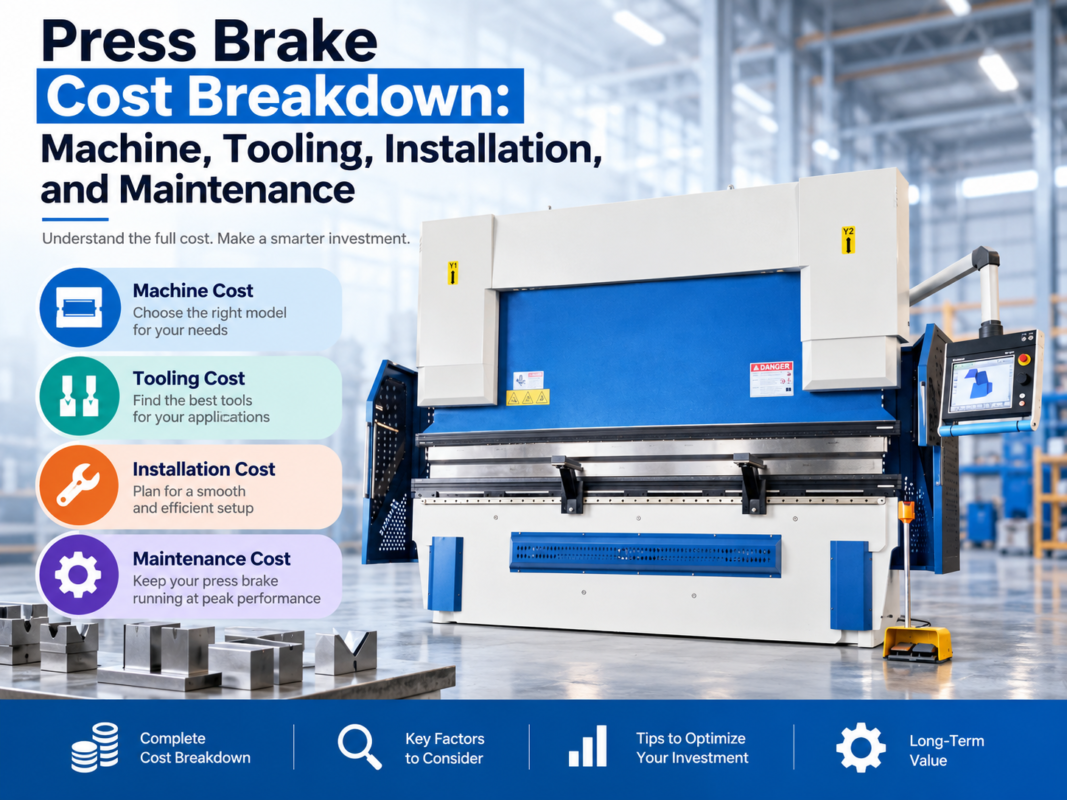
When budgeting for a press brake, many buyers overlook the “hidden” costs that occur after the purchase. These can easily add 10% to 20% to your total expenditure. First among these is shipping and logistics. A 400-ton press brake can weigh over 30,000 kg, requiring specialized heavy-lift transport and potentially a flat-rack container for international shipping. Port fees, customs duties, and local trucking can be substantial.
Installation and Commissioning are also vital. While HARSLE provides detailed manuals and remote support, many shops prefer to have a technician on-site to level the machine, fill the hydraulic oil (which can be hundreds of liters), and perform the initial calibration. This service, along with operator training, ensures that your team can use the CNC software effectively from day one. Without proper training, the sophisticated features you paid for may go unused.
Finally, consider maintenance and wear parts. Hydraulic oil needs to be filtered and changed periodically. Seals, filters, and electrical components will eventually need replacement. Additionally, your tooling is a consumable; bending abrasive materials or high-strength steel will wear down your dies over time. Budgeting for a high-quality set of tools at the start is often more cost-effective than buying cheap tools that need frequent replacement.
ROI Calculation: Justifying the Investment
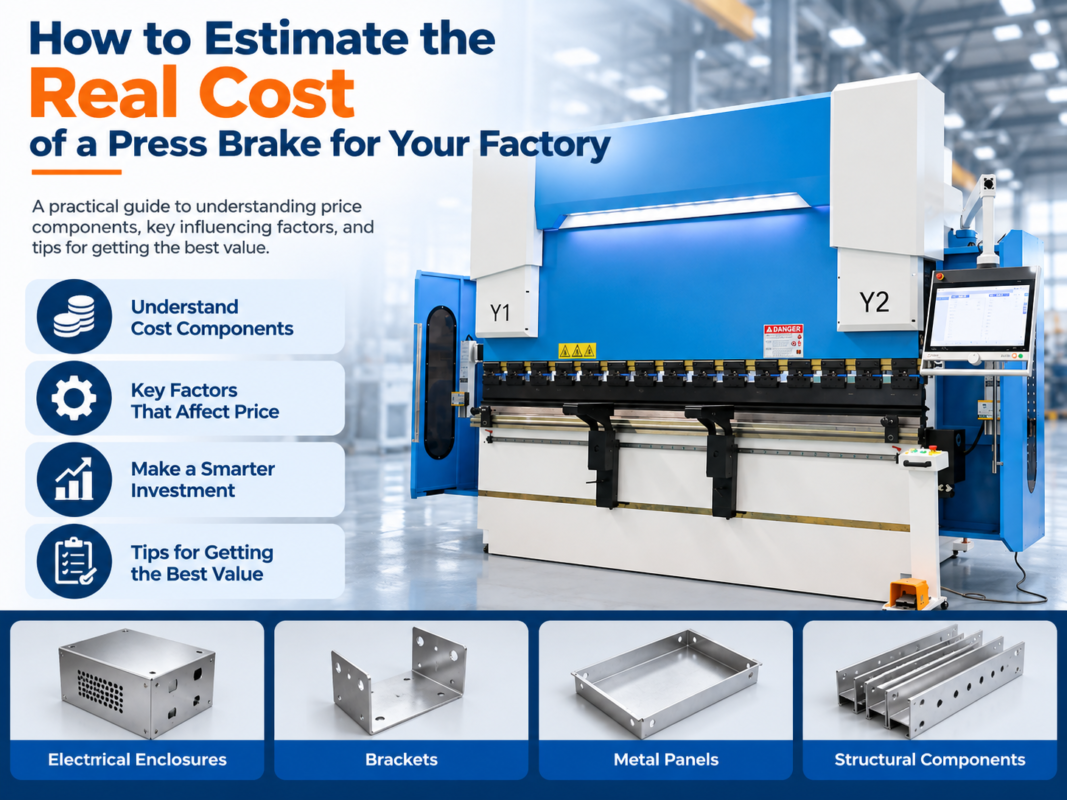
To determine if a press brake is worth the price, you must calculate the Return on Investment (ROI). A 400-ton machine is a massive investment, but if it allows you to bring heavy plate bending in-house rather than outsourcing it, the machine can pay for itself in less than two years. Consider the following factors in your ROI calculation:
- Labor Savings: A modern CNC press brake with a graphical interface allows for faster programming and setup. What took an hour on an old manual machine might take 10 minutes on a new HARSLE CNC model.
- Waste Reduction: High-precision synchronization and crowning systems mean fewer scrapped parts. In high-value materials like stainless steel or aluminum, reducing waste by even 5% can save thousands of dollars annually.
- Increased Capability: Buying a 200-ton machine instead of a 100-ton model might cost more now, but it opens the door to heavier contracts that you previously had to turn down.
- Energy Efficiency: Modern servo-hybrid press brakes use significantly less electricity than traditional hydraulic systems. If your energy costs are high, the premium for a hybrid system is often recovered through lower utility bills.
By analyzing your current outsourcing costs and projected production volumes, you can determine the “payback period.” For most industrial shops, a well-chosen press brake should provide a payback period of 18 to 36 months, after which it becomes a pure profit generator for the next 15-20 years.
Buying Advice: Choosing the Right Tonnage
Selecting the right tonnage is a balance between your current needs and your future growth. A common mistake is buying a machine that is exactly at the limit of your thickest material. We recommend a “20% Safety Margin.” If your calculations suggest you need 100 tons to bend your thickest part, consider a 120-ton or 130-ton machine. This prevents the machine from constantly running at its maximum pressure, extending the life of the hydraulic seals and the frame.
Consider the V-opening of your dies. A wider V-opening reduces the tonnage required to bend a specific thickness but increases the internal radius of the bend. If your parts require tight radii, you will need more tonnage. Always consult a tonnage chart or use the HARSLE bending calculator before finalizing your capacity requirements. Furthermore, think about the material type. Stainless steel requires roughly 50% more pressure than mild steel of the same thickness, and high-tensile materials like Hardox require even more.
Lastly, don’t overspend on features you don’t need. If you only bend simple 90-degree angles in thin sheet metal, a 4-axis CNC system might be overkill; a 2-axis NC machine could suffice. However, if you are doing complex multi-bend sequences, the time saved by a full CNC system is worth every penny. At HARSLE, we work closely with our customers to audit their part drawings and recommend the most cost-effective configuration.
Frequently Asked Questions (FAQ)
1. Why is there such a big price difference between NC and CNC press brakes?
NC (Numerical Control) machines use a mechanical torsion bar to keep the ram level, which is a simpler and cheaper technology. CNC (Computer Numerical Control) machines use independent hydraulic cylinders with electronic linear encoders and proportional valves to monitor and adjust the ram position thousands of times per second. This provides much higher accuracy and allows for features like angled bending and automatic crowning, which justifies the higher cost.
2. Can I bend 10mm plate on a 100-ton press brake?
It depends on the length of the bend and the V-opening of the die. Over a short distance (e.g., 500mm) with a wide V-opening, it is possible. However, for a standard 2.5-meter or 3-meter bend, 100 tons is generally insufficient for 10mm mild steel. You would likely need a 160-ton or 200-ton machine for consistent results without damaging the equipment.
3. How long does a HARSLE press brake typically last?
With proper maintenance, a high-quality hydraulic press brake has a service life of 15 to 25 years. The mechanical frame is built to last even longer. The components that may need upgrading or replacement over that time include the CNC controller, hydraulic seals, and electrical relays.
4. Is it better to buy one large press brake or two smaller ones?
This depends on your workflow. If you have a high volume of small parts, two 40-ton machines will be much more productive than one 100-ton machine. However, if you occasionally need to bend long or thick parts, you need the capacity of the larger machine. Some shops opt for a “Tandem” configuration, where two machines can work independently for small parts or be synchronized to work as one large machine for long parts.
5. Does the price include tooling?
Most HARSLE press brakes come with a standard set of top punches and a multi-V bottom die. However, specialized tooling for specific radii or complex shapes is usually quoted separately. It is always best to provide your part drawings during the quoting process so we can include the necessary tooling in the package.
6. What are the electrical requirements for a 400-ton machine?
A 400-ton machine typically requires a significant power supply, often involving a 30kW to 45kW main motor. You must ensure your facility’s electrical infrastructure can handle the high amperage start-up loads associated with these large hydraulic pumps.