Press Brake Budget Guide: Hidden Costs Buyers Often Overlook


Introduction to Press Brake Budgeting
Investing in a press brake is a pivotal moment for any metal fabrication shop. Whether you are upgrading from manual folding or expanding a high-production facility, the financial commitment goes far beyond the initial purchase price listed on a quote. A comprehensive Press Brake Budget : Hidden Costs Buyers Often Overlook is essential to ensure that your investment remains profitable and doesn’t lead to unexpected cash flow strain. Many first-time buyers focus solely on the ‘sticker price,’ only to realize later that installation, tooling, and specialized training can add 20% to 40% to the total project cost.
At HARSLE, we believe in transparency. Understanding the total cost of ownership (TCO) allows fabricators to choose a machine that fits their technical needs while remaining financially sustainable. This guide will walk you through the various tiers of press brake pricing, the technical drivers of those costs, and, most importantly, the ‘hidden’ expenses that often catch buyers off guard. By the end of this article, you will have a clear roadmap for budgeting your next sheet metal bending powerhouse.
Price Range Overview: From Entry-Level to High-End
The price of a press brake varies wildly based on technology, tonnage, and country of origin. Generally, the market is divided into three main categories: NC (Numerical Control) torsion bar machines, CNC (Computer Numerical Control) synchro machines, and high-end Electric or Hybrid machines. Understanding where your needs fall within these categories is the first step in establishing a baseline budget.
- Entry-Level NC Press Brakes ($10,000 – $30,000): These are typically torsion bar machines. They are reliable for simple, repetitive bends where high precision across the entire length of the bed isn’t the primary concern. They often feature simple 2-axis control (X and Y).
- Mid-Range CNC Synchro Press Brakes ($35,000 – $85,000): This is the ‘sweet spot’ for most professional job shops. These machines use hydraulic valves and linear encoders to ensure the ram stays perfectly level. They usually come with multi-axis backgauges (4-axis to 6-axis) and sophisticated controllers like the Delem DA-53T or DA-58T.
- High-End Electric and Hybrid Press Brakes ($90,000 – $250,000+): These machines prioritize speed, energy efficiency, and extreme precision. Electric press brakes eliminate hydraulic oil, reducing maintenance and increasing cycle speeds. Hybrid systems combine the power of hydraulics with the precision of servo-electric drives.
It is important to note that tonnage and length significantly influence these ranges. A 300-ton machine will naturally command a much higher price than a 40-ton machine within the same technology tier. When budgeting, always allow for a 10% buffer to account for currency fluctuations or shipping surcharges that may arise during the procurement process.
Main Cost Drivers: What Are You Actually Paying For?
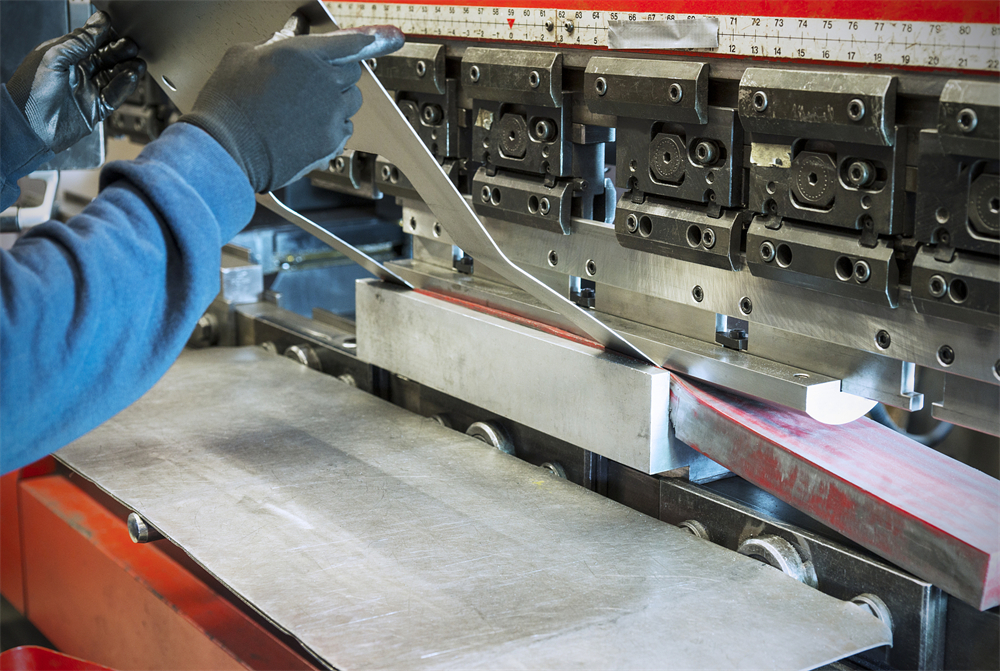
When you receive a quote for a press brake, the price is driven by several core components. Understanding these helps you decide where to invest and where to save. The primary driver is Tonnage and Bed Length. The more force a machine can exert, and the longer the material it can handle, the more steel is required for the frame. A heavy, rigid frame is essential for maintaining accuracy over years of use. If a machine is too light for its rated tonnage, it will flex excessively, leading to inconsistent bends and premature wear.
The second major driver is the Control System. The ‘brain’ of the machine can represent a significant portion of the cost. High-end controllers from brands like Delem (Netherlands), ESA (Italy), or Cybelec (Switzerland) offer 3D visualization, offline programming compatibility, and intuitive touchscreens. While a basic NC controller is cheap, a high-end CNC controller can save hundreds of hours in setup time annually, making it a wise investment for shops with high part variety.
Thirdly, the Backgauge System complexity adds to the cost. A simple X-axis (in and out) backgauge is standard. However, adding R (height), Z1/Z2 (lateral movement), and even X-prime (for tapered bends) axes increases the machine’s versatility but also its price. Each additional axis requires its own servo motor, drive, and mechanical components. For complex geometries, these axes are non-negotiable, but for simple brackets, they might be an unnecessary luxury.
Configuration Impact: Customizing for Productivity
The configuration of your press brake can drastically change the final invoice. One of the most critical configurations is the Crowning System. As a press brake bends, the center of the bed and ram tend to deflect. A crowning system (either manual or automatic hydraulic/mechanical) compensates for this deflection to ensure the bend angle is consistent from one end of the part to the other. Automatic CNC crowning is highly recommended for machines over 2.5 meters in length, as it adjusts in real-time based on the material thickness and length.
Another configuration to consider is the Clamping System. Standard manual clamps require an Allen key or lever to change tools, which can take 15-30 minutes for a full setup. Hydraulic or pneumatic quick-clamping systems allow for tool changes in seconds. If your shop performs five setup changes a day, the time saved with quick-clamping can pay for the upgrade within the first year of operation.
Safety systems also impact the budget. In many regions, Laser Safety Guards (like DSP, LazerSafe, or Fiessler) are a legal requirement. these systems protect the operator by stopping the ram if an obstruction is detected near the pinch point. While they add several thousand dollars to the cost, they are essential for workplace safety and compliance with CE or OSHA standards. Choosing a machine without adequate safety features can lead to massive liabilities and fines later on.
Hidden Costs: The Expenses Buyers Often Overlook
This is the core of our Press Brake Budget : Hidden Costs Buyers Often Overlook guide. Beyond the machine and its features, several ‘invisible’ costs can derail your financial planning if not accounted for early.
1. Logistics and Rigging
The price of the machine usually excludes shipping from the factory to your door. Furthermore, once the machine arrives on a flatbed truck, you need a way to get it off the truck and into your shop. A 100-ton press brake can weigh 6,000kg to 10,000kg. Standard forklifts often cannot handle this. You may need to hire a professional rigging company with a heavy-duty crane or specialized skates. Depending on your location and the machine’s size, rigging can cost anywhere from $2,000 to $10,000.
2. Foundation and Floor Preparation
Press brakes require a stable, level, and reinforced concrete floor. For very high-tonnage machines (over 200 tons), you may need to excavate and pour a dedicated reinforced concrete pad to prevent the machine from sinking or shifting over time. Even for smaller machines, if your floor is uneven, the machine will not produce accurate parts. Shimming and leveling take time and specialized equipment.
3. Tooling: The ‘Second’ Purchase
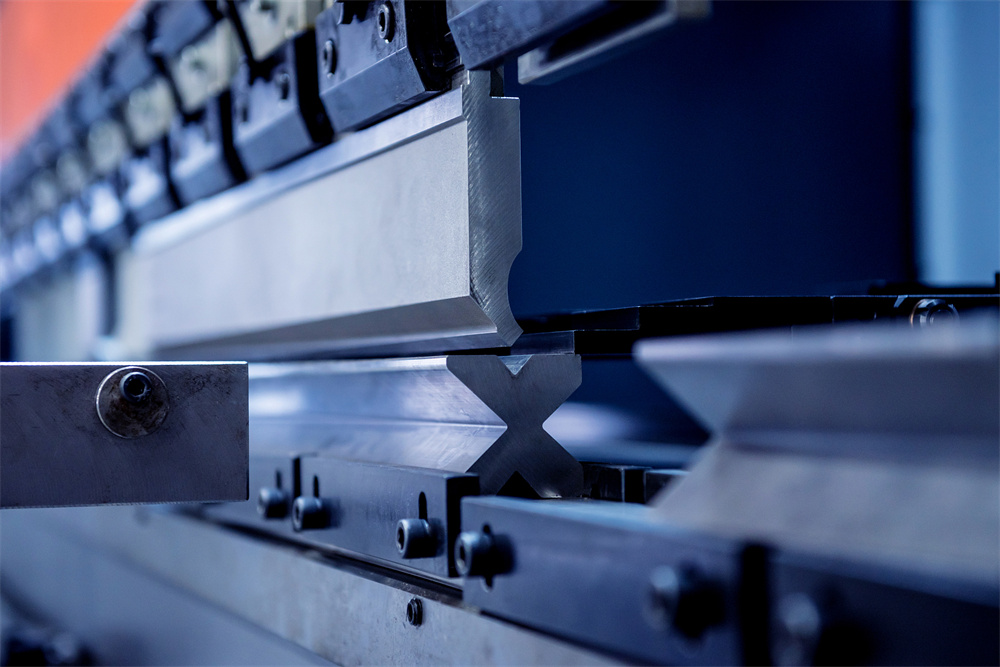
Most press brakes do not come with a full suite of tooling. You will need a variety of V-dies and punches to handle different material thicknesses and bend radii. High-quality precision-ground tooling is expensive. It is not uncommon for a new buyer to spend $5,000 to $15,000 on an initial tooling package. Using cheap, non-hardened tooling on a high-end CNC machine is a waste of the machine’s potential, as the inaccuracies in the tools will negate the precision of the ram.
4. Electrical Infrastructure
Does your shop have the correct power supply? Industrial press brakes typically run on 3-phase power (220V, 380V, or 480V). If your facility only has single-phase power, you will need a phase converter or a utility upgrade, both of which are costly. Additionally, you must factor in the cost of the electrical drop, circuit breakers, and professional installation by a licensed industrial electrician.
5. Software and Training
To get the most out of a CNC press brake, you may want Offline Programming Software. This allows your engineering team to create bend sequences and flat patterns on a computer, which are then transferred to the machine. This keeps the machine running instead of sitting idle while the operator programs at the controller. Software licenses often come with annual maintenance fees. Furthermore, don’t skimp on training. Budgeting for 2-3 days of professional on-site training ensures your operators use the machine safely and efficiently from day one.
ROI Calculation: Justifying the Investment
When looking at the total budget, including hidden costs, the number might seem daunting. However, the Return on Investment (ROI) is what truly matters. To calculate ROI, compare your current bending costs (including scrap rates, labor hours, and outsourcing fees) against the projected costs with the new machine. A modern CNC press brake can often reduce setup times by 50% and scrap rates by 90% compared to older manual methods.
Consider a scenario where a shop spends $4,000 a month outsourcing complex bends. By bringing that work in-house with a $60,000 machine (total cost including hidden fees), and accounting for $1,500 in monthly labor and power, the shop saves $2,500 per month. The machine pays for itself in just 24 months. Furthermore, the ability to offer faster lead times to customers can lead to increased sales volume, which further accelerates the ROI. Always look at the cost per part rather than just the cost of the machine.
Buying Advice: Making the Right Choice
When navigating the Press Brake Budget : Hidden Costs Buyers Often Overlook, our best advice is to partner with a reputable manufacturer like HARSLE that provides a detailed breakdown of what is included. Here are a few final tips for your buying journey:
- Future-Proof Your Purchase: It is better to buy a machine with slightly more tonnage and length than you currently need. Growing out of a machine in two years is much more expensive than buying a larger one now.
- Check the Warranty: Understand what is covered. Does the warranty include on-site labor, or just parts? Who pays for the shipping of replacement parts?
- Request a ‘Turnkey’ Quote: Ask the supplier to include shipping, installation, and training in the quote so there are fewer surprises.
- Consider the Resale Value: Well-known brands with good support networks hold their value much better on the used market.
- Inspect the Components: Ensure the machine uses globally recognized components (like Schneider electronics or Rexroth hydraulics). This makes it much easier and cheaper to find replacement parts locally in the future.
By taking a holistic view of the costs—from the initial deposit to the first gallon of hydraulic oil—you position your business for long-term success. A press brake is a workhorse that should serve your shop for 15 to 20 years. Budgeting correctly today ensures those years are productive and profitable.
Frequently Asked Questions (FAQ)
1. How much should I budget for press brake tooling?
For a standard 100-ton machine, a versatile starter set of precision-ground tooling typically costs between $5,000 and $8,000. This usually includes a multi-V die and a few different punch profiles (standard, gooseneck, and acute). If you are doing specialized work like deep boxes or heavy plate, this cost can easily double.
2. Do I really need a CNC crowning system?
If your machine is longer than 2.5 meters (8 feet) or if you are working with high-strength materials like stainless steel, a CNC crowning system is highly recommended. It ensures the bend angle is consistent across the entire length. Without it, you may spend hours ‘shimming’ dies to get a straight bend, which wastes time and material.
3. What are the typical maintenance costs for a hydraulic press brake?
Annual maintenance usually involves changing the hydraulic oil and filters, which can cost $500 to $1,000 depending on the tank size. You should also factor in the cost of periodic calibration and seal replacements every few years. Overall, hydraulic machines are very durable if the oil is kept clean.
4. Is it better to buy a used press brake to save money?
While the initial cost is lower, used machines often lack modern safety features, have worn-out hydraulic seals, or use obsolete controllers that are impossible to repair. When you factor in the potential for downtime and the lack of a warranty, a new, mid-range machine often provides a better long-term value than a ‘cheap’ used one.
5. How much space does a press brake actually require?
Beyond the physical dimensions of the machine, you must budget for ‘working space.’ You need at least 2-3 meters of clear space in front of and behind the machine to handle large sheets. You also need space for material racks and a safety perimeter. Improper floor planning can lead to bottlenecks and safety hazards.
6. Can I install the machine myself to save on costs?
Unless you have an experienced industrial maintenance team, we strongly recommend professional installation. A press brake must be perfectly leveled and the hydraulics must be bled correctly. Incorrect installation can void your warranty and lead to permanent damage to the machine’s frame or cylinders.