Improving Weld Prep and Part Consistency with a Hydraulic Press


Introduction to Modern Weld Preparation
In the competitive landscape of metal fabrication, the difference between a high-quality weld and a structural failure often begins long before the arc is struck. Weld preparation is a critical phase that dictates the integrity, aesthetics, and strength of the final assembly. However, manual preparation methods frequently lead to inconsistencies that plague downstream processes. This is where improving weld prep part consistency a hydraulic press becomes a transformative strategy for modern workshops. By utilizing controlled force and precision tooling, a hydraulic press ensures that every component meets exact dimensional tolerances, providing a perfect foundation for robotic or manual welding.
Traditional methods of preparing parts—such as manual grinding, hammering, or using outdated mechanical presses—often result in variations in edge geometry and surface flatness. These variations cause fit-up issues, leading to uneven gaps that require more filler metal and increase the risk of burn-through or lack of penetration. A hydraulic press, specifically designed for industrial applications, offers the repeatability and power necessary to eliminate these variables. Whether it is straightening thick plates, forming precise bevels, or ensuring uniform curvature in cylindrical sections, the hydraulic press stands as the backbone of a consistent production line.
HARSLE has long recognized that the efficiency of a welding cell is directly proportional to the quality of the parts it receives. By integrating a high-performance hydraulic press into the pre-welding workflow, fabricators can achieve a level of uniformity that was previously unattainable. This article explores the technical nuances of how these machines improve part consistency, the key considerations for implementation, and how to select the right equipment to optimize your weld prep operations.
Key Considerations for Improving Weld Prep and Part Consistency
When focusing on improving weld prep part consistency a hydraulic press, several factors must be evaluated to ensure the equipment aligns with production goals. The first consideration is material behavior. Different alloys, from mild steel to high-strength stainless steel, exhibit varying degrees of springback and yield strength. A hydraulic press allows for fine-tuned pressure adjustments, enabling operators to compensate for these material properties and achieve the exact shape required for a perfect weld joint.
Repeatability is the second pillar of consistency. In high-volume manufacturing, the ability to produce the 1,000th part exactly like the first is essential. Hydraulic presses equipped with CNC controls and linear encoders can maintain stroke positions within microns. This precision ensures that bevel angles and flange lengths remain constant, which is particularly vital for automated welding systems that cannot easily adapt to fluctuating gap widths. Without this consistency, the cost of rework and scrap can quickly erode profit margins.
Tooling design also plays a pivotal role. The interaction between the press ram, the workpiece, and the die determines the final geometry of the part. Custom-engineered dies for weld prep—such as those used for creating V-grooves or J-grooves—can be mounted on a hydraulic press to provide a cleaner, more accurate edge than thermal cutting or manual grinding. Furthermore, the use of multi-stage dies can combine several prep steps into a single press cycle, further reducing the margin for human error and increasing throughput.
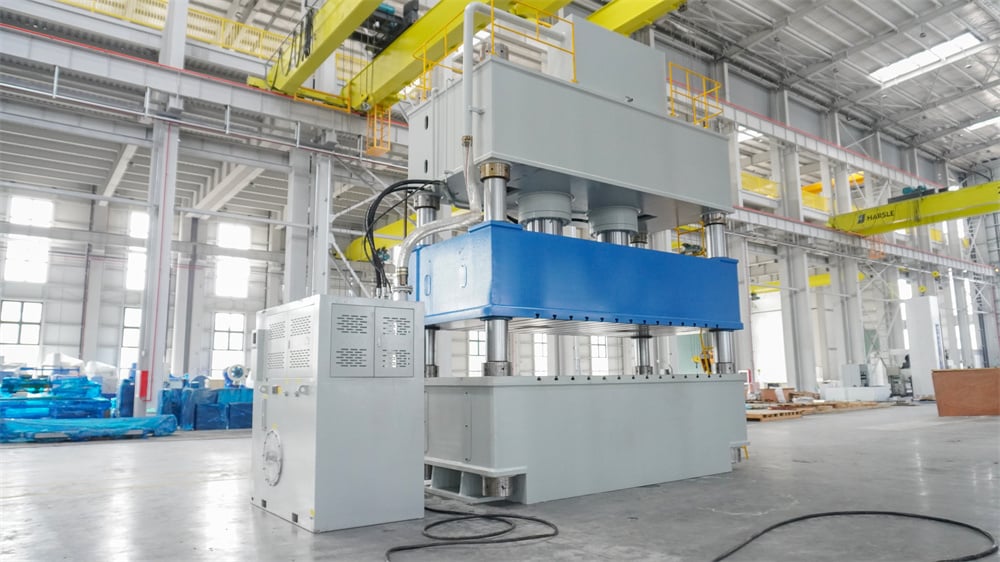
Finally, the physical footprint and structural rigidity of the press must be considered. A press that deflects under load will produce inconsistent parts, regardless of how advanced its control system is. Heavy-duty H-frame designs are preferred for weld prep tasks involving thick plates, as they offer the highest level of stability. By minimizing frame deflection, the press ensures that the force is applied uniformly across the entire surface of the workpiece, resulting in superior flatness and edge alignment.
Technical Details of Hydraulic Press Operations
The technical superiority of a hydraulic press in weld preparation lies in its ability to deliver full tonnage at any point in the stroke. Unlike mechanical presses, which only reach peak force at the bottom of the stroke, a hydraulic system provides constant pressure. This is crucial for improving weld prep part consistency a hydraulic press because it allows for controlled deformation of the metal, preventing the internal stresses that can lead to warping during the subsequent welding process.
Pressure Control and Proportional Valving
Modern hydraulic presses utilize proportional valve technology to manage oil flow and pressure with extreme accuracy. This allows the operator to program specific pressure ramps, which is essential when working with sensitive materials that might crack under sudden impact. By gradually increasing the force, the press can “settle” the material into the die, ensuring that the grain structure remains stable and the part dimensions are locked in. This level of control is a primary driver in achieving consistent weld prep across diverse batches of raw material.
Stroke and Position Monitoring
To ensure part consistency, the press must know exactly where the ram is at all times. High-end hydraulic presses incorporate linear transducers that feed real-time position data back to the controller. This allows for “bottoming” operations where the ram stops at a precise depth every time, or “pressure-dwell” operations where the press holds a specific tonnage for a set duration to minimize springback. These technical features are indispensable for creating uniform bevels and flanges that fit together seamlessly during assembly.
Hydraulic Circuit Efficiency and Cooling
Consistency is not just about the first hour of the shift; it is about maintaining performance throughout an eight-hour workday. As hydraulic oil heats up, its viscosity changes, which can affect the speed and force of the press. Advanced HARSLE machines include integrated oil cooling systems and high-efficiency manifolds to maintain a stable operating temperature. This thermal stability ensures that the machine’s response remains identical from morning to night, preventing the “drift” in part dimensions that often occurs with lesser equipment.
Frame Construction and Stress Relieving
The frame of the hydraulic press is its foundation. For weld prep applications, the frame is typically constructed from heavy-duty welded steel plates that have been stress-relieved through heat treatment or vibratory methods. This process removes internal tensions within the steel, ensuring that the frame will not warp or twist over years of heavy use. A rigid frame is the only way to guarantee that the upper and lower bolsters remain perfectly parallel, which is the secret to producing flat, weld-ready components.
Selection Advice: Choosing the Right Press for Your Shop
Selecting the appropriate machine for improving weld prep part consistency a hydraulic press requires a deep dive into your specific production requirements. The first step is calculating the required tonnage. This is determined by the material thickness, the length of the bend or prep area, and the tensile strength of the metal. It is always advisable to select a press with a capacity 20-30% higher than your maximum calculated need to avoid running the machine at its absolute limit, which extends the lifespan of the hydraulic components.
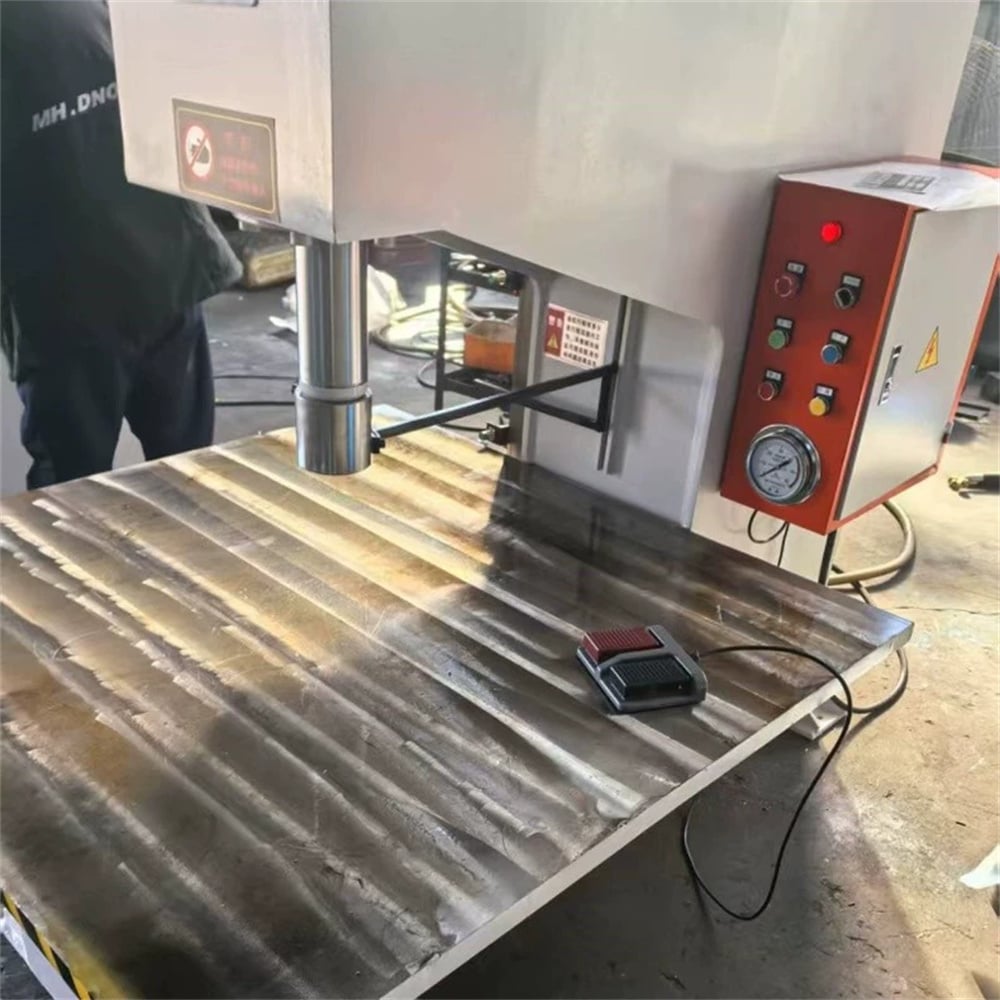
Bed size and daylight (the distance between the bed and the ram) are equally important. For weld prep, you need enough space to maneuver large plates or complex weldments. If your shop handles a variety of part sizes, a press with a large bolster area and adjustable stroke limits offers the most versatility. Consider whether a C-frame (gap frame) or H-frame (four-column) is better suited for your workflow. C-frames provide three-sided access, which is excellent for smaller parts and manual loading, while H-frames offer the rigidity needed for heavy-duty, high-precision work.
Speed and Cycle Times
In a high-production environment, the speed of the press can be a bottleneck. Look for hydraulic presses that feature a “fast approach” speed, a slower “pressing” speed, and a “fast return.” This three-stage cycle maximizes efficiency by minimizing the time the ram spends moving through the air, while still providing the slow, controlled force needed for the actual metal forming. HARSLE presses often feature dual-pump systems to achieve these high speeds without sacrificing the precision required for consistent part preparation.
Automation and Integration
As industry 4.0 becomes the standard, the ability of your hydraulic press to communicate with other machines is vital. If you are using robotic welding cells, look for a press with a controller that supports industrial protocols like Modbus or Ethernet/IP. This allows the press to be integrated into an automated line where parts are loaded by robots, prepped by the press, and then moved directly to the welding station. This level of integration virtually eliminates human error and ensures the highest possible level of part consistency.
Safety Features and Compliance
Never overlook safety when selecting a hydraulic press. Modern machines should be equipped with light curtains, dual palm button stations, and emergency stop circuits that comply with local safety standards (such as CE or OSHA). Beyond operator safety, look for features that protect the machine itself, such as overload protection valves and low-oil-level sensors. A safe machine is a reliable machine, and reliability is key to maintaining a consistent production schedule.
Frequently Asked Questions (FAQ)
How does a hydraulic press improve weld penetration?
By ensuring that parts are perfectly flat and edges are accurately beveled, a hydraulic press allows for a consistent root gap. This uniformity enables the welding heat to penetrate the joint evenly, resulting in a stronger, more reliable weld without the need for excessive filler material or multiple passes.
Can a hydraulic press handle different types of metal?
Yes, one of the primary advantages of improving weld prep part consistency a hydraulic press is its versatility. By adjusting the pressure and using appropriate tooling, the same press can be used for mild steel, aluminum, stainless steel, and even high-strength alloys. The ability to control the speed and force makes it ideal for materials with different yield points.
What maintenance is required for a weld-prep hydraulic press?
Regular maintenance includes monitoring oil levels and quality, checking for leaks in the hydraulic lines, and ensuring the filtration system is clean. It is also important to lubricate the ram guides and inspect the electrical connections. A well-maintained press from HARSLE can provide decades of consistent service with minimal downtime.
Is a CNC controller necessary for weld prep?
While manual presses can be used, a CNC controller significantly enhances consistency. It allows for the storage of “recipes” for different parts, ensuring that the same pressure and stroke settings are used every time a specific job is run. This eliminates operator guesswork and is essential for achieving high-precision results across multiple shifts.
How do I calculate the tonnage needed for my application?
Tonnage is typically calculated using the formula: Force (tons) = (Length of cut/bend x Material Thickness x Tensile Strength) / Constant. However, many factors like die opening and friction play a role. It is best to consult with HARSLE technical experts who can provide a precise tonnage recommendation based on your specific material and part geometry.
Conclusion: The HARSLE Advantage in Weld Prep
In conclusion, improving weld prep part consistency a hydraulic press is not just an upgrade to your machinery; it is an investment in the overall quality of your fabricated products. By providing unmatched precision, repeatability, and power, a hydraulic press eliminates the variables that lead to poor weld joints and costly rework. Whether you are a small job shop or a large-scale industrial manufacturer, the ability to produce perfectly prepped parts is the key to staying competitive in today’s market.
HARSLE continues to lead the industry by providing innovative hydraulic solutions tailored to the needs of modern fabricators. Our machines are designed with the perfect balance of robust construction and advanced control technology, ensuring that your weld prep process is as efficient and consistent as possible. By choosing HARSLE, you are partnering with a company dedicated to helping you achieve excellence in every weld, starting with the very first press of the ram. Explore our range of hydraulic presses today and take the first step toward a more consistent and profitable fabrication workflow.