Mechanical Punching Machine Vs Servo Punching Machine: Which Is Better Line


Technical Overview: Understanding the Core Mechanics
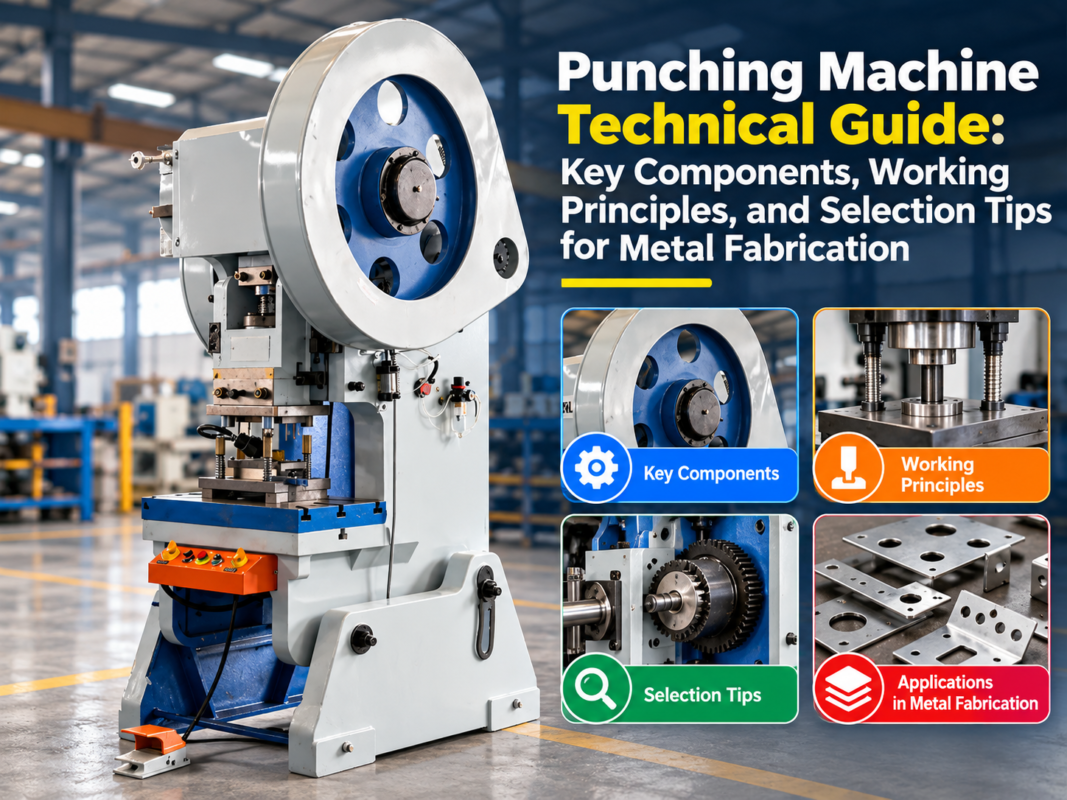
In the modern metal fabrication landscape, the debate between traditional mechanical systems and advanced servo-driven technology is central to production efficiency. When evaluating a Mechanical Punching Machine Vs Servo Punching Machine: Which Is Better Line for your specific facility, one must first understand the fundamental physics governing each system. Mechanical punching machines have been the backbone of the industry for decades. They rely on a massive flywheel that stores kinetic energy, which is then transferred to the ram via a clutch and crankshaft mechanism. This design is optimized for high-speed, repetitive tasks where the stroke profile remains constant.
Conversely, the servo punching machine represents a paradigm shift in press technology. Instead of a flywheel and clutch, it utilizes a high-torque servo motor directly coupled to the drive mechanism (often a ball screw or a toggle link). This allows for complete control over the ram’s position, speed, and pressure throughout the entire stroke. The ability to program the motion profile means that a servo press can perform tasks that are impossible for a mechanical press, such as dwelling at the bottom of the stroke for forming operations or slowing down just before impact to reduce noise and vibration.
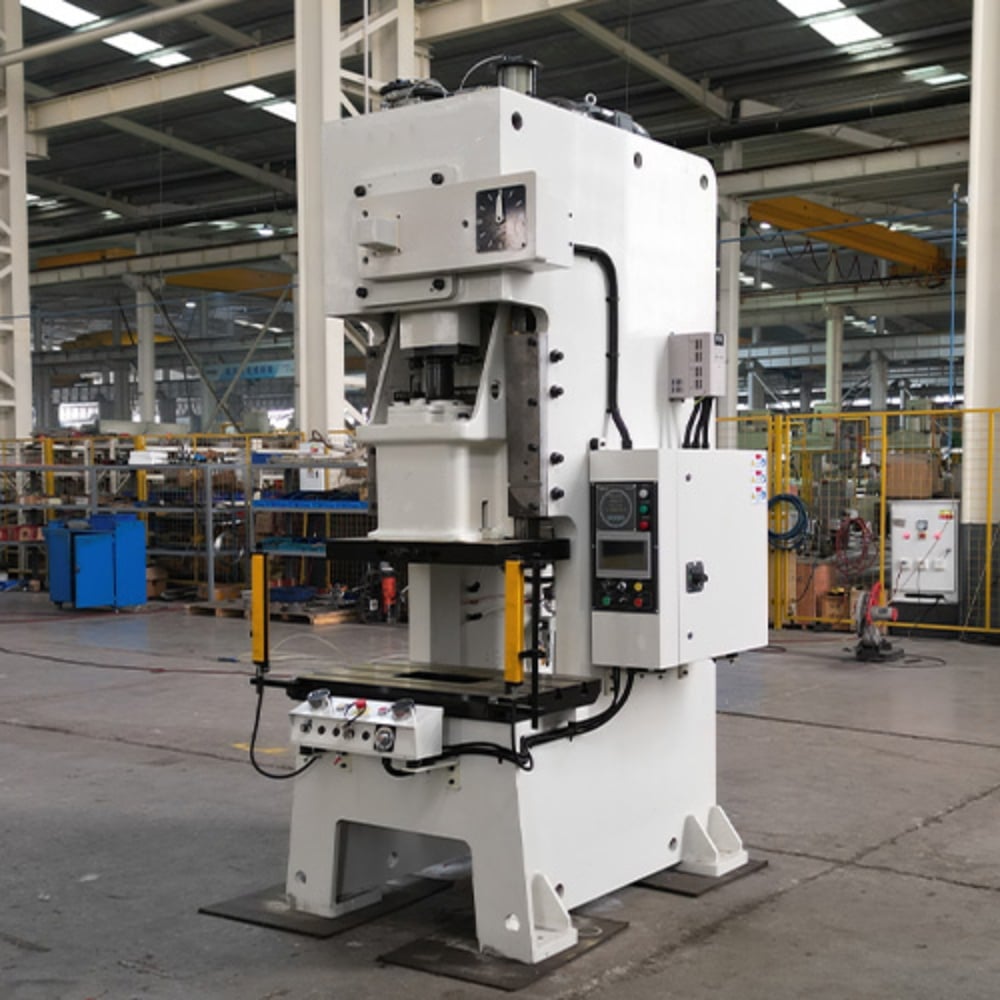
From an engineering perspective, the mechanical press is a “constant energy” machine, while the servo press is a “controlled motion” machine. The mechanical press delivers its maximum tonnage only near the bottom dead center (BDC) of the stroke. If the material is too thick or the tool is set incorrectly, the machine can jam at BDC, requiring significant effort to release. The servo press, however, can deliver full torque at any point in the stroke, providing much greater flexibility for deep drawing or complex multi-stage punching operations.
HARSLE has observed that the transition toward servo technology is driven by the need for higher precision and energy efficiency. While mechanical presses are excellent for simple, high-speed blanking, the servo press offers a level of versatility that caters to the increasing complexity of modern component designs. The choice between the two often hinges on the balance between initial capital expenditure and long-term operational flexibility.
Core Parameters: Comparing Performance Metrics
When analyzing Mechanical Punching Machine Vs Servo Punching Machine: Which Is Better Line, several core parameters must be scrutinized. The first is Strokes Per Minute (SPM). Mechanical presses generally hold the advantage in pure speed for simple blanking operations. Because the flywheel maintains constant momentum, the cycle time is extremely consistent. However, the servo press is catching up; while its peak SPM might be lower in some configurations, its “effective” speed can be higher because the stroke length can be shortened to the minimum required for the specific part, reducing idle time.
Energy consumption is another critical parameter. A mechanical press requires the flywheel to be spinning constantly, consuming electricity even when the machine is not actively punching. In contrast, a servo motor only consumes significant power during the actual punching stroke. During standby or the return stroke, energy consumption is minimal. Furthermore, many modern servo systems feature energy recovery modules that capture the kinetic energy from the braking phase and feed it back into the system or the grid, leading to energy savings of up to 30-50% compared to traditional mechanical models.
Precision and repeatability are where servo machines truly shine. Because the ram position is monitored by high-resolution encoders, the accuracy of the stroke depth can be controlled within microns. This is vital for applications like coining or partial-depth punching. Mechanical presses, while robust, are subject to “frame stretch” and thermal expansion that can affect BDC accuracy over a long production run. The servo system’s ability to compensate for these variables in real-time ensures a higher quality of finished goods.
Noise and vibration levels also differ significantly. The mechanical clutch engagement and the sudden impact of the tool on the metal create substantial noise and floor vibration. Servo presses can be programmed with a “soft touch” profile, where the tool approaches the material quickly but slows down just before contact. This significantly reduces the breakthrough noise and extends the life of the tooling by minimizing the shock load. For factories located in urban areas or those prioritizing operator ergonomics, this is a decisive factor.
Calculation Method: Determining Tonnage and Energy Needs
To determine which machine fits your line, you must accurately calculate the required punching force. The standard formula for punching tonnage (P) is:
P = L × t × τ
Where:
– L is the total length of the cut perimeter (mm).
– t is the material thickness (mm).
– τ is the shear strength of the material (N/mm² or MPa).
For example, if you are punching a 50mm diameter hole in 3mm thick stainless steel (shear strength approx. 520 MPa), the calculation would be: (50 × π) × 3 × 520 = 245,044 Newtons, which is approximately 25 tons. When choosing between a mechanical and servo press, you must add a safety factor (usually 20-30%). In a mechanical press, you must ensure this tonnage is reached at the specific point in the stroke where the tool hits the metal. In a servo press, you have the luxury of knowing that the rated tonnage is available throughout a much wider range of the stroke.
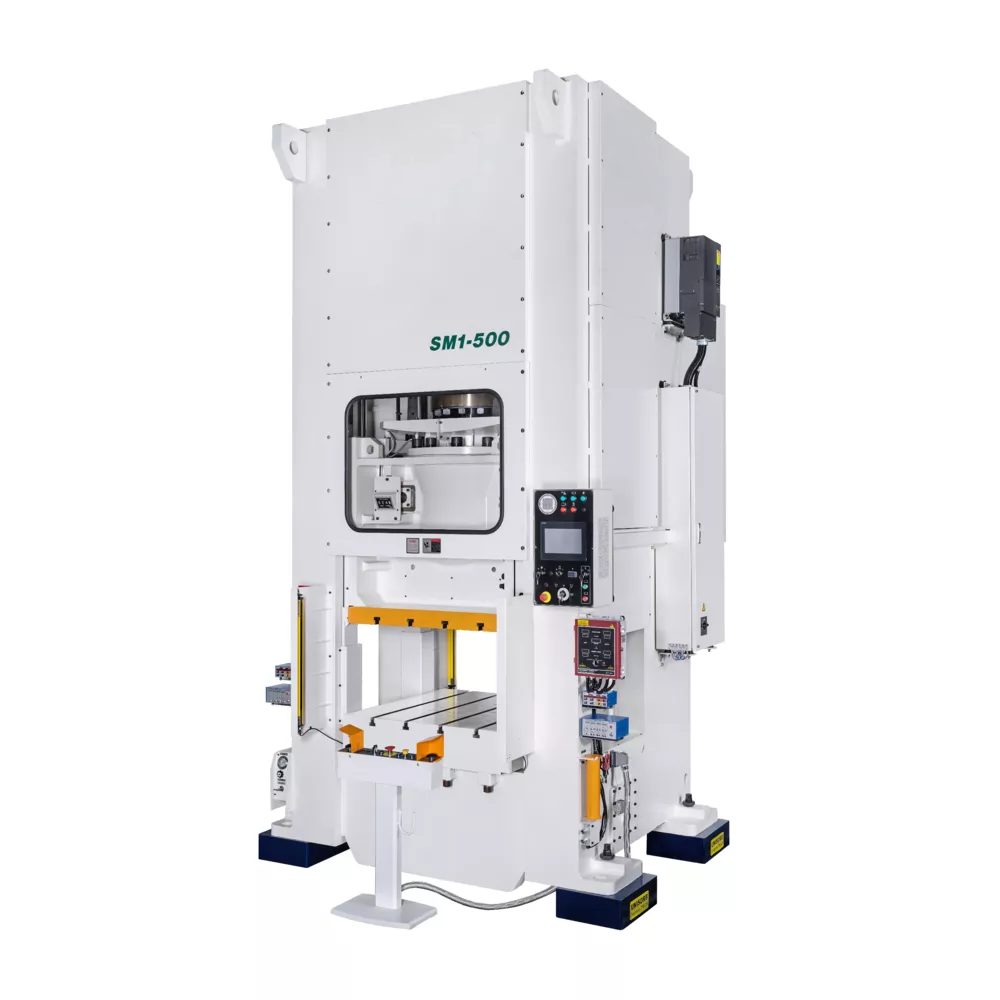
Another important calculation involves the energy per stroke. For a mechanical press, the energy is stored in the flywheel: E = 1/2 × I × ω² (where I is the moment of inertia and ω is angular velocity). If the energy required for a punch exceeds the flywheel’s available energy, the motor will slow down significantly, leading to overheating. For a servo press, the calculation is more direct, based on the motor’s peak torque and the duration of the stroke. Understanding these calculations helps in sizing the electrical infrastructure of your facility, as servo presses may have higher peak current demands despite lower total energy consumption.
Parameter Table: Mechanical vs. Servo Comparison
| Feature | Mechanical Punching Machine | Servo Punching Machine |
|---|---|---|
| Drive Mechanism | Flywheel, Clutch, Crankshaft | High-Torque Servo Motor |
| Stroke Profile | Fixed (Sinusoidal) | Fully Programmable |
| Energy Efficiency | Lower (Flywheel always spins) | Higher (Power on demand) |
| Precision | Standard (Mechanical limits) | Ultra-High (Encoder feedback) |
| Maintenance | High (Clutch/Brake wear) | Low (Fewer moving parts) |
| Noise Level | High (Impact & Clutch) | Low (Soft-touch capability) |
| Initial Cost | Lower | Higher |
Common Engineering Mistakes in Machine Selection
One of the most frequent mistakes engineers make when evaluating Mechanical Punching Machine Vs Servo Punching Machine: Which Is Better Line is over-tonnage. There is a common misconception that “bigger is always better.” However, using a 200-ton press for a 20-ton job is inefficient. In mechanical presses, this leads to excessive wear on the clutch and brake. In servo presses, it means you are paying for a massive motor and drive system that you aren’t utilizing, which extends your ROI period unnecessarily. Always match the machine tonnage to your most common high-volume tasks, rather than your rarest heavy-duty tasks.
Another mistake is ignoring the stroke flexibility of the servo press. Many shops buy a servo press but then run it with a standard sinusoidal profile, essentially treating it like a mechanical press. This wastes the primary benefit of the technology. By not utilizing the ability to dwell, pulse, or vary speeds, the shop fails to improve tool life or part quality. Engineers should work closely with manufacturers like HARSLE to develop custom stroke profiles that optimize the specific material flow and shearing characteristics of their parts.
Neglecting the cooling requirements of servo systems is also a common pitfall. While mechanical presses generate heat in the clutch and bearings, servo presses generate heat in the motor and the electrical cabinet. If the factory environment is extremely hot or lacks proper ventilation, the servo drive may derate its power to protect itself, leading to unexpected downtime. Ensuring that the machine’s cooling system (whether air or liquid) is properly maintained is vital for the longevity of the electronics.
Finally, many buyers fail to account for the total cost of ownership (TCO). A mechanical press is cheaper upfront, but the costs of replacing clutch linings, repairing oil leaks, and the higher electricity bills add up. Conversely, a servo press has a higher entry price but significantly lower maintenance and operational costs. A failure to perform a 5-year or 10-year TCO analysis often leads to a short-sighted purchase that costs more in the long run.
Selection Checklist: Which Is Better for Your Line?
- Production Volume: If you are running millions of identical, simple parts at maximum speed, a high-speed mechanical press may still be the most cost-effective solution.
- Part Complexity: Does your part require forming, coining, or varying depths? If yes, the programmable stroke of a servo press is indispensable.
- Material Sensitivity: Are you working with high-strength steels or delicate pre-painted materials? The “soft touch” capability of a servo press prevents surface damage and reduces material fracture.
- Energy Costs: In regions with high electricity rates, the energy efficiency of a servo motor can pay for the machine’s price premium within a few years.
- Maintenance Capability: Does your team have the skills to maintain complex electronics (Servo) or traditional heavy mechanics (Mechanical)? Servo machines require less frequent but more specialized maintenance.
- Floor Space and Environment: Servo presses are often more compact and significantly quieter, making them better suited for modern, clean-room, or urban manufacturing environments.
- Future-Proofing: As Industry 4.0 becomes the standard, the digital nature of servo presses makes them much easier to integrate into smart factory networks for data logging and predictive maintenance.
FAQ: Mechanical vs. Servo Punching Machines
1. Can a servo punching machine be as fast as a mechanical one?
In terms of pure cycles per minute for long strokes, mechanical presses often hold the edge. However, because a servo press can use a very short, optimized stroke, its actual parts-per-hour output is often comparable or even superior for many applications.
2. Is the maintenance for a servo press more expensive?
While the components (like the servo drive) are more expensive, they fail much less frequently than the wear parts in a mechanical press (like the clutch and brake). Overall, the annual maintenance cost for a servo press is typically lower.
3. Does a servo press lose power at the top of the stroke?
No. Unlike a mechanical press, which relies on the flywheel’s position to deliver tonnage, a servo press can deliver its rated torque at almost any point in the stroke, providing much more flexibility for deep-draw operations.
4. Which machine is better for thick plate punching?
Mechanical presses are traditionally favored for very thick plate punching due to the massive energy stored in the flywheel. However, large-scale servo presses are now available that can handle heavy-duty tasks while offering better control over the breakthrough shock.
5. How long does it take to see a return on investment (ROI) for a servo press?
Depending on energy costs and production volume, most facilities see an ROI within 2 to 4 years through energy savings, reduced scrap, and lower tooling costs.