Shearing Machine Buying Guide: Key Features to Compare Before You Order


Introduction to Shearing Machine Procurement
In the competitive landscape of metal fabrication, the efficiency of your primary cutting operations often dictates the profitability of your entire production line. Investing in a shearing machine is a significant capital expenditure that requires a deep understanding of technical specifications and market offerings. This Shearing Machine Buying Guide: Key Features to Compare Before You Order is designed to help workshop managers, procurement officers, and business owners navigate the complexities of modern shearing technology. Whether you are looking for a basic hydraulic swing beam shear or a high-precision CNC guillotine, understanding the nuances of these machines ensures that you select a model that meets your current needs while allowing for future growth.
HARSLE has been at the forefront of metalworking innovation for years, providing high-quality machinery to global markets. We understand that the ‘best’ machine isn’t always the most expensive one; it is the one that offers the best balance of precision, durability, and cost-effectiveness for your specific application. In the following sections, we will break down the financial and technical aspects of shearing machine acquisition, providing you with a roadmap to make an informed decision.
Price Range Overview: What to Expect in the Market
The price of a shearing machine can vary drastically based on its capacity, technology, and brand reputation. Generally, the market is divided into three main tiers. The entry-level tier consists of mechanical shears and small hydraulic swing beam machines, typically ranging from $5,000 to $15,000. These are ideal for light-gauge materials and workshops where high-speed production is not the primary concern. While they lack advanced automation, they offer a reliable and cost-effective entry point for small businesses.
The mid-range tier, priced between $15,000 and $40,000, includes standard hydraulic guillotine shears and advanced swing beam models equipped with digital displays or basic CNC controllers like the E21S. These machines are the workhorses of the industry, capable of handling thicknesses from 6mm to 16mm with reasonable precision. They often feature improved hydraulic components and more robust frames, ensuring a longer service life under multi-shift operations.
High-end industrial shearing machines can exceed $60,000 and often reach well over $100,000 for specialized, large-format equipment. These machines feature full CNC integration (such as Delem DAC-310 or DAC-360 systems), automatic blade gap adjustment, rake angle control, and high-speed backgauges. They are designed for high-precision environments where every millimeter counts and where material waste must be minimized through advanced nesting and cutting programs.
Main Cost Drivers in Shearing Machine Buying
When you begin your Shearing Machine Buying : Key Features Compare Before You Order process, it is essential to identify what exactly you are paying for. The primary cost driver is the cutting capacity—both the maximum thickness of the material and the total cutting length. A machine designed to cut 20mm carbon steel requires significantly more structural steel in its frame and a much more powerful hydraulic system than a machine designed for 4mm sheet metal. As the thickness capacity increases, the price rises exponentially due to the engineering requirements to manage the immense shearing forces.
Blade quality is another critical factor. High-quality blades made from Cr12MoV or 6CrW2Si are more expensive but offer superior wear resistance and can be reground multiple times. Cheaper machines often come with standard carbon steel blades that dull quickly, leading to poor cut quality and frequent downtime. Furthermore, the complexity of the hydraulic system—specifically the use of premium valves from brands like Rexroth or Bosch—adds to the initial cost but significantly reduces the likelihood of leaks and pressure failures over time.
Automation and control systems also play a major role in pricing. A manual backgauge is inexpensive but slow and prone to human error. In contrast, a CNC-controlled backgauge with high-precision ball screws and AC servo motors ensures repeatable accuracy within 0.1mm. While this adds to the upfront cost, the reduction in scrap and the increase in setup speed often justify the investment for high-volume shops.
Configuration Impact: Swing Beam vs. Guillotine
One of the most important technical decisions you will make is choosing between a swing beam shear (QC12Y series) and a guillotine shear (QC11Y series). The swing beam shear uses a circular arc movement for the upper blade. It is generally simpler in construction, easier to maintain, and more affordable. However, because the blade moves in an arc, the rake angle is fixed, which can lead to slight distortion (twisting) in narrow strips of cut material.
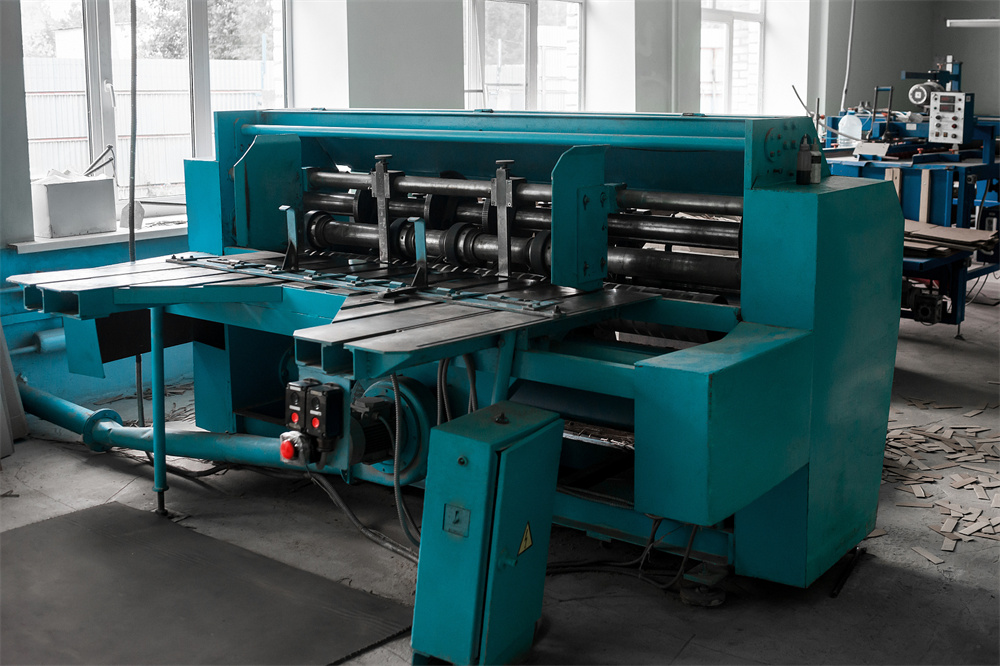
The hydraulic guillotine shear, on the other hand, moves the upper blade in a straight vertical line. This design allows for an adjustable rake angle. By decreasing the rake angle for thinner materials, you can significantly reduce the ‘bow’ and ‘twist’ of the cut piece, resulting in much higher quality blanks. Guillotine shears are also generally more robust and capable of handling thicker plates with greater precision. If your work involves high-precision assembly or thin-gauge aesthetic panels, the guillotine configuration is usually the superior choice despite the higher price tag.
Furthermore, the blade gap adjustment mechanism differs between these types. Many modern guillotine shears feature automatic blade gap adjustment controlled by the CNC system. This ensures that the gap is perfectly optimized for the specific material thickness being cut, which extends blade life and improves edge quality. In manual swing beam machines, this is often a hand-lever operation, which is subject to operator error.
Hidden Costs to Consider Before You Order
The sticker price of a shearing machine is rarely the total cost of ownership. One of the most overlooked hidden costs is shipping and logistics. These machines are incredibly heavy and often require specialized flat-rack containers or heavy-lift cranes for offloading. Depending on your location relative to the manufacturer, freight costs can add thousands of dollars to your budget. Additionally, you must consider the cost of site preparation, including a reinforced concrete foundation if you are installing a large-capacity shear.
Installation and commissioning are also vital considerations. While some manufacturers include this in the price, others charge daily rates for technicians to travel to your site. Proper leveling and calibration are essential for the machine’s accuracy; a poorly installed machine will never perform to its rated specifications. You should also budget for initial consumables, such as high-grade hydraulic oil (often hundreds of liters) and a spare set of blades to minimize downtime when the first set needs sharpening.
Finally, consider the long-term energy consumption. Older hydraulic designs can be inefficient, generating significant heat and wasting electricity. Modern machines with inverter-driven motors or load-sensing hydraulics can reduce energy costs by up to 30%. While these features might increase the purchase price, they lower the operational ‘hidden’ costs over the machine’s 10-15 year lifespan.
ROI Calculation: Making the Business Case
To justify the purchase of a new shearing machine, you must calculate the Return on Investment (ROI). The most immediate gain comes from labor savings. A CNC-controlled shear can reduce setup time from minutes to seconds. If your operator performs 20 setups a day, saving 5 minutes per setup equates to over 1.5 hours of additional production time daily. Over a year, this labor efficiency alone can recover a significant portion of the machine’s cost.

Material savings are another critical factor in ROI. High-precision shears produce cleaner edges and more accurate dimensions, which reduces the need for secondary operations like grinding or squaring. Furthermore, advanced CNC controllers allow for better nesting of cuts, reducing the amount of scrap generated from expensive raw materials like stainless steel or aluminum. If you can reduce your scrap rate by even 2-3%, the annual savings in material costs can be substantial.
Don’t forget to factor in the ‘opportunity cost’ of your current setup. If you are currently outsourcing your shearing, you are paying a markup on every cut and dealing with lead times that are out of your control. Bringing shearing in-house gives you total control over your production schedule and quality, allowing you to take on more complex projects and respond faster to customer demands. This increased agility is a ‘soft’ ROI that often leads to hard revenue growth.
Buying Advice: Key Features to Compare Before You Order
When you are ready to finalize your order, use this checklist to compare different models. First, verify the frame construction. Look for a ‘monoblock’ welded frame that has been stress-relieved in a furnace. This prevents the frame from warping over time, which is the death knell for shearing accuracy. Second, examine the backgauge system. Ensure it uses ball screws rather than T-screws for better precision and longevity.
Third, check the hydraulic and electrical components. Brands like Schneider, Siemens, and Rexroth are global standards for a reason—parts are easy to find locally if something breaks. Avoid machines with ‘no-name’ components, as a $50 failed relay could shut down your entire production line for weeks while you wait for a proprietary part from overseas. Fourth, ask about the blade material and the number of cutting edges. Some blades have two cutting edges, while others have four, effectively doubling the time between professional sharpenings.
Lastly, evaluate the manufacturer’s support network. Does the company offer remote troubleshooting? Do they have a clear warranty policy? At HARSLE, we pride ourselves on providing comprehensive technical support and detailed manuals to ensure our customers get the most out of their investment. A machine is only as good as the support behind it, so choose a partner who understands the industrial realities of your business.
Frequently Asked Questions (FAQ)
What is the difference between a mechanical and a hydraulic shearing machine?
Mechanical shears use a flywheel and clutch system to drive the blade. They are very fast but offer less control and are generally limited to thinner materials. Hydraulic shears use fluid power, providing much higher cutting forces, adjustable stroke lengths, and better safety features, making them the industry standard for modern fabrication.
How often do shearing machine blades need to be sharpened?
This depends entirely on the material being cut and the volume of production. For standard carbon steel, blades might last 6-12 months before needing a regrind. If you are cutting stainless steel or high-strength alloys, the interval will be much shorter. Always monitor the edge quality; a ‘burr’ on the cut piece is a sign that the blades are dulling.
Can I cut stainless steel on a standard shearing machine?
Yes, but you must account for the material’s hardness. Stainless steel is much tougher than mild steel. Generally, a machine’s capacity for stainless steel is about 50-60% of its rated capacity for mild steel. For example, a 10mm mild steel shear should only be used for up to 5-6mm stainless steel to avoid damaging the blades and hydraulic system.
What is ‘rake angle’ and why does it matter?
The rake angle is the angle of the upper blade relative to the lower blade. A higher rake angle reduces the force required to cut the metal but increases the distortion (twist) in the cut piece. An adjustable rake angle, found on guillotine shears, allows you to find the perfect balance between cutting power and part flatness.
Is CNC control necessary for a shearing machine?
It is not strictly necessary for simple, repetitive tasks, but it is highly recommended for any shop that handles various sizes and thicknesses. CNC systems like the E21S or DAC-360 automate the backgauge positioning and can even suggest the correct blade gap and rake angle, significantly reducing operator error and increasing throughput.
What maintenance is required for a hydraulic shear?
Regular maintenance includes checking hydraulic oil levels and quality, lubricating the backgauge and guide rails, inspecting the blade gap, and ensuring all bolts and hydraulic fittings are tight. Most manufacturers recommend a full oil change and filter replacement every 2,000 operating hours to ensure the longevity of the pump and valves.