How to Match a Shearing Machine to Your Material Thickness and Width: A Comprehensive Guide


Introduction to Shearing Machine Selection
In the world of metal fabrication, precision and efficiency are the cornerstones of profitability. One of the most critical decisions a workshop manager or business owner faces is selecting the right equipment for their specific production needs. When it comes to cutting sheet metal, the ability to match a shearing machine material thickness width requirements is not just a matter of convenience—it is a matter of machine longevity, safety, and output quality. Choosing a machine that is underpowered for your material leads to premature blade wear and hydraulic failure, while over-investing in a machine with excessive capacity can lead to unnecessary capital expenditure and higher operational costs.
HARSLE understands that every fabrication shop has unique requirements. Whether you are working with thin aluminum sheets for HVAC ducting or heavy-duty carbon steel plates for structural engineering, the physics of shearing remain the same. The machine must exert enough force to overcome the material’s shear strength while maintaining a rigid frame to prevent deflection. This guide will walk you through the technical nuances of matching machine specifications to your material profile, ensuring you make an informed investment that yields a high return.
Price Range Overview: What to Expect
The market for shearing machines is diverse, with prices varying significantly based on capacity, technology, and build quality. Understanding the price brackets helps in setting a realistic budget for your procurement process. Generally, shearing machines are categorized by their maximum cutting thickness (usually based on mild steel with a tensile strength of 450N/mm²) and their maximum cutting length.
Entry-level mechanical shearing machines, often used for thin-gauge materials (up to 3mm or 4mm thickness) and shorter widths (around 1300mm to 2500mm), typically range from $4,000 to $9,000. These machines are excellent for light-duty workshops where speed is prioritized over heavy-duty capacity. They are often simpler to maintain but lack the hydraulic force required for thicker plates.
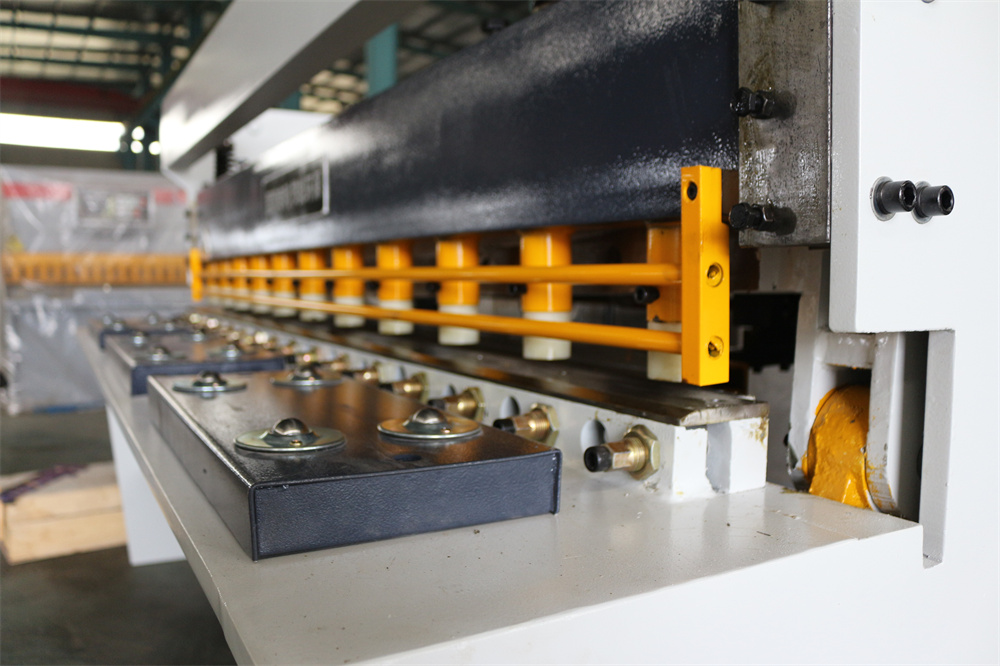
Mid-range hydraulic swing beam shearing machines (QC12Y series) are the workhorses of the industry. For a standard 6mm thickness and 2500mm width capacity, prices usually fall between $12,000 and $22,000. As you move into the 10mm to 16mm thickness range, prices can climb to $35,000. These machines offer a balance of durability and cost-effectiveness, utilizing hydraulic cylinders to move the upper blade in an arc motion.
High-end CNC hydraulic guillotine shears (QC11Y series) represent the premium segment. These machines are designed for high precision and heavy-duty applications, often featuring variable rake angles and automatic blade gap adjustments. For a machine capable of cutting 20mm thick plate at a 6000mm width, prices can exceed $60,000 to $100,000. These units are essential for large-scale industrial operations where accuracy and the ability to handle various material types are paramount.
Main Cost Drivers in Shearing Machinery
When you look at the price tag of a shearing machine, several key factors are driving that cost. The most obvious is the physical size and weight of the machine frame. A machine designed to cut 20mm plate must be significantly more rigid than one designed for 4mm plate. This requires more high-quality steel in the frame construction to resist the massive forces generated during the shearing process. If the frame flexes, the blade gap changes, resulting in a poor-quality cut or “burr.”
The hydraulic system is another major cost driver. High-capacity machines require larger pumps, more complex valve blocks, and higher-volume cylinders. The quality of these components—often sourced from reputable brands like Rexroth or Bosch—directly impacts the machine’s reliability and cycle speed. A faster cycle time means more parts per hour, which justifies a higher initial cost for high-volume manufacturers.
Blade material and quality cannot be overlooked. To match a shearing machine material thickness width needs effectively, the blades must be harder than the material being cut. Standard blades are usually made of 9CrSi or 6CrW2Si, suitable for mild steel. However, if you are cutting stainless steel, you require high-carbon, high-chrome blades (such as Cr12MoV), which are more expensive but necessary to prevent rapid dulling. Stainless steel has a much higher tensile strength, effectively requiring a machine with 50% more capacity than what would be needed for the same thickness of mild steel.
Lastly, the control system adds to the cost. A basic NC (Numerical Control) system like the E21S manages the backgauge position and stroke counting. In contrast, a full CNC system with a touch screen (like the Delem DAC-360T) can automatically calculate the required blade gap, rake angle, and stroke length based on the material type and thickness entered by the operator. This automation reduces human error and setup time, but adds several thousand dollars to the purchase price.
Configuration Impact: Swing Beam vs. Guillotine
Choosing between a swing beam and a guillotine shear is a pivotal step in matching the machine to your material. The swing beam shear (QC12Y) uses a pivot point to move the upper blade in a circular arc. This design is simpler and generally more affordable. However, because the blade moves in an arc, the rake angle (the angle of the upper blade relative to the lower blade) is fixed. This can lead to “twist” or “bow” in narrow strips of thin material. Swing beam machines are excellent for general-purpose fabrication where extreme precision on very thin or very thick strips isn’t the primary concern.
The hydraulic guillotine shear (QC11Y) moves the upper blade in a straight vertical line using tracks or rollers. This allows for a variable rake angle. By adjusting the rake angle, the operator can minimize distortion. For example, a lower rake angle is used for thinner materials to prevent twisting, while a higher rake angle is used for thicker materials to reduce the required shearing force. If your work involves a wide variety of material thicknesses and you require high-precision straightness, the guillotine configuration is the superior choice.

Another configuration factor is the blade gap adjustment. On basic machines, this is done manually via a handle on the side of the machine. On advanced models, it is motorized and controlled by the NC/CNC. Correct blade gap is essential: too wide, and the metal will bend between the blades; too narrow, and you will damage the blades and the machine. To properly match a shearing machine material thickness width, the ability to quickly and accurately set this gap is a major productivity booster.
Hidden Costs of Ownership
The purchase price is only the beginning of the financial commitment. One often overlooked hidden cost is the foundation and installation. Heavy shearing machines require a reinforced concrete floor to maintain level and absorb vibration. If your workshop floor isn’t up to spec, you may need to excavate and pour a dedicated pad, which can cost thousands. Additionally, the electrical requirements for large hydraulic motors are significant; you may need to upgrade your shop’s power supply or install new circuit breakers.
Maintenance is a recurring cost that must be factored into the ROI. Hydraulic oil needs to be changed periodically, and filters must be replaced to prevent contamination of the valves. The blades will eventually dull and require regrinding. Depending on your volume, this might happen once a year or every few months. Regrinding requires specialized equipment or shipping the blades to a service center, leading to downtime. Having a spare set of blades on hand is a wise but additional upfront cost.
Energy consumption is another factor. Older hydraulic systems run the pump at full speed constantly. Modern machines equipped with inverter-driven motors or “eco-modes” only consume significant power during the actual cutting stroke. While these features increase the initial price, they significantly reduce the monthly utility bills, especially in regions with high electricity costs. Over a 10-year lifespan, the energy savings can often pay for the technology upgrade.
ROI Calculation: Is the Machine Worth It?
Calculating the Return on Investment (ROI) for a shearing machine involves comparing the total cost of ownership against the increased revenue and savings it generates. First, consider labor savings. A CNC machine that automates the backgauge and blade gap settings can reduce setup time by 50% compared to a manual machine. If your operator saves 2 hours a day, and the labor rate is $30/hour, that’s $15,000 saved annually.
Second, look at material utilization. High-precision shears produce cleaner cuts with less distortion, meaning fewer parts are rejected or require secondary grinding. If you can reduce your scrap rate by even 2%, the savings on expensive materials like stainless steel or aluminum add up quickly. Furthermore, having the capacity to cut in-house rather than outsourcing to a service center saves on lead times and markup costs, allowing you to take on more profitable, fast-turnaround projects.
To calculate the ROI period, use the formula: (Total Investment) / (Annual Savings + Annual Increased Profit). For most HARSLE customers, a well-matched shearing machine pays for itself within 18 to 36 months. Beyond that point, the machine contributes directly to the company’s bottom line. Choosing a machine that can handle slightly more than your current maximum thickness ensures that you won’t outgrow the machine in two years, protecting your investment for the long term.
Buying Advice: How to Match Your Needs
To successfully match a shearing machine material thickness width, follow this step-by-step checklist before requesting a quote:
- Identify Your Maximums: What is the absolute thickest material you will cut? Remember to specify if it is mild steel, stainless, or aluminum. A machine rated for 6mm mild steel can usually only handle 3-4mm stainless steel.
- Determine Your Widest Sheet: Standard widths are 2500mm, 3200mm, 4000mm, and 6000mm. Always buy a machine slightly wider than your widest sheet to allow for easy positioning.
- Assess Your Accuracy Requirements: If you are doing basic construction work, a swing beam NC shear is sufficient. If you are supplying parts for aerospace or high-end electronics, a CNC guillotine is necessary.
- Consider the Backgauge Range: How deep are the pieces you need to cut? Ensure the backgauge travel (usually 500mm to 1000mm) is sufficient for your largest parts.
- Check for Support Options: For long, thin sheets, look for a machine with a pneumatic rear support system to prevent the material from sagging before the cut.
Finally, always choose a reputable manufacturer like HARSLE that provides comprehensive after-sales support, spare parts availability, and clear technical documentation. A machine is only an asset if it stays running.
Frequently Asked Questions (FAQ)
Can I cut stainless steel on a machine rated for mild steel?
Yes, but you must significantly de-rate the capacity. Stainless steel is much harder and has higher tensile strength. As a rule of thumb, a machine can cut stainless steel that is about 50% to 60% of its rated mild steel thickness. For example, a 10mm mild steel shear should only be used for up to 5mm or 6mm stainless steel to avoid damaging the hydraulics and blades.
What is the difference between NC and CNC in shearing?
An NC (Numerical Control) system typically controls only one axis—the backgauge. The operator must still manually set the blade gap and rake angle. A CNC (Computer Numerical Control) system is more advanced; it allows the operator to select the material type and thickness from a library, and the machine automatically adjusts the backgauge, blade gap, rake angle, and stroke length for the perfect cut.
How often do the blades need to be sharpened?
This depends entirely on the material being cut and the volume of production. If you are cutting clean mild steel, blades can last for thousands of cuts. If you are cutting scaled hot-rolled steel or stainless steel, they will dull faster. You will know it’s time to sharpen when you see increased burrs on the edges of the cut or if the machine sounds like it’s struggling more than usual.
Why does my metal twist after being cut?
Twisting is usually caused by a rake angle that is too high for the thickness of the material, or a blade gap that is too wide. In swing beam shears, the rake angle is fixed, so some twisting is inevitable on very narrow strips. In guillotine shears, you can lower the rake angle to minimize this effect. Ensuring the material is properly clamped by the hydraulic hold-downs also helps prevent movement during the cut.
Is a hydraulic or mechanical shear better?
Mechanical shears are faster and better for thin materials in high-volume environments. However, hydraulic shears are much more powerful, offer adjustable stroke lengths, and have built-in overload protection. If a hydraulic shear hits something it can’t cut, the relief valve opens; a mechanical shear might simply break its flywheel or frame. For most modern industrial applications, hydraulic is the preferred choice.