How to Choose the Right Shearing Machine for Sheet Metal Processing

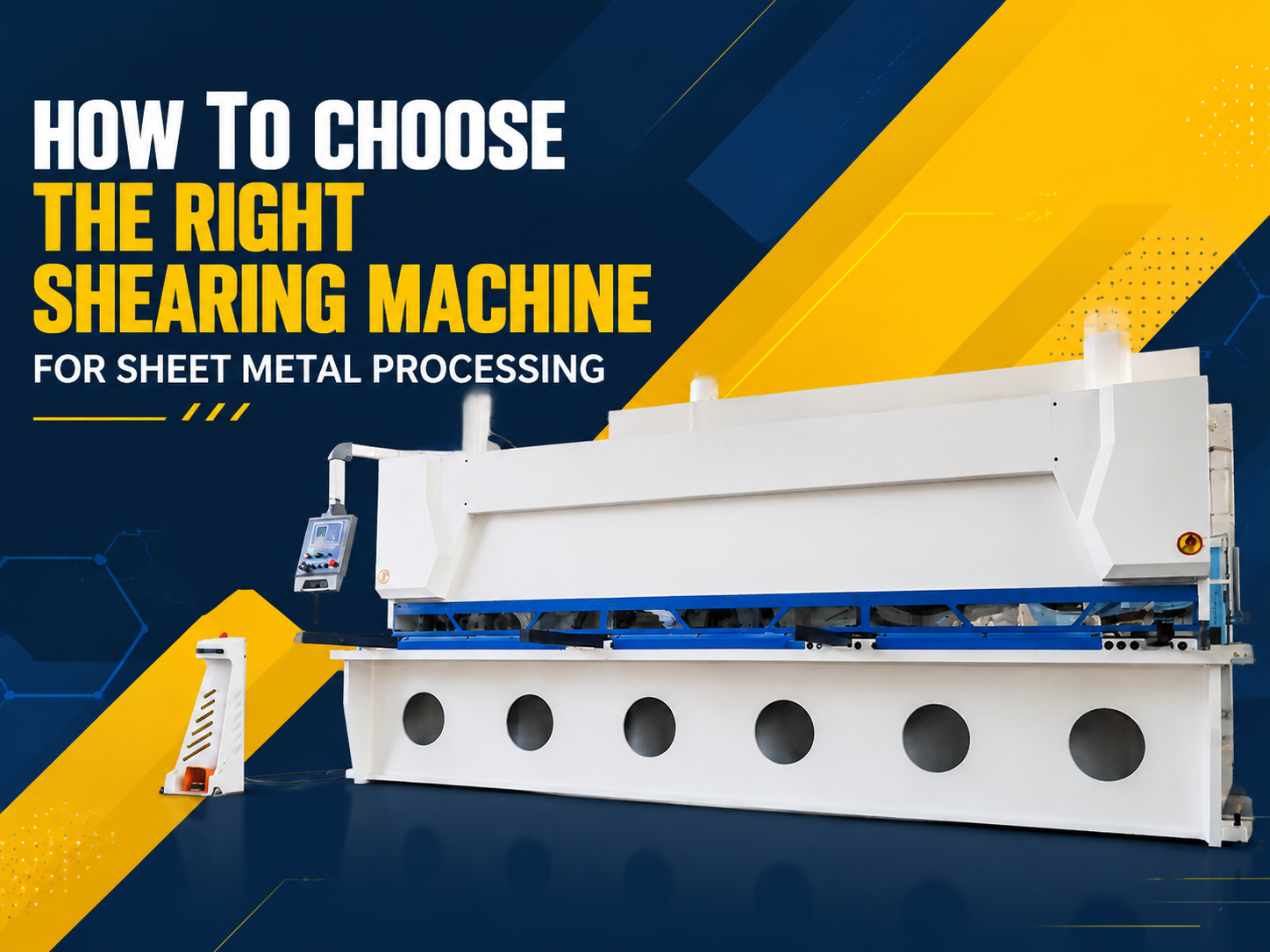
Technical Overview of Shearing Machines in Modern Fabrication
In the realm of metal fabrication, the shearing machine stands as a foundational pillar for sheet metal processing. Choosing the right shearing machine for sheet metal processing is not merely a matter of purchasing a piece of equipment; it is an investment in the precision, efficiency, and long-term viability of your production line. At HARSLE, we understand that the nuances of hydraulic systems, blade geometry, and structural integrity define the quality of the final cut. A shearing machine operates by applying a high-pressure force through a moving blade against a fixed blade, effectively ‘cleaving’ the metal along a straight line. This process is essential for preparing blanks that will later be bent, welded, or machined into complex components.
There are two primary categories of hydraulic shearing machines used in the industry today: the Hydraulic Swing Beam Shearing Machine (QC12Y series) and the Hydraulic Guillotine Shearing Machine (QC11Y series). The swing beam shear utilizes a circular motion where the upper blade moves in an arc. This design is robust, simpler to maintain, and highly effective for standard thickness ranges. Conversely, the guillotine shear moves the upper blade in a strictly vertical path. This allows for an adjustable rake angle, which is critical for reducing distortion in the workpiece, especially when dealing with thicker plates or high-tensile materials. Understanding these fundamental mechanical differences is the first step in determining which machine aligns with your specific production requirements.
Beyond the mechanical movement, the drive system plays a crucial role. While mechanical shears were once the industry standard, hydraulic shears have largely taken over due to their superior control, safety features, and ability to handle varying material thicknesses without the risk of jamming. Modern hydraulic systems integrated into HARSLE machines offer consistent pressure throughout the stroke, allowing for smoother cuts and reduced wear on the blades. Furthermore, the integration of CNC (Computer Numerical Control) has revolutionized shearing, enabling automated backgauge positioning and stroke adjustment, which significantly reduces setup time and human error.
When we discuss sheet metal processing, we must also consider the material science involved. Different metals—such as mild steel, stainless steel, and aluminum—react differently to the shearing force. Stainless steel, for instance, requires significantly more force and harder blade materials compared to aluminum. Therefore, the technical overview of your selection process must account for the hardest and thickest material you intend to process. A machine that is constantly pushed to its maximum capacity will suffer from premature component failure and decreased accuracy over time. Selecting a machine with a 20% buffer over your maximum requirements is often a wise engineering decision.
Core Parameters to Evaluate Before Purchase
To choose the right shearing machine for sheet metal processing, one must dissect the technical specifications provided by manufacturers. The most critical parameter is the Maximum Cutting Thickness. This is typically rated based on mild steel with a tensile strength of approximately 450 N/mm². If your facility primarily processes stainless steel, you must downrate the machine’s capacity by roughly 30-40% because stainless steel has a much higher tensile strength and work-hardening property. Failure to account for this can lead to shattered blades or hydraulic cylinder failure.
The Cutting Length is the second most vital parameter. This defines the maximum width of the sheet the machine can accommodate. Common lengths range from 2000mm to 6000mm. It is important to match this to your standard sheet sizes. However, one must also consider the ‘throat depth’ of the machine. The throat depth allows for the shearing of sheets longer than the blade length by feeding the material through the side frames. If your workflow involves long, continuous strips, a machine with a deeper throat is indispensable.
Another core parameter is the Rake Angle. The rake angle is the slope of the upper blade relative to the lower blade. A higher rake angle reduces the required shearing force, allowing the machine to cut thicker materials. However, a high rake angle also increases the ‘twist’ and ‘bow’ in the sheared strip. Guillotine shears often feature an adjustable rake angle, allowing the operator to decrease the angle for thin sheets (to ensure flatness) and increase it for thick plates (to protect the machine). Swing beam shears usually have a fixed rake angle, making them less versatile for a wide range of thicknesses but more straightforward for dedicated tasks.
The Blade Gap Adjustment is a parameter that directly influences the quality of the cut edge. The gap between the upper and lower blades must be optimized based on the material thickness—typically 5% to 10% of the thickness. If the gap is too wide, the metal will ‘burr’ or bend between the blades. If it is too tight, the blades will experience excessive friction and potential chipping. HARSLE machines often feature a rapid manual or CNC-controlled blade gap adjustment, ensuring that operators can switch between different gauges of metal quickly while maintaining edge quality. Finally, the Backgauge Range and Precision determine the dimensional accuracy of your blanks. High-speed, ball-screw driven backgauges with CNC controllers like the E21S or DAC360T are preferred for high-precision environments.
Calculation Method for Shearing Force
Engineering precision requires more than just looking at a spec sheet; it requires understanding the physics of the cut. The shearing force (F) required to cut a piece of metal can be estimated using a specific formula. This calculation is essential when you are working with non-standard materials or when you need to ensure your hydraulic system is not being overstressed. The general formula for shearing force is:
F = 0.5 * L * S² * σb / tan(α)
Where:
F = Shearing Force (Newtons)
L = Cutting Length (mm)
S = Material Thickness (mm)
σb = Tensile Strength of the material (N/mm²)
α = Rake Angle of the blade
From this formula, it is evident that the thickness (S) has a squared relationship with the force. This means that doubling the thickness of the material quadruples the force required. This is why it is so dangerous to exceed the rated capacity of a shearing machine. Even a slight increase in thickness can lead to a massive spike in hydraulic pressure. Furthermore, the tensile strength (σb) varies greatly. While mild steel is around 450 N/mm², some grades of stainless steel can exceed 700 N/mm². When calculating for stainless steel, the force requirement increases proportionally.
The rake angle (α) also plays a denominator role in the formula. As the rake angle increases, the tangent of the angle increases, which reduces the total force (F). This explains why guillotine shears with adjustable rake angles are preferred for heavy-duty applications. By increasing the angle to 2 or 3 degrees, the machine can process much thicker plates than it could at a 0.5-degree angle. However, the trade-off is the geometric distortion of the cut piece. For precision components where flatness is paramount, engineers must balance the rake angle with the machine’s structural capacity.
In addition to the shearing force, one must calculate the ‘hold-down force.’ Before the blade descends, hydraulic hold-downs (clamp cylinders) must secure the plate to prevent it from shifting. The total hold-down force should generally be about 10-15% of the shearing force. If the hold-downs are insufficient, the plate will tip during the cut, resulting in an angled edge rather than a clean, vertical shear. HARSLE integrates independent hydraulic hold-downs that apply pressure proportional to the shearing force, ensuring the workpiece remains immobile throughout the cycle.
Comparison Table: Swing Beam vs. Guillotine Shears
To help you choose the right shearing machine for sheet metal processing, the following table compares the two most common types of hydraulic shears found in industrial settings.
| Feature | Hydraulic Swing Beam (QC12Y) | Hydraulic Guillotine (QC11Y) |
|---|---|---|
| Blade Movement | Arc/Circular Path | Vertical/Straight Path |
| Rake Angle | Fixed (usually 1.5° – 2°) | Adjustable (0.5° – 3°) |
| Cut Quality | Good (slight distortion on thin strips) | Excellent (minimal distortion) |
| Blade Life | High (upper blade is rectangular) | Very High (4-sided blades) |
| Maintenance | Simple and Low Cost | Moderate Complexity |
| Price Point | Economical | Premium |
| Best Application | General fabrication, 3mm-12mm steel | High precision, heavy plate, stainless steel |
As seen in the table, the Swing Beam shear is often the ‘workhorse’ for general shops. Its design is inherently rigid because the upper blade beam is supported by a large pivot point. However, the Guillotine shear is the superior choice for shops that require high precision across a wide range of thicknesses. The ability to flatten the rake angle for thin sheets prevents the ‘corkscrew’ effect that often plagues thin strips cut on swing beam machines.
Common Engineering Mistakes in Machine Selection
One of the most frequent mistakes when choosing a shearing machine for sheet metal processing is underestimating the impact of material variety. Many buyers purchase a machine rated for 6mm mild steel and then attempt to cut 6mm stainless steel. As discussed in the calculation section, the higher tensile strength of stainless steel will likely stall the machine or cause the relief valves to bypass, leading to an incomplete cut and potential damage to the hydraulic seals. Always specify your material types to the manufacturer before finalizing a purchase.
Another common error is ignoring the importance of the ‘shadow line’ or lighting. In many manual shearing operations, the operator needs to align a marked line on the sheet with the cutting edge. Without a high-intensity LED shadow line or a laser guide, accuracy drops significantly, leading to wasted material. Similarly, neglecting the ergonomics of material handling can bottleneck a high-speed machine. If you are cutting large, heavy plates, you must ensure the machine is equipped with front support arms and ball transfers in the table to allow the operator to move the material without excessive physical strain.
Maintenance accessibility is often overlooked during the selection phase. Some low-cost machines have hydraulic components tucked away in inaccessible areas, making a simple seal replacement a multi-day ordeal. HARSLE designs machines with centralized lubrication systems and accessible hydraulic manifolds to ensure that routine maintenance does not interfere with production schedules. Furthermore, failing to check the quality of the blades (the ‘knives’) can be a costly mistake. High-carbon, high-chrome blades are essential for longevity. Using inferior blade steel will result in frequent sharpening, which requires removing the blades, sending them to a grinder, and then painstakingly shimming them back into the machine.
Finally, many engineers fail to consider the future growth of their product line. A machine that fits today’s needs perfectly might be obsolete in two years if your company moves toward thicker materials or larger formats. While it is not always feasible to buy the largest machine available, choosing a model with a slightly higher capacity and a CNC controller that can be upgraded or integrated into a larger factory network is a strategic move that pays dividends in the long run.
Selection Checklist for Sheet Metal Shearing Machines
When you are ready to choose the right shearing machine for sheet metal processing, use this comprehensive checklist to ensure no detail is missed:
- Material Specifications: Identify the maximum thickness and tensile strength of all materials (Mild Steel, Stainless, Aluminum, etc.).
- Maximum Width: Determine the longest sheet you will need to cut in a single stroke.
- Accuracy Requirements: Do you need +/- 0.1mm precision (CNC) or is +/- 0.5mm (Manual) acceptable?
- Production Volume: High-volume shops should look for machines with high strokes-per-minute (SPM) and automated stacking systems.
- Blade Quality: Ensure the blades are made of 6CrW2Si or Cr12MoV for long-lasting performance.
- Controller Type: Choose between a simple digital display (E21S) or a full CNC touch screen (DAC360T) based on operator skill and job complexity.
- Safety Features: Verify the presence of finger guards, rear light curtains, and emergency stop buttons that comply with CE or local safety standards.
- Backgauge Drive: Prefer ball screws and linear guides over lead screws for better repeatability and speed.
- Power Supply: Confirm the machine’s voltage and frequency match your facility’s electrical grid.
- After-Sales Support: Ensure the manufacturer (like HARSLE) provides technical support, spare parts availability, and clear documentation.
Frequently Asked Questions (FAQ)
1. What is the difference between a mechanical and a hydraulic shear?
Mechanical shears use a flywheel and clutch system to deliver the shearing force. They are very fast but lack the ability to stop mid-stroke and are generally noisier and harder to maintain. Hydraulic shears use fluid power, offering better control, adjustable stroke lengths, and overload protection, making them the standard for modern sheet metal processing.
2. How often should I sharpen the shearing blades?
The frequency of sharpening depends on the material being cut and the volume of production. Generally, if you notice a significant burr on the edge of the metal or if the machine requires more pressure to cut, it is time to rotate or sharpen the blades. Most HARSLE blades have four cutting edges on the bottom and two or four on the top, allowing you to flip them before needing a professional grind.
3. Can I cut small strips on a large shearing machine?
Yes, but you must be aware of ‘twist.’ When cutting very narrow strips (where the width is less than 10 times the thickness), the shearing action tends to twist the strip like a corkscrew. To minimize this, use a guillotine shear with the lowest possible rake angle and ensure the blade gap is set perfectly for the material thickness.
4. Why is the blade gap adjustment so important?
The blade gap is the space between the upper and lower knives as they pass each other. If the gap is too small for thick material, it creates excessive heat and stress on the blades. If it is too large for thin material, the metal will simply fold between the blades rather than being cut. Proper adjustment ensures a clean, square edge and extends the life of the machine.
5. What does the CNC controller actually do on a shearing machine?
A CNC controller, such as the Delem DAC360T, automates several functions: it moves the backgauge to the programmed dimension, adjusts the rake angle, sets the blade gap, and limits the stroke length to match the width of the sheet (which speeds up the cycle time). This allows for complex jobs with multiple different cut lengths to be performed in a single sequence without manual adjustments.
6. Is a swing beam or guillotine shear better for stainless steel?
A guillotine shear is generally better for stainless steel. Because stainless steel is harder and more prone to work-hardening, the ability to adjust the rake angle and the more rigid vertical movement of the guillotine design provide a cleaner cut and better handle the high forces involved.