How to Keep a Shearing Machine Cutting Straight with Routine Maintenance


The Critical Role of Maintenance in Shearing Precision
In the world of metal fabrication, precision is the benchmark of quality. Whether you are producing components for the aerospace industry or simple structural brackets, the accuracy of your initial cut dictates the success of every subsequent process. A shearing machine that fails to cut straight is more than just a nuisance; it is a source of material waste, increased labor costs, and potential damage to downstream equipment like press brakes or laser welders. Understanding how to keep a shearing machine cutting straight with routine maintenance is essential for any shop manager or operator looking to maximize the lifespan and ROI of their HARSLE equipment.
Shearing machines, particularly hydraulic guillotine shears and swing beam shears, operate under immense pressure. Over time, the mechanical stresses of cutting through thick plates of mild steel or stainless steel can lead to subtle misalignments. These misalignments manifest as “bowing,” “twisting,” or “cambering” in the cut piece. Routine maintenance acts as a preventative shield, ensuring that the blade gap remains consistent, the backgauge stays calibrated, and the hydraulic system provides uniform pressure across the entire length of the workpiece.
At HARSLE, we design our machines for durability, but even the most robust industrial machinery requires a disciplined upkeep schedule. By following a structured maintenance plan, you can ensure that your machine delivers clean, square edges every time. This guide will walk you through the essential steps to maintain cutting straightness, from daily visual checks to complex hydraulic calibrations.
Daily Inspection Protocols for Peak Performance
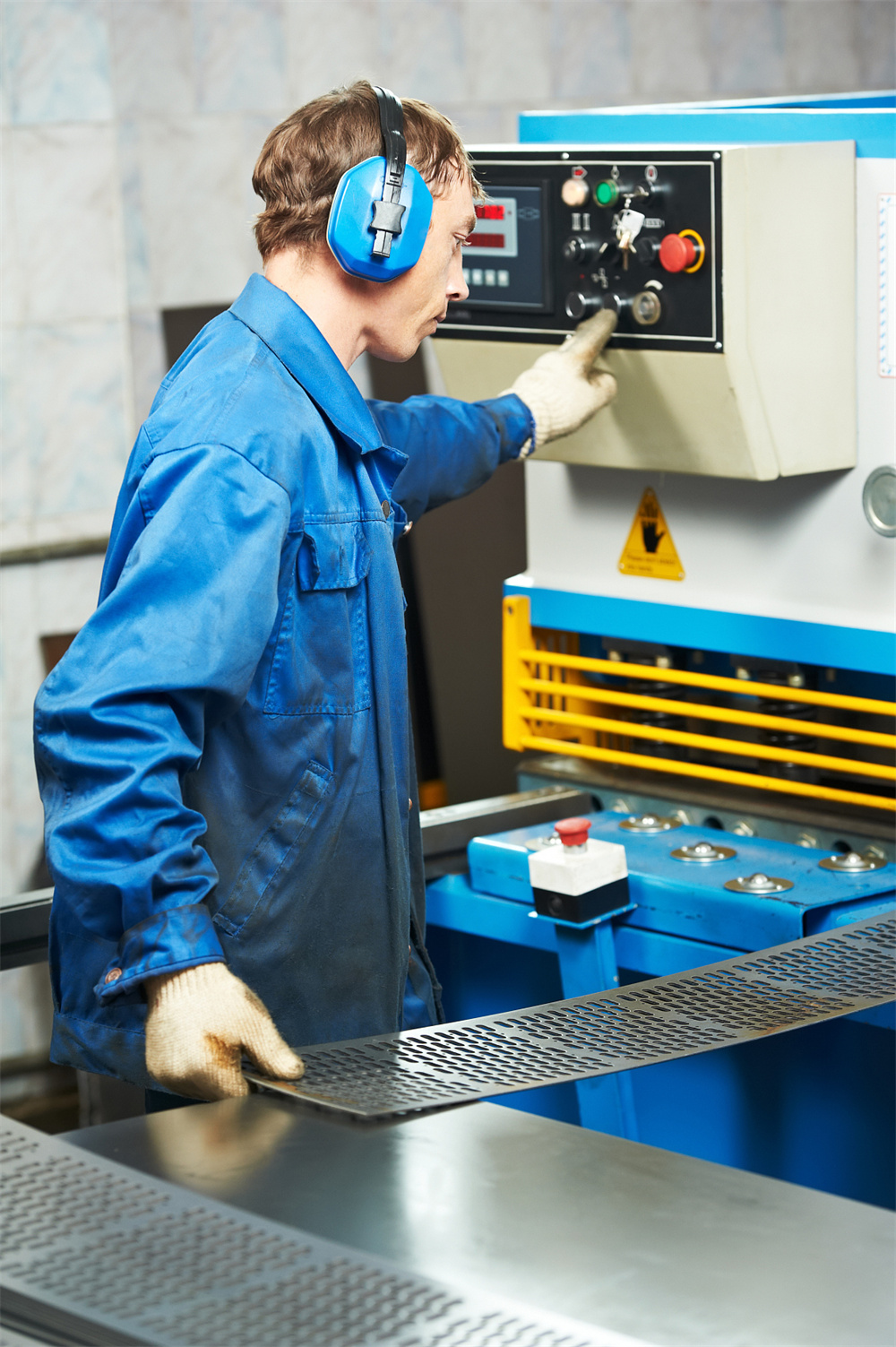
The first step in keep a shearing machine cutting straight routine maintenance begins before the first cut of the day. A daily inspection protocol ensures that minor issues are caught before they escalate into major mechanical failures. Operators should start by cleaning the worktable and the area around the lower blade. Metal chips, scale, and debris can lodge themselves between the material and the table, causing the workpiece to sit at a slight angle, which inevitably leads to a crooked cut.
Next, inspect the blade gap setting. Most modern HARSLE shearing machines feature an automated or semi-automated blade gap adjustment system. However, manual verification is still recommended. If the gap is too wide for the material thickness, the metal will “fold” or “tear” rather than shear, resulting in a burred and non-straight edge. Conversely, a gap that is too tight can cause the blades to clash, leading to catastrophic damage. Ensure the gap is uniform across the entire length of the blade.
Safety sensors and emergency stops must also be checked daily. While these don’t directly affect the straightness of the cut, a malfunctioning safety system can lead to erratic machine behavior. Finally, observe the hold-down cylinders. These hydraulic components are responsible for clamping the material firmly against the table. If one cylinder is leaking or applying less pressure than the others, the material may shift during the shearing stroke, resulting in a diagonal or curved cut.
Deep Dive: Hydraulic System Integrity
The hydraulic system is the heart of the shearing machine. To keep a shearing machine cutting straight routine maintenance must prioritize hydraulic health. The consistency of the downward force applied by the ram is dependent on the stability of hydraulic pressure. If the oil is contaminated or the pressure valves are fluctuating, the ram may descend unevenly, causing the blade to deflect.
Check the hydraulic oil level and color daily. Cloudy or milky oil indicates water contamination, while dark, burnt-smelling oil suggests overheating. Contaminated oil can cause the solenoid valves to stick or wear prematurely, leading to uneven cutting speeds. We recommend changing the hydraulic oil every 2,000 to 3,000 hours of operation, or at least once a year, depending on the intensity of use. Always use the high-quality anti-wear hydraulic oil specified in your HARSLE manual.
Furthermore, pay close attention to the nitrogen return cylinders (accumulator system). Many shearing machines use nitrogen cylinders to return the ram to its top position. If the nitrogen pressure is low, the return stroke will be sluggish, and the ram may not sit perfectly level at the start of the next cut. Regularly check the pressure gauges and recharge the nitrogen as needed to ensure the ram remains balanced and responsive.
Electrical and Control System Calibration
In the era of CNC-controlled fabrication, the electrical system plays a vital role in cutting accuracy. The backgauge is the primary component responsible for determining the width and squareness of the cut. If the electrical signals to the backgauge motor are inconsistent, or if the encoder is dirty, the backgauge may move to the wrong position or sit at an angle.
Routine maintenance should include a check of all electrical connections in the control cabinet. Vibrations from the shearing process can loosen terminal screws over time, leading to intermittent signal loss. Ensure that the PLC (Programmable Logic Controller) is free from dust and that the cooling fans are operational. Overheating in the control cabinet can cause the electronics to “drift,” leading to inaccuracies in the backgauge positioning.
Calibration of the backgauge is a critical task. Periodically measure the distance from the backgauge to the blade at both ends of the machine using a precision ruler or gauge block. If the measurements differ, the backgauge is “out of square.” Most HARSLE machines allow for easy adjustment through the CNC interface or via mechanical fine-tuning bolts. Keeping the backgauge perfectly parallel to the blade is the single most important factor in ensuring straight, repeatable cuts.
Mechanical Alignment and Blade Management
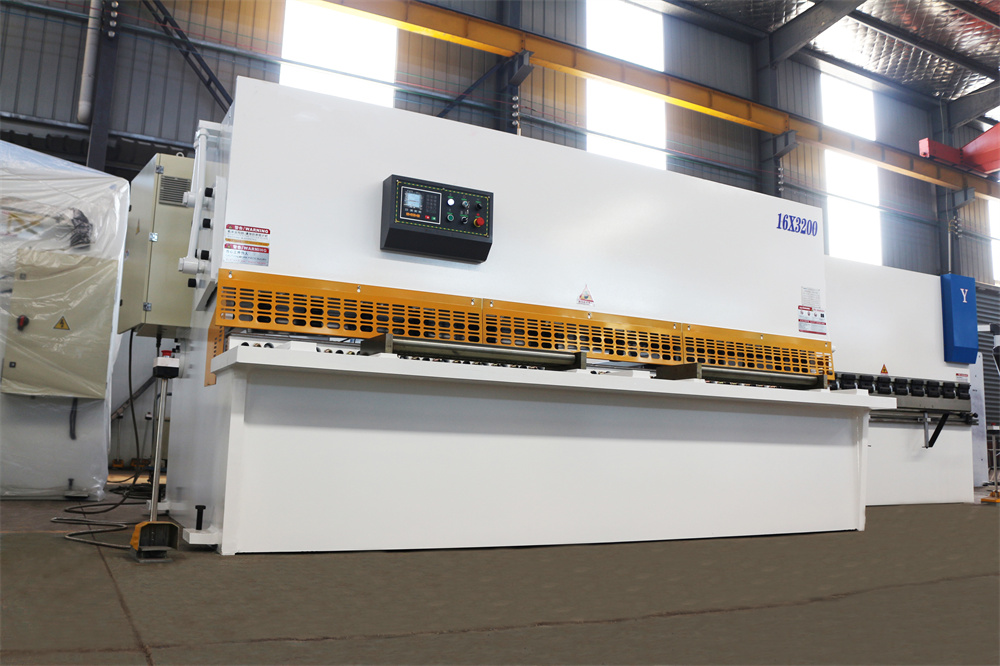
The mechanical structure of the shear—the ram, the bed, and the blade seats—must remain rigid. To keep a shearing machine cutting straight routine maintenance involves inspecting the gibs or guideways. These are the surfaces upon which the ram slides. If the gibs are too loose, the ram will have “play,” allowing the blade to wander during the cut. If they are too tight, they will cause excessive friction and heat. Adjust the gibs according to the manufacturer’s specifications to ensure a smooth, vertical stroke.
Blade maintenance is equally paramount. A dull blade requires more force to cut, which increases the stress on the machine frame and can cause the ram to deflect. Inspect the cutting edges for chips or rounded corners. Most HARSLE shearing blades are four-edged; when one edge becomes dull, you can rotate the blade to a fresh edge. Ensure that when blades are flipped or replaced, the blade seats are meticulously cleaned. Even a tiny piece of metal behind the blade can cause a “bulge” in the blade profile, resulting in a non-straight cut.
Don’t forget the hold-down feet. The pads on the bottom of the hold-down cylinders should be in good condition. If the rubber or plastic pads are worn out, they may not grip the material securely, especially on polished surfaces like stainless steel. If the material slips even a fraction of a millimeter during the cut, the straightness of the edge is compromised.
Comprehensive Lubrication Strategy
Lubrication is the simplest yet most often neglected aspect of keep a shearing machine cutting straight routine maintenance. Without proper lubrication, the moving parts of the machine will experience friction-induced wear, leading to misalignment. A comprehensive lubrication plan should cover three main areas: the guideways, the backgauge lead screws, and the pivot points.
- Guideways: The ram moves up and down on precision-ground ways. These should be lubricated daily with a heavy-duty way oil to prevent galling and ensure smooth movement.
- Backgauge Lead Screws: The accuracy of your backgauge depends on the smooth rotation of the ball screws or lead screws. Use a high-quality lithium-based grease to keep these components moving freely and to prevent backlash.
- Pivot Points: On swing beam shears, the main pivot bearings carry the entire load of the cut. These must be greased regularly to prevent the bearings from wearing unevenly, which would cause the beam to tilt.
Many HARSLE machines are equipped with centralized lubrication systems. Ensure the reservoir is full and that the distribution lines are not blocked. If you notice one specific area of the machine looking dry, manually lubricate it and investigate the blockage in the automatic system immediately.
Identifying and Solving Common Cutting Deviations
Even with good maintenance, operators must be trained to recognize the “signals” of a machine that is starting to drift. Troubleshooting these signals early can prevent costly downtime.
1. Bowing: This is when the cut piece curves away from the straight line. This is often caused by the blade gap being too wide or the material being too thin for the current settings. It can also happen if the hold-downs are not applying enough pressure in the center of the sheet.
2. Twisting: If the sheared strip looks like a corkscrew, this is usually due to the rake angle being too high. While a higher rake angle allows you to cut thicker material with less force, it increases the internal stresses in the metal, causing it to twist. Lowering the rake angle (if your machine allows) can help keep the cut straight.
3. Cambering: This occurs when the sheet moves horizontally during the cut. This is almost always a result of the backgauge not being parallel to the blade or the hold-downs failing to secure the material. Check for oil on the material or the hold-down pads, which can reduce friction and cause sliding.
Maintenance Schedule Table
To help you keep a shearing machine cutting straight routine maintenance, use the following table as a baseline for your shop’s schedule.
| Frequency | Task | Component | Objective |
|---|---|---|---|
| Daily | Clean worktable and blades | Mechanical | Remove debris that causes misalignment |
| Daily | Check oil levels and leaks | Hydraulic | Ensure consistent pressure for straight ram travel |
| Daily | Verify blade gap setting | Control/Mechanical | Prevent burrs and material deformation |
| Weekly | Lubricate backgauge screws | Mechanical | Maintain positioning accuracy |
| Weekly | Inspect hold-down pads | Hydraulic/Mechanical | Prevent material slippage during shearing |
| Monthly | Calibrate backgauge parallelism | Electrical/Mechanical | Ensure squareness of the cut piece |
| Monthly | Check nitrogen pressure | Hydraulic | Ensure smooth and level ram return |
| Yearly | Change hydraulic oil and filters | Hydraulic | Prevent valve wear and erratic movement |
| Yearly | Inspect and adjust ram gibs | Mechanical | Eliminate “play” in the cutting stroke |
Frequently Asked Questions
1. Why is my shearing machine cutting at an angle?
A diagonal cut is usually caused by the backgauge being out of alignment or the material slipping. Check that the backgauge is perfectly parallel to the blade and ensure your hold-down cylinders are functioning correctly. Also, verify that the material is pushed firmly against the backgauge before initiating the cut.
2. How often should I sharpen the shearing blades?
There is no set timeframe, as it depends on the material type and volume. However, if you notice increased burrs, a louder “bang” during the cut, or the machine struggling to cut material within its rated capacity, it is time to rotate or sharpen the blades. Generally, high-production shops rotate edges every 6-12 months.
3. Can I cut stainless steel with the same settings as mild steel?
No. Stainless steel is much harder and requires a tighter blade gap (usually 5-10% of material thickness) and more pressure. Cutting stainless steel with a gap set for mild steel will result in poor cut quality and faster blade wear, which will eventually affect the machine’s ability to cut straight.
4. What happens if the nitrogen pressure in the return cylinder is too low?
If the nitrogen pressure is low, the ram will return slowly or may not reach the full “up” position. This can cause the machine to cycle unevenly and may prevent the CNC system from registering the start position, leading to errors in the next cut’s alignment.
5. How do I know if my hydraulic oil needs changing?
Perform a visual check. If the oil is dark, has a burnt smell, or appears cloudy, it needs to be replaced. Additionally, if you notice the machine’s cycle time slowing down as the oil heats up, it’s a sign that the oil has lost its viscosity and needs changing.
6. Does the temperature of the shop affect cutting straightness?
Extreme temperatures can affect hydraulic oil viscosity. In very cold shops, the oil is thicker, which can cause sluggish movement. In very hot shops, the oil thins out, potentially leading to internal leakage in valves. Both scenarios can affect the consistency of the ram stroke and the straightness of the cut. Using a heater or cooler for the hydraulic tank can mitigate this.
7. Why is my backgauge making a grinding noise?
A grinding noise usually indicates a lack of lubrication on the lead screws or a failure in the bearings. Stop the machine immediately and lubricate the components. If the noise persists, the lead screw may be damaged or misaligned, which will directly impact your cutting accuracy.