Shearing Machine Price Comparison: Manual, Hydraulic, and CNC Models


Introduction to Shearing Machine Investments
In the world of metal fabrication, the shearing machine is a cornerstone of production. Whether you are a small hobbyist shop or a large-scale industrial manufacturer, the ability to accurately cut sheet metal to size is fundamental. However, the market for shearing machines is vast, with prices ranging from a few hundred dollars to well over a hundred thousand. Navigating this landscape requires a deep understanding of the different technologies available—Manual, Hydraulic, and CNC—and how their features translate into both upfront costs and long-term value.
Choosing the right shearing machine is not just about finding the lowest price tag; it is about matching the machine’s capabilities to your specific production needs. A machine that is too small will bottleneck your production, while one that is overly complex for your needs will represent wasted capital. This guide provides a comprehensive Shearing Machine Price Comparison: Manual, Hydraulic, CNC Models, helping you understand the nuances of pricing and the factors that drive the cost of these essential industrial tools.
Price Range Overview: Manual, Hydraulic, and CNC Models
The first step in any procurement process is establishing a budget. Shearing machines generally fall into three categories based on their power source and control systems. Each category serves a different market segment and comes with a distinct price bracket.
Manual Shearing Machines ($500 – $3,500)
Manual shearing machines, often referred to as foot shears or treadle shears, are the entry-level option. These machines rely entirely on human power, typically operated by a foot pedal or a hand lever. They are designed for thin-gauge materials, usually up to 1.5mm or 16-gauge mild steel. Because they lack complex hydraulic systems or electronics, they are the most affordable. You can find small benchtop models for as little as $500, while heavy-duty industrial foot shears with 50-inch cutting lengths can reach up to $3,500.
Hydraulic Shearing Machines ($5,000 – $60,000+)
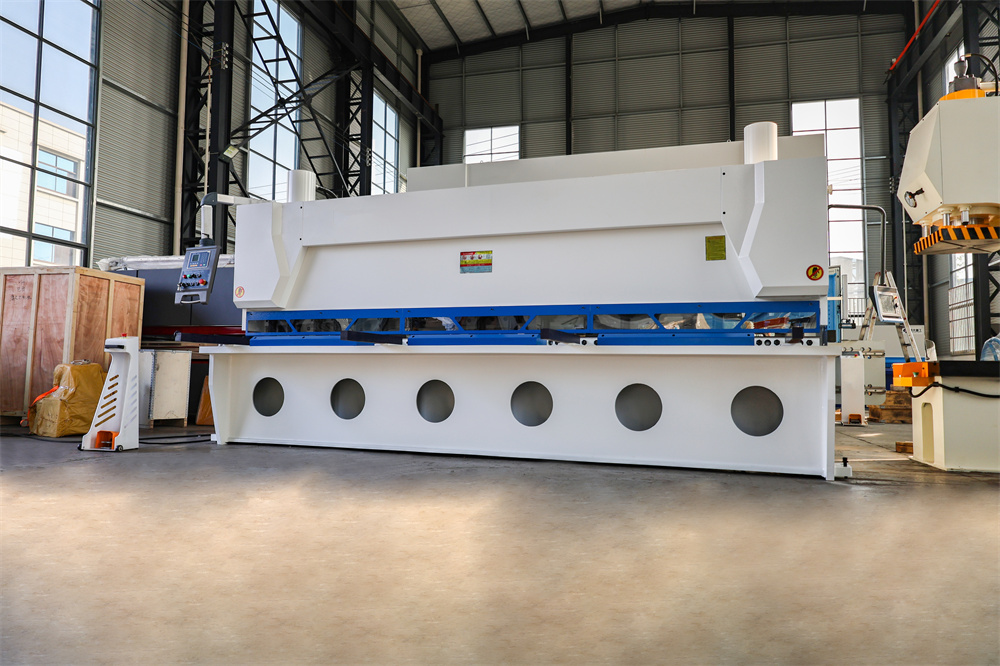
Hydraulic shearing machines represent the workhorse of the modern fabrication shop. They use hydraulic cylinders to move the upper blade, providing the force necessary to cut through thick plates. Within this category, there are two main types: Swing Beam (QC12Y) and Guillotine (QC11Y). Swing beam models are generally more affordable, starting around $5,000 for basic configurations. Guillotine shears, which offer higher precision and adjustable rake angles, typically start at $12,000 and can exceed $60,000 for large-capacity models (e.g., 20mm thickness and 6-meter length).
CNC Shearing Machines ($15,000 – $120,000+)
CNC (Computer Numerical Control) shearing machines are essentially hydraulic shears equipped with advanced automation. The price jump for CNC models is attributed to the sophisticated control systems (like Delem or Cybelec), motorized backgauges, and automatic blade gap adjustments. A basic CNC shear might start at $15,000, but high-end models with automated loading/unloading systems, pneumatic sheet supports, and high-speed precision can easily reach $120,000 or more. These are designed for high-volume environments where speed and repeatability are paramount.
Main Cost Drivers in Shearing Technology
When comparing prices, it is important to look beyond the base model. Several technical specifications significantly influence the final quote from a manufacturer like HARSLE.
1. Cutting Capacity (Length and Thickness)
The most obvious cost driver is the physical size and power of the machine. A machine designed to cut 4mm mild steel requires significantly less structural steel and hydraulic force than one designed for 20mm plate. Similarly, the cutting length (e.g., 2500mm vs. 6000mm) dictates the size of the frame and the length of the blades. As the length and thickness increase, the price increases exponentially due to the need for a more rigid frame to prevent deflection during the cut.
2. Material Compatibility
While most machines are rated for mild steel, cutting stainless steel requires more power and harder blades. If your shop primarily works with stainless steel, you will need a machine with higher-grade blade materials (such as Cr12MoV or 6CrW2Si) and a more robust hydraulic system. This specialization can add 10-20% to the base price of a standard hydraulic shear.
3. Blade Quality and Metallurgy
The blades are the most critical consumable on a shearing machine. Standard blades are suitable for mild steel, but high-carbon, high-chrome blades are necessary for tougher materials. The cost of a replacement set of high-quality blades can range from $800 to $5,000 depending on the length. Machines that come standard with premium blades will naturally have a higher initial purchase price but lower long-term maintenance costs.
4. Frame Construction and Rigidity
A cheaper machine often uses thinner steel plates for the frame, which can lead to vibration and inaccuracy over time. Premium manufacturers like HARSLE use heavy-duty, stress-relieved welded frames. The process of heat-treating the frame to remove internal stresses adds to the manufacturing cost but ensures the machine maintains its precision for decades.
Configuration Impact: How Features Dictate Price
The “bells and whistles” of a shearing machine are often what separate a budget model from a professional-grade tool. Understanding these configurations is key to a successful Shearing Machine Price Comparison: Manual, Hydraulic, CNC Models.
Control Systems (NC vs. CNC)
Many hydraulic shears come with a simple NC (Numerical Control) system like the Estun E21S. This controls the backgauge position and the cutting stroke. It is reliable and cost-effective. However, upgrading to a full CNC system like the Delem DAC-360T allows for automatic calculation of the rake angle, blade gap, and stroke length based on the material type and thickness entered by the operator. This upgrade can add $3,000 to $7,000 to the machine’s price but significantly reduces setup time.
Backgauge Systems
The backgauge is responsible for the accuracy of the cut length. Manual backgauges are standard on low-end models. Motorized backgauges with digital readouts are standard on most hydraulic models. High-precision ball screw backgauges, which offer much tighter tolerances and faster movement, are an upgrade that adds to the cost but is essential for precision work.
Pneumatic Sheet Support
When cutting thin sheets (under 2mm), the material can sag before it reaches the backgauge, leading to inaccurate cuts. A pneumatic sheet support system holds the material level during the gauging process. This is a common add-on for CNC shears and typically costs between $2,000 and $5,000 depending on the complexity and length of the machine.
Safety Features
Safety is a significant factor in modern industrial equipment. Basic machines come with standard finger guards. However, many regions require advanced safety features like rear light curtains, side fences with interlocks, and emergency stop systems that comply with CE or OSHA standards. Integrating these systems adds to the manufacturing cost but is often a legal requirement for industrial operations.
Hidden Costs of Ownership
The purchase price is only the beginning of the investment. To get an accurate picture of the total cost, buyers must consider several “hidden” expenses.
- Shipping and Logistics: Shearing machines are heavy and bulky. Shipping a 5-ton machine across the ocean or even across the country requires specialized freight services and rigging. Depending on your location, shipping can add $1,000 to $10,000 to your total cost.
- Installation and Commissioning: While some shops can install a machine themselves, many prefer to have a factory-trained technician handle the setup, leveling, and initial calibration. This ensures the warranty remains valid and the machine performs at its peak from day one.
- Consumables and Maintenance: Hydraulic oil, filters, and blade sharpening are ongoing costs. A high-capacity shear might require 200-400 liters of hydraulic oil, which needs to be changed periodically. Blades will eventually need to be flipped (most have 2 or 4 cutting edges) and eventually reground.
- Power Consumption: Large hydraulic motors (15kW to 30kW+) can significantly impact your monthly utility bill. CNC machines with inverter-driven motors can be more energy-efficient, but they have a higher upfront cost.
ROI Calculation: When Does an Upgrade Pay Off?
When performing a Shearing Machine Price Comparison: Manual, Hydraulic, CNC Models, the goal is to determine the Return on Investment (ROI). A more expensive machine might actually be cheaper in the long run if it increases throughput.
Consider a shop that currently uses a manual shear. If they spend 20 hours a week cutting material, and a hydraulic shear could do that same work in 5 hours, they save 15 hours of labor per week. At a labor rate of $30/hour, that is a savings of $450 per week, or $23,400 per year. In this scenario, a $15,000 hydraulic shear pays for itself in less than eight months.
For CNC models, the ROI comes from reduced scrap and faster setup. If a CNC shear prevents just 2% of material waste on high-value metals like stainless steel or aluminum, the material savings alone can justify the $5,000 – $10,000 premium over a standard hydraulic model within a year of high-volume production.
Buying Advice: Selecting the Right Model for Your Shop
Before making a final decision, follow this checklist to ensure you are getting the best value for your investment:
- Define Your Maximums: What is the thickest and longest piece you will cut? Always buy a machine with about 20% more capacity than your current maximum to allow for future growth and to avoid straining the machine.
- Evaluate Your Volume: If you cut 10 pieces a day, a manual or basic hydraulic shear is fine. If you cut 500 pieces a day, a CNC shear with a pneumatic support system is a necessity.
- Check the Components: Look for reputable brands in the internal components. HARSLE machines, for example, often use Rexroth valves, Schneider electronics, and Sunny pumps. These parts are easier to source and replace globally.
- Consider the After-Sales Support: A cheap machine from an unknown vendor can become a paperweight if a part breaks and there is no technical support. Choose a manufacturer with a proven track record and available spare parts.
- Test the Accuracy: If possible, request a cutting video or a sample cut of your specific material. Check for squareness and the quality of the edge (burr-free).
Frequently Asked Questions (FAQ)
What is the difference between a Swing Beam and a Guillotine shear?
A swing beam shear (QC12Y) has an upper blade that moves in an arc. It is simpler and cheaper but has a fixed rake angle. A guillotine shear (QC11Y) moves the blade in a straight vertical line and allows for adjustment of the rake angle. This reduces distortion (twisting) in the cut piece, especially for thick materials.
How often do shearing machine blades need to be sharpened?
This depends entirely on the material being cut. For mild steel, blades can often last 1-2 years before needing to be flipped or sharpened. For stainless steel, this interval may be reduced to 6 months. Using the correct blade gap is the best way to extend blade life.
Can I cut 6mm stainless steel on a machine rated for 6mm mild steel?
No. Stainless steel is much harder and has a higher tensile strength. Generally, a machine’s capacity for stainless steel is about 50-60% of its capacity for mild steel. To cut 6mm stainless, you would typically need a machine rated for 10mm or 12mm mild steel.
Is a CNC backgauge worth the extra cost?
If your work involves frequent changes in cut lengths, yes. A CNC backgauge can move to a new position in seconds with high precision. If you are cutting the same size all day, a manual or simple motorized backgauge may be sufficient.
What maintenance is required for a hydraulic shearing machine?
Regular maintenance includes checking hydraulic oil levels, inspecting hoses for leaks, greasing the guide rails and backgauge screws, and ensuring the blade gap is correctly set for the material thickness being cut.