
Press Brake Not Bending to Angle? Common Causes and Practical Solutions


Introduction to Bending Inaccuracies in Metal Fabrication
In the world of precision metal fabrication, the press brake is the backbone of the workshop. Whether you are producing complex aerospace components or simple structural brackets, the accuracy of your bend angle is paramount. However, one of the most common frustrations for operators is finding that the Press Brake Not Bending Angle? Common Causes Practical Solutions are not immediately apparent when a part comes off the machine out of spec. An inaccurate bend doesn’t just result in a rejected part; it leads to material waste, lost time, and decreased profitability.
Achieving a perfect 90-degree bend (or any specified angle) requires a harmonious interaction between the machine’s hydraulic system, the CNC controller, the tooling, and the material itself. When any one of these variables shifts, the resulting angle will deviate. Understanding why a press brake fails to hit its target angle is the first step toward maintaining a high-quality production line. This guide will delve deep into the mechanical, material, and operational factors that influence bending precision.
For industrial manufacturers using HARSLE equipment or any high-end CNC press brake, maintaining tight tolerances is a daily requirement. When the machine begins to drift, it is rarely a single catastrophic failure but rather a combination of small variables. By systematically addressing these issues, operators can restore the machine to its peak performance. In the following sections, we will explore the technical nuances of why these deviations occur and provide actionable solutions to fix them.
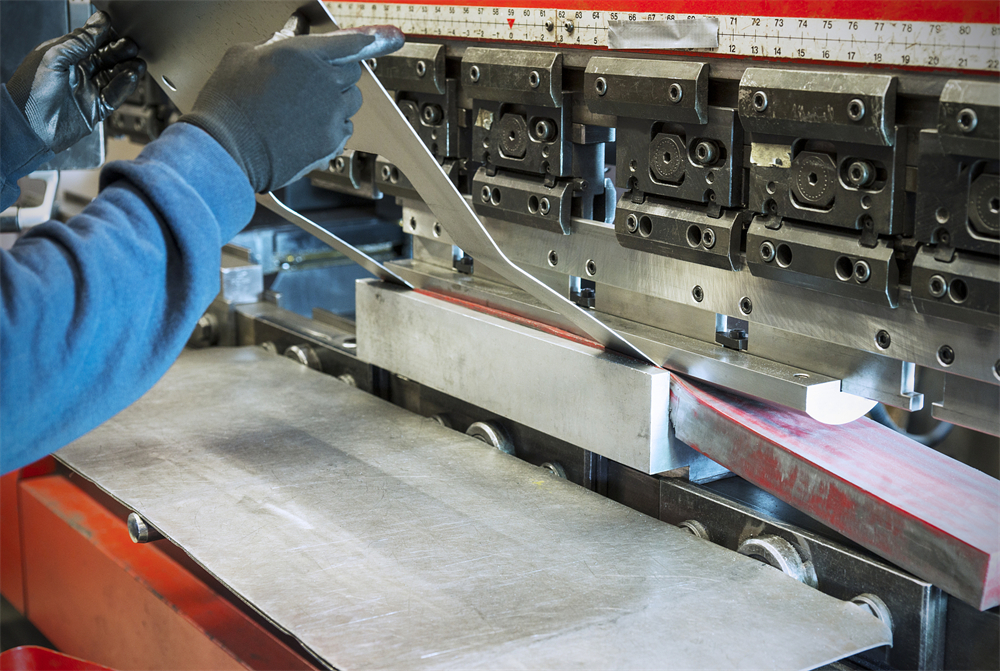
Key Considerations for Angle Precision
Material Properties and the Challenge of Springback
One of the most significant factors in angle deviation is the material itself. No two sheets of metal are identical, even if they come from the same batch. Variations in tensile strength, yield strength, and thickness can all cause the press brake to produce inconsistent results. The most notorious of these factors is “springback.” When the pressure of the punch is released, the elastic nature of the metal causes it to slightly return toward its original shape. If the CNC controller is not programmed to over-bend the material to compensate for this, the final angle will be wider than intended.
Furthermore, the grain direction of the metal plays a crucial role. Bending with the grain (longitudinal) requires less force but is more prone to cracking and offers different springback characteristics compared to bending against the grain (transverse). If an operator mixes parts with different grain orientations in the same run without adjusting the machine settings, the angles will inevitably vary. Consistency in material sourcing and grain orientation is a key consideration for any high-precision shop.
Tooling Selection and Wear
The condition and selection of your tooling—the punch and the die—are just as important as the machine itself. Over time, the tip of the punch and the shoulders of the V-die will wear down. Even a few thousandths of an inch of wear can translate into several degrees of error in the final bend. This is especially true in high-volume environments where the same tooling is used for thousands of cycles. Regular inspection of tooling for signs of deformation or pitting is essential.
Additionally, using the wrong V-opening for the material thickness can lead to inaccurate angles. The general rule of thumb is that the V-opening should be 8 times the material thickness. If the V-opening is too small, the tonnage required increases significantly, leading to potential machine deflection. If it is too large, the material may not be properly supported, leading to an inconsistent radius and angle. Proper tooling management is a fundamental practical solution for angle issues.
Technical Details: Why Your Press Brake Fails to Hit the Mark
Hydraulic System Inconsistencies
In hydraulic press brakes, the consistency of the ram’s movement is dependent on the health of the hydraulic system. If the oil temperature fluctuates significantly throughout the day, its viscosity changes. Thinner, hotter oil may flow through valves differently than cooler, thicker oil, leading to slight variations in the ram’s bottom dead center (BDC) position. Modern CNC machines often have temperature compensation, but older or less sophisticated models may require manual adjustment as the machine warms up.
Air trapped in the hydraulic lines or leaking seals can also cause the ram to “drift” or fail to reach the exact depth required for a precise bend. If the Y1 and Y2 axes (the left and right cylinders) are not perfectly synchronized, the ram will tilt, resulting in a different angle on one end of the workpiece compared to the other. This is a common technical failure that requires checking the proportional valves and the linear encoders that track ram position.
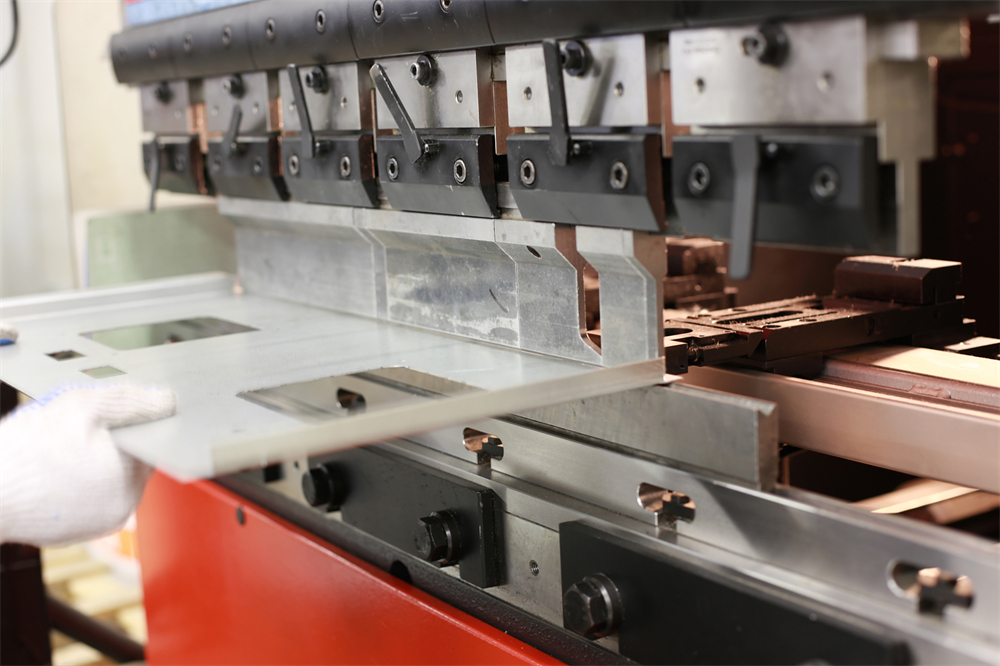
Mechanical Wear and Ram Parallelism
The mechanical integrity of the press brake frame and the ram guides (gibbing) is vital. Over years of service, the guides that ensure the ram moves vertically can wear down, allowing for lateral movement or “play.” This play prevents the punch from entering the die at a perfectly perpendicular angle, causing the bend to be skewed. Adjusting or replacing the wear plates in the gibbing system is a standard maintenance task that can solve long-term accuracy problems.
Ram parallelism is another critical factor. If the ram is not parallel to the bed, the depth of penetration will vary across the length of the machine. This is often detected when a long part has a perfect 90-degree bend in the middle but is 92 degrees at the ends. Checking parallelism involves using dial indicators to ensure both cylinders are moving in perfect unison and that the bed itself hasn’t settled or shifted over time.
The Role of the CNC Controller and Crowning
Modern CNC controllers are incredibly powerful, but they are only as good as the data they receive. If the operator enters the wrong material thickness or tensile strength, the controller will calculate the wrong depth for the punch. Furthermore, the “crowning” system is essential for long bends. When a press brake applies pressure, the bed and the ram naturally deflect or “bow” in the center. Without a crowning system (either hydraulic or mechanical) to compensate for this deflection, the center of the bend will always be shallower (wider angle) than the ends.
If your Press Brake Not Bending Angle? Common Causes Practical Solutions search led you here, check your crowning settings. A malfunctioning crowning motor or a miscalibrated hydraulic crowning cylinder is a frequent culprit for “canoeing”—where the part is straight at the ends but bowed in the middle. Ensuring the crowning system is properly synced with the tonnage being applied is a technical necessity for any part over 2 meters in length.
Selection Advice: Choosing a Press Brake for High Precision
When purchasing a new press brake, such as those offered by HARSLE, it is important to look for features that inherently prevent angle inaccuracies. If your work requires extreme precision, an electro-hydraulic synchronous press brake is superior to a traditional torsion bar machine. Synchronous machines use dual linear encoders and proportional valves to monitor and adjust the ram position hundreds of times per second, ensuring the Y1 and Y2 axes are always perfectly aligned.
Another feature to consider is an integrated angle measurement system. Some high-end press brakes come equipped with laser or contact-based angle sensors that measure the bend in real-time and automatically adjust the punch depth to hit the exact target. While this increases the initial investment, it virtually eliminates scrap and the need for manual test bends. For shops dealing with expensive materials like stainless steel or high-strength alloys, this technology pays for itself quickly.
Finally, consider the rigidity of the frame. A heavier, more robust frame will deflect less under load, making the job of the crowning system much easier. Look for machines with a deep throat and a high-quality CNC system (like Delem or Cybelec) that offers comprehensive material libraries and easy-to-use calibration tools. Choosing the right machine from the start is the best way to avoid the headache of inconsistent bending angles later on.
Troubleshooting Checklist: Common Symptoms and Solutions
| Symptom | Potential Cause | Practical Solution |
|---|---|---|
| Angle is inconsistent across the length | Improper crowning or ram parallelism | Adjust crowning settings or recalibrate Y1/Y2 axes. |
| Angle changes as the machine warms up | Hydraulic oil viscosity changes | Install an oil cooler or use temperature compensation settings. |
| Angle is wider than programmed (Springback) | Material elasticity not accounted for | Increase the over-bend angle in the CNC controller. |
| Bend is inconsistent between different batches | Variation in material thickness/tensile strength | Measure actual thickness and update the CNC program. |
| The punch is not hitting the bottom consistently | Worn tooling or loose gibbing | Inspect/replace tooling and tighten ram guides. |
FAQ: Frequently Asked Questions
1. Why does my press brake bend differently at the ends than in the middle?
This is usually due to machine deflection. Under high pressure, the bed and ram flex. Without a properly adjusted crowning system to push back against this flex, the center of the bend will not be as deep as the ends, resulting in a wider angle in the middle.
2. How often should I calibrate my press brake for angle accuracy?
For high-precision work, a quick check should be performed daily. A full calibration of the Y-axes and backgauge should be done monthly or whenever you notice a consistent drift in part accuracy. Regular maintenance is the best preventative measure.
3. Can I use the same settings for different types of steel?
No. Stainless steel, for example, has much higher springback than mild steel. Even different grades of aluminum will react differently. Always update your CNC material parameters when switching between different metal types.
4. Does the temperature of the workshop affect the bend angle?
Yes, significantly. Extreme cold can make hydraulic oil sluggish, while extreme heat can make it too thin. Both conditions affect the precision of the hydraulic valves. It is best to let the machine run for 15-20 minutes to reach a stable operating temperature before starting precision work.
5. What is the “8x Rule” in press brake tooling?
The 8x rule suggests that the V-die opening should be approximately eight times the thickness of the material being bent. Using a V-opening that is too small increases the required tonnage and can cause inaccurate angles or even damage the machine.
Conclusion: Mastering the Art of the Perfect Bend
Solving the issue of a Press Brake Not Bending Angle? Common Causes Practical Solutions requires a holistic approach. It is rarely just about the machine; it is about the synergy between the operator, the material, the tooling, and the hydraulic system. By understanding the technical details of springback, hydraulic consistency, and mechanical deflection, you can transform a frustrating production bottleneck into a streamlined, high-precision operation.
Regular maintenance remains the most effective way to ensure long-term accuracy. Keeping the hydraulic oil clean, inspecting tooling for wear, and ensuring the CNC controller is correctly programmed are simple steps that yield significant results. For those looking to upgrade their capabilities, investing in modern CNC technology with automatic crowning and angle sensors can virtually eliminate these common issues.
At HARSLE, we understand that precision is the lifeblood of your business. Our range of CNC press brakes is designed to provide the stability and technological edge needed to hit the perfect angle every time. By following the practical solutions outlined in this guide, you can ensure that your equipment remains a reliable asset for years to come, delivering the high-quality results your customers expect.


