Hydraulic Press vs Servo Press: A Comparison for Precision Manufacturing


Comparison Summary: Navigating the Press Technology Landscape
In the rapidly evolving world of metal fabrication, the choice between a hydraulic press and a servo press is one of the most critical decisions a facility manager or business owner can make. Both technologies have shaped the modern industrial landscape, yet they operate on fundamentally different principles. The Hydraulic Press Vs Servo Press: A Comparison Precision Manufacturing debate isn’t just about which machine is ‘better’—it is about which technology aligns with your specific production goals, material requirements, and long-term financial strategy.
Hydraulic presses have been the workhorse of the industry for decades, known for their immense power and ability to deliver full tonnage throughout the entire stroke. They are the go-to solution for heavy-duty applications like deep drawing and heavy plate forming. On the other hand, servo presses represent the pinnacle of modern precision. By utilizing high-torque servo motors instead of flywheel-driven or fluid-driven systems, they offer unparalleled control over ram speed, position, and pressure. This comparison aims to dissect these two giants of the manufacturing floor, providing a detailed roadmap for precision-oriented businesses.
As manufacturers face increasing pressure to reduce cycle times, improve part quality, and lower energy consumption, the nuances of these machines become more significant. While a hydraulic press might offer a lower initial investment, a servo press often promises lower operational costs and higher throughput for complex parts. In the following sections, we will explore the mechanics, advantages, and limitations of each, helping you determine which investment will drive your facility toward greater efficiency and profitability.
Machine A Overview: The Power of the Hydraulic Press
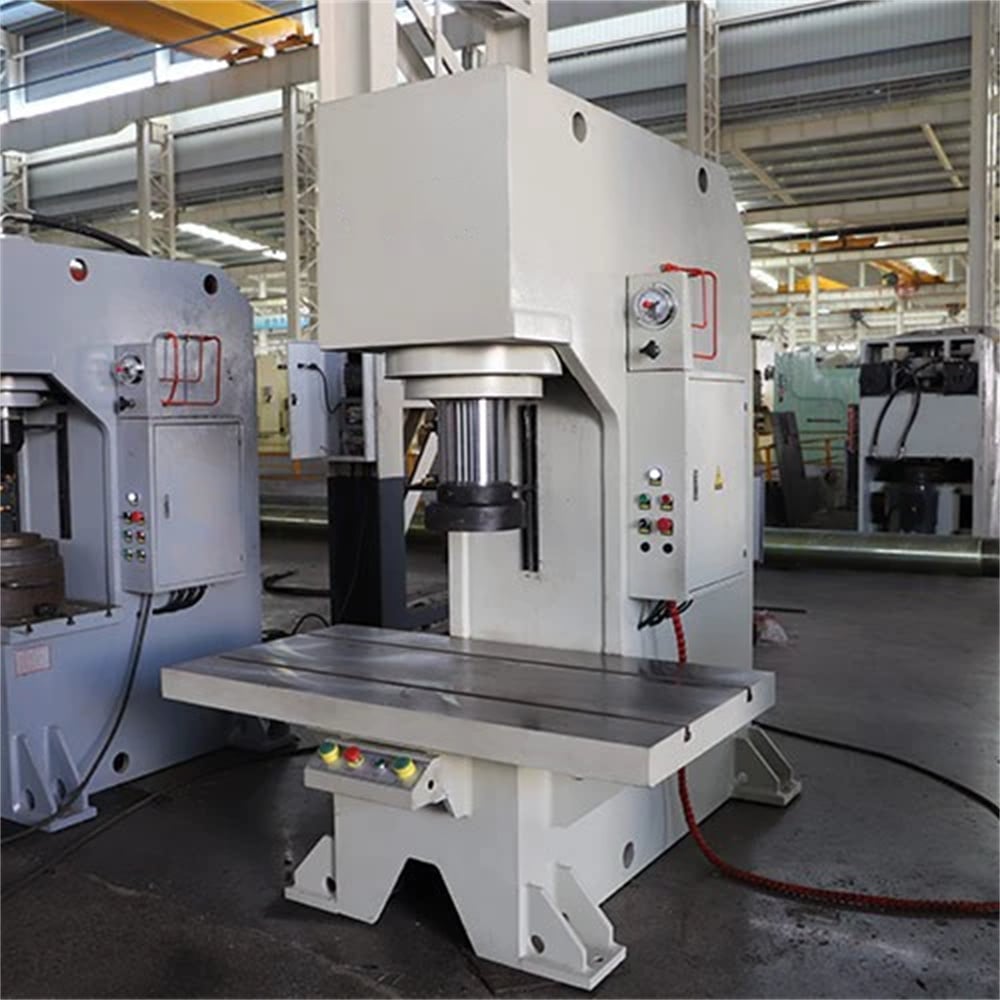
The hydraulic press operates on Pascal’s Principle, which states that pressure applied to a confined fluid is transmitted undiminished in every direction. In practical terms, this allows a relatively small amount of force generated by a pump to be converted into massive amounts of pressure through a series of cylinders and pistons. This technology is characterized by its versatility; a hydraulic press can be used for everything from simple assembly tasks to complex deep drawing of automotive panels.
One of the primary advantages of the hydraulic press is its ability to deliver its maximum rated tonnage at any point in the stroke. This is a stark contrast to mechanical presses, which only reach peak force at the bottom of the stroke. For precision manufacturing, this means that hydraulic presses are exceptionally well-suited for applications where the material requires consistent pressure over a long distance, such as in the forming of deep vessels or large structural components. Furthermore, the stroke length and pressure are easily adjustable, allowing operators to switch between different molds and materials with minimal downtime.
However, hydraulic systems are not without their drawbacks. They rely on complex networks of pumps, valves, and hoses, which are susceptible to leaks and require regular maintenance of the hydraulic fluid. Additionally, hydraulic presses are generally slower than their servo counterparts. The time required for fluid to move through the system and for pressure to build up creates a natural limit on cycle speeds. In terms of energy efficiency, hydraulic presses often consume power even when the ram is idle, as the pump must maintain a baseline pressure within the system.
Despite these challenges, modern hydraulic presses, such as those manufactured by HARSLE, have integrated advanced CNC controls and proportional valve technology to improve precision. These enhancements allow for better control over the ram’s approach and retraction speeds, narrowing the gap between traditional hydraulic power and modern precision requirements. For shops dealing with thick materials or requiring high-tonnage capacity at a lower entry price point, the hydraulic press remains an indispensable asset.
Machine B Overview: The Precision of the Servo Press
The servo press is a relatively recent innovation that has revolutionized the stamping and forming industry. Unlike traditional presses that use a flywheel or hydraulic fluid, the servo press is driven by a high-torque servo motor connected to a drive mechanism, such as a ball screw or a specialized linkage system. This direct-drive approach allows for absolute control over the ram’s movement. In the context of Hydraulic Press Vs Servo Press: A Comparison Precision Manufacturing, the servo press is the undisputed leader in flexibility and accuracy.
The defining feature of a servo press is its programmable stroke profile. Operators can program the ram to move at different speeds at different points in the cycle. For example, the ram can approach the workpiece quickly, slow down significantly during the actual forming process to prevent material tearing, and then retract at high speed to maximize throughput. This level of control is vital for precision manufacturing, especially when working with high-strength steels or delicate electronic components where even a slight variation in speed or pressure can lead to defects.
Energy efficiency is another area where the servo press excels. Because the motor only draws significant power when it is moving, energy consumption is drastically lower than that of a hydraulic press. Many servo presses also feature energy recovery systems that capture the kinetic energy generated during the ram’s deceleration and store it for the next stroke. This not only reduces the carbon footprint of the facility but also leads to substantial savings on utility bills over the life of the machine.
Furthermore, the absence of hydraulic oil eliminates the risk of leaks and the need for fluid disposal, making the servo press a ‘cleaner’ technology suitable for medical or food-grade manufacturing environments. The mechanical simplicity of the drive system also tends to result in higher reliability and less frequent maintenance compared to the complex plumbing of a hydraulic system. While the initial cost of a servo press is higher, the combination of high speed, extreme precision, and low operating costs makes it a compelling choice for high-volume, high-precision operations.
Specification Comparison Table
To better understand the technical differences, the following table compares the key performance indicators of hydraulic and servo presses in a precision manufacturing context.
| Feature | Hydraulic Press | Servo Press |
|---|---|---|
| Force Delivery | Full tonnage throughout the entire stroke. | Peak force typically at the bottom (depends on drive). |
| Precision & Repeatability | High (with CNC), but limited by fluid dynamics. | Extreme (micron-level) via electronic feedback. |
| Stroke Control | Adjustable, but generally linear. | Fully programmable, complex motion profiles. |
| Cycle Speed | Moderate to Slow. | Very High (up to 50% faster than hydraulic). |
| Energy Efficiency | Lower (pump runs constantly). | Very High (power used only during movement). |
| Maintenance | High (oil changes, seal leaks, filters). | Low (mostly lubrication of mechanical parts). |
| Initial Cost | Lower to Moderate. | High. |
| Noise Level | Higher (pump and fluid noise). | Very Low. |
Best-fit Applications: Choosing the Right Tool for the Job
When evaluating Hydraulic Press Vs Servo Press: A Comparison Precision Manufacturing, the application is the ultimate deciding factor. Hydraulic presses are the champions of ‘brute force’ and deep forming. In the automotive industry, they are used extensively for forming large body panels, chassis components, and fuel tanks. Their ability to maintain constant pressure over a long stroke makes them ideal for deep drawing, where the material must be stretched into a mold without thinning or cracking. They are also preferred for heavy-duty powder compaction and forging operations where the sheer tonnage required exceeds the practical limits of most servo systems.
Conversely, servo presses are designed for the ‘finesse’ of modern manufacturing. They are widely used in the electronics industry for stamping intricate connectors and lead frames where tolerances are measured in microns. In the aerospace sector, the ability to program specific dwell times and slow-forming speeds allows for the processing of exotic alloys that are sensitive to work-hardening. The medical device industry also favors servo presses for their cleanliness and the ability to record precise data for every single part produced, ensuring 100% traceability and quality assurance.
Another area where servo presses shine is in multi-stage progressive die stamping. Because the stroke can be shortened to just what is necessary for the part, the cycle time is significantly reduced compared to a hydraulic press that might have to complete a longer, slower cycle. However, for small job shops that handle a wide variety of low-volume, heavy-gauge parts, the versatility and lower cost of a hydraulic press often outweigh the speed advantages of a servo press. The hydraulic press’s ability to handle ‘overload’ situations more gracefully than a servo motor also provides a safety margin for less experienced operators.
Cost and Maintenance Comparison: Short-term vs. Long-term
The financial aspect of the Hydraulic Press Vs Servo Press: A Comparison Precision Manufacturing debate requires a look at the Total Cost of Ownership (TCO). A hydraulic press is significantly cheaper to purchase upfront. For a startup or a facility expanding its capacity on a budget, this lower entry barrier is attractive. However, the ongoing costs are higher. Hydraulic oil must be cooled, filtered, and periodically replaced. Seals will eventually leak, and pumps will wear out. Furthermore, the energy cost of running a hydraulic pump throughout an eight-hour shift can be substantial, especially in regions with high electricity rates.
Servo presses demand a premium price, often 30% to 50% more than a comparable hydraulic press. This is due to the cost of high-capacity servo motors, sophisticated drive electronics, and the robust mechanical linkages required to translate motor rotation into linear force. However, the ROI (Return on Investment) can be surprisingly fast. The energy savings alone can reach 40-70% compared to hydraulic systems. Because there are fewer moving parts and no high-pressure fluid system, the maintenance schedule is much lighter, focusing primarily on the lubrication of the ball screw or linkage and checking electrical connections.
From a maintenance perspective, a hydraulic press requires a technician skilled in fluid power, which is becoming a rarer skill set in some regions. A servo press requires an electronics or mechatronics technician. For many modern factories already utilizing robotics and CNC machining centers, the skill set required to maintain a servo press is already present on the floor. When you factor in the increased productivity—more parts per hour—and the reduction in scrap due to better precision, the servo press often proves to be the more economical choice for high-volume production over a 5-to-10-year horizon.
Recommendation: Which Should You Choose?
Choosing between these two technologies depends on your specific production profile. If your manufacturing process involves heavy-gauge materials, deep drawing, or requires high tonnage (over 1000 tons) at a lower initial cost, the Hydraulic Press is likely your best option. It provides the necessary power and flexibility for a wide range of traditional metal forming tasks. HARSLE offers a variety of hydraulic solutions that integrate modern controls to ensure that even these ‘traditional’ machines meet today’s precision standards.
However, if your focus is on high-speed production, extreme precision, energy efficiency, and the ability to work with complex, thin, or sensitive materials, the Servo Press is the superior choice. The ability to customize the stroke profile and the significant reduction in long-term operating costs make it the ideal tool for a forward-thinking, high-tech manufacturing facility. It is an investment in the future of your production capabilities, offering the agility needed to respond to changing market demands and tighter quality requirements.
Before making a final decision, we recommend conducting a thorough analysis of your most common part geometries, material types, and expected production volumes. Consult with a HARSLE technical expert to run a simulation of your production cycle on both machine types. This data-driven approach will ensure that your investment provides the maximum possible return and keeps your facility competitive in the global marketplace.
Frequently Asked Questions
1. Can a servo press handle the same tonnage as a hydraulic press?
While servo presses are increasing in capacity, hydraulic presses still dominate the very high tonnage range (3000+ tons). For most standard precision manufacturing needs (50 to 1000 tons), both technologies are available, but the servo press will be significantly more expensive at higher tonnages.
2. Is the programming for a servo press difficult?
Modern servo presses come with user-friendly CNC interfaces. While it requires more initial setup than a simple hydraulic press, the software usually includes templates for common motion profiles, making it accessible for operators familiar with CNC machinery.
3. How much energy can I really save with a servo press?
On average, users report energy savings between 40% and 70%. The exact amount depends on your cycle time and how much ‘idle’ time the press has. The more complex the motion and the more frequent the stops, the more the servo press saves compared to a hydraulic pump that stays on.
4. Does a hydraulic press produce more scrap?
Not necessarily, but the servo press offers better ‘process monitoring.’ Because the servo press can detect minute changes in force and position in real-time, it can stop the cycle before a defect occurs, whereas a hydraulic press might continue through the stroke, resulting in a rejected part.
5. Which machine has a longer lifespan?
Both machines are built for industrial use and can last 20+ years with proper maintenance. The hydraulic press may require more frequent ‘mid-life’ overhauls of its seals and pumps, while the servo press’s longevity depends on the quality of its electronic components and motor cooling systems.