Manual Hydraulic Press vs Automatic Hydraulic Press: Which Is More Efficient?


Comparison Summary: Understanding the Efficiency Gap
In the world of metal fabrication, the hydraulic press stands as a cornerstone of production, capable of delivering immense force for bending, punching, forging, and molding. However, when a facility looks to upgrade or expand, the primary question often revolves around the choice between a manual hydraulic press and an automatic hydraulic press. Efficiency, in this context, is not a singular metric; it encompasses production speed, labor costs, precision, energy consumption, and the overall return on investment (ROI).
A manual hydraulic press relies on human intervention—typically through a hand pump or a foot pedal—to generate the pressure required for the operation. It is the traditional choice for small-scale workshops, repair shops, and educational environments. On the other hand, an automatic hydraulic press utilizes advanced electrical control systems, often integrated with Programmable Logic Controllers (PLCs), to automate the pressing cycle. This allows for high-speed, repetitive tasks with minimal human oversight.
While the automatic press is the clear winner in terms of raw output and cycle time, the manual press offers a level of tactile feedback and low-cost flexibility that remains invaluable for certain niche applications. To determine which is more efficient for your specific operation, one must look beyond the machine’s speed and consider the total cost of ownership, the skill level of the operators, and the volume of the production run. This guide will break down these factors in detail to help you make an informed decision for your facility.
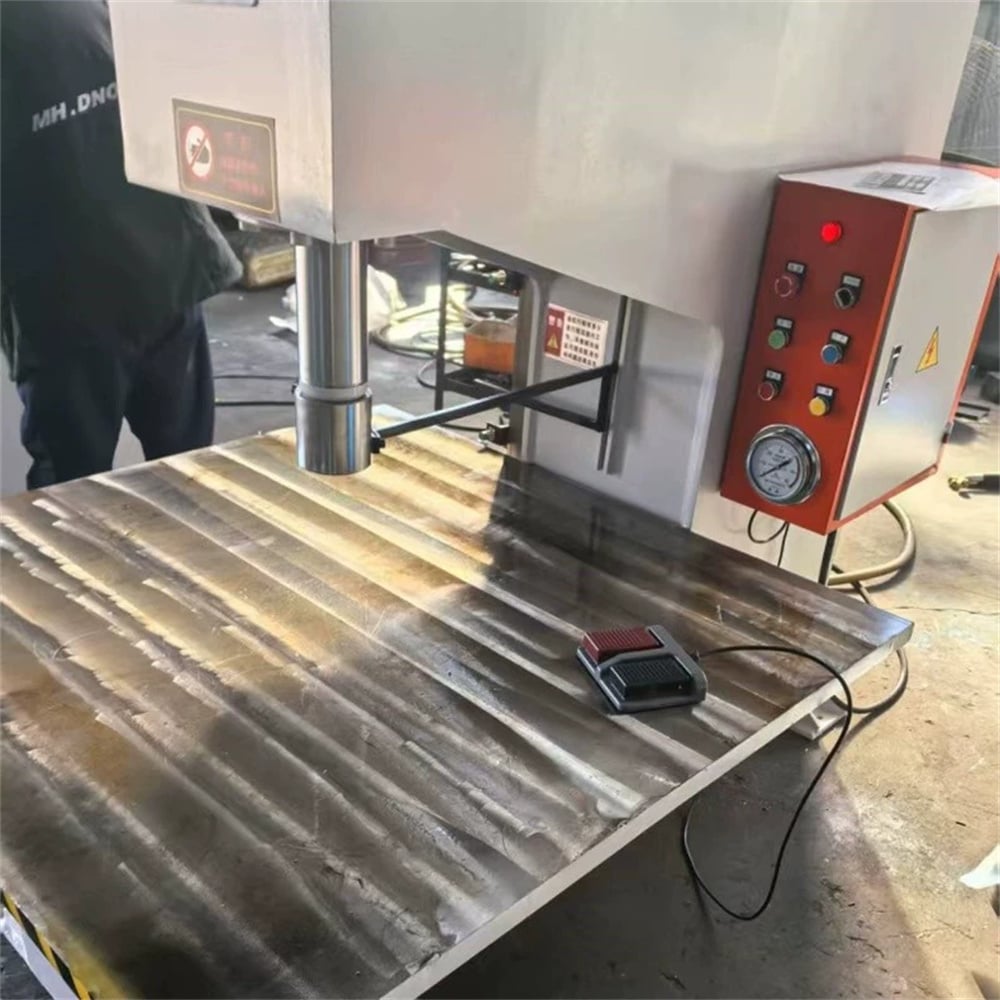
Manual Hydraulic Press Overview: The Power of Human Control
The manual hydraulic press is the bedrock of many small-to-medium enterprises (SMEs). Its design is elegantly simple: a hydraulic cylinder, a frame, and a manual pump. The operator uses a lever or a foot pedal to move the piston, allowing for precise control over the speed and pressure applied to the workpiece. This “feel” for the material is something that even the most advanced sensors struggle to replicate perfectly in a low-volume setting.
One of the primary advantages of the manual press is its independence from complex electrical systems. Because it does not require a constant power source for the pumping mechanism (though some may have electric motors for the pump, the control remains manual), it is highly reliable in environments where power stability is an issue or where the machine is used infrequently. The lack of electronic components also means there are fewer points of failure, making maintenance straightforward and accessible to most mechanics.
However, the manual press is inherently limited by human fatigue. An operator can only maintain a certain pace for a few hours before their speed and accuracy begin to decline. This makes the manual press inefficient for mass production. Furthermore, achieving consistent pressure across hundreds of parts is difficult, as the operator must manually monitor the pressure gauge for every single stroke. This variability can lead to higher scrap rates in precision-dependent industries.
Despite these limitations, the manual hydraulic press remains highly efficient for prototyping and one-off repairs. When a technician needs to straighten a shaft or press a bearing, the setup time for a manual press is virtually zero. In contrast, programming an automatic press for a single task can take longer than the task itself. For shops that handle a wide variety of unique, low-volume jobs, the manual press is often the more efficient choice in terms of time-to-task completion.
Automatic Hydraulic Press Overview: Precision and High-Volume Output
The automatic hydraulic press represents the pinnacle of modern metal forming technology. These machines are designed for high-speed, high-precision, and high-volume production. Equipped with electric motors, sophisticated hydraulic valves, and PLC systems, an automatic press can execute complex pressing cycles with the push of a button. Once the parameters—such as stroke length, pressure, and dwell time—are programmed, the machine can repeat the process indefinitely with near-perfect consistency.
Efficiency in an automatic press is driven by its ability to integrate into a larger production line. These machines often feature automatic feeding systems, light curtains for safety, and sensors that monitor every aspect of the press cycle. If the pressure deviates by even a fraction of a percent, the system can automatically adjust or halt production to prevent waste. This level of control is essential for industries like automotive manufacturing, aerospace, and electronics, where tolerances are extremely tight.
Another key factor in the efficiency of automatic presses is the reduction in labor costs. A single operator can often oversee multiple automatic machines simultaneously, as their role shifts from physically operating the press to monitoring the system and performing quality checks. This significantly lowers the cost per part over a long production run. Furthermore, automatic presses are designed for 24/7 operation, allowing a facility to maximize its output without the constraints of human work shifts.
The complexity of these machines, however, comes with a higher initial investment and a need for specialized maintenance. The integration of electronics, hydraulics, and software means that when a breakdown occurs, it often requires a technician with specific expertise in PLC programming or advanced hydraulics. Despite this, for any business looking to scale their production and maintain a competitive edge in manufacturing, the automatic hydraulic press is the standard for operational efficiency.
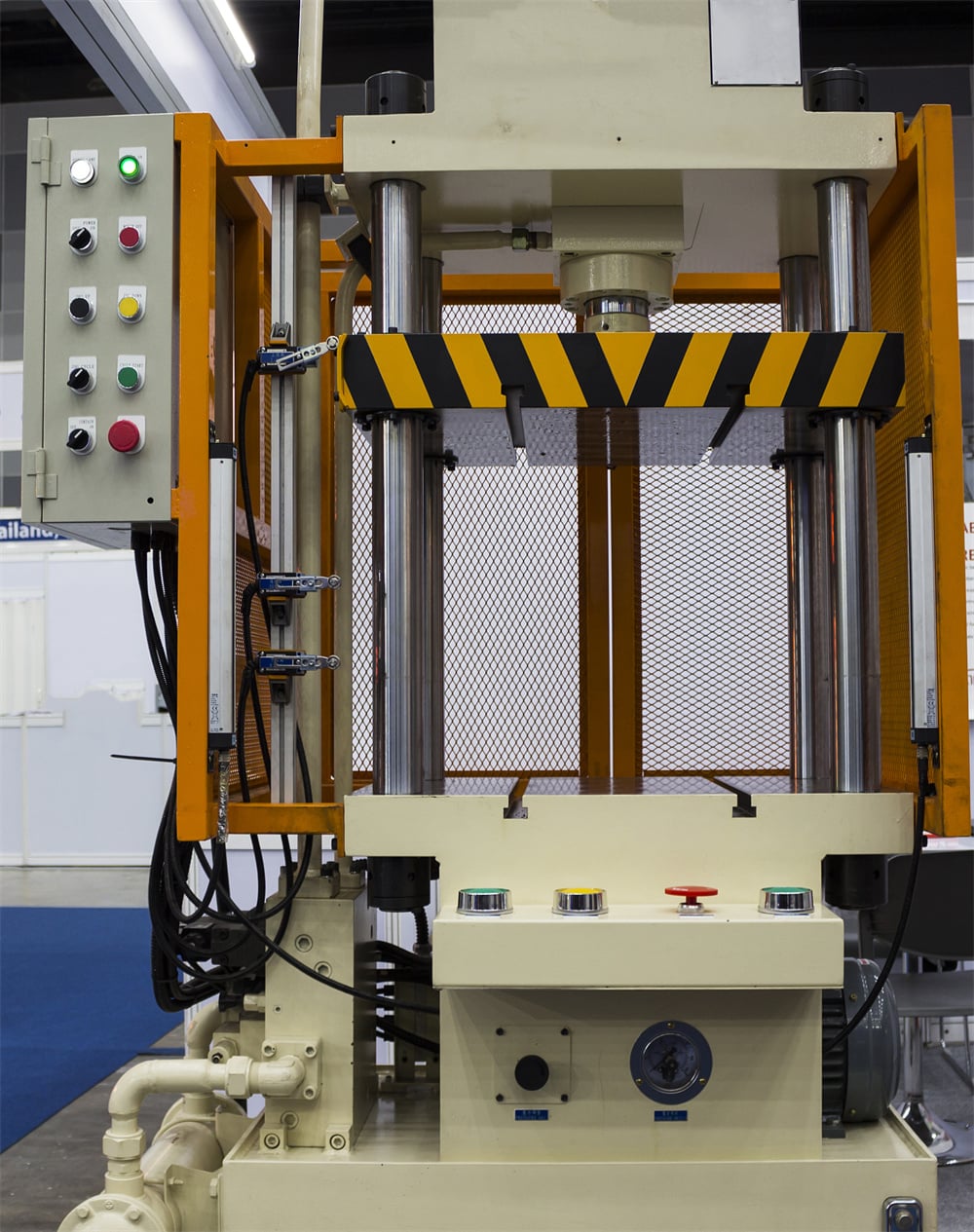
Specification Comparison Table
To better understand the technical differences between these two types of machinery, the following table compares key specifications that impact overall efficiency.
| Feature | Manual Hydraulic Press | Automatic Hydraulic Press |
|---|---|---|
| Operation Mode | Hand pump / Foot pedal | PLC / CNC Controlled |
| Production Speed | Low (Dependent on operator) | High (Continuous cycles) |
| Precision & Repeatability | Moderate (Human error possible) | Very High (Sensor-driven) |
| Labor Requirement | 1 operator per machine | 1 operator for multiple machines |
| Setup Time | Very Fast (Minimal programming) | Moderate (Requires programming) |
| Safety Features | Basic (Manual guards) | Advanced (Light curtains, E-stops) |
| Initial Cost | Low to Moderate | High |
| Maintenance Complexity | Low (Mechanical focus) | High (Electronic & Hydraulic) |
Best-fit Applications: Choosing Based on Your Workflow
The decision between manual and automatic isn’t just about speed; it’s about the nature of the work being performed. Each machine excels in different industrial environments. Understanding where each fits best is crucial for optimizing your shop’s workflow and ensuring that you aren’t over-investing in technology you don’t need, or under-investing in technology that could save you money in the long run.
When to Choose a Manual Hydraulic Press
Manual presses are the “Swiss Army Knives” of the fabrication world. They are best suited for:
- Maintenance and Repair: For tasks like pressing out bushings, straightening bent components, or removing bearings, the manual press offers the control needed to avoid damaging sensitive parts.
- Prototyping: When developing a new product, engineers often need to make small adjustments on the fly. The manual press allows for immediate, tactile adjustments without the need for reprogramming.
- Educational Settings: Schools and vocational centers use manual presses to teach the fundamental principles of hydraulics and material science safely and affordably.
- Low-Volume Custom Work: If your shop produces unique, custom pieces where no two jobs are the same, the zero-setup time of a manual press is a major efficiency boost.
When to Choose an Automatic Hydraulic Press
Automatic presses are the workhorses of the modern factory. They are the superior choice for:
- Mass Production: If you are producing thousands of identical parts, the speed and consistency of an automatic press are unmatched.
- Deep Drawing and Complex Forming: Tasks that require precise dwell times and multi-stage pressure applications are nearly impossible to perform consistently on a manual machine.
- High-Precision Components: In industries like medical device manufacturing or aerospace, where every micron counts, the PLC-controlled accuracy of an automatic press is mandatory.
- Integrated Assembly Lines: Automatic presses can be synced with robotic arms and conveyor systems, creating a fully autonomous production environment.
Cost and Maintenance Comparison: Long-term Efficiency
When evaluating efficiency, the financial aspect is often the deciding factor. The “efficiency” of a machine is also measured by how much it costs to keep it running versus how much revenue it generates. A machine that is constantly down for repairs or that requires expensive specialized parts can quickly become a liability, regardless of how fast it can theoretically operate.
Initial Investment: A manual hydraulic press is significantly cheaper upfront. For a small startup or a dedicated repair bay, the low entry cost allows for a faster path to profitability. An automatic hydraulic press, however, requires a substantial capital outlay. This includes not just the machine itself, but also the potential costs of training staff to program and operate the new technology. However, for high-volume shops, the automatic press usually pays for itself within 12 to 24 months through labor savings and reduced scrap.
Maintenance Requirements: Manual presses are remarkably durable. Maintenance usually involves checking oil levels, replacing seals every few years, and ensuring the frame remains square. Most of this can be done in-house. Automatic presses are more temperamental. They rely on clean, high-quality hydraulic oil to protect sensitive valves and sensors. The electrical cabinet must be kept cool and dust-free. While HARSLE machines are built for durability, the reality of automatic systems is that they require a more rigorous preventative maintenance schedule to avoid costly downtime.
Energy Efficiency: Modern automatic presses often feature variable frequency drives (VFDs) and energy-saving modes that only draw power when the machine is actively pressing. In contrast, some older electric-pump manual presses run the motor constantly. However, a purely hand-pumped manual press uses zero electricity, making it the ultimate energy-efficient choice for occasional use. For high-duty cycles, the sophisticated power management of a modern automatic press is generally more efficient in terms of kilowatt-hours per part produced.
Recommendation: Which One Should You Buy?
The final recommendation depends on your business’s current scale and future goals. At HARSLE, we have seen that the most successful fabrication shops often utilize a mix of both technologies to maximize their overall facility efficiency. However, if you must choose one, consider the following criteria:
Choose a Manual Hydraulic Press if: You are a small shop, a repair facility, or a custom fabricator. If your daily production involves a wide variety of tasks but in very low quantities (less than 20-50 pieces per day), the manual press will provide the best ROI. It is also the right choice if you have a limited budget and do not have the technical staff to maintain complex electronic systems.
Choose an Automatic Hydraulic Press if: You are looking to scale your production, improve part consistency, or reduce your reliance on skilled manual labor. If you have a steady contract for hundreds or thousands of parts, the automatic press is the only way to remain competitive. The precision and speed will allow you to take on more complex jobs and deliver them faster than any manual operation could dream of.
Ultimately, efficiency is about matching the tool to the task. A manual press is efficient for a repairman; an automatic press is efficient for a manufacturer. Assess your volume, your tolerance requirements, and your budget to find the HARSLE machine that fits your needs.
Frequently Asked Questions (FAQ)
1. Can a manual hydraulic press be converted to an automatic one?
While it is technically possible to retro-fit a manual press with an electric pump and some basic controls, it is rarely cost-effective or as safe as buying a purpose-built automatic machine. The frames of automatic presses are often reinforced to handle the continuous vibration and heat generated by high-speed cycles.
2. Is an automatic press safer than a manual press?
Automatic presses are generally safer because they include advanced safety features like light curtains, dual-hand start buttons, and automatic shut-offs. However, because they move faster and with more force, the potential for a serious accident is higher if safety protocols are ignored. Manual presses are slower, giving the operator more time to react, but they lack the automated fail-safes of modern machines.
3. How long does a HARSLE hydraulic press typically last?
With proper maintenance, a HARSLE hydraulic press—whether manual or automatic—can last 20 to 30 years. The hydraulic cylinders and frames are built for longevity. The components most likely to need replacement over time are seals, hoses, and, in the case of automatic machines, electronic sensors or PLC modules.
4. Does an automatic press require a specialized operator?
Yes, while the physical labor is less, the mental requirement is higher. An operator needs to understand how to set parameters on the HMI (Human Machine Interface) and how to troubleshoot basic error codes. HARSLE provides training and documentation to help operators get up to speed quickly.
5. Which machine is better for deep drawing applications?
An automatic hydraulic press is significantly better for deep drawing. Deep drawing requires precise control over the speed of the draw and the pressure of the blank holder to prevent tearing or wrinkling. These variables are difficult to control manually but can be programmed perfectly into an automatic system.