
Hydraulic Press vs Forging Press: Which Machine Is Right for Your Workshop?


Comparison Summary: Understanding the Core Differences
In the world of metal fabrication, selecting the right equipment is the cornerstone of operational efficiency and product quality. When workshop owners and industrial engineers evaluate their options, the debate often centers on Hydraulic Press Vs Forging Press: Which Machine Is Workshop? While both machines are designed to shape metal through the application of force, their mechanical principles, speed of operation, and metallurgical outcomes differ significantly. A hydraulic press utilizes fluid pressure to deliver a consistent, controlled force throughout its entire stroke, making it ideal for precision work and deep drawing. In contrast, a forging press—which can be mechanical or hydraulic—is specifically engineered to deform metal into high-strength components by applying massive pressure, often to heated billets, to refine the internal grain structure of the material.
Choosing between these two powerhouses requires a deep understanding of your production goals. If your workshop focuses on versatile tasks such as assembly, stamping, and molding, the hydraulic press offers unparalleled flexibility. However, if your output demands high-integrity structural parts for the aerospace or automotive industries, the specialized capabilities of a forging press are indispensable. This guide provides an exhaustive analysis of both machines, helping you navigate the technical nuances and financial considerations of each to ensure your workshop is equipped with the most effective tool for your specific manufacturing needs.
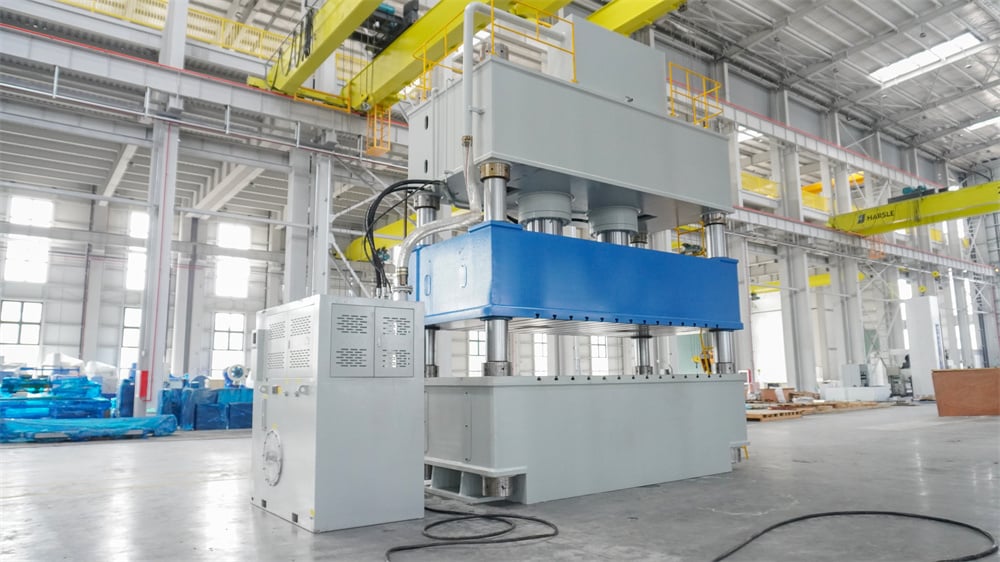
Hydraulic Press Overview: Versatility and Precision
The hydraulic press is a staple in modern metalworking, operating on the principle of Pascal’s Law. This law states that pressure applied to a confined fluid is transmitted undiminished in every direction. In a hydraulic press, a small amount of force applied to a small piston is converted into a massive force at a larger piston. This allows the machine to generate hundreds or even thousands of tons of pressure with extreme control. One of the primary advantages of a hydraulic press is its ability to maintain full tonnage throughout the entire stroke. Unlike mechanical presses, where the force peaks at a specific point, the hydraulic system ensures that the pressure remains constant, which is critical for processes like deep drawing where the metal must be stretched evenly without tearing.
Modern hydraulic presses, such as those manufactured by HARSLE, are equipped with advanced PLC (Programmable Logic Controller) systems. these systems allow operators to fine-tune the stroke length, pressure, and speed. This level of adjustability makes the hydraulic press a multi-functional asset. It can be used for everything from simple bending and punching to complex powder compaction and plastic molding. Furthermore, hydraulic presses are generally quieter than their forging counterparts and have built-in overload protection. If the pressure exceeds the set limit, the relief valve opens, preventing damage to the machine or the die—a feature that significantly enhances the lifespan of the equipment and ensures operator safety.
From a structural perspective, hydraulic presses come in various configurations, including H-frame, C-frame, and four-column designs. The four-column press is particularly popular in high-precision industries because it provides excellent rigidity and ensures that the slide remains perfectly parallel to the bed. This prevents uneven wear on the tooling and results in highly accurate parts. For workshops looking for a machine that can handle a wide variety of materials—from thin sheet metal to thick plates—the hydraulic press is often the first choice due to its adaptability and ease of setup.
Forging Press Overview: Strength and Structural Integrity
A forging press is a specialized machine designed to shape metal through localized compressive forces. While some forging presses are hydraulic, many are mechanical, using a crank or eccentric shaft to deliver a high-speed blow. The primary objective of a forging press is not just to change the shape of the metal, but to improve its mechanical properties. During the forging process, the internal grain structure of the metal is manipulated to follow the general shape of the part. This results in a component that is significantly stronger and more resistant to fatigue and impact than a part that has been cast or machined from a solid block.
Forging presses are typically categorized into hot forging and cold forging. Hot forging involves heating the metal above its recrystallization temperature, making it easier to deform and allowing for the creation of complex shapes with lower forces. Cold forging is done at room temperature and results in excellent surface finishes and dimensional accuracy. The forging press is the workhorse of heavy industry, producing critical components like crankshafts, connecting rods, gears, and structural airframe parts. The sheer power of a forging press allows it to handle massive ingots, transforming them into high-performance parts that can withstand extreme operational stresses.
Unlike the steady squeeze of a standard hydraulic press, a forging press often operates with a faster cycle time, especially in mechanical configurations. This speed is essential in hot forging to ensure the metal is shaped before it cools down and becomes too difficult to work. The construction of a forging press is incredibly robust, designed to absorb the massive vibrations and shocks associated with high-impact deformation. For a workshop that specializes in heavy-duty industrial components, the investment in a forging press is an investment in the ability to produce parts that meet the highest standards of structural integrity.
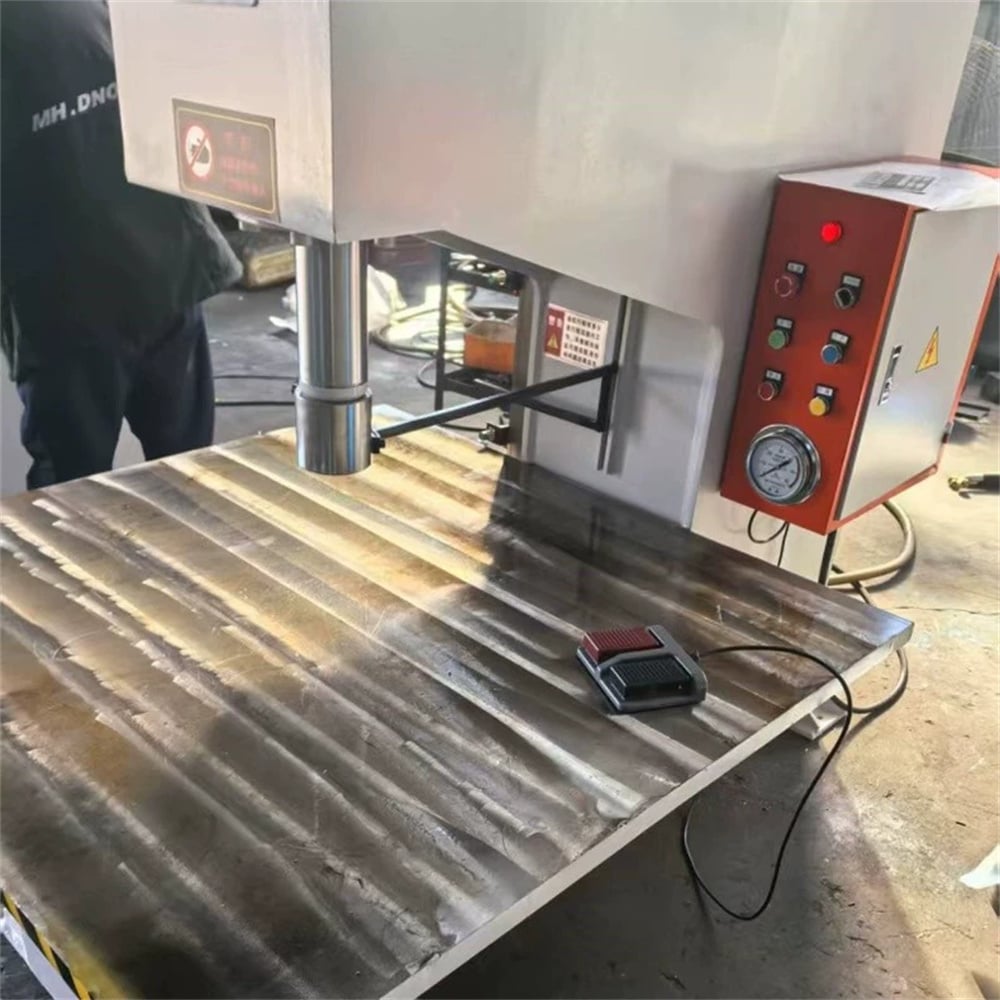
Specification Comparison Table
To better understand the technical differences, the following table compares the key specifications of a standard hydraulic press versus a dedicated forging press.
| Feature | Hydraulic Press | Forging Press (Mechanical/Hydraulic) |
|---|---|---|
| Force Delivery | Constant throughout the stroke | Peaks at the bottom of the stroke (Mechanical) |
| Speed | Slower, controlled movement | High speed for rapid deformation |
| Precision | High precision with stroke control | Moderate to high, focused on grain flow |
| Versatility | Extremely high (Stamping, Drawing, Molding) | Specialized (Forging, Upsetting) |
| Noise Level | Relatively quiet | High noise and vibration |
| Maintenance | Focus on seals, pumps, and fluid | Focus on mechanical linkages and lubrication |
| Initial Cost | Moderate to High | High to Very High |
Best-fit Applications: Where Each Machine Excels
The decision of Hydraulic Press Vs Forging Press: Which Machine Is Workshop? often comes down to the specific products you intend to manufacture. Hydraulic presses are the masters of the sheet metal world. Their ability to apply a gentle yet firm pressure makes them perfect for deep drawing applications, such as creating kitchen sinks, automotive body panels, and gas cylinders. In these processes, the metal must flow into the die cavity without thinning or cracking, a feat that requires the precise speed and pressure control that only a hydraulic system can provide. Additionally, hydraulic presses are widely used in the electronics industry for assembling delicate components and in the plastics industry for compression molding.
Forging presses, on the other hand, are found in environments where strength is the priority. In the automotive industry, forging is used to create engine components that must endure thousands of revolutions per minute and high thermal stress. In the aerospace sector, the landing gear of an aircraft is almost always forged to ensure it can handle the immense impact of landing. Forging is also the preferred method for producing hand tools like wrenches and hammers, as well as industrial valves and fittings that must operate under high pressure. If your workshop’s business model involves high-volume production of parts that require maximum durability, the forging press is the superior choice.
Furthermore, the choice of machine affects the secondary operations required. Parts produced on a high-precision hydraulic press often require minimal finishing, saving time and labor costs. Forged parts, while structurally superior, may require more extensive machining or heat treatment to reach their final dimensions and hardness. Therefore, when considering the best-fit application, you must look at the entire production lifecycle, from raw material to the finished product delivered to the customer.
Cost and Maintenance Comparison
Investing in heavy machinery requires a clear understanding of both the upfront costs and the long-term operational expenses. Hydraulic presses generally have a lower initial purchase price compared to high-end forging presses of similar tonnage. The components of a hydraulic press—pumps, valves, and cylinders—are standardized and widely available, which can keep the initial investment manageable. However, the cost of hydraulic oil and the energy required to run the cooling systems must be factored into the monthly operating budget. Maintenance for hydraulic presses primarily involves monitoring for leaks, ensuring oil cleanliness through regular filtration, and replacing seals as they wear out.
Forging presses, particularly large mechanical ones, represent a significant capital investment. The engineering required to manage the massive forces and vibrations adds to the cost. However, mechanical forging presses can be more energy-efficient in high-speed, high-volume environments because they utilize flywheels to store and release energy. Maintenance for forging presses is often more labor-intensive. The mechanical linkages, bearings, and clutches are subject to extreme stress and require a rigorous lubrication schedule. Additionally, the dies used in forging are exposed to high temperatures and pressures, leading to faster wear and the need for frequent refurbishment or replacement.
Another cost factor is the skill level of the operators. Hydraulic presses with modern CNC interfaces are relatively easy to learn and operate, reducing training costs. Forging, especially hot forging, is more of an art form that requires experienced operators who understand metal flow and temperature management. When calculating the total cost of ownership, workshops must weigh the higher maintenance and labor costs of a forging press against the high-value, high-margin parts it is capable of producing.
Recommendation: Making the Right Choice for Your Workshop
So, when asking Hydraulic Press Vs Forging Press: Which Machine Is Workshop?, the answer depends on your strategic direction. If you are a job shop that needs to handle a wide variety of contracts ranging from simple brackets to complex deep-drawn parts, the Hydraulic Press is the most logical choice. Its versatility, ease of use, and precision make it a reliable workhorse for diverse manufacturing needs. HARSLE offers a range of hydraulic presses that can be customized with various table sizes and tonnages to fit perfectly into a growing workshop.
Conversely, if you are looking to specialize in high-performance components for the heavy industrial, automotive, or defense sectors, the Forging Press is the necessary tool. The ability to offer forged parts gives your workshop a competitive edge in markets where structural integrity is non-negotiable. While the investment is higher, the specialized nature of forging allows for higher service premiums and long-term contracts with Tier 1 suppliers.
Before making a final decision, we recommend conducting a thorough production audit. Consider the materials you work with (aluminum, steel, titanium), the typical thickness of your workpieces, and your expected production volume. If possible, consult with a machinery expert at HARSLE to discuss your specific requirements. Often, a workshop may find that a combination of both machines—a hydraulic press for versatile forming and a forging press for high-strength parts—is the ultimate setup for a comprehensive metal fabrication facility.
Frequently Asked Questions (FAQ)
1. Can a hydraulic press be used for forging?
Yes, there are specific types of hydraulic presses known as hydraulic forging presses. They combine the controlled movement of a hydraulic system with the heavy-duty frame and high-tonnage capacity required for forging. They are slower than mechanical forging presses but offer more control over the deformation process.
2. Which machine is safer for operators?
Both machines are safe when proper protocols are followed. However, hydraulic presses are generally considered safer because they have built-in overload protection and can be stopped instantly at any point in the stroke. Forging presses, especially mechanical ones, have a fixed cycle that is harder to interrupt once it has started.
3. Does forging always require heat?
No. While hot forging is common for large or complex parts, cold forging is used for smaller components. Cold forging increases the strength of the metal through work hardening and provides a better surface finish, but it requires much higher forces than hot forging.
4. How long do these machines typically last?
With proper maintenance, both hydraulic and forging presses can last for decades. It is not uncommon to see presses from the 1970s or 80s still in operation in modern workshops. The key is regular lubrication, oil changes, and timely replacement of wear parts like seals and bushings.
5. Which machine is better for small-batch production?
The hydraulic press is generally better for small batches because it is easier and faster to set up and change dies. Forging presses often require more extensive setup and are better suited for high-volume production runs where the setup time can be amortized over thousands of parts.












