Choosing the Right Hydraulic Press: A Comparison of Force, Speed, and Application

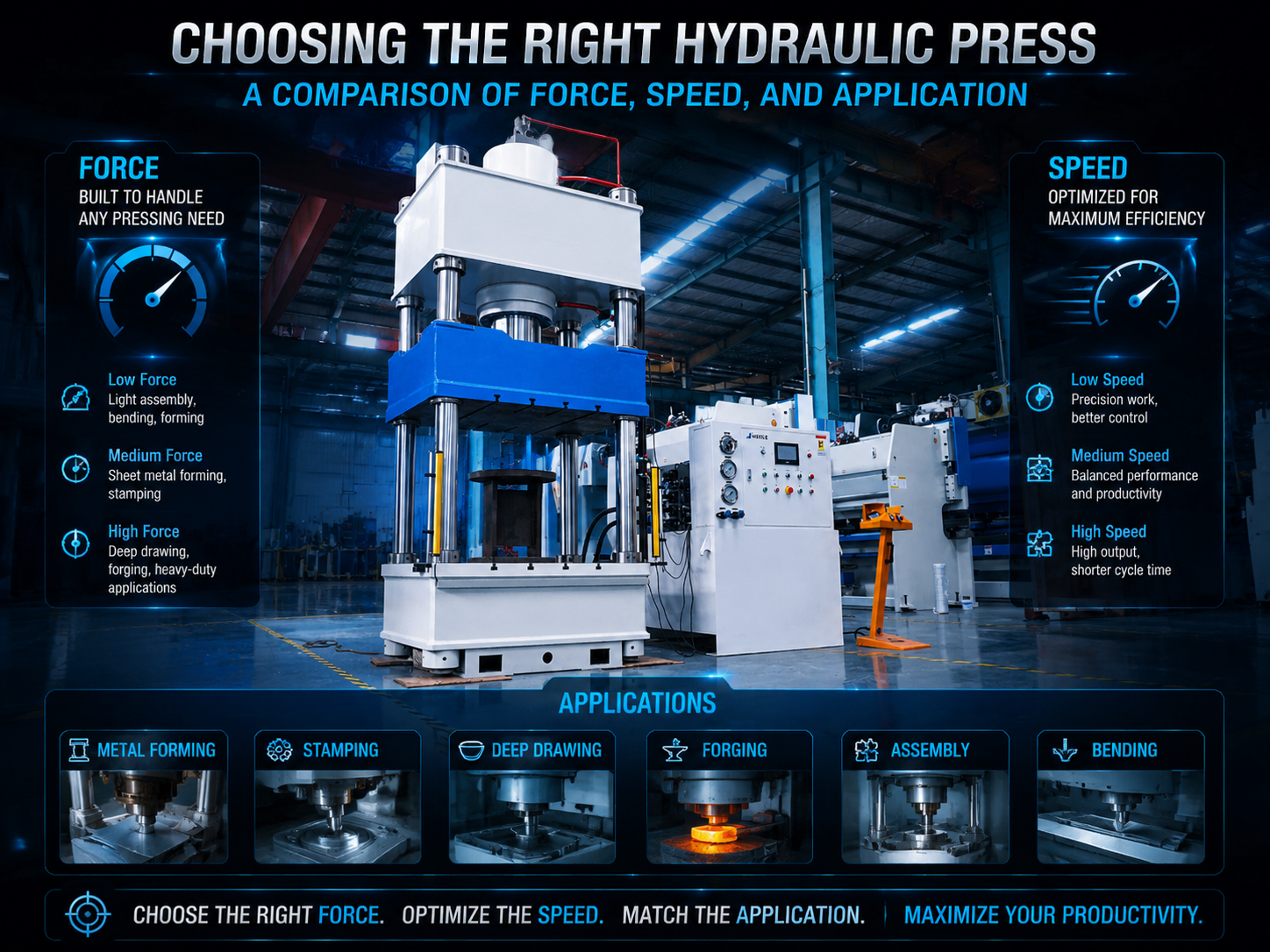
Introduction to Hydraulic Press Selection
In the realm of modern metal fabrication, the hydraulic press remains an indispensable workhorse. Whether you are involved in deep drawing automotive components, molding plastics, or straightening heavy steel beams, the efficiency of your operation hinges on one critical decision: choosing the right hydraulic press. This choice is not merely about selecting a machine with the highest tonnage; it involves a nuanced understanding of how force, speed, and application-specific requirements intersect to provide the best return on investment. At HARSLE, we recognize that every workshop has unique needs, and navigating the technical specifications of industrial machinery can be daunting.
The fundamental principle of a hydraulic press is Pascal’s Law, which allows for the generation of massive amounts of force through fluid pressure. However, the application of this force varies significantly between different machine architectures. A press designed for high-speed stamping will look and perform very differently from one designed for slow, controlled deep drawing. As manufacturers strive for higher precision and faster cycle times, the integration of advanced hydraulics and CNC systems has further complicated the selection process. This guide aims to demystify these variables, providing a comprehensive comparison to help you make an informed procurement decision.
Comparison Summary: Force vs. Speed vs. Versatility
When evaluating hydraulic presses, three primary factors dominate the conversation: force (tonnage), speed (cycle time), and application versatility. Force is the most obvious metric, representing the maximum pressure the ram can exert on the workpiece. However, force without control is often counterproductive. For instance, in delicate molding operations, the ability to maintain a constant pressure over a specific duration is more important than the peak tonnage. Conversely, in high-volume production environments, the speed of the approach, pressing, and return strokes determines the overall throughput and profitability of the line.
Speed in hydraulic presses is typically categorized into three phases: the fast approach speed, the working (pressing) speed, and the rapid return speed. High-speed presses often utilize specialized valves and accumulators to minimize idle time. However, increasing speed often requires more robust cooling systems and higher energy consumption. Versatility, on the other hand, refers to the machine’s ability to handle different dies, materials, and processes. An H-frame press might offer great versatility for general repair and assembly, while a four-column press provides the superior alignment necessary for complex multi-stage dies.
Machine A Overview: The H-Frame Hydraulic Press
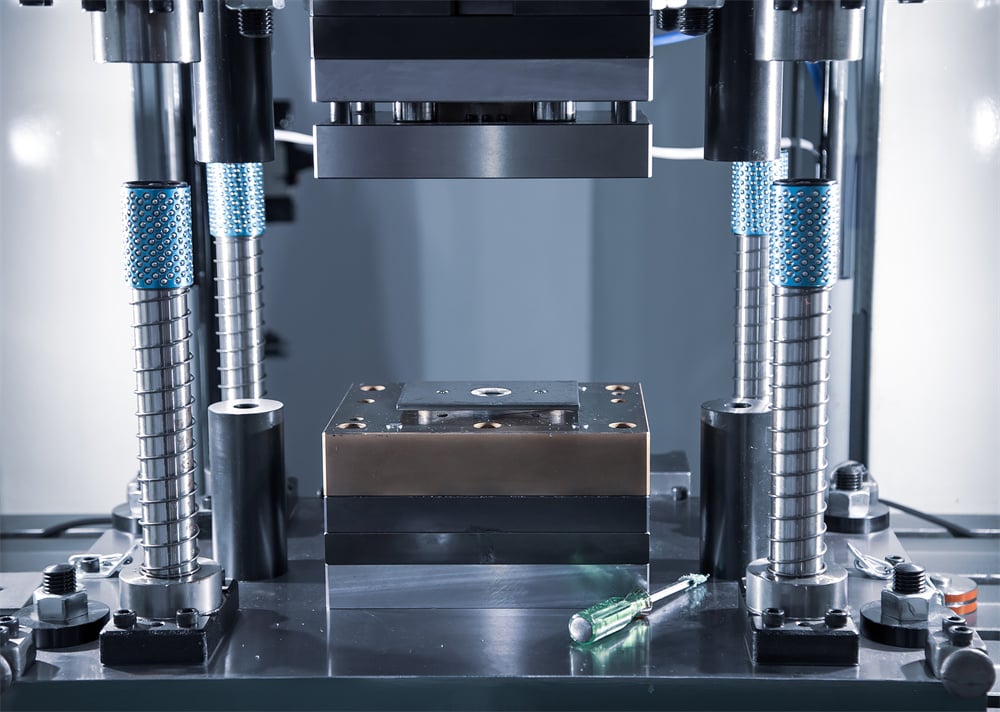
The H-frame hydraulic press, often referred to as a portal press, is characterized by its robust, rectangular steel frame. This design is favored for its exceptional rigidity and strength, making it the go-to choice for heavy-duty applications. H-frame presses are commonly found in maintenance shops, steel construction facilities, and general manufacturing plants. Their open-sided design allows for the processing of long workpieces that can pass through the frame, providing a level of flexibility that other designs lack.
One of the key advantages of the H-frame design is its durability. Because the frame is welded or bolted into a solid structure, it can withstand significant off-center loading without compromising the integrity of the machine. This makes it ideal for tasks like straightening warped shafts or pressing bearings into large housings. HARSLE’s H-frame models often feature adjustable bed heights, allowing operators to customize the daylight (the distance between the bolster and the ram) to suit various tool sizes. While they may not always match the high-speed capabilities of specialized stamping presses, their reliability in high-force applications is unmatched.
Machine B Overview: The Four-Column Hydraulic Press
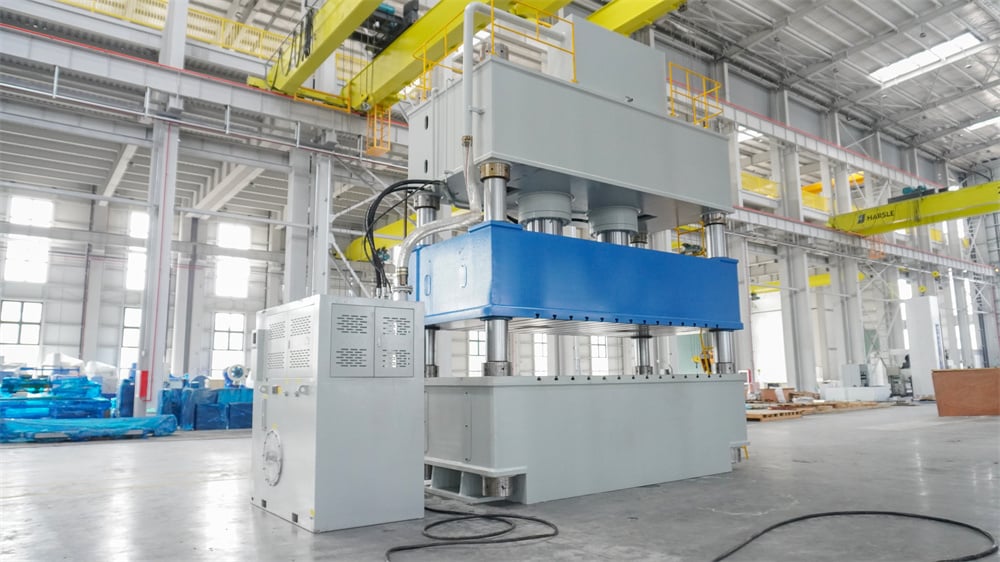
The four-column hydraulic press is the gold standard for precision and uniformity. By utilizing four precision-ground pillars to guide the moving platen, this machine ensures that the pressure is distributed evenly across the entire surface of the die. This structural symmetry is crucial for applications where even a slight misalignment could result in defective parts or tool damage. Common applications include deep drawing, powder metallurgy, and the molding of composite materials.
Beyond precision, the four-column design offers excellent accessibility. With all four sides of the pressing area open, it is much easier to integrate automated loading and unloading systems, such as robotic arms or conveyors. This makes the four-column press a favorite for high-volume, automated production lines. Furthermore, these machines are often equipped with advanced PLC controls and proportional valve technology, allowing for precise adjustment of the pressing speed and pressure profile during the cycle. This level of control is essential for complex forming processes where the material flow must be carefully managed to prevent tearing or thinning.
Specification Comparison Table
To better understand the differences between these two common types of hydraulic presses, let us look at a side-by-side comparison of their typical specifications and performance characteristics.
| Feature | H-Frame Hydraulic Press | Four-Column Hydraulic Press |
|---|---|---|
| Primary Structure | Welded Steel Portal Frame | Four Precision Pillars/Columns |
| Force Distribution | High, but sensitive to frame flex | Excellent, highly uniform |
| Typical Tonnage | 10 to 1,000+ Tons | 50 to 5,000+ Tons |
| Precision/Alignment | Moderate | Very High |
| Accessibility | Front and Back only | All four sides (360 degrees) |
| Speed Capabilities | Standard to Moderate | High Speed / Servo Options |
| Best Use Case | Straightening, Bending, Assembly | Deep Drawing, Molding, Stamping |
| Maintenance Complexity | Low to Moderate | Moderate (Column lubrication) |
Best-fit Applications: Matching Machine to Task
Choosing the right press requires a deep dive into the specific application. For Deep Drawing, the four-column press is almost always the superior choice. The process involves stretching a metal sheet into a three-dimensional shape, which requires consistent pressure and perfect alignment to ensure the metal flows smoothly into the die. Any tilt in the platen can cause uneven wall thickness or wrinkling. In contrast, for Straightening and General Assembly, the H-frame press is more practical. Its ability to handle long bars and provide a rugged platform for high-force pushing makes it indispensable for structural steel work.
In the Automotive Industry, both types are used but for different purposes. Four-column presses are used for body panels and structural components, while H-frame presses might be used in the assembly of sub-frames or engine components. For Plastic and Rubber Molding, the four-column design is preferred because it can accommodate large, multi-cavity molds while maintaining the thermal stability and pressure uniformity required for high-quality finishes. Understanding the material behavior—whether it’s the elasticity of thin-gauge aluminum or the density of powdered metal—is the first step in determining which machine architecture will yield the best results.
Technical Deep Dive: Force Calculation and Speed Control
Determining the required force is a mathematical necessity. The formula for the force (F) exerted by a hydraulic cylinder is F = P × A, where P is the hydraulic pressure and A is the effective area of the piston. However, in a real-world fabrication scenario, you must also account for the material’s shear strength, thickness, and the geometry of the bend or cut. It is a common industry standard to select a press with a tonnage capacity 20-30% higher than the calculated requirement to ensure the machine is not constantly running at its limit, which extends the lifespan of the hydraulic seals and pumps.
Speed control is equally technical. Modern HARSLE presses utilize Proportional Valve Technology. Unlike standard on/off valves, proportional valves can vary the flow rate of hydraulic oil based on an electronic signal from the PLC. This allows for “soft start” and “soft stop” movements, reducing hydraulic shock and vibration. For high-speed applications, Servo-Hydraulic Systems are becoming increasingly popular. These systems use a servo motor to drive the hydraulic pump, allowing for extreme precision in ram positioning (down to microns) and significant energy savings, as the motor only runs when the ram is moving.
Cost and Maintenance Comparison
The initial purchase price is only one part of the total cost of ownership (TCO). H-frame presses generally have a lower entry price due to their simpler construction. They are also easier to maintain, as they have fewer moving parts and the frame itself requires little more than periodic inspections for weld integrity. Maintenance for an H-frame press typically focuses on the hydraulic power unit (HPU), ensuring the oil is clean and the filters are replaced regularly.
Four-column presses represent a higher initial investment but offer greater efficiency for high-volume production. Maintenance for these machines is more intensive; the four columns must be kept clean and properly lubricated to prevent scoring and ensure smooth platen movement. Additionally, because these machines often feature more complex electronics and hydraulic circuits, they require technicians with a higher level of expertise for troubleshooting. However, the reduction in scrap rates and the increase in production speed often justify the higher maintenance and acquisition costs in an industrial setting.
Buyer’s Checklist: What to Look for Before Purchasing
- Tonnage Requirement: Have you calculated the maximum force needed, including a safety margin?
- Bed Size and Daylight: Will your largest dies fit comfortably within the working area?
- Stroke Length: Is the ram travel sufficient for your deepest drawing or forming operation?
- Speed Requirements: Does the cycle time meet your production targets?
- Control System: Do you need a simple manual control, or a full CNC system with recipe storage?
- Safety Features: Does the machine include light curtains, dual palm buttons, and emergency stops?
- Frame Rigidity: Is the frame designed to handle the specific stresses of your application?
- After-Sales Support: Does the manufacturer provide reliable spare parts and technical assistance?
Recommendation: Making the Final Decision
If your facility focuses on a wide variety of low-to-medium volume tasks, such as repair, straightening, and simple bending, the HARSLE H-Frame Hydraulic Press is the most cost-effective and versatile choice. Its ruggedness and ease of use make it a staple for any general engineering workshop. You will benefit from its longevity and the ability to handle diverse workpieces with minimal setup time.
However, if your goal is high-precision manufacturing, deep drawing, or automated mass production, the HARSLE Four-Column Hydraulic Press is the clear winner. The superior alignment and accessibility it provides are essential for maintaining tight tolerances and integrating with modern Industry 4.0 automation. While the investment is higher, the gains in quality and throughput will provide a much faster ROI in a dedicated production environment. Always consult with a technical expert at HARSLE to review your specific drawings and material specs before finalizing your order.
Frequently Asked Questions (FAQ)
1. How do I calculate the tonnage needed for a punching operation?
To calculate punching tonnage, use the formula: Tonnage = (Perimeter of cut x Material Thickness x Shear Strength) / 2000 (for US tons). It is always recommended to add a 20% safety factor to this result to protect the press and tooling.
2. Can a hydraulic press be used for both metal and plastic?
Yes, many hydraulic presses are versatile enough to handle both. However, plastic molding often requires heated platens and precise dwell time controls, which may be optional features on a standard metalworking press.
3. What is the advantage of a servo-hydraulic system?
Servo-hydraulic systems offer significantly higher energy efficiency (up to 50% savings), reduced noise levels, less heat generation in the oil, and much higher precision in ram positioning compared to traditional fixed-displacement pump systems.
4. How often should hydraulic oil be changed?
Generally, hydraulic oil should be changed every 2,000 to 4,000 hours of operation, or at least once a year. However, regular oil analysis is the best way to determine the actual condition of the oil and whether it needs replacement.
5. Why is ‘daylight’ important in a hydraulic press?
Daylight refers to the maximum vertical opening between the bed and the ram. It is crucial because it determines the maximum height of the die and the workpiece that can be placed in the press. Insufficient daylight can severely limit the types of jobs you can accept.