Real-World Results: Boosting Cutting Accuracy with a Fiber Laser Cutting Machine


Introduction to Precision in Modern Metal Fabrication
In the competitive landscape of modern manufacturing, precision is no longer a luxury—it is a fundamental requirement. As industries such as aerospace, automotive, and medical device manufacturing demand tighter tolerances, the equipment used must evolve to meet these challenges. The transition from traditional CO2 lasers and plasma cutters to advanced fiber laser technology has marked a significant turning point. This article explores the Real-World Results: Boosting Cutting Accuracy A Fiber Laser Cutting Machine can provide, and how manufacturers like HARSLE are leading the charge in delivering high-performance solutions.
Fiber laser cutting machines utilize a solid-state laser source to generate a high-intensity beam that is delivered through a fiber optic cable. This method offers unparalleled stability and focus compared to gas-based lasers. When we talk about “accuracy,” we are referring to the machine’s ability to follow a programmed path with minimal deviation, ensuring that the finished part matches the CAD design within microns. For a fabrication shop, this means less waste, fewer secondary finishing processes, and the ability to take on high-complexity projects that were previously impossible.
The impact of adopting this technology is felt across the entire production line. By achieving Real-World Results: Boosting Cutting Accuracy A Fiber Laser Cutting Machine, companies can reduce their cost-per-part significantly. High accuracy translates to better fitment during assembly, which is critical for structural components and intricate machinery. In the following sections, we will delve into the technical nuances that make this precision possible and provide a roadmap for selecting the right equipment for your specific needs.
Key Considerations for Achieving Maximum Cutting Accuracy
Achieving high precision is not solely dependent on the laser source; it is a synergy of several critical factors. The first consideration is the mechanical stability of the machine frame. A fiber laser operates at incredible speeds, often exceeding 100 meters per minute in rapid positioning. Without a heavy-duty, heat-treated frame, the vibrations generated during high-speed movement can lead to “chatter” marks on the cut edge, compromising the dimensional accuracy of the part.
Another vital factor is the motion control system. High-end fiber lasers utilize AC servo motors and high-precision rack-and-pinion or linear motor systems. These components must work in perfect harmony with the CNC controller to ensure that the laser head moves exactly where it is commanded. Even a deviation of 0.01mm can be the difference between a pass and a fail in high-precision industries. Thermal management also plays a role; as the machine operates, heat can cause components to expand. Advanced machines incorporate cooling systems for the laser source, the cutting head, and sometimes even the structural beams to maintain thermal equilibrium.
Material preparation and consistency are often overlooked but are essential for Real-World Results: Boosting Cutting Accuracy A Fiber Laser Cutting Machine. The reflectivity of the material (such as copper or brass) and the surface cleanliness can affect how the laser beam interacts with the metal. Modern fiber lasers are equipped with back-reflection protection, allowing them to cut highly reflective materials without damaging the internal optics, thereby maintaining consistent accuracy over long production runs.
Finally, the choice of assist gas—whether oxygen, nitrogen, or compressed air—significantly impacts the edge quality and accuracy. Nitrogen is typically used for stainless steel and aluminum to prevent oxidation, resulting in a clean, shiny edge that requires no post-processing. Oxygen is used for carbon steel to facilitate an exothermic reaction, allowing for faster cutting of thicker plates. The pressure and purity of these gases must be precisely controlled by the machine’s software to ensure the kerf (the width of the cut) remains consistent throughout the operation.
Technical Details: The Anatomy of a High-Precision Fiber Laser
To understand how to achieve Real-World Results: Boosting Cutting Accuracy A Fiber Laser Cutting Machine, one must look under the hood. The heart of the system is the fiber laser source, typically manufactured by industry leaders like IPG, Raycus, or Maxphotonics. These sources produce a beam with a wavelength of approximately 1.06 microns, which is ten times shorter than that of a CO2 laser. This shorter wavelength allows the beam to be focused into a much smaller spot size, increasing the energy density and allowing for much finer cuts.
The Cutting Head and Autofocus Technology
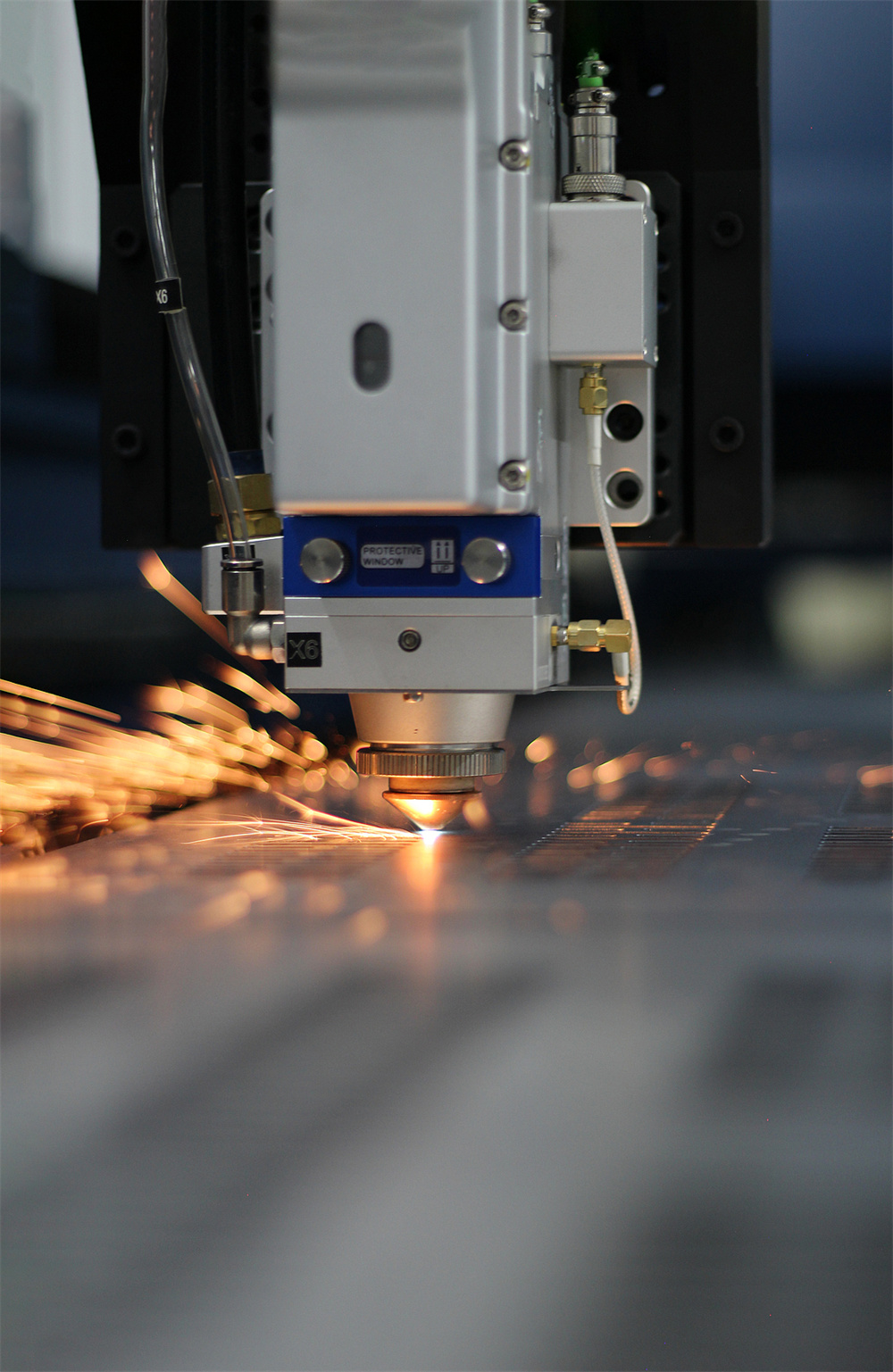
The cutting head is where the magic happens. Modern heads, such as those from Raytools or Precitec, feature sophisticated sensor systems that maintain a constant distance between the nozzle and the workpiece. This is known as “capacitive height sensing.” Even if the metal sheet is slightly warped, the head adjusts its height in real-time (within milliseconds) to keep the focal point perfectly positioned. This is crucial for maintaining a consistent kerf width and preventing dross (slag) buildup on the bottom of the cut.
CNC Control Systems and Software Integration
The “brain” of the machine is the CNC controller, with CypCut being one of the most popular and user-friendly options in the industrial sector. These controllers handle complex algorithms for cornering, lead-ins, and nesting. Advanced features like “FlyCut” allow the laser to cut a series of holes without stopping the motion of the head, significantly increasing speed while maintaining precision. Furthermore, the integration of CAD/CAM software allows for seamless transition from design to production, ensuring that the geometric complexities of the part are accurately translated into machine code.
| Component | Function | Impact on Accuracy |
|---|---|---|
| Laser Source | Generates the high-energy beam | Determines beam stability and focusability |
| Servo Motors | Drives the X, Y, and Z axes | Ensures precise positioning and repeatability |
| Cutting Head | Focuses the beam and delivers gas | Maintains focal consistency via height sensors |
| Machine Bed | Provides structural support | Dampens vibrations and prevents thermal distortion |
| CNC Controller | Processes G-code and manages motion | Coordinates all components for smooth execution |
Real-World Results: A Case Study in Mexico
To illustrate the Real-World Results: Boosting Cutting Accuracy A Fiber Laser Cutting Machine can deliver, let’s look at a fabrication shop located in Mexico that recently upgraded from a plasma system to a HARSLE 3kW fiber laser. The shop specialized in producing custom brackets for the automotive aftermarket. With their old plasma system, they struggled with a tolerance of ±0.5mm and significant edge taper, which required extensive grinding and manual drilling to make the parts fit.
After implementing the fiber laser, the results were immediate. The tolerance improved to ±0.05mm, and the edge taper was virtually eliminated. This allowed the shop to eliminate the secondary grinding stage entirely. Furthermore, the precision of the laser allowed them to cut small, intricate holes that were previously impossible with plasma, enabling them to offer more complex designs to their clients. The shop owner noted that their “scrap rate” dropped from 8% to less than 1%, saving thousands of dollars in material costs annually.

The case study also highlighted the importance of the “human element.” While the machine provides the capability, the operator’s ability to fine-tune the cutting parameters—such as frequency, duty cycle, and gas pressure—is what pushes the accuracy to its limit. In this Mexican facility, the transition was supported by HARSLE’s technical training, ensuring the staff could leverage the full potential of the CNC software to optimize nesting and minimize heat-affected zones (HAZ).
Selection Advice: Choosing the Right Machine for Your Accuracy Goals
When looking to achieve Real-World Results: Boosting Cutting Accuracy A Fiber Laser Cutting Machine, the selection process must be rigorous. Not all machines are created equal, and the cheapest option often leads to higher long-term costs due to maintenance and lack of precision. Here is a guide to help you make an informed decision:
- Determine Your Power Needs: Higher wattage (e.g., 6kW to 12kW) is not just for cutting thicker materials; it also allows for faster cutting of thinner materials with better edge quality. However, for high-precision thin-gauge work, a 1.5kW to 3kW machine might offer a smaller spot size and better control.
- Evaluate the Bed Construction: Look for a machine with a plate-welded or cast-iron bed that has undergone stress-relief annealing. This ensures the machine remains square and level over years of heavy use.
- Check the Component Brands: Ensure the machine uses reputable brands for its critical components (e.g., HIWIN rails, Yaskawa servos, Schneider electrics). This guarantees the availability of spare parts and consistent performance.
- Software Compatibility: Ensure the machine’s controller is compatible with your existing CAD/CAM workflow. Features like automatic nesting and common-line cutting can save material and improve overall efficiency.
- After-Sales Support: Precision machinery requires occasional calibration and maintenance. Choose a manufacturer like HARSLE that offers robust technical support and training to ensure your machine continues to deliver peak accuracy.
Furthermore, consider the environment where the machine will be placed. A climate-controlled room is ideal for high-precision work, as extreme temperature fluctuations can affect the machine’s calibration. If your shop floor is prone to dust and debris, ensure the machine has high-quality bellows and a dust extraction system to protect the precision rails and optics.
Frequently Asked Questions (FAQ)
How often should a fiber laser cutting machine be calibrated?
For standard industrial use, a full calibration check should be performed every six months. However, the operator should perform daily checks on the nozzle centering and focal point to ensure consistent accuracy. If the machine is moved or subjected to a significant collision, it must be recalibrated immediately.
What is the typical lifespan of a fiber laser source?
Most high-quality fiber laser sources are rated for 100,000 hours of operation. This equates to over 10 years of 24/7 use. Unlike CO2 lasers, there are no internal mirrors or glass tubes to replace, making them much more reliable and cost-effective over time.
Can a fiber laser cut non-metallic materials?
Fiber lasers are specifically optimized for metals due to their wavelength. While they can cut some plastics or composites, they are generally not suitable for wood or organic materials, as these can catch fire or produce toxic fumes. For non-metals, a CO2 laser is usually the better choice.
How does the thickness of the material affect cutting accuracy?
As material thickness increases, maintaining a perfectly vertical cut becomes more challenging. This is due to the beam’s natural divergence. However, by using high-power sources and specialized nozzles, modern fiber lasers can maintain impressive accuracy even on plates up to 30mm thick.
What maintenance is required to keep the machine accurate?
Key maintenance tasks include cleaning the protective windows in the cutting head, lubricating the linear rails, checking the assist gas filters, and ensuring the chiller is filled with clean, deionized water. Keeping the machine clean and well-lubricated is the best way to prevent mechanical wear that leads to inaccuracy.
Conclusion: The Future of Precision with HARSLE
The quest for Real-World Results: Boosting Cutting Accuracy A Fiber Laser Cutting Machine is a journey toward manufacturing excellence. By understanding the technical components, environmental factors, and operational best practices, fabrication shops can transform their production capabilities. The shift to fiber laser technology represents a significant leap forward, offering a level of precision, speed, and reliability that was once the stuff of science fiction.
As we have seen, the benefits extend far beyond just “making a cut.” High accuracy leads to material savings, reduced labor costs, and the ability to compete in high-value markets. Whether you are a small shop in Mexico or a large-scale industrial facility, the investment in a high-quality fiber laser cutting machine from a trusted manufacturer like HARSLE is an investment in the future of your business. As technology continues to advance, we can expect even greater levels of automation and precision, further solidifying the fiber laser’s role as the cornerstone of modern metal fabrication.