Case Study On Improving Edge Quality An Advanced Laser Cutting Machine


Introduction: The Pursuit of Perfection in Metal Fabrication
In the modern industrial landscape, the demand for precision and aesthetic excellence in metal components has never been higher. For manufacturers, the edge quality of a cut part is often the primary metric of success. This Case Study On Improving Edge Quality An Advanced Laser Cutting Machine examines how transitioning to high-performance fiber laser technology can eliminate secondary processing costs and enhance overall production efficiency. Traditionally, metal fabrication shops relied on mechanical shearing or older CO2 laser systems, which often left behind burrs, dross, or a significant heat-affected zone (HAZ). These imperfections required labor-intensive grinding and polishing before the parts could move to the assembly or painting stages.
As global competition intensifies, the ability to deliver ‘ready-to-use’ parts directly from the cutting bed is a significant competitive advantage. This case study focuses on a mid-sized fabrication facility that faced challenges with edge roughness and oxidation when cutting stainless steel and aluminum. By integrating an advanced fiber laser cutting machine, the facility aimed to achieve a mirror-like finish on thick plates while maintaining high throughput. The following sections detail the journey of optimizing parameters, understanding the physics of the laser-material interaction, and the eventual results achieved through technological innovation.
Edge quality is not merely a cosmetic concern; it affects the structural integrity of the weld, the adhesion of powder coatings, and the fatigue life of the component. In industries such as aerospace, medical device manufacturing, and high-end architectural metalwork, even minor striations on a cut edge can lead to part rejection. Therefore, understanding the nuances of how an advanced laser cutting machine interacts with various alloys is essential for any modern fabricator looking to scale their operations.

Key Considerations for Enhancing Edge Quality
Improving edge quality is a multi-faceted challenge that involves balancing several variables. In our Case Study On Improving Edge Quality An Advanced Laser Cutting Machine, we identified four critical pillars: assist gas selection, focal position management, cutting speed optimization, and nozzle maintenance. Each of these factors plays a decisive role in whether the final edge is smooth and clean or jagged and covered in dross.
The Role of Assist Gases
The choice of assist gas is perhaps the most influential factor in edge quality. For carbon steel, oxygen is traditionally used to facilitate an exothermic reaction, which adds energy to the cutting process but leaves an oxide layer. For stainless steel and aluminum, nitrogen is the preferred choice. Nitrogen acts as a shielding gas, blowing away the molten metal without allowing it to react with oxygen. This results in a bright, oxide-free edge that is immediately ready for welding. In this case study, the transition to high-pressure nitrogen was a turning point for the client, as it eliminated the need for acid pickling or mechanical de-scaling.
Focal Position and Beam Profile
The focal point of the laser beam determines the energy density at the point of contact. If the focus is too high, the kerf becomes wide and the top edge may round off. If it is too low, dross (re-solidified metal) clings to the bottom of the cut. Advanced laser cutting machines feature automated focal adjustment, allowing the machine to shift the focus dynamically based on the material thickness and type. This precision ensures that the ‘waist’ of the laser beam is positioned perfectly to create a vertical, smooth cut face with minimal striations.
Nozzle Condition and Centering
A frequently overlooked aspect of edge quality is the condition of the nozzle. Even a microscopic piece of splatter on the nozzle tip can disrupt the flow of the assist gas, leading to turbulence. This turbulence causes an uneven cooling of the melt pool, resulting in a rough edge. This case study emphasizes the importance of regular nozzle inspection and the use of automated nozzle cleaning and calibration systems found in high-end HARSLE machines. Ensuring the beam is perfectly centered within the nozzle orifice is paramount for achieving symmetry in the cut quality across all directions of travel.
Technical Details of Advanced Laser Systems
To understand the improvements seen in this Case Study On Improving Edge Quality An Advanced Laser Cutting Machine, one must delve into the technical specifications of the equipment. Modern fiber lasers operate at a wavelength of approximately 1.06 microns, which is much more readily absorbed by metals compared to the 10.6 microns of CO2 lasers. This higher absorption rate leads to a more stable melt pool and a narrower kerf.
Fiber Laser Source and Beam Quality
The heart of the machine is the fiber laser source. High-quality sources from manufacturers like IPG or Raycus provide a Beam Parameter Product (BPP) that remains constant even at high power levels. A lower BPP means the beam can be focused into a smaller spot, increasing the power density. In our case study, upgrading to a 12kW fiber source allowed the user to cut thicker materials with a ‘cool’ cut method, which reduces the heat-affected zone and prevents the warping of thin-gauge sheets.
Motion Control and Structural Rigidity
Edge quality is also a function of the machine’s mechanical stability. Any vibration in the gantry or the cutting head will manifest as ‘chatter’ marks on the edge of the metal. Advanced machines utilize a heavy-duty, heat-treated bed frame and aviation-grade aluminum gantries to minimize inertia. Coupled with high-precision rack and pinion systems or linear motors, these machines can maintain micron-level accuracy even at high acceleration rates. The case study revealed that the structural damping of the HARSLE frame was instrumental in achieving smooth edges on complex, small-radius geometries.
| Parameter | Standard Laser Machine | Advanced Fiber Laser (HARSLE) | Impact on Edge Quality |
|---|---|---|---|
| Beam Stability | Moderate | High (Active Feedback) | Reduced striations and roughness |
| Focal Control | Manual/Semi-Auto | Fully Automated Dynamic Focus | Consistent quality across plate thickness |
| Assist Gas Pressure | Up to 15 Bar | Up to 30 Bar | Cleaner dross-free bottom edges |
| Acceleration | 0.5G – 1.0G | 1.5G – 2.5G | Sharper corners and less heat buildup |
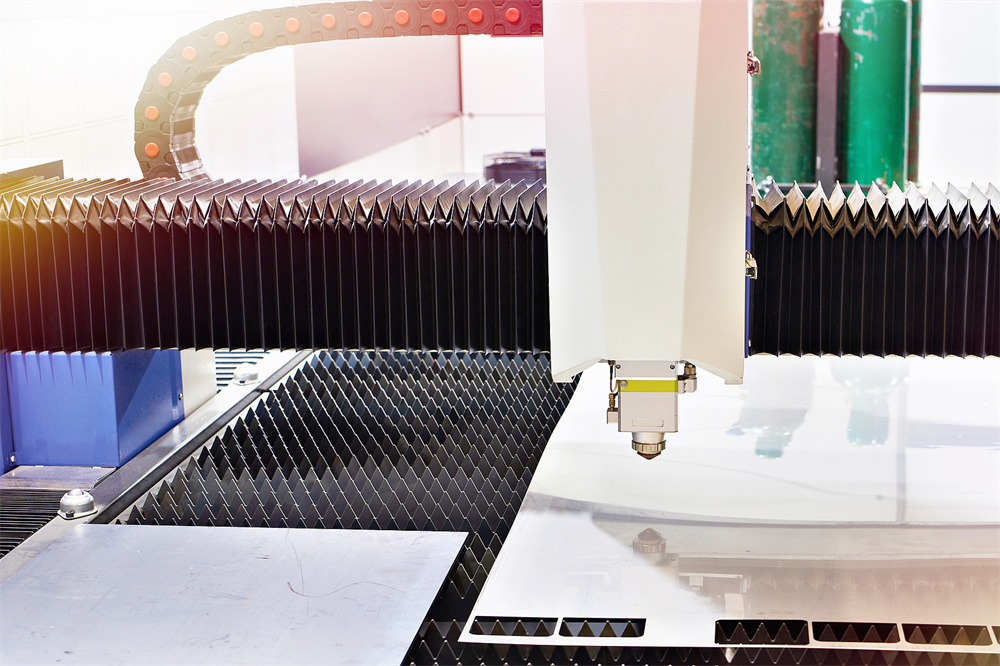
Selection Advice for Achieving Superior Results
Choosing the right machine is the first step toward improving edge quality. Based on the findings of this Case Study On Improving Edge Quality An Advanced Laser Cutting Machine, potential buyers should consider several factors before making an investment. It is not always about having the highest wattage; it is about having the right configuration for your specific material mix.
Matching Power to Application
While a 20kW laser can cut through 50mm steel, it might not be the most efficient choice if 90% of your work is 3mm stainless steel. High-power lasers are excellent for thick plates because they allow for faster cutting speeds, which actually reduces the total heat input into the part, leading to a cleaner edge. However, for thin materials, the stability of the laser at lower power percentages is more critical. We recommend a thorough analysis of your production data to select a wattage that places your most common thicknesses in the ‘sweet spot’ of the machine’s performance curve.
Software and Nesting Integration
The ‘brain’ of the machine—the CNC controller and the nesting software—plays a vital role in edge quality. Advanced software like CypCut or Lantek includes features such as ‘Lead-in’ and ‘Lead-out’ optimization, which prevents burn marks at the start and end of a cut. Furthermore, ‘Corner Power Control’ automatically reduces the laser power as the machine slows down to navigate a sharp corner, preventing the corner from melting away. When selecting a machine, ensure the software package is intuitive and offers these advanced modulation features.
The Importance of Local Support and Training
No matter how advanced the machine is, the operator’s skill remains a variable. This case study highlighted that the client’s success was largely due to the comprehensive training provided by HARSLE technicians. Understanding how to read the ‘sparks’ and adjust the gas pressure on the fly is an art form. Ensure your supplier offers robust after-sales support, including remote diagnostics and on-site training, to help your team master the nuances of edge quality optimization.
Frequently Asked Questions (FAQ)
What causes dross on the bottom of a laser-cut edge?
Dross is typically caused by an imbalance between the cutting speed and the assist gas pressure. If the speed is too high, the molten metal doesn’t have enough time to be blown out of the kerf. If the gas pressure is too low, it lacks the force to clear the melt. Adjusting the focal position can also help concentrate the energy more effectively to ensure a clean exit.
Can I achieve a mirror finish on stainless steel with a fiber laser?
Yes, by using high-pressure nitrogen and a high-power fiber laser, you can achieve a very smooth, bright edge on stainless steel. The key is to use a ‘cool cut’ or ‘bright cut’ parameter set, which involves a specific nozzle design and a focal point positioned deep within the material to create a wider kerf that allows the nitrogen to flush the melt pool efficiently.
How does material quality affect the laser cutting edge?
Material quality is paramount. ‘Laser-grade’ steel is specifically produced with low silicon and phosphorus content and a consistent grain structure. Lower quality ‘commodity’ steel may have internal stresses or impurities that cause the laser beam to scatter or the assist gas reaction to become unpredictable, resulting in a rougher edge and more dross.
Is air cutting a viable option for good edge quality?
Air cutting (using a high-pressure compressor) is a cost-effective alternative to nitrogen for thin materials. While it does leave a slight oxide layer and the edge is not as bright as a nitrogen cut, modern high-pressure air systems can produce a very clean, burr-free edge on materials up to 3mm or 4mm thick, which is acceptable for many industrial applications.
How often should I calibrate the cutting head?
For the best edge quality, the cutting head should be calibrated daily. This includes checking the nozzle centering and the height sensor calibration. Most advanced machines have automated routines for this. If you notice a sudden change in edge quality or if the machine has had a minor collision, recalibration should be performed immediately.
Conclusion: The Future of Precision Cutting
As demonstrated in this Case Study On Improving Edge Quality An Advanced Laser Cutting Machine, the transition to advanced fiber laser technology is a transformative step for any metal fabrication business. By focusing on the synergy between high-power laser sources, precision motion control, and optimized assist gas delivery, manufacturers can achieve edge qualities that were previously thought impossible without secondary finishing. The reduction in labor costs, combined with the ability to take on high-precision contracts, provides a rapid return on investment.
The journey to perfect edge quality is an ongoing process of refinement. As laser technology continues to evolve—with the introduction of beam shaping and even higher power levels—the boundaries of what can be achieved in metal fabrication will continue to expand. For companies like HARSLE, the goal remains clear: providing the tools and expertise necessary for fabricators to turn raw metal into masterpieces of precision. By investing in the right equipment and committing to the technical mastery of the cutting process, your facility can set new standards for quality in the industry.