Industrial Hydraulic Press Price Guide: Budget, Mid-Range, and Heavy-Duty Options


Introduction to Industrial Hydraulic Press Investment
In the realm of metal fabrication, the hydraulic press remains a cornerstone of production capability. Whether you are a small workshop performing basic assembly or a massive automotive plant deep-drawing complex body panels, understanding the Industrial Hydraulic Press Price : Budget, Mid-Range, Heavy-Duty Options is critical for strategic financial planning. A hydraulic press is not merely a purchase; it is a long-term capital investment that dictates your shop’s capacity, precision, and safety standards for decades.
The market for hydraulic presses is vast, ranging from simple manual shop presses to multi-thousand-ton automated systems. Navigating this landscape requires a deep dive into the technical specifications that drive costs. Price is often a reflection of the machine’s rigidity, the sophistication of its hydraulic circuit, and the level of automation integrated into its control system. For brands like HARSLE, providing a balance between high-end performance and cost-effectiveness is the primary goal, ensuring that fabricators get the most ‘tonnage for their buck.’
This guide aims to demystify the pricing structures of industrial hydraulic presses. We will break down the market into three distinct tiers, examine the engineering factors that influence the final quote, and highlight the often-overlooked expenses that can impact your total cost of ownership. By the end of this article, you will have a clear roadmap for selecting a machine that aligns with both your production requirements and your budgetary constraints.
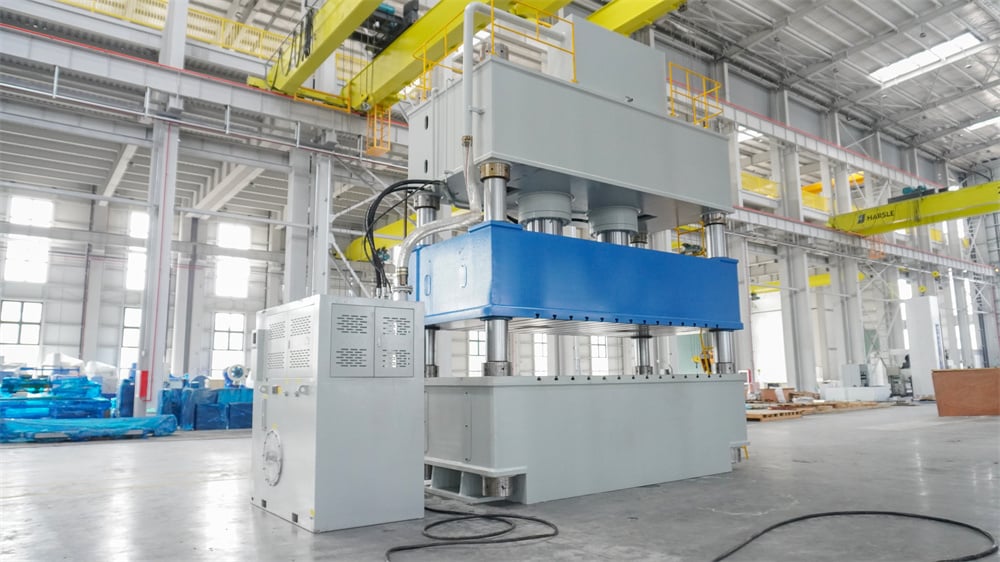
Price Range Overview: Budget, Mid-Range, and Heavy-Duty
When evaluating the Industrial Hydraulic Press Price : Budget, Mid-Range, Heavy-Duty Options, it is helpful to categorize machines based on their intended duty cycle and force capacity. While these categories overlap, they provide a useful framework for initial budgeting.
1. Budget Options ($5,000 – $25,000)
Budget-tier hydraulic presses are typically designed for light-duty industrial use, maintenance shops, or small-scale fabrication. In this price bracket, you will primarily find C-frame (gap frame) presses and small H-frame workshop presses with capacities ranging from 10 to 100 tons. These machines often feature manual or semi-automatic controls and are ideal for tasks like bushing insertion, straightening, and basic punching.
The lower price point is achieved through simpler frame designs and standard hydraulic components. While they lack the high-speed approach and retract capabilities of more expensive models, they offer excellent value for businesses that do not require 24/7 production cycles. However, buyers should be aware that budget machines may have higher deflection rates under maximum load compared to their heavy-duty counterparts.
2. Mid-Range Options ($30,000 – $150,000)
The mid-range category is the ‘sweet spot’ for most professional metal fabrication shops. These machines are built for consistent, multi-shift production. Prices in this range typically cover 4-column hydraulic presses and robust H-frame models with capacities between 100 and 500 tons. At this level, you begin to see advanced features such as PLC (Programmable Logic Controller) integration, touch-screen interfaces, and precision pressure transducers.
Mid-range presses offer significantly better frame rigidity, which is essential for maintaining die alignment and extending tool life. They also feature improved hydraulic manifolds that allow for faster cycle times and smoother transitions between rapid advance and pressing speeds. For a company looking to scale its production of stamped parts or deep-drawn components, a mid-range HARSLE press provides the necessary reliability without the seven-figure price tag of specialized custom machinery.
3. Heavy-Duty and Custom Options ($200,000 – $1,000,000+)
Heavy-duty hydraulic presses are the titans of the industry. These are often custom-engineered machines designed for specific high-force applications such as aerospace forging, large-scale automotive stamping, or heavy plate forming. Tonnages in this category frequently exceed 1,000 tons, and the physical size of the machine may require specialized foundations and high-ceiling facilities.
The cost of these machines is driven by massive steel fabrications, high-volume hydraulic reservoirs, and sophisticated servo-hydraulic systems that optimize energy consumption. These presses are often integrated into fully automated production lines with robotic loading and unloading. When you invest in a heavy-duty press, you are paying for extreme precision, massive force, and the engineering expertise required to ensure the machine can withstand millions of cycles under intense stress.
Main Cost Drivers in Hydraulic Press Manufacturing
Understanding why one 200-ton press costs $40,000 while another costs $90,000 requires looking under the hood. Several engineering and component choices significantly impact the manufacturing cost and, consequently, the sales price.
- Frame Construction and Rigidity: The amount of steel used in the frame is a primary cost driver. A “heavy” frame is desirable because it resists deflection (bending) under load. A press that flexes too much will cause uneven wear on expensive dies and result in parts that are out of tolerance. High-end manufacturers use finite element analysis (FEA) to optimize frame design and then perform stress-relieving heat treatments on the welded structures to ensure long-term stability.
- Tonnage and Cylinder Design: The force a press can exert is a function of the cylinder diameter and the hydraulic pressure. Larger cylinders require more raw material and more precise machining. Furthermore, the quality of the seals and the chrome plating on the ram affect the machine’s lifespan and leak resistance. High-tonnage machines also require larger pumps and motors to move the necessary volume of oil.
- Hydraulic Component Quality: The “brain” of the press is its hydraulic manifold. Premium brands like HARSLE often utilize components from world-renowned suppliers like Bosch Rexroth, Vickers, or Schneider. These components are more expensive than generic alternatives but offer superior reliability, faster response times, and easier global sourcing for replacement parts.
- Control Systems and Automation: A basic manual valve is inexpensive. A multi-axis CNC system with remote monitoring, data logging, and integration with peripheral equipment (like coil feeders) adds tens of thousands of dollars to the price. However, these systems drastically reduce setup times and labor costs, providing a higher ROI in the long run.
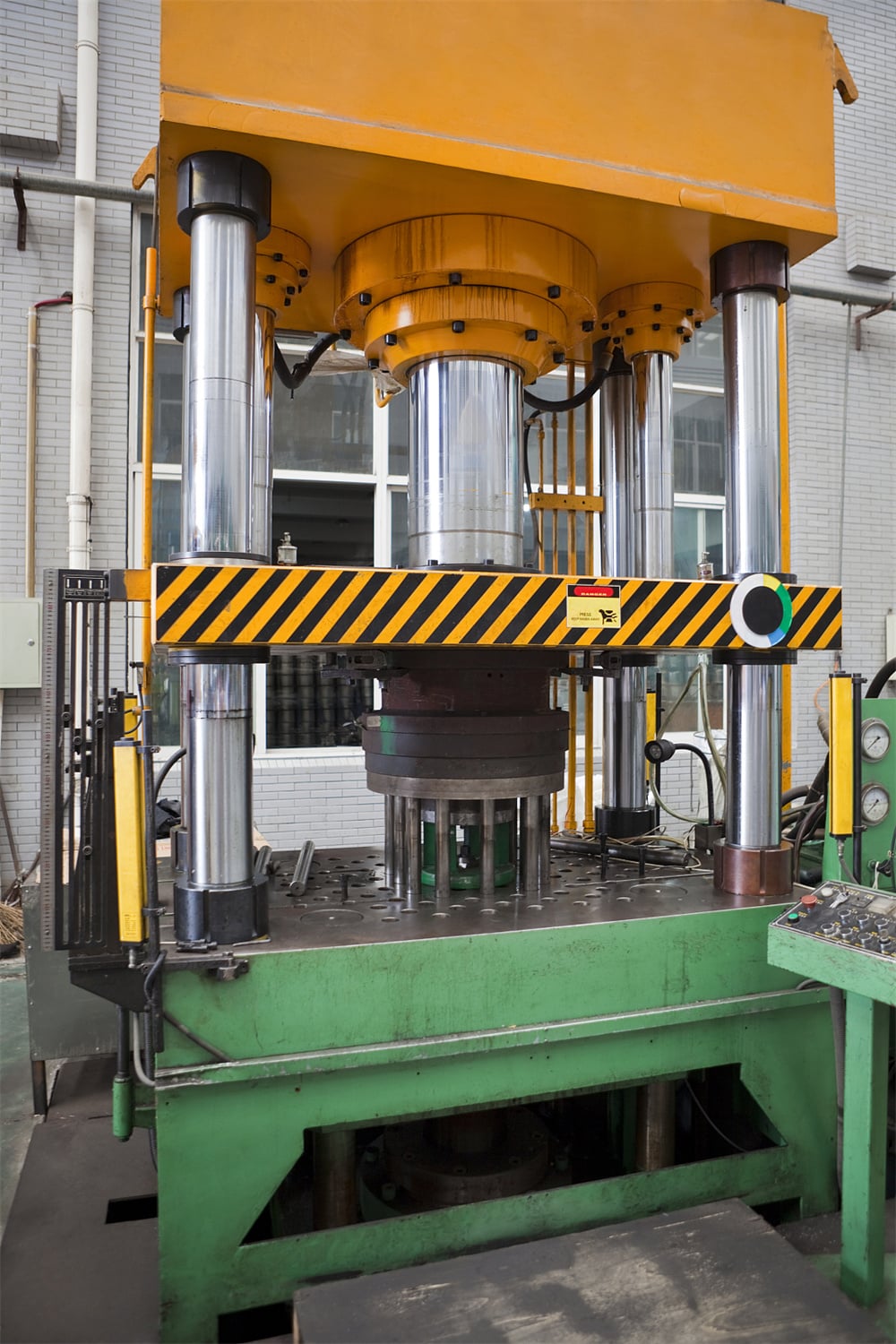
Configuration Impact: How Customization Changes the Price
Rarely is a hydraulic press bought “off the shelf” without some level of configuration. Each modification to the base design will influence the Industrial Hydraulic Press Price : Budget, Mid-Range, Heavy-Duty Options.
Stroke Length and Daylight: Daylight is the vertical clearance between the bolster plate and the ram in its fully retracted position. If your application involves very tall parts or deep dies, you may need extended daylight and a longer stroke. Increasing these dimensions requires longer cylinders and a taller, more reinforced frame, which increases the price.
Bolster Size and Bed Area: A larger bed allows for larger dies or the mounting of multiple dies for progressive operations. However, a larger bed also means the frame must be wider and stronger to prevent the bed from bowing in the center. This “bed deflection” is a critical metric; high-precision work requires a very stiff bed, which adds significant cost.
Speed Requirements: Standard hydraulic presses have three speeds: rapid advance, pressing speed, and rapid return. If your production volume is high, you need faster speeds. Achieving high speeds requires larger pumps, higher-horsepower motors, and more complex valving to manage the rapid flow of hydraulic oil without causing “hydraulic shock” or overheating. Servo-driven hydraulic systems are an increasingly popular (though more expensive) option that provides extreme speed control and energy efficiency.
Hidden Costs of Purchasing a Hydraulic Press
The quote you receive from a manufacturer is rarely the final number on your balance sheet. To accurately budget for an industrial hydraulic press, you must account for several “hidden” or secondary costs.
| Cost Category | Description | Estimated Impact |
|---|---|---|
| Shipping & Logistics | Oversized machinery requires flatbed trailers, permits, and sometimes escorts. | $2,000 – $15,000+ |
| Rigging & Installation | Professional riggers are needed to offload and position the machine. | $3,000 – $20,000 |
| Foundation Work | Heavy-duty presses may require a reinforced concrete pad or a pit. | $5,000 – $50,000 |
| Hydraulic Oil | Large presses can require hundreds or thousands of gallons of oil. | $1,000 – $10,000 |
| Tooling & Dies | The press is useless without the specific dies for your parts. | Variable (High) |
| Operator Training | Ensuring staff can safely and efficiently operate the new CNC controls. | $1,000 – $5,000 |
Furthermore, consider the electrical requirements. A 500-ton press might require a significant upgrade to your facility’s electrical service to handle the peak amperage of the main motors. It is always advisable to consult with an electrician and a structural engineer before the machine arrives on-site.
Calculating ROI: Beyond the Initial Price Tag
When discussing Industrial Hydraulic Press Price : Budget, Mid-Range, Heavy-Duty Options, the conversation should eventually shift from “How much does it cost?” to “How much will it make?” Return on Investment (ROI) is the ultimate metric for any machinery purchase.
To calculate ROI, consider the following factors:
- Cycle Time Reduction: If a mid-range press can produce 20% more parts per hour than your current setup, calculate the additional revenue generated over a year.
- Scrap Rate Improvement: A more rigid, precise press reduces part rejects. If you are working with expensive materials like stainless steel or titanium, reducing scrap by even 2% can save thousands of dollars annually.
- Labor Savings: Modern CNC controls allow for faster setup times and can often be operated by less specialized labor once programmed. Automation integration can even allow for “lights-out” manufacturing.
- Maintenance Costs: A cheaper budget machine might have lower upfront costs but higher annual maintenance and downtime costs. A high-quality HARSLE press is designed for durability, reducing the frequency of unplanned repairs.
Typically, a well-chosen hydraulic press in a high-volume environment should pay for itself within 18 to 36 months. If the machine has a lifespan of 20+ years, the long-term profitability is substantial.
Buying Advice: How to Choose the Right Press
Choosing the right hydraulic press requires a balance of technical needs and financial reality. Here is a checklist to guide your decision-making process:
- Define Your Maximum Requirements: Don’t buy a press that just barely meets your current needs. If your heaviest job requires 180 tons, buy a 200 or 250-ton press. Running a machine at 100% capacity constantly will shorten its lifespan.
- Prioritize Frame Rigidity: If you are doing precision stamping or using expensive dies, do not skimp on the frame. Look for heavy-duty welded steel constructions that have been stress-relieved.
- Evaluate the Control System: Ensure the interface is user-friendly for your operators. If you plan to integrate the press into a larger smart-factory ecosystem, ensure the PLC supports modern communication protocols (like Ethernet/IP or Modbus).
- Check After-Sales Support: A machine is only as good as the support behind it. Brands like HARSLE provide comprehensive manuals, readily available spare parts, and technical support to ensure your downtime is minimized.
- Safety First: Ensure the press meets or exceeds local safety standards (such as OSHA in the US or CE in Europe). Light curtains, dual palm buttons, and safety interlocks are non-negotiable in a modern industrial environment.
Frequently Asked Questions (FAQ)
1. How long does an industrial hydraulic press typically last?
With proper maintenance, a high-quality industrial hydraulic press can last 20 to 30 years or more. Many machines from the mid-20th century are still in operation today, though their hydraulic and control systems have usually been retrofitted to meet modern standards.
2. Is it better to buy a new or used hydraulic press?
While used presses are cheaper, they often come with hidden risks such as worn seals, fatigued frames, or obsolete control systems. A new HARSLE press provides the latest safety features, a manufacturer’s warranty, and higher energy efficiency, which often outweighs the initial savings of a used machine.
3. What is the difference between a 4-column and an H-frame press?
A 4-column press offers excellent access to the die area from all four sides, making it ideal for large parts and automated loading. An H-frame press (or straight-side press) is generally more rigid and better at handling off-center loads, which is crucial for complex stamping operations.
4. Can I upgrade my press’s tonnage later?
No. The tonnage of a press is limited by the structural integrity of the frame and the capacity of the hydraulic cylinder. Attempting to increase the pressure beyond the design limit is extremely dangerous and will lead to catastrophic frame failure.
5. How often should the hydraulic oil be changed?
This depends on the duty cycle and environment, but generally, hydraulic oil should be tested annually and changed every 2,000 to 4,000 operating hours. Keeping the oil clean and cool is the single most important factor in extending the life of your hydraulic components.
6. Does HARSLE offer custom-designed hydraulic presses?
Yes, HARSLE specializes in tailoring machine specifications—including tonnage, stroke, daylight, and table size—to meet specific customer applications, ensuring the best possible fit for your production line.
7. What safety features should I look for in a budget press?
Even on a budget, you should never compromise on safety. Look for emergency stop buttons, overload protection valves, and at least basic light curtains or physical guarding to protect the operator from the point of operation.