Hydraulic Plate Shearing Machine Price Guide for Heavy-Duty Cutting Applications


Introduction to Heavy-Duty Hydraulic Plate Shearing Machine Pricing
In the world of industrial metal fabrication, the hydraulic plate shearing machine stands as a cornerstone of production efficiency. For businesses engaged in heavy-duty cutting applications—such as shipbuilding, bridge construction, and large-scale pressure vessel manufacturing—selecting the right equipment is not just about the initial purchase price; it is about understanding the total cost of ownership and the value the machine brings to the shop floor. The Hydraulic Plate Shearing Machine Price Heavy-Duty Cutting Applications varies significantly based on capacity, precision, and automation levels.
HARSLE has long been a leader in providing robust shearing solutions that balance performance with cost-effectiveness. When we talk about ‘heavy-duty,’ we are typically referring to machines capable of shearing plates with thicknesses ranging from 12mm to over 40mm, and lengths often exceeding 4 meters. These machines require immense structural integrity, powerful hydraulic systems, and high-grade blade materials to withstand the stresses of continuous industrial use. This guide aims to demystify the pricing landscape, helping procurement managers and shop owners make informed decisions.
Understanding the price of a hydraulic shear requires a deep dive into the engineering that goes into these machines. A machine designed for 6mm mild steel is fundamentally different from one designed for 25mm high-tensile steel. The latter requires reinforced frames, larger cylinders, and more sophisticated control systems to prevent frame deflection and ensure a clean, square cut. As we explore the price ranges, keep in mind that the cheapest option often leads to higher long-term costs in maintenance and wasted material.
Price Range Overview: What to Expect in the Market
The market for hydraulic plate shearing machines is segmented into three primary tiers: entry-level industrial, mid-range performance, and high-end automated systems. For heavy-duty applications, even the ‘entry-level’ machines represent a significant investment due to the sheer volume of steel and hydraulic components required. Generally, for a machine capable of cutting 16mm to 20mm plate at a 3-meter length, prices start around $25,000 and can climb rapidly depending on the brand and features.
Entry-level heavy-duty machines often utilize NC (Numerical Control) systems for backgauge positioning but may require manual adjustment for blade gap and rake angle. These are suitable for shops where production volume is moderate and material types are consistent. In the mid-range, which typically falls between $45,000 and $85,000, you will find machines with full CNC integration. These systems automatically adjust the blade gap, rake angle, and stroke length based on the material thickness entered by the operator, significantly reducing setup time and human error.
High-end systems, often exceeding $120,000, are designed for 24/7 operation in demanding environments. These machines feature premium components such as Bosch-Rexroth hydraulics, Siemens electronics, and specialized blade alloys. They often include automated loading and unloading systems, scrap conveyors, and sophisticated safety light curtains. For large-scale industrial operations, the higher upfront cost of these machines is justified by their extreme durability and high throughput rates.
Main Cost Drivers in Heavy-Duty Shearing Machines
The primary driver of the Hydraulic Plate Shearing Machine Price Heavy-Duty Cutting Applications is the cutting capacity. As the thickness of the plate increases, the force required grows exponentially. This necessitates larger hydraulic cylinders, a more powerful motor, and a significantly heavier steel frame to resist the torsional forces generated during the cut. A machine rated for 25mm plate will weigh substantially more than one rated for 12mm, and the cost of the raw steel alone contributes to the price difference.
Blade quality is another critical cost factor. Heavy-duty applications often involve cutting high-strength alloys or stainless steel, which can quickly dull standard blades. High-carbon, high-chrome blades (such as Cr12MoV or 6CrW2Si) are essential for longevity but add to the initial cost. Furthermore, the length of the machine plays a role; a 6-meter shear requires a much more rigid beam and more complex hydraulic synchronization than a 3-meter shear to ensure consistent cut quality across the entire length.
Hydraulic and electrical components also dictate pricing. Machines equipped with world-class components like Schneider electrics and Sunny pumps command a premium because they offer better reliability and easier sourcing of spare parts globally. Cheap, no-name components might lower the initial price but often lead to costly downtime when a failure occurs. HARSLE prioritizes the use of reputable components to ensure that our heavy-duty shears remain operational in the toughest environments.
Configuration Impact: Swing Beam vs. Guillotine
When evaluating the price, the fundamental design of the machine—Swing Beam (QC12Y) or Guillotine (QC11Y)—is a major consideration. Swing beam shears are generally more affordable. They operate on a pivot point, moving the upper blade in an arc. While effective for many applications, the fixed rake angle can lead to ‘twist’ or ‘bow’ in the sheared strip, especially in thicker materials. For heavy-duty tasks where precision is less critical, a swing beam shear offers excellent value.
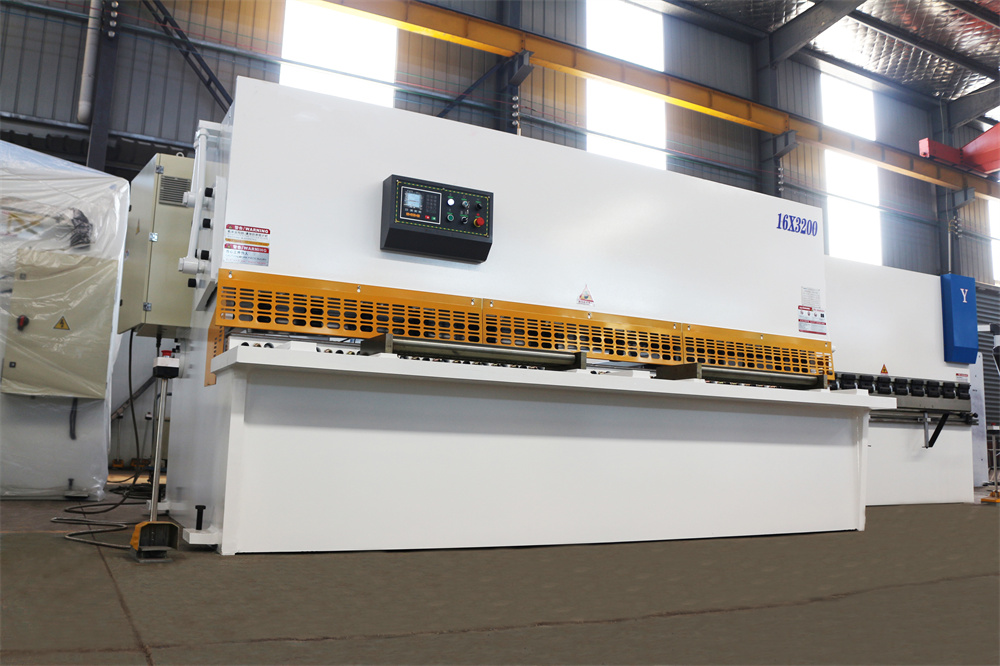
Guillotine shears, on the other hand, move the upper blade vertically. This design allows for an adjustable rake angle. By decreasing the rake angle for thinner plates and increasing it for thicker ones, the operator can minimize material distortion. Guillotine machines are more complex to manufacture and therefore more expensive, often costing 20-30% more than a comparable swing beam model. However, for heavy-duty applications requiring high precision and minimal deformation, the guillotine design is the industry standard.
Furthermore, the level of automation in the configuration impacts the price. A basic NC backgauge is standard, but upgrading to a CNC system with a touchscreen interface, multi-step programming, and automatic material support systems will increase the price. For heavy plates, a pneumatic or hydraulic rear support system is often necessary to prevent the plate from sagging before the cut, which ensures dimensional accuracy but adds a few thousand dollars to the configuration cost.
Hidden Costs of Industrial Shearing Equipment
The sticker price of a hydraulic plate shearing machine is only part of the financial equation. One of the most overlooked hidden costs is site preparation. A heavy-duty shear can weigh between 10 and 50 tons. This requires a reinforced concrete foundation to prevent the machine from shifting or sinking, which would ruin its alignment and cut quality. Excavation and specialized concrete work can add significant costs before the machine even arrives.
Shipping and installation are also substantial factors. Moving a 20-ton machine requires specialized heavy-lift logistics and rigging services. Once on-site, a factory-trained technician is usually required to oversee the assembly, leveling, and commissioning of the machine. While HARSLE provides comprehensive support, buyers must budget for these logistical expenses. Additionally, initial operator training is vital; an untrained operator can damage expensive blades or hydraulic systems within days of installation.
Ongoing operational costs include electricity, hydraulic oil, and blade sharpening. A heavy-duty shear might use a 30kW to 75kW motor, which can impact monthly utility bills. Hydraulic systems require hundreds of liters of high-quality oil that must be filtered and periodically replaced. Finally, blades will eventually need to be rotated (most have 4 cutting edges) and eventually reground. The cost of removing, transporting, and regrinding large blades should be factored into the long-term maintenance budget.
ROI Calculation: Investing in Quality
Calculating the Return on Investment (ROI) for a Hydraulic Plate Shearing Machine Price Heavy-Duty Cutting Applications involves looking at productivity gains and waste reduction. A modern CNC shear can reduce setup times by up to 70% compared to manual machines. If your shop processes 20 tons of steel a day, a 5% reduction in scrap due to better accuracy can save thousands of dollars per month, quickly paying for the price difference of a higher-end machine.
Labor savings are another major component. An automated machine with a CNC backgauge and material support allows a single operator to handle tasks that might otherwise require two people. Furthermore, the speed of hydraulic systems has improved; faster cycle times mean more cuts per hour. When you multiply these efficiencies over a 10-to-15-year lifespan, the initial investment in a high-quality HARSLE machine becomes highly profitable.
Consider also the secondary processing costs. If a shear produces a clean, square edge, the need for secondary grinding or edge preparation before welding is minimized. In heavy-duty applications like tank fabrication, this can save hundreds of man-hours annually. By investing in a machine with an adjustable rake angle and precise blade gap control, you ensure that the output is ready for the next stage of production without costly rework.
Buying Advice for Heavy-Duty Applications
When you are ready to purchase, start by defining your maximum requirements. Do not buy a machine that will constantly run at 100% of its rated capacity. If you frequently cut 16mm plate, buy a machine rated for 20mm. This ‘headroom’ ensures the machine isn’t overstressed, leading to a much longer service life and better cut quality. Always ask for a sample cut of your specific material to verify the machine’s performance.
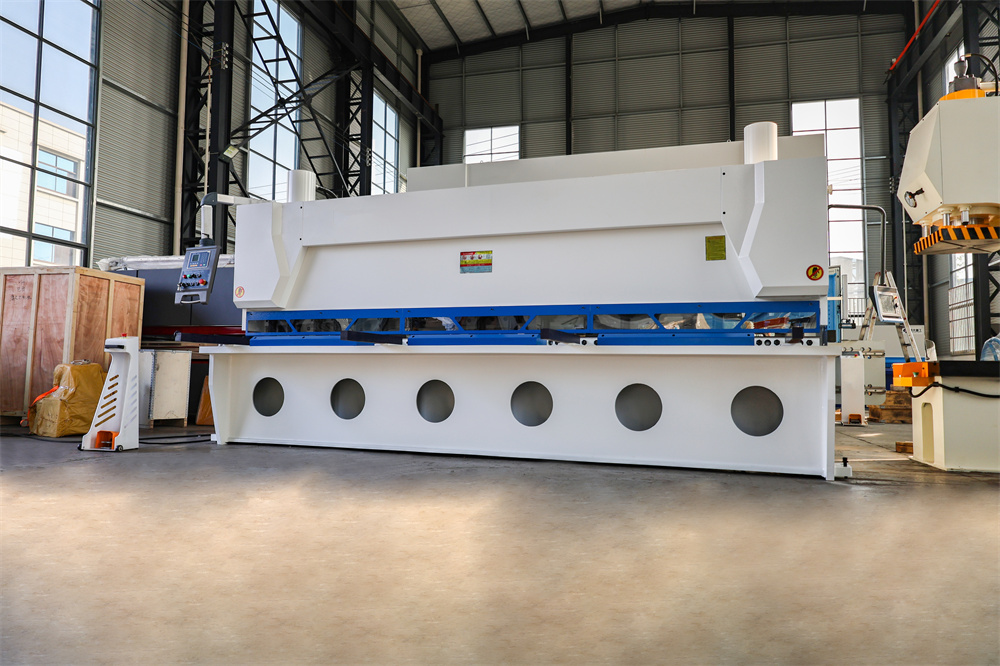
Evaluate the manufacturer’s after-sales support. A heavy-duty shear is a long-term asset, and you will eventually need spare parts or technical advice. HARSLE offers robust global support, but it is always wise to check the availability of local technicians or the speed of parts shipping. Also, consider the resale value; well-known brands with a reputation for durability hold their value much better on the used equipment market.
Finally, don’t ignore safety features. In heavy-duty cutting, the forces involved are lethal. Ensure the machine complies with modern safety standards, including front finger guards, rear light curtains, and emergency stop buttons. While these features add to the price, they are non-negotiable for protecting your workforce and complying with industrial regulations. A safe shop is a productive shop.
Frequently Asked Questions (FAQ)
What is the average lifespan of a heavy-duty hydraulic shear?
With proper maintenance, a high-quality hydraulic shearing machine from HARSLE can last 20 to 25 years. The key to longevity is regular oil changes, blade sharpening, and ensuring the machine is not consistently operated beyond its rated capacity. Many machines built in the 1990s are still in active service today due to their robust mechanical design.
Can I cut stainless steel on a standard hydraulic shear?
Yes, but you must account for the material’s hardness. Stainless steel is much harder than mild steel. Generally, a machine’s capacity is rated for mild steel (450N/mm²). For stainless steel, you typically need to reduce the rated thickness capacity by about 50%. For example, a 20mm mild steel shear is usually rated for 10mm stainless steel. You also need high-quality blades specifically designed for stainless applications.
Is CNC really necessary for heavy-duty shearing?
While not strictly necessary for simple cuts, CNC is highly recommended for shops that handle various thicknesses and lengths. The ability to automatically adjust the rake angle and blade gap ensures the best possible cut quality and protects the blades from premature wear. It also significantly reduces the skill level required for the operator to produce perfect results.
How often should the blades be sharpened?
This depends entirely on the volume of work and the material being cut. For a typical heavy-duty shop, blades might need to be rotated every 6 to 12 months. Most shearing blades have four cutting edges. Once all four edges are dull, the blades must be sent to a professional grinding service. Using dull blades increases the load on the hydraulic system and results in poor cut quality.
What kind of hydraulic oil should I use?
Most heavy-duty shears use anti-wear hydraulic oil, typically ISO VG 46 or 68, depending on the ambient temperature of your facility. It is crucial to use high-quality oil and keep it clean. Contaminated oil is the leading cause of valve failure and pump wear in hydraulic machinery. HARSLE recommends using a filtration system to extend the life of the oil and the hydraulic components.