Industrial Shearing Machine Price Range: What Buyers Should Expect


Introduction to Industrial Shearing Machine Pricing
In the world of metal fabrication, the shearing machine is a cornerstone of production. Whether you are a small workshop or a large-scale industrial plant, understanding the Industrial Shearing Machine Price Range: What Buyers Should Expect is crucial for effective budgeting and long-term financial planning. The price of a shearing machine is not just a single number; it is a reflection of engineering precision, material capacity, technological integration, and brand reliability.
For many buyers, the initial shock of price variations can be confusing. Why does one machine cost $8,000 while another seemingly similar model costs $60,000? The answer lies in the details of the machine’s construction and its intended duty cycle. This guide aims to demystify these costs, providing a clear roadmap for procurement officers and business owners to navigate the complex market of metal cutting equipment.
As we delve into the specifics, it is important to remember that a shearing machine is a long-term asset. A well-maintained machine from a reputable manufacturer like HARSLE can last for decades. Therefore, the “price” should always be viewed in the context of the “value” it brings to your production line. In the following sections, we will break down the price tiers, explore the technical drivers of cost, and identify the hidden expenses that often catch buyers off guard.

Price Range Overview: Categorizing the Market
The market for industrial shearing machines is broadly divided into three categories based on capacity, technology, and build quality. Understanding where your needs fall within these categories is the first step in establishing a realistic budget.
1. Entry-Level and Light-Duty Machines ($5,000 – $15,000)
These machines are typically designed for small workshops or maintenance departments. They usually feature NC (Numerical Control) systems like the E21S, which manage the backgauge but require manual adjustment for blade gap and stroke length. These machines are often limited to cutting thinner materials, typically up to 4mm or 6mm of carbon steel, with lengths rarely exceeding 2500mm. While affordable, they lack the speed and automation required for high-volume production.
2. Mid-Range Professional Machines ($15,000 – $45,000)
This is the most popular segment for dedicated fabrication shops. In this price range, buyers can expect hydraulic swing beam or guillotine shears with higher precision. These machines often feature more advanced controllers (such as the Delem DAC-310 or DAC-360) that automate blade gap adjustment and rake angle. They are built with heavier frames to handle materials up to 10mm or 12mm thick and lengths up to 4000mm. The components used in these machines, such as hydraulic valves and electrical switches, are usually sourced from global brands like Bosch Rexroth and Schneider.
3. High-End and Heavy-Duty Systems ($50,000 – $150,000+)
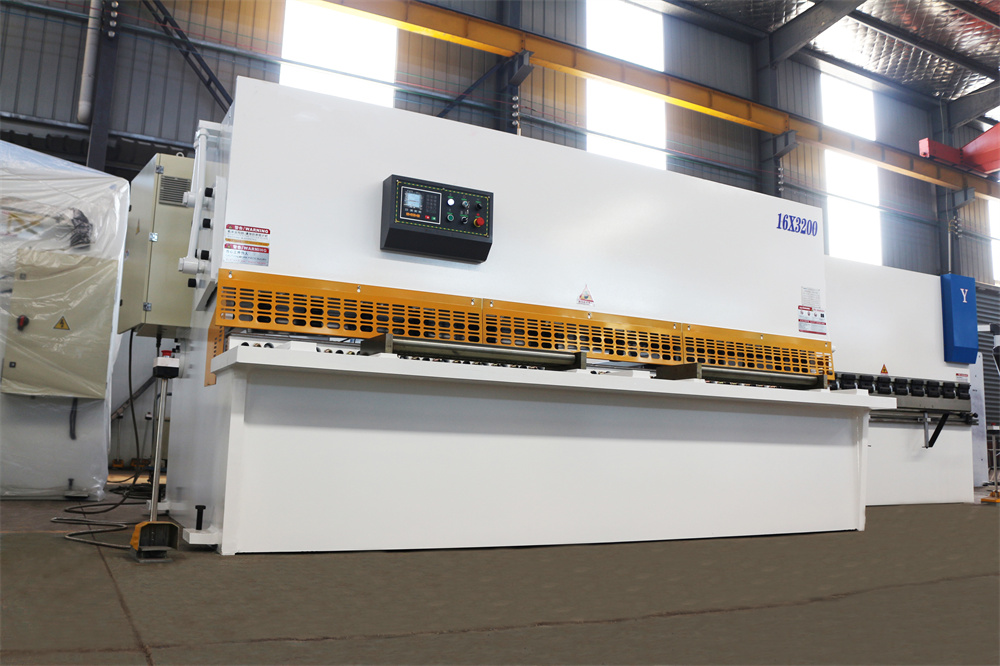
At the top of the spectrum are heavy-duty hydraulic guillotine shears designed for 24/7 industrial operations. These machines can handle plate thicknesses of 20mm, 25mm, or even 40mm, with cutting lengths extending to 6000mm or more. They feature full CNC integration, automatic material handling systems, and specialized cooling systems for continuous use. The price reflects the massive amount of high-grade steel used in the frame and the sophisticated hydraulics required to exert hundreds of tons of shearing force.
| Machine Category | Typical Thickness Capacity | Typical Price Range (USD) | Target User |
|---|---|---|---|
| Entry-Level NC | 1mm – 6mm | $5,000 – $15,000 | Small Workshops |
| Mid-Range CNC | 6mm – 12mm | $15,000 – $45,000 | Fabrication Shops |
| Heavy-Duty CNC | 16mm – 40mm+ | $50,000 – $150,000+ | Industrial Plants |
Main Cost Drivers: What Are You Paying For?
When analyzing the Industrial Shearing Machine Price Range: What Buyers Should Expect, several technical factors dictate the final quote. Understanding these drivers allows you to prioritize features that matter most to your specific applications.
Material Capacity and Frame Rigidity
The most significant cost driver is the physical size and capacity of the machine. To shear a 20mm steel plate, the machine frame must withstand incredible torsional forces. This requires thicker steel plates for the side frames and the ram, which increases the raw material cost and the shipping weight. A machine designed for 3200mm length will always be significantly more expensive than a 2500mm model because the longer blade beam requires more reinforcement to prevent deflection during the cut.
The Drive System: Hydraulic vs. Mechanical
While mechanical shears still exist, the modern industry has largely shifted to hydraulic systems. Within hydraulics, there are levels of sophistication. A simple hydraulic system with basic valves is cheaper but may be prone to overheating or inconsistent pressure. High-end machines utilize variable displacement pumps and proportional valves that provide smoother operation, faster cycle times, and better energy efficiency. These premium components can add several thousand dollars to the machine’s price but offer better reliability.
Blade Quality and Material
The blades are the only part of the machine that actually touches the workpiece. Standard blades are usually made of 9CrSi, which is suitable for carbon steel. However, if you plan to cut stainless steel regularly, you need high-carbon, high-chrome blades (such as 6CrW2Si or Cr12MoV). These specialized blades stay sharp longer under the stress of cutting hard materials but come at a premium price. Furthermore, the number of cutting edges (two vs. four) on the blades affects the long-term cost of ownership.
Brand Reputation and Component Sourcing
A machine is only as good as its weakest link. Manufacturers like HARSLE invest in high-quality components from recognized global leaders. Using Siemens motors, Bosch Rexroth hydraulics, and Schneider electrics ensures that spare parts are available worldwide and that the machine performs predictably. While “no-name” components can lower the initial price, they often lead to higher costs due to downtime and difficult repairs.
Configuration Impact: Customizing for Performance
The base price of a shearing machine is often just the starting point. Optional configurations and upgrades can significantly impact the final cost, but they also provide the functionality needed for specific tasks.
Swing Beam vs. Guillotine Design
Generally, swing beam shears are more affordable than guillotine shears. The swing beam design uses a pivot point, which is simpler to manufacture. However, it has a fixed rake angle, which can lead to more distortion (bowing and twisting) on thin strips. Guillotine shears move the blade in a vertical track and allow for adjustable rake angles. This flexibility reduces material distortion and allows for a wider range of thicknesses to be cut on the same machine, but the complex guiding system makes it more expensive.
CNC Controllers and Automation
The level of automation is a major price variable. A basic NC controller might only move the backgauge to a specific dimension. A high-end CNC controller can automatically calculate the correct blade gap, rake angle, and stroke length based on the material type and thickness entered by the operator. Some systems even include “Return-to-Sender” features or pneumatic sheet supports that prevent thin sheets from sagging before the cut. Each of these features adds to the electronics and pneumatic hardware costs.
Backgauge Precision and Travel
Standard backgauges use T-screws and are accurate to within 0.1mm. For high-precision aerospace or medical applications, buyers might opt for ball-screw backgauges with AC servo motors, which offer 0.01mm precision and much faster positioning speeds. Additionally, if you need to cut very deep sheets, extending the backgauge travel from the standard 600mm or 750mm to 1000mm or more will require a larger mechanical structure and higher costs.
Hidden Costs: Beyond the Sticker Price
When calculating the Industrial Shearing Machine Price Range: What Buyers Should Expect, many first-time buyers overlook the “soft costs” associated with bringing a new machine into production. These can easily add 10% to 20% to the total project budget.
- Shipping and Logistics: Shearing machines are heavy and oversized. Shipping a 10-ton machine across the ocean involves sea freight, port fees, customs duties, and inland trucking. If the machine is too wide for a standard container, it may require a “Flat Rack,” which is significantly more expensive.
- Foundation and Installation: Large shearing machines require a reinforced concrete floor to maintain accuracy and prevent the frame from twisting. Some heavy-duty models even require a pit. You must factor in the cost of masonry work and the rental of a heavy-duty crane or forklift for the offloading and positioning.
- Commissioning and Training: While many machines are “plug and play,” sophisticated CNC models require professional commissioning. Paying for a technician to visit your site, level the machine, and train your staff on the controller and safety protocols is an investment in safety and productivity.
- Consumables and Maintenance: You should budget for hydraulic oil (which can be hundreds of liters), spare filters, and the eventual cost of blade sharpening or replacement. A set of high-quality blades for a 4-meter machine can cost several thousand dollars.
ROI Calculation: Justifying the Investment
The price of a shearing machine should be evaluated against its Return on Investment (ROI). A more expensive, automated machine often pays for itself faster than a cheap, manual one through several channels.
Labor Savings
A CNC shearing machine with automatic blade gap and rake adjustment allows an operator to switch between jobs in seconds rather than minutes. Over a year, this can save hundreds of hours of labor. Furthermore, features like pneumatic sheet supports allow a single operator to handle large sheets that would otherwise require two people, effectively halving the labor cost per cut.
Material Yield and Accuracy
Inaccurate cuts lead to scrap. If a cheaper machine has a backgauge that drifts or a frame that flexes, you may find yourself throwing away expensive material or spending extra time on secondary grinding processes. A high-precision machine ensures that every cut is square and accurate, maximizing material yield and reducing the cost of downstream operations like welding and assembly.
Energy Efficiency
Modern hydraulic systems, especially those equipped with inverter-driven motors, only consume significant power during the actual cutting stroke. Older or cheaper designs may keep the pump running at full speed constantly. For a shop running multiple shifts, the electricity savings from a modern, high-efficiency machine can amount to thousands of dollars annually.
Buying Advice: How to Choose the Right Supplier
Navigating the Industrial Shearing Machine Price Range: What Buyers Should Expect requires a strategic approach to sourcing. Here is a checklist to ensure you get the best value for your money:
- Define Your Maximums: Don’t buy a machine based on your average work; buy it based on your maximum thickness and length. Overloading a light-duty machine will lead to premature failure and poor cut quality.
- Verify Component Brands: Ask for a detailed component list. Ensure the hydraulics, electronics, and motors are from reputable brands that have a service presence in your region.
- Request a Test Cut: If possible, send samples of your most difficult material to the manufacturer. A reputable supplier like HARSLE will provide video proof or a live demonstration of the machine cutting your specific material to the required tolerance.
- Check the Warranty and Support: A low price is no comfort if the machine breaks down and the supplier is unresponsive. Look for a minimum 12-month warranty and confirm that technical support is available in your language and time zone.
- Consider the Resale Value: Machines from recognized brands hold their value much better on the used market. If you decide to upgrade in five years, a HARSLE machine will be much easier to sell than a generic, unbranded model.
Frequently Asked Questions (FAQ)
What is the typical lifespan of an industrial shearing machine?
With proper maintenance, a high-quality hydraulic shearing machine can last 20 to 30 years. The mechanical frame is usually over-engineered to last a lifetime, while the hydraulic seals, valves, and electronic controllers may need refurbishment or replacement every 10 to 15 years.
Can I cut stainless steel on a standard shearing machine?
Yes, but you must account for the material’s hardness. Stainless steel is much harder than carbon steel. Generally, you should reduce the rated capacity of the machine by 50% when cutting stainless (e.g., a 10mm carbon steel shear should only cut 5mm stainless). You also need high-chrome blades to prevent rapid dulling.
Is a CNC controller worth the extra cost?
If your shop does high-volume production or frequent job changes, yes. The ability to save programs and have the machine automatically adjust the blade gap and rake angle reduces setup time and eliminates operator error, which significantly boosts productivity.
What is the difference between a swing beam and a guillotine shear?
A swing beam shear moves the upper blade in a circular arc, which is simpler and cheaper. A guillotine shear moves the blade in a straight vertical line, allowing for adjustable rake angles and higher precision, especially on thicker plates. Guillotines are generally more expensive but more versatile.
How often do the blades need sharpening?
This depends entirely on the material being cut and the volume of work. For a typical shop cutting carbon steel, blades might need to be rotated or sharpened every 1-2 years. Cutting abrasive or very hard materials will shorten this interval significantly.