How a Hydraulic Press Delivered Stable Bending Results for Large Metal Parts


Introduction to Large-Scale Metal Bending Challenges
In the realm of heavy industrial manufacturing, the ability to manipulate massive steel plates and structural components with precision is not just an advantage—it is a necessity. For years, fabricators have struggled with the inherent volatility of large-scale metalwork. When dealing with workpieces that span several meters and weigh multiple tons, traditional mechanical methods often fall short. This is where the narrative of how a hydraulic press delivered stable bending results for large metal parts becomes essential for any modern workshop looking to scale its operations.
Large metal parts, such as those used in shipbuilding, bridge construction, and heavy-duty mining equipment, require immense force to deform. However, force alone is insufficient. Without stability and control, the material is prone to cracking, uneven deformation, or significant springback issues. The transition to advanced hydraulic systems has revolutionized this process, providing the consistent pressure and slow-speed control required to manage the molecular stress within thick steel plates. HARSLE has been at the forefront of this evolution, engineering machines that prioritize structural rigidity and hydraulic precision.
The stability of a bending operation is measured by its repeatability and the accuracy of the final angle. When we say a hydraulic press delivered stable bending results for large metal parts, we are referring to a machine’s ability to maintain a constant tonnage throughout the stroke, regardless of the resistance offered by the material. This article explores the technical nuances, strategic considerations, and selection criteria that make such stability possible in the demanding world of heavy metal fabrication.
Key Considerations for Bending Large Metal Parts
When approaching the task of bending large-scale components, several critical factors must be evaluated to ensure the integrity of the final product. The first and most obvious is material thickness and yield strength. High-strength alloys and thick carbon steels behave differently under pressure than thinner sheets. As the thickness increases, the internal stresses during the bending process grow exponentially, requiring a machine that can handle high tonnage without frame deflection.
Another vital consideration is the “springback” effect. Every metal has an elastic limit; once the pressure is released, the part tends to return slightly to its original shape. For large parts, even a one-degree deviation in springback can result in a misalignment of several centimeters at the end of a long flange. A stable hydraulic press compensates for this through precision depth control and dwell time, allowing the metal to “set” into its new shape before the pressure is fully retracted.
Workpiece handling is also a major logistical hurdle. Large parts require specialized support systems, such as heavy-duty front and rear sheet followers, to prevent the material from sagging under its own weight during the bend. If the material is not supported correctly, the weight of the overhanging section can introduce unwanted secondary bends or even damage the machine’s tooling. Therefore, the stability of the result is as much about the peripheral support as it is about the press itself.
Finally, operator safety and environmental factors cannot be ignored. Large-scale bending involves massive amounts of stored energy. A stable hydraulic system must include redundant safety valves, light curtains, and emergency stop protocols. Furthermore, the thermal stability of the hydraulic oil is crucial; as the machine works through heavy cycles, the oil heats up, which can change its viscosity and affect the precision of the valves. High-end hydraulic presses utilize cooling systems to maintain a consistent operating temperature, ensuring that the first bend of the day is identical to the last.
Technical Details: How Stability is Achieved
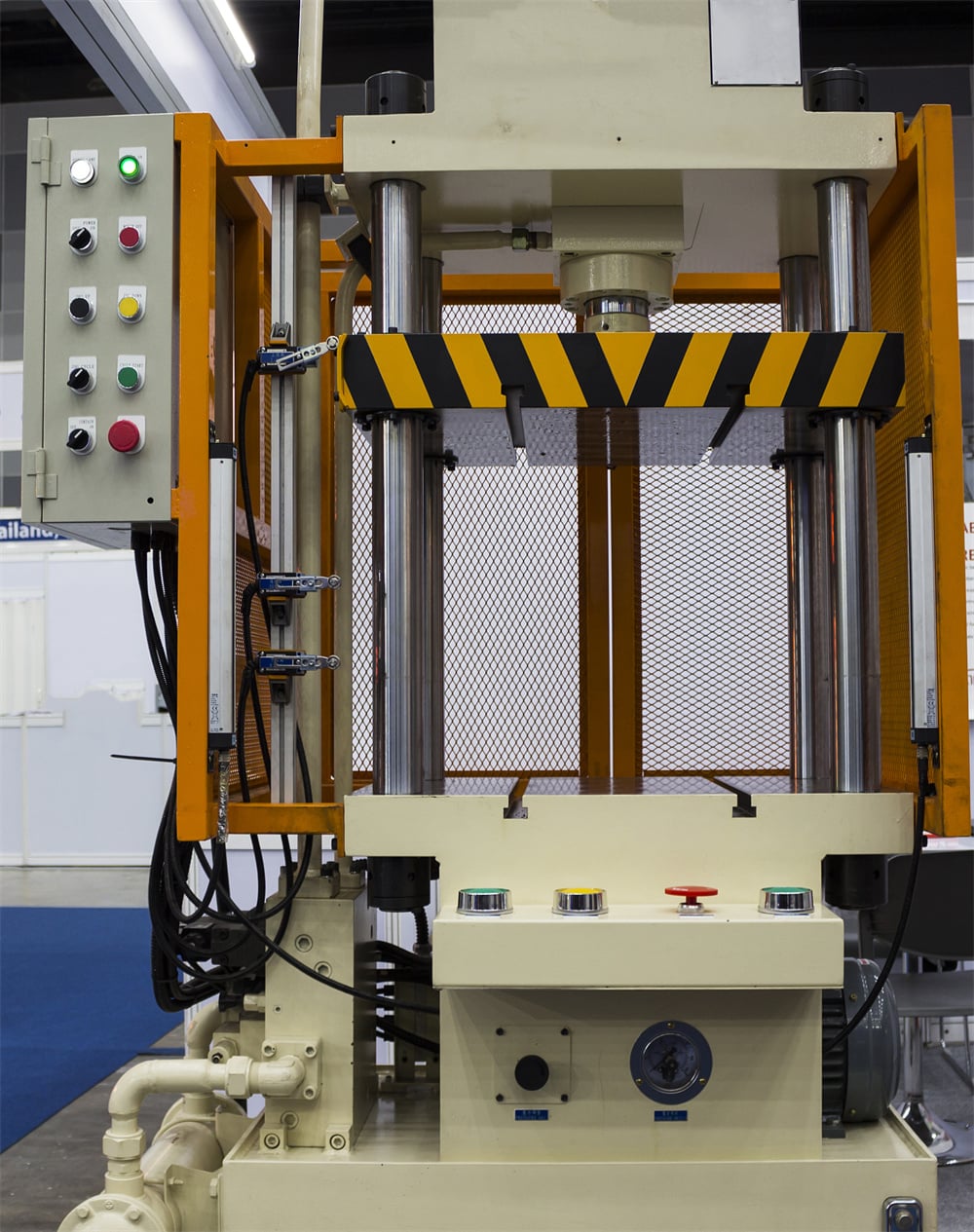
The core reason why a hydraulic press delivered stable bending results for large metal parts lies in its sophisticated internal architecture. Unlike mechanical presses that rely on a flywheel and eccentric shaft, hydraulic presses use fluid power to generate force. This allows for a constant pressure throughout the entire stroke, which is essential for thick materials that require a steady, controlled deformation rather than a sudden impact.
1. Synchronized Cylinder Technology
In large-scale presses, multiple hydraulic cylinders are often used to distribute force across a long bed. The challenge is ensuring that these cylinders move in perfect unison. Modern CNC systems use linear encoders to monitor the position of the ram at sub-micron levels. If one side of the ram encounters more resistance than the other, the hydraulic valves instantly adjust the flow to compensate, keeping the ram perfectly level. This synchronization is what prevents “twisting” in large parts.
2. Proportional Valve Control
The use of proportional valves allows for the fine-tuning of oil flow and pressure. Instead of a simple “on/off” mechanism, these valves can open and close in increments, allowing the press to slow down as it approaches the “pinch point.” This deceleration is critical for large parts, as it prevents the material from being shocked, which reduces the risk of fracture in high-carbon steels.
3. Frame Rigidity and Finite Element Analysis (FEA)
A hydraulic press is only as stable as the frame that holds it. For large-scale bending, H-frame designs are preferred over C-frames due to their superior resistance to deflection. During the design phase, HARSLE utilizes FEA software to simulate the stresses of maximum tonnage. By reinforcing the areas of the frame that experience the most strain, engineers ensure that the machine does not “yawn” or flex during the bend, which is the primary cause of angular inaccuracy in large parts.
| Feature | Impact on Stability | Benefit for Large Parts |
|---|---|---|
| CNC Crowning System | Compensates for bed deflection | Ensures consistent angles across long bends |
| Servo-Driven Pumps | Precise oil flow regulation | Reduced heat and higher energy efficiency |
| Heavy-Duty Tooling | Resists wear and deformation | Maintains profile accuracy over time |
| Laser Angle Measurement | Real-time feedback loop | Eliminates manual trial-and-error for springback |
Selection Advice: Choosing the Right Press for Large Components
Selecting a machine that ensures a hydraulic press delivered stable bending results for large metal parts requires a deep understanding of your specific production needs. You cannot simply buy the largest machine available; you must balance tonnage, bed length, and control sophistication. The first step is calculating the required tonnage. This is typically done using the formula: Tonnage = (L x T^2 x UTS) / (V x 1000), where L is the length, T is thickness, UTS is ultimate tensile strength, and V is the die opening. For large parts, always add a 20% safety margin to avoid running the machine at its absolute limit.
Consider the “throat depth” and “daylight” of the machine. Large parts often have deep flanges that require significant clearance to rotate within the machine frame. If the throat depth is too shallow, you will be limited in the types of geometries you can create. Similarly, a large daylight (the distance between the bed and the ram) allows for the use of tall tools, which are often necessary for complex large-scale bends.
The control system is another non-negotiable factor. For large-scale work, a 2D or 3D graphical CNC interface is highly recommended. These systems allow operators to simulate the bend sequence before the metal ever touches the die. This prevents costly mistakes where a multi-ton plate might collide with the machine frame mid-bend. Furthermore, look for systems that offer integrated maintenance alerts and remote diagnostics, as downtime on a large-capacity press can be incredibly expensive.
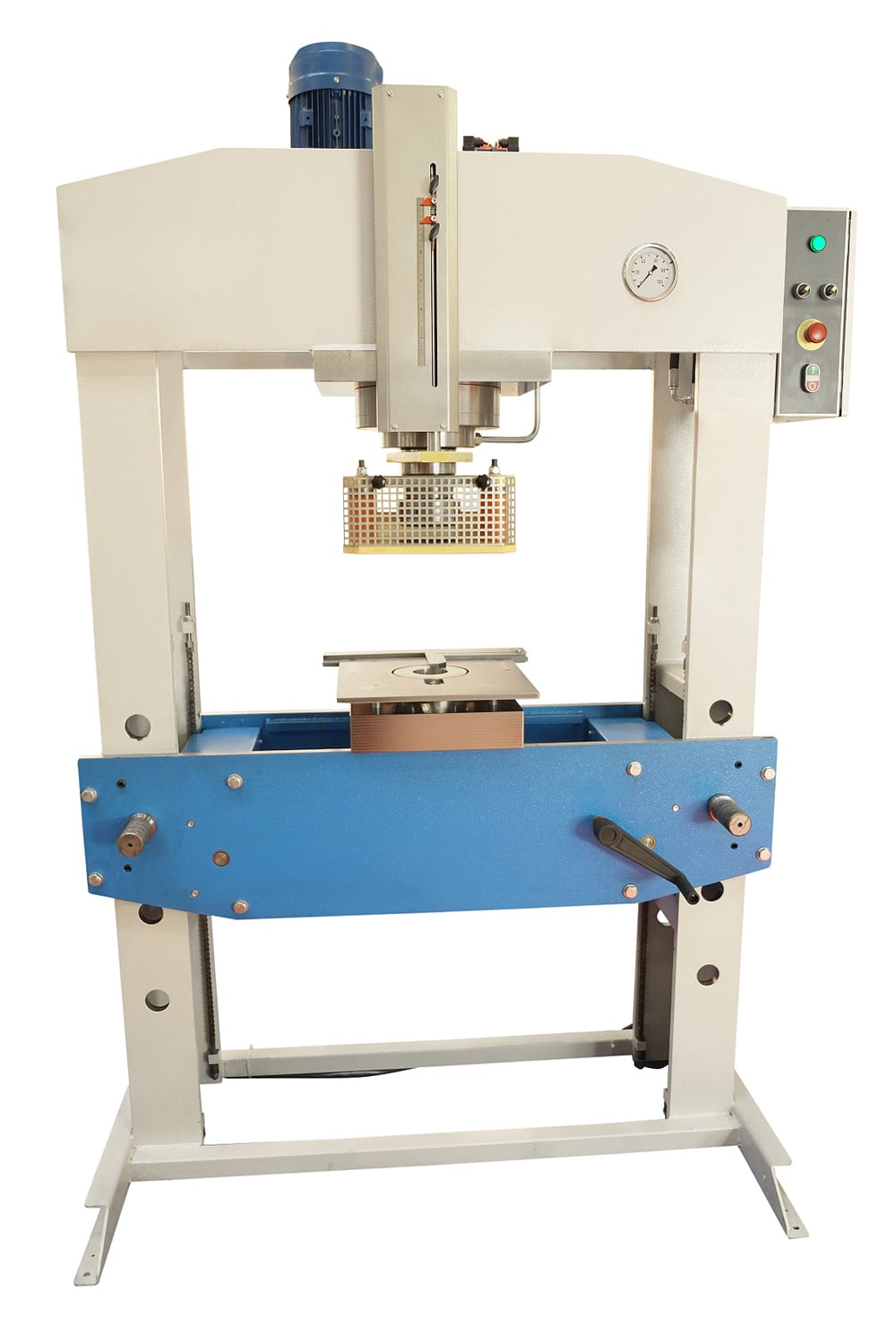
Finally, evaluate the manufacturer’s reputation for service and parts availability. A hydraulic press for large parts is a long-term investment, often spanning 20 years or more. Ensuring that you have access to specialized technicians who understand the complexities of high-tonnage hydraulics is vital. HARSLE provides comprehensive training and support to ensure that your team can maximize the stability and output of the equipment from day one.
Frequently Asked Questions (FAQ)
Why is a hydraulic press better than a mechanical press for large parts?
A hydraulic press provides full tonnage throughout the entire stroke, whereas a mechanical press only reaches peak tonnage at the bottom of the stroke. For large, thick parts, the ability to control the speed and maintain constant pressure is essential for preventing material failure and ensuring an even bend. Additionally, hydraulic presses offer better overload protection, which is critical when working with heavy materials.
How do I prevent cracking when bending thick steel plates?
Cracking is often caused by bending too quickly or using a die opening (V-width) that is too small. To ensure a hydraulic press delivered stable bending results for large metal parts without cracking, use a larger V-die (typically 8 to 12 times the material thickness) and utilize the press’s ability to perform a slow-speed bend. Heating the material slightly (pre-heating) can also improve ductility in certain high-strength alloys.
What is ‘crowning’ and why is it necessary for large parts?
When a long piece of metal is bent, the center of the machine’s bed and ram tend to deflect or bow slightly under the immense pressure. This results in a “canoe effect” where the angle in the middle of the part is wider than at the ends. A crowning system (either mechanical or hydraulic) compensates for this by slightly pushing up the center of the bed, ensuring a perfectly straight and consistent bend across the entire length of the part.
How often should I maintain the hydraulic system?
For high-tonnage machines, oil quality is paramount. You should perform oil analysis every six months to check for contaminants and degradation. Filters should be replaced according to the manufacturer’s schedule, and the cooling system should be inspected regularly. Keeping the hydraulic fluid clean and cool is the single best way to ensure the long-term stability of your bending results.
Conclusion: The Future of Large-Scale Bending
The industrial landscape continues to demand larger, stronger, and more complex metal components. From the towers of wind turbines to the hulls of massive ships, the requirements for precision are only increasing. As we have explored, the reason a hydraulic press delivered stable bending results for large metal parts is a combination of robust mechanical engineering and advanced digital control. By providing constant pressure, synchronized movement, and sophisticated compensation for material behavior, these machines have turned a once-volatile process into a predictable science.
Investing in a high-quality hydraulic press is not just about buying a machine; it is about securing the capability to take on the most challenging projects in the industry. With the right equipment, such as the solutions offered by HARSLE, fabricators can reduce waste, improve safety, and deliver results that meet the most stringent international standards. As technology continues to advance, we can expect even greater integration of AI and real-time material sensing, further solidifying the hydraulic press as the cornerstone of heavy metal fabrication.
Whether you are upgrading an existing facility or building a new production line, focusing on the stability of your bending process is the key to long-term success. By understanding the technical details and following the selection advice outlined in this guide, you can ensure that your operations remain competitive, efficient, and capable of handling the largest parts the industry can imagine.