A Complete Guide to Shearing Machine Safety Features for Buyers: Ensuring Efficiency and Protection


Introduction to Shearing Machine Safety
In the modern metal fabrication industry, the shearing machine stands as a cornerstone of production. Whether you are operating a hydraulic swing beam shear or a high-precision guillotine shear, the power required to cut through thick steel plates is immense. With this power comes significant risk. For business owners and procurement managers, understanding A Complete Shearing Machine Safety Features Buyers guide is not just about regulatory compliance; it is about protecting your most valuable asset—your workforce—and ensuring the long-term viability of your operations. HARSLE, a leader in metalworking machinery, emphasizes that safety and productivity are two sides of the same coin. A machine that is safe to operate is a machine that operates consistently without the costly interruptions of accidents or legal liabilities.
The evolution of shearing technology has seen a shift from purely mechanical safeguards to sophisticated, integrated electronic systems. Today’s buyers must navigate a complex landscape of light curtains, laser barriers, emergency stop circuits, and interlocking guards. This guide aims to demystify these features, providing a clear roadmap for those looking to invest in new equipment. By the end of this article, you will understand how safety features influence the total cost of ownership, how to calculate the return on investment for safety upgrades, and what specific configurations are necessary for your specific industrial application.
Price Range Overview: The Cost of Safety Integration
When evaluating the price of a shearing machine, safety features often represent a significant portion of the tiered pricing structure. Entry-level machines, often designed for markets with less stringent regulatory requirements, may only feature basic mechanical guards and a single emergency stop button. These machines typically range from $8,000 to $15,000 for standard capacities (e.g., 6mm x 2500mm). While the initial capital outlay is lower, these machines often lack the sophisticated sensors that prevent accidents before they happen, potentially leading to higher insurance premiums and a greater risk of workplace injuries.
Mid-range shearing machines, priced between $18,000 and $35,000, begin to incorporate advanced safety technology as standard equipment. In this bracket, you can expect to find rear light curtains, side-access interlocking gates, and more robust hydraulic safety valves. These machines are often compliant with CE (European Conformity) or OSHA (Occupational Safety and Health Administration) standards, making them suitable for professional workshops in developed markets. The investment here covers not just the hardware, but the engineering required to integrate these systems into the machine’s logic controller.
High-end, fully automated shearing systems can exceed $50,000 to $100,000. At this level, safety is deeply embedded into the CNC (Computer Numerical Control) system. Features include laser-based finger guards that allow the operator to work close to the blade while maintaining a virtual barrier, and intelligent monitoring systems that can predict component failure before it leads to a hazardous situation. For buyers, the price range is a reflection of the level of risk mitigation provided. Investing in a higher-priced machine with comprehensive safety features often pays for itself by reducing the likelihood of catastrophic accidents and improving the overall speed of the shearing process through better operator confidence.
Main Cost Drivers in Shearing Machine Safety
The primary driver of cost in shearing machine safety is the technology used for presence sensing. Light curtains are a prime example. High-quality light curtains from reputable brands like Sick or Pilz can add several thousand dollars to the machine’s price. These devices use infrared beams to create an invisible wall; if the beam is broken, the machine stops instantly. The cost is driven by the resolution of the beams (how small an object they can detect) and the response time of the integrated braking system. Faster response times require more expensive hydraulic valves and electrical relays, which contributes to the overall machine cost.
Another significant cost driver is the hydraulic safety block. Unlike standard hydraulic systems, a safety-rated system includes redundant valves. If one valve fails to close, the second valve ensures the ram stops moving. This redundancy is a requirement for many international safety standards but adds complexity to the hydraulic manifold and increases the cost of components. Furthermore, the integration of these components into a unified safety PLC (Programmable Logic Controller) requires specialized programming and testing, which adds to the manufacturer’s labor costs—a cost that is passed on to the buyer but results in a much more reliable machine.
Physical guarding and ergonomics also play a role in the cost. High-visibility, heavy-duty steel guards with interlocking switches ensure that the machine cannot run if a panel is removed. The design of these guards must allow for easy maintenance while preventing any part of the operator’s body from reaching the “point of operation.” Ergonomic considerations, such as the placement of the foot pedal and the inclusion of a protective shroud around the pedal to prevent accidental activation, are small but vital details that contribute to the total manufacturing cost. When you see a higher price tag, you are often paying for these meticulously engineered details that ensure the machine is “fail-safe.”
Configuration Impact: Tailoring Safety to Production Needs
The configuration of a shearing machine significantly impacts how safety features are implemented. For instance, a swing beam shear, which uses a circular arc motion to cut, has different guarding requirements than a guillotine shear, which moves vertically. In a swing beam configuration, the rear of the machine is often more exposed, necessitating longer light curtains or more extensive perimeter fencing. Buyers must decide if their workflow allows for a fully enclosed rear area or if they need sensors that allow for material to pass through while still protecting personnel.

CNC integration is another configuration choice that affects safety. In a basic machine, the backgauge is moved manually or via a simple digital readout. In a CNC-configured machine, the backgauge moves automatically based on the program. This introduces a new hazard: the movement of the backgauge itself. Safety configurations for CNC machines often include “soft limits” and torque-sensing motors that stop the backgauge if it encounters an obstruction. For buyers, choosing a CNC configuration means investing in a more complex safety ecosystem that protects against both the cutting blade and the moving mechanical parts behind the machine.
Furthermore, the choice of material handling options, such as rear sheet support systems or front feeding tables, changes the safety landscape. A rear sheet support system prevents large, thin sheets from sagging, which not only improves cut accuracy but also prevents the operator from having to reach into the machine to support the metal. These systems must be synchronized with the shearing cycle and the safety sensors. A well-configured machine will have these auxiliary systems fully integrated into the emergency stop circuit, ensuring that a single button press halts all movement across the entire production cell.
Hidden Costs of Shearing Machine Safety
While the purchase price is the most visible cost, there are several hidden costs associated with shearing machine safety that buyers must account for. The first is the cost of compliance and certification. Depending on your region, you may be required to have a third-party safety audit or a professional engineer’s certification (such as a PSR in Ontario, Canada) before the machine can be put into service. These audits can cost between $1,000 and $5,000 and may identify the need for additional guarding that was not included in the original purchase.
Maintenance of safety components is another ongoing expense. Light curtains can become misaligned or obscured by dust and oil, requiring regular cleaning and calibration. Safety relays and emergency stop buttons have a finite mechanical life and must be tested and replaced periodically. If a safety component fails, the machine should, by design, refuse to operate. This means that a $200 failed sensor can lead to thousands of dollars in lost production time if you do not have a spare on hand or a technician who understands how to troubleshoot safety circuits. Buyers should factor in the cost of training their maintenance staff on these specific systems.
Finally, there is the cost of operator training. A machine with advanced safety features is only effective if the operators know how to use them correctly. Training programs must cover not only how to operate the machine but also how to perform daily safety checks, how to respond to an emergency, and the dangers of attempting to bypass safety interlocks. While HARSLE provides comprehensive manuals and initial training, the ongoing responsibility for safety culture lies with the buyer. Neglecting this “soft cost” can lead to the most expensive hidden cost of all: the legal and emotional aftermath of a preventable workplace accident.
ROI Calculation: The Financial Logic of Safety
Calculating the Return on Investment (ROI) for safety features requires looking beyond the immediate expense. The most direct ROI comes from the prevention of accidents. According to various industrial safety studies, the direct and indirect costs of a single finger amputation can exceed $150,000, including medical bills, legal fees, workers’ compensation increases, and lost productivity. If a $5,000 safety upgrade prevents even one such accident over the 20-year lifespan of a shearing machine, the ROI is over 3,000%. This is a compelling financial argument for even the most budget-conscious buyer.
Safety also improves operational efficiency. When operators feel safe, they work more confidently and at a more consistent pace. Modern safety features like laser guards allow for a more natural workflow compared to old-fashioned physical cages that might obstruct the view or make it difficult to handle small parts. Furthermore, machines with integrated safety diagnostics reduce downtime. Instead of a technician spending hours searching for a broken wire, the CNC screen can pinpoint exactly which safety gate is open or which sensor is tripped, allowing for a 5-minute fix instead of a 5-hour delay.
Insurance premiums are another area where safety pays off. Many industrial insurers offer lower rates to facilities that utilize modern, CE-certified equipment with documented safety protocols. Over time, these savings can offset a significant portion of the initial investment in high-end safety configurations. When presenting a capital expenditure request for a new HARSLE shearing machine, including these projected savings in insurance and potential liability can make the case for a higher-spec, safer machine much stronger to stakeholders.
Buying Advice: A Complete Shearing Machine Safety Features Buyers Checklist
When you are ready to purchase, it is essential to approach the manufacturer with a specific set of questions regarding safety. First, ask for a detailed list of all safety components and their certifications. Ensure that the light curtains, safety relays, and valves are from recognized international brands, as this ensures the availability of replacement parts in the future. Ask the manufacturer to demonstrate how the machine reacts when a safety boundary is breached—does it stop instantly, or is there a dangerous delay? A high-quality machine like those from HARSLE will have a near-instantaneous response time.
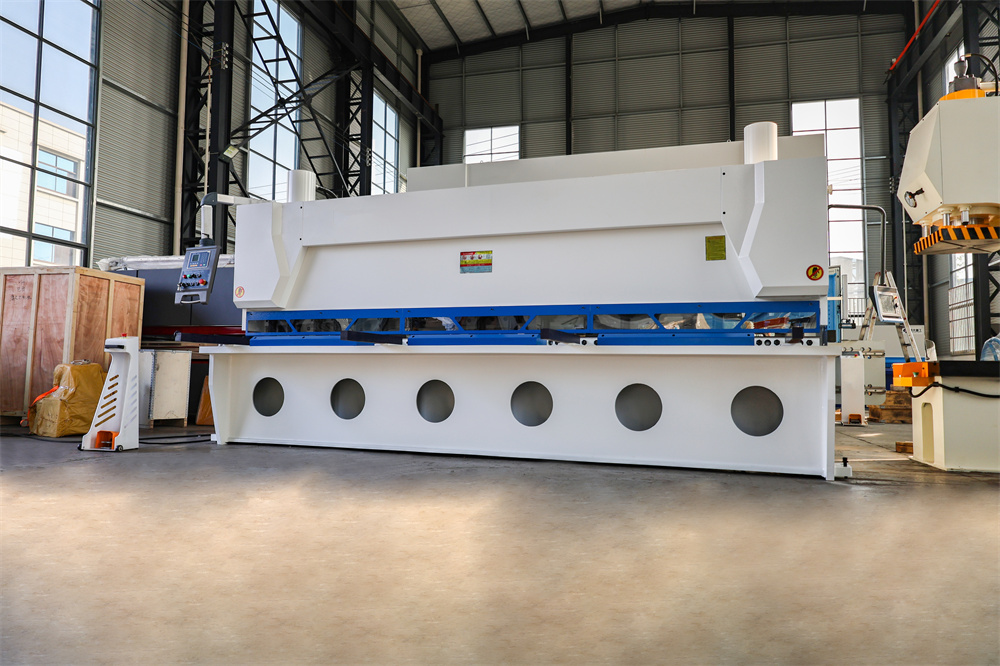
Consider the environment in which the machine will operate. If your shop is prone to dust or metallic particles, standard light curtains might trigger false alarms. In such cases, you might need to discuss specialized enclosures or alternative sensing technologies with the HARSLE sales team. Additionally, evaluate the ergonomics of the safety features. Are the emergency stop buttons easily reachable from all operating positions? Is the foot pedal heavy enough to stay in place but easy enough to operate without causing fatigue? These small details significantly impact the daily experience of the operator.
Finally, always verify the manufacturer’s after-sales support for safety systems. Does the company offer remote diagnostics? Can they send a technician to recalibrate sensors if needed? Buying a shearing machine is the start of a long-term relationship. Choosing a partner like HARSLE, who prioritizes safety in their design and provides the necessary documentation and support, ensures that your investment remains a productive and safe asset for years to come. Do not be afraid to ask for a “Safety Features Walkthrough” during your pre-shipment inspection to ensure everything meets your company’s specific standards.
Frequently Asked Questions (FAQ)
What are the most essential safety features for a new shearing machine?
The most essential features include an emergency stop button (E-stop), a protective finger guard at the front, a hydraulic safety block with redundant valves, and rear light curtains or physical fencing to prevent access to the back of the machine while it is in operation. These features form the baseline for safe operation in any industrial setting.
Can I retro-fit safety features onto an older shearing machine?
Yes, it is possible to retrofit features like light curtains and improved guarding onto older machines. However, this often requires significant electrical work to integrate the new sensors into the old control logic. In many cases, the cost of a comprehensive retrofit can approach the cost of a newer, safer machine that comes with these features integrated from the factory.
What is the difference between CE and OSHA safety standards for shears?
CE (European Conformity) standards are generally more prescriptive regarding the specific types of safety components and redundant systems required. OSHA (USA) focuses more on the outcome—ensuring the operator cannot reach the point of operation. Many modern machines, including those from HARSLE, are designed to meet or exceed both sets of standards to ensure global compliance.
How often should shearing machine safety features be inspected?
Daily inspections should be performed by the operator at the start of every shift (e.g., testing the E-stop and checking light curtain alignment). A more thorough professional inspection should be conducted at least annually, or more frequently if the machine is used in a high-volume, multi-shift environment. Documentation of these inspections is often a legal requirement.
Do safety features slow down the production process?
While older, poorly designed guards could be cumbersome, modern safety features like laser barriers and intelligent CNC integration are designed to be unobtrusive. In fact, they often speed up production by giving operators the confidence to work at the machine’s full capacity without fear of injury, and by providing faster diagnostics when a stop occurs.
What should I do if a safety sensor keeps tripping?
Never bypass a safety sensor. If a sensor is tripping frequently, it usually indicates a misalignment, a build-up of debris, or a genuine mechanical issue that needs to be addressed. Consult the machine’s manual or contact HARSLE technical support to diagnose the root cause and ensure the machine remains safe to operate.