Why Shearing Machines Matter In Steel Plate Processing Lines


Introduction to Shearing in Modern Fabrication
In the world of industrial metalworking, the initial stage of production often dictates the quality and efficiency of the entire manufacturing cycle. Steel plate processing is a complex sequence of events, and at the heart of this sequence lies the shearing machine. Whether you are producing automotive components, heavy construction machinery, or intricate HVAC ducting, the ability to accurately and quickly cut large steel plates into manageable sizes is paramount. This is precisely why shearing machines matter in steel plate processing lines; they serve as the foundational gatekeeper for all subsequent fabrication steps.
A shearing machine operates on the principle of applying a high-pressure force through a moving blade against a fixed blade, effectively “shearing” the metal along a straight line. While the concept sounds simple, the engineering behind modern hydraulic and mechanical shears is incredibly sophisticated. These machines must handle varying thicknesses, tensile strengths, and material types while maintaining tight tolerances. Without a reliable shearing solution, a production facility faces bottlenecks, material waste, and downstream errors that can compromise the structural integrity of the final product.
HARSLE has long recognized that the efficiency of a steel plate processing line is only as strong as its weakest link. By integrating advanced CNC controls, robust hydraulic systems, and precision-ground blades, modern shearing machines have evolved from basic cutting tools into high-tech assets. In this comprehensive guide, we will delve into the technical nuances, strategic importance, and selection criteria that define the role of shearing machines in today’s competitive industrial landscape.
Why Shearing Machines Matter In Steel Plate Processing Lines
The primary reason why shearing machines matter in steel plate processing lines is their unmatched ability to provide high-speed, straight-line cuts with minimal material deformation. Unlike thermal cutting methods such as plasma or laser, shearing is a cold-cutting process. This means there is no Heat Affected Zone (HAZ), which is critical for materials that might lose their metallurgical properties when exposed to high temperatures. For industries that require subsequent welding or precision bending, having a clean, cold-cut edge is a significant advantage.
Furthermore, shearing machines are designed for high-volume throughput. In a busy processing line, the speed at which raw plates are converted into blanks determines the overall output of the factory. A high-performance hydraulic shear can perform dozens of cuts per minute, far outpacing many other cutting technologies for straight-line requirements. This efficiency directly translates to lower labor costs and a faster return on investment (ROI) for the equipment.
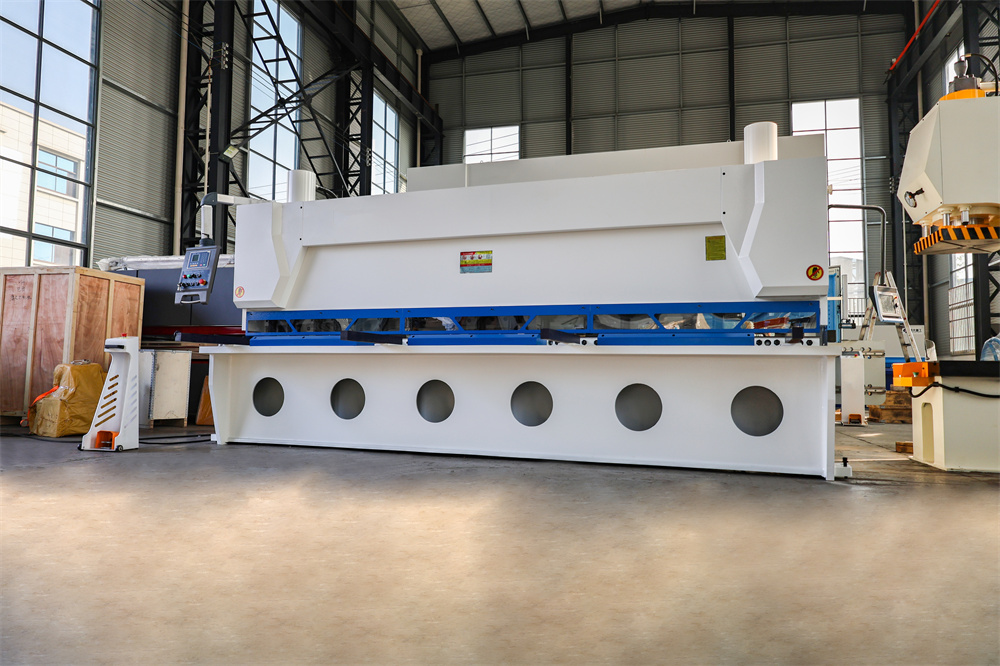
Material utilization is another factor highlighting why shearing machines matter in steel plate processing lines. Precision backgauges and CNC programming allow operators to nest cuts closely together, reducing the amount of scrap metal generated. In large-scale operations where steel is purchased by the ton, even a 2% reduction in waste can result in tens of thousands of dollars in annual savings. The accuracy of the cut also ensures that the blanks fit perfectly into the next machine in the line, such as a press brake or a CNC punch, preventing costly rework.
Finally, the versatility of modern shearing machines cannot be overstated. Today’s machines are capable of handling everything from thin aluminum sheets to heavy-duty carbon steel plates. With adjustable rake angles and blade gap settings, a single machine can be optimized for different materials in a matter of seconds. This flexibility allows manufacturers to take on a wider variety of projects without needing to invest in multiple specialized cutting tools, making the shearing machine a versatile workhorse in any fabrication shop.
Technical Details: Understanding the Mechanics
To fully appreciate why shearing machines matter in steel plate processing lines, one must understand the technical mechanisms that drive their performance. There are two primary types of shearing machines used in the industry today: the Swing Beam Shear and the Guillotine Shear. Each has its own set of advantages depending on the specific needs of the processing line.
Swing Beam vs. Guillotine Shears
The Swing Beam Shear utilizes a circular arc movement for the upper blade. This design is inherently robust and requires less maintenance because it uses fewer moving parts and pivot points. It is ideal for general-purpose shearing where high speed and reliability are the main priorities. However, because the blade moves in an arc, there is a slight limitation on the rake angle adjustment compared to guillotine models.
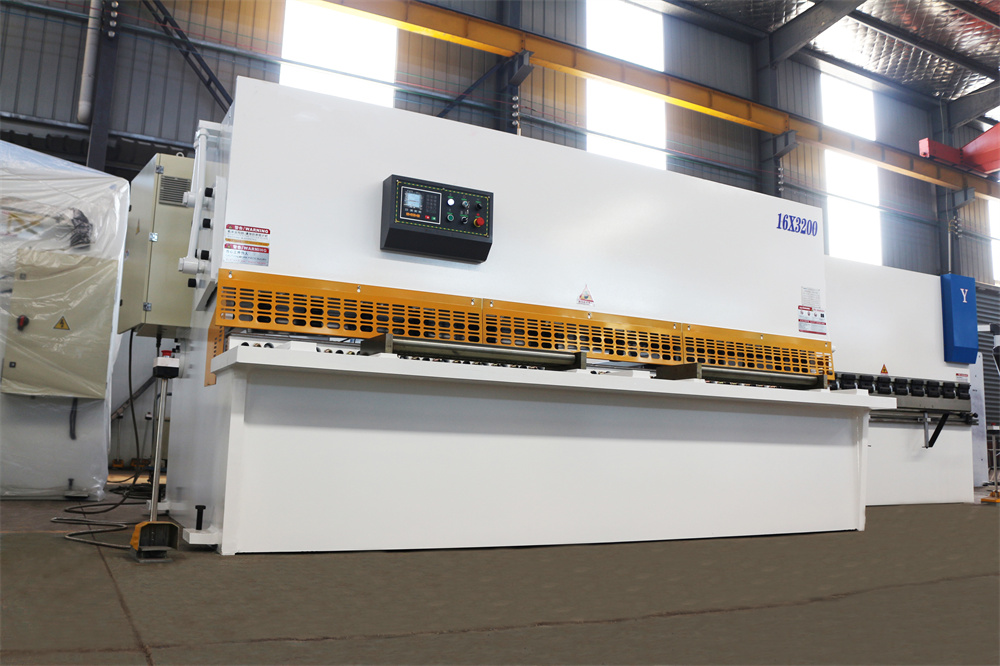
The Guillotine Shear, on the other hand, moves the upper blade in a strictly vertical path. This allows for a variable rake angle, which is the angle of the upper blade relative to the lower blade. By adjusting the rake angle, operators can minimize the “twist” and “bow” of the cut piece, especially when dealing with narrow strips or very thick plates. Guillotine shears are often preferred for high-precision applications where edge squareness is critical.
Blade Gap and Rake Angle Adjustment
The “Blade Gap” is the distance between the upper and lower blades as they pass each other. If the gap is too wide, the metal will bend rather than cut, leaving a burred edge. If it is too tight, the blades can be damaged, and the machine will require more power. Modern HARSLE shearing machines feature rapid blade gap adjustment, often controlled via a CNC interface, allowing the operator to set the perfect clearance for the specific material thickness being processed.
The Rake Angle is equally important. A higher rake angle reduces the amount of force required to cut the metal, which allows the machine to cut thicker materials than its nominal capacity might suggest. However, a high rake angle can cause the cut piece to curl or twist. Advanced shearing machines allow for the fine-tuning of this angle to balance the need for cutting power with the requirement for flat, undistorted parts.
Key Components of High-Performance Shearing Machines
A shearing machine is a sum of its parts, and high-quality components are what differentiate a standard machine from an industrial-grade powerhouse. When discussing why shearing machines matter in steel plate processing lines, we must look at the following critical components:
- Hydraulic System: The heart of the machine. High-pressure hydraulic pumps and valves ensure smooth, consistent downward force. Quality seals and cooling systems are necessary to prevent leaks and maintain performance during multi-shift operations.
- Backgauge System: This is the positioning mechanism that determines the length of the cut. Precision ball screws and AC servo motors allow for tolerances within 0.1mm. In a CNC-integrated line, the backgauge moves automatically based on the programmed dimensions.
- Blades: Typically made from high-carbon, high-chrome tool steel (such as Cr12MoV or 6CrW2Si). These blades must be hardened and ground to maintain a sharp edge over thousands of cycles. Most blades are 4-edged, meaning they can be flipped and rotated to extend their service life.
- Hold-down Cylinders: These hydraulic plungers grip the steel plate firmly against the table before the cut begins. This prevents the plate from shifting, ensuring a straight cut and protecting the operator.
- CNC Control Unit: Modern controllers like those from Delem or Cybelec allow for the storage of hundreds of programs, automatic calculation of blade gap, and integration with factory-wide ERP systems.
Selection Advice: Choosing the Right Machine for Your Line
Selecting the right equipment is vital to ensuring that shearing machines matter in steel plate processing lines for your specific business. A mismatch between machine capacity and production needs can lead to premature equipment failure or unnecessary capital expenditure. Here is a checklist for selecting the ideal shearing machine:
| Factor | Description | Why It Matters |
|---|---|---|
| Material Type | Mild steel, stainless steel, or aluminum. | Stainless steel requires higher cutting force and harder blades than mild steel. |
| Maximum Thickness | The thickest plate you intend to cut. | Determines the hydraulic tonnage and frame rigidity required. |
| Maximum Width | The longest cut required (e.g., 3200mm, 4000mm). | Determines the physical size of the machine and the length of the blades. |
| Production Volume | Number of cuts per hour/shift. | High-volume lines need faster cycle times and automated material handling. |
| Accuracy Requirements | The allowable tolerance for the finished blank. | Guillotine shears with CNC backgauges offer the highest precision. |
Beyond the technical specs, consider the manufacturer’s reputation and after-sales support. HARSLE provides comprehensive training and technical support to ensure that your operators can maximize the machine’s potential. Additionally, look for safety features such as rear light curtains, emergency stop buttons, and finger guards. A safe machine is a productive machine, and modern safety standards are non-negotiable in a professional steel plate processing environment.
Another consideration is the integration of the shear into the broader workflow. If your processing line includes a CNC press brake, choosing a shearing machine with a compatible control system can streamline the programming process. Some advanced lines even use robotic arms to feed the shearing machine and stack the cut blanks, further emphasizing why shearing machines matter in steel plate processing lines that aim for full automation.
Maintenance and Longevity
To ensure that your shearing machine remains a valuable asset, a strict maintenance schedule is required. The high forces involved in shearing mean that components are subject to significant stress. Regular lubrication of the guideways and pivot points is the simplest yet most effective way to prevent wear. Hydraulic oil should be filtered and changed according to the manufacturer’s recommendations to protect the sensitive valves and pumps.
Blade maintenance is also critical. Dull blades increase the load on the motor and hydraulics, leading to poor cut quality and potential mechanical failure. Blades should be inspected weekly for chips or dullness. Because most HARSLE blades are multi-edged, they can be rotated to a fresh edge quickly, minimizing downtime. When all edges are worn, professional regrinding can restore the blades to like-new condition, provided the material hasn’t been ground beyond its minimum thickness.
Finally, check the calibration of the backgauge regularly. Over time, vibrations can cause small shifts in the alignment of the ball screws. A quick recalibration ensures that your “100mm cut” remains exactly 100mm, maintaining the precision that makes these machines so essential to the production line.
Frequently Asked Questions
1. Why should I choose a hydraulic shear over a mechanical one?
Hydraulic shearing machines offer more control over the cutting process. They provide overload protection (the machine simply stops if the material is too thick, rather than breaking a flywheel), adjustable stroke length for shorter cuts, and generally quieter operation. While mechanical shears can be faster for very thin materials, hydraulics are the industry standard for versatility and safety.
2. How often should I sharpen the shearing blades?
The frequency depends on the material being cut. Cutting stainless steel will dull blades much faster than mild steel. Generally, blades should be rotated or sharpened when you notice an increase in burr height on the cut edge or if the machine requires more pressure to complete a cut. For most high-volume shops, this might be every 6 to 12 months.
3. Can a shearing machine cut shapes or only straight lines?
Shearing machines are designed specifically for straight-line cutting. For complex shapes, curves, or internal cutouts, you would need a laser, plasma, or waterjet cutting machine. The shear is used to create the rectangular or square “blanks” that are then processed further.
4. What is the importance of the rake angle?
The rake angle is the slope of the upper blade. A higher angle allows the machine to cut thicker material with less force but increases the risk of the metal strip twisting. A lower angle produces a flatter cut but requires more hydraulic power. Adjustable rake angles allow you to optimize the machine for each specific job.
5. How does a CNC controller improve shearing efficiency?
A CNC controller automates the positioning of the backgauge, the adjustment of the blade gap, and the setting of the rake angle. It can store complex cutting sequences, reducing setup time between different jobs and eliminating human error in measurements.
Conclusion
In conclusion, understanding why shearing machines matter in steel plate processing lines is essential for any fabrication business looking to optimize its operations. These machines provide the speed, precision, and cost-effectiveness required to turn raw steel into high-quality products. By serving as the first step in the fabrication process, the shearing machine sets the standard for everything that follows. A clean, accurate cut leads to easier bending, more precise welding, and a superior finished product.
Investing in a high-quality HARSLE shearing machine means investing in the future of your production line. With the right combination of hydraulic power, CNC precision, and robust construction, these machines become more than just tools—they become the backbone of your manufacturing success. Whether you are upgrading an existing line or building a new facility, prioritizing the shearing stage will pay dividends in efficiency, material savings, and overall product quality for years to come.