Shearing Machine Uses in Automotive Manufacturing and Component Production: A Comprehensive Guide


Introduction to Shearing Machine Uses In Automotive Manufacturing Component Production
In the high-stakes world of automotive manufacturing, precision, speed, and material efficiency are the cornerstones of success. As vehicles evolve to become lighter, safer, and more technologically advanced, the demand for high-quality metal components has skyrocketed. Central to this production ecosystem is the shearing machine. The Shearing Machine Uses In Automotive Manufacturing Component Production are vast, ranging from the initial processing of raw steel coils to the creation of intricate internal brackets and structural reinforcements.
HARSLE, a leader in metal fabrication machinery, understands that the automotive industry requires equipment that can handle high-volume output without sacrificing accuracy. Shearing machines, particularly hydraulic guillotine and swing beam models, provide the foundational cuts necessary for subsequent processes like stamping, bending, and welding. Without the clean, straight edges provided by a professional-grade shear, the integrity of the entire vehicle assembly could be compromised.

The transition toward Electric Vehicles (EVs) has further intensified the need for specialized shearing. EVs often utilize advanced high-strength steels (AHSS) and aluminum alloys to offset battery weight. These materials require shearing machines with superior blade quality and adjustable rake angles to prevent deformation. In this guide, we will explore the technical nuances, selection criteria, and specific applications of shearing machines within the automotive sector.
Key Considerations for Automotive Shearing Applications
Material Versatility and High-Strength Steels
Modern automotive design relies heavily on a mix of materials. While traditional mild steel is still used, there is a significant shift toward Advanced High-Strength Steel (AHSS) and Ultra-High-Strength Steel (UHSS). These materials offer excellent crash protection but are notoriously difficult to cut. When considering Shearing Machine Uses In Automotive Manufacturing Component Production, the machine must possess the structural rigidity to handle the high shear resistance of these alloys. A machine that flexes during a cut will produce a “bowed” edge, which is unacceptable for precision automotive assembly.
Aluminum is another critical material, especially for hoods, trunks, and door skins. Shearing aluminum requires a different approach than steel; the blade gap must be precisely calibrated to avoid “smearing” the softer metal. HARSLE machines feature rapid blade gap adjustment systems that allow operators to switch between material types in seconds, ensuring that the production line remains fluid and versatile.
Precision and Edge Quality
In automotive manufacturing, a “good enough” cut is never sufficient. Components such as chassis rails and pillar reinforcements must meet tight tolerances to ensure they fit perfectly into automated welding jigs. Burrs—small ridges or imperfections left after a cut—can interfere with robotic sensors and lead to weak weld joints. High-quality shearing machines minimize burr height by maintaining a consistent rake angle and utilizing high-carbon, high-chrome blades. This precision reduces the need for secondary finishing processes, thereby lowering the overall cost per part.
Integration with Automation and Industry 4.0
The modern automotive factory is a marvel of automation. Shearing machines are no longer standalone units; they are often integrated into larger production cells. This involves the use of CNC (Computer Numerical Control) systems that can store hundreds of cutting programs. For instance, a single shearing machine might process parts for three different vehicle models in a single shift. The ability to automatically adjust the backgauge and stroke length based on the digital blueprint is essential for maintaining the “Just-In-Time” (JIT) manufacturing cycles prevalent in the industry.
Technical Details of Shearing Machines in the Automotive Sector
Hydraulic Guillotine vs. Swing Beam Shears
There are two primary types of shearing machines used in automotive component production: the hydraulic guillotine shear and the hydraulic swing beam shear. The guillotine shear moves the upper blade in a vertical plane, allowing for an adjustable rake angle. This is particularly useful for thick automotive plates where reducing the rake angle can minimize distortion. The swing beam shear, conversely, moves the upper blade in a circular arc. While generally faster for thinner gauges, it lacks the flexibility of the guillotine for varying material thicknesses.
| Feature | Guillotine Shear | Swing Beam Shear |
|---|---|---|
| Cutting Motion | Vertical/Straight Down | Arc/Circular Path |
| Rake Angle Adjustment | Adjustable (Reduces Twist) | Fixed |
| Material Thickness | Ideal for 6mm to 30mm+ | Best for 4mm to 16mm |
| Edge Precision | Higher (Minimal Distortion) | Standard |
The Role of the Backgauge System
The backgauge is the component that determines the length of the cut piece. In automotive production, where parts like floor pans or roof panels can be quite large, the backgauge must be both accurate and robust. HARSLE utilizes high-precision ball screws and AC servo motors for backgauge movement, achieving tolerances within ±0.05mm. Furthermore, many automotive shears are equipped with “swing-away” backgauges, which allow for the processing of sheets longer than the backgauge’s maximum reach, providing extra flexibility for custom vehicle modifications or heavy-duty truck components.
Blade Material and Maintenance
The blades are the heart of the shearing machine. For automotive applications involving high-strength steel, HARSLE recommends blades made from 9CrSi or 6CrW2Si. These materials offer the hardness required to maintain a sharp edge over thousands of cycles. Maintenance is also a critical technical factor. Automated lubrication systems ensure that the slideways and cylinders operate smoothly, preventing the friction-induced heat that can lead to thermal expansion and subsequent loss of accuracy.
Selection Advice: Choosing the Right Shear for Automotive Parts
Assessing Tonnage and Cutting Length
When selecting a machine for Shearing Machine Uses In Automotive Manufacturing Component Production, the first step is to calculate the maximum tonnage required. This is determined by the material’s tensile strength, thickness, and the length of the cut. For example, shearing a 10mm thick AHSS plate requires significantly more force than a standard 10mm mild steel plate. It is always advisable to choose a machine with a capacity 20-30% higher than your maximum requirement to prevent overstressing the hydraulic system.
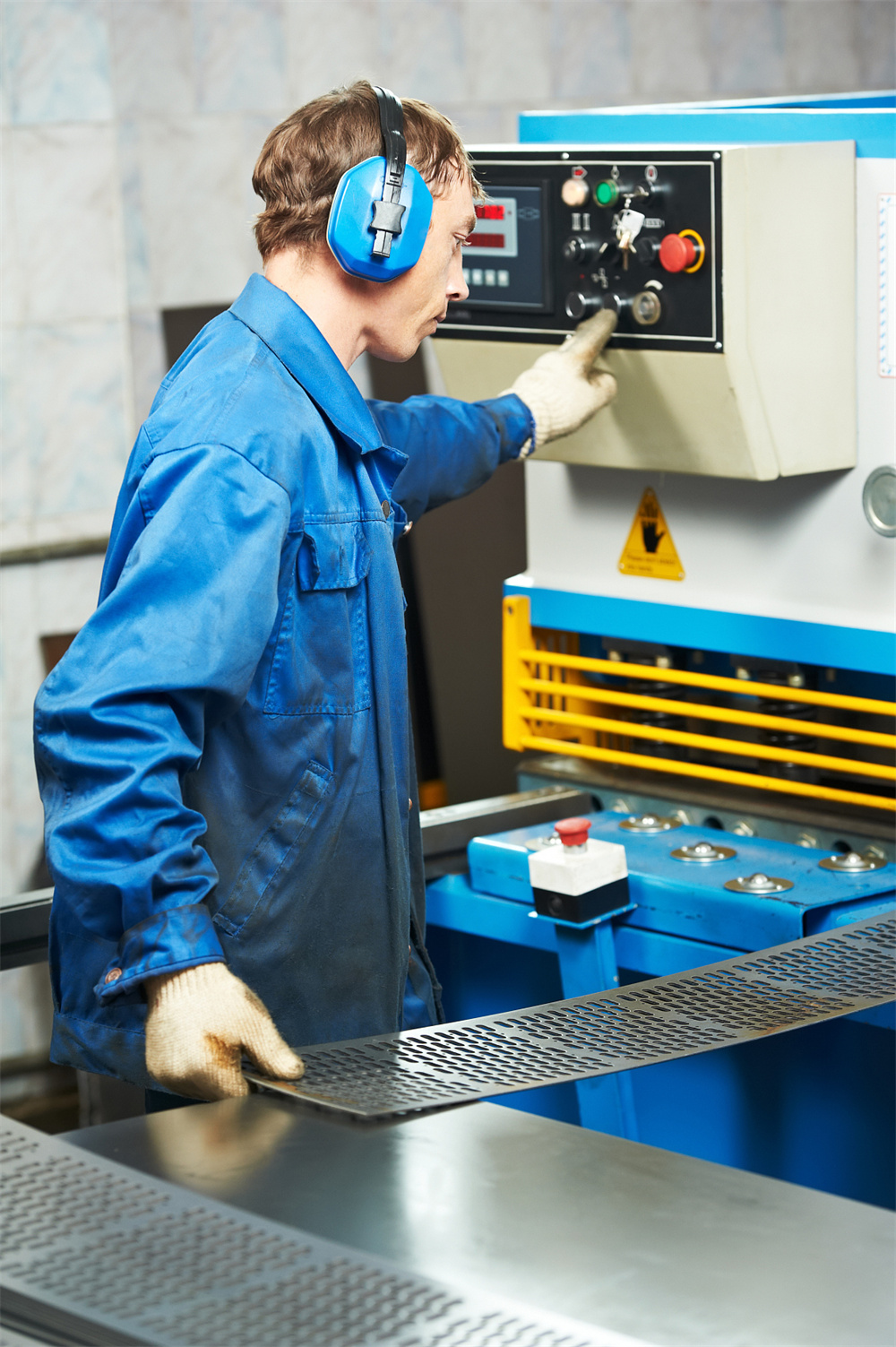
Safety Features and Compliance
Automotive factories operate under stringent safety regulations (such as CE or OSHA standards). A shearing machine must be equipped with modern safety features, including:
- Light Curtains: Infrared sensors that immediately stop the machine if a hand enters the cutting zone.
- Emergency Stop Buttons: Located at both the front control panel and the rear of the machine.
- Finger Guards: Physical barriers that prevent access to the hold-down cylinders.
- Hydraulic Overload Protection: Prevents damage to the machine frame if an oversized workpiece is inserted.
Evaluating the Control System
For high-volume component production, a simple manual backgauge is insufficient. Look for CNC controllers like the Delem DAC-310 or DAC-360. These systems allow for the programming of multiple steps, automatic calculation of the blade gap based on material thickness, and stroke control to increase the number of cuts per minute for smaller parts. This level of control is vital for maintaining the competitive edge required in the automotive supply chain.
Specific Automotive Component Applications
The versatility of shearing machines allows them to be used across various departments in an automotive plant:
- Body-in-White (BIW): Shearing large sheets for side panels, roofs, and floor assemblies before they go into the deep-drawing presses.
- Chassis Components: Cutting thick plates for frame rails, cross-members, and suspension mounting brackets.
- Internal Brackets: Producing smaller, high-precision pieces for dashboard supports, seat frames, and door latch reinforcements.
- Heat Shields and Exhaust: Precision shearing of thin-gauge stainless steel and aluminum for thermal management components.
FAQ: Shearing Machine Uses In Automotive Manufacturing Component Production
1. Can a shearing machine cut high-strength steel used in modern EVs?
Yes, but it requires a machine with high structural rigidity and specialized blades (such as D2 or SKD11 steel). The rake angle must also be carefully managed to prevent the material from twisting or bowing during the cut.
2. How often should the blades be rotated or sharpened in an automotive setting?
In a high-volume automotive environment, blades should be inspected daily. Depending on the material being cut, blades typically need to be rotated (most have 4 cutting edges) every 3-6 months and professionally reground once all edges are dull.
3. What is the advantage of a CNC shearing machine over a manual one?
CNC machines offer repeatable accuracy, faster setup times, and the ability to integrate with factory-wide ERP systems. For automotive production, this means fewer scrapped parts and higher throughput.
4. How does blade gap adjustment affect the quality of automotive parts?
If the gap is too wide, the metal will bend rather than shear, leaving a large burr. If it is too tight, it can damage the blades and the machine. Proper adjustment ensures a clean, square edge that is ready for welding.
5. Are HARSLE shearing machines compatible with robotic loading systems?
Absolutely. HARSLE machines can be equipped with specialized interfaces to communicate with robotic arms, allowing for fully automated sheet feeding and part removal.
Conclusion
The Shearing Machine Uses In Automotive Manufacturing Component Production are fundamental to the efficiency and quality of the modern vehicle. From the initial sizing of steel sheets to the creation of complex structural reinforcements, the shearing machine provides the precision and reliability that the automotive industry demands. As manufacturers continue to push the boundaries of material science and automation, the role of high-performance shearing equipment like that offered by HARSLE becomes even more critical.
Investing in the right shearing technology—characterized by CNC precision, robust hydraulic systems, and advanced safety features—allows automotive suppliers to meet tight deadlines while maintaining the highest safety standards. Whether you are producing components for traditional internal combustion engines or the latest electric vehicles, a HARSLE shearing machine is an indispensable asset in your production arsenal. By prioritizing edge quality and material versatility, manufacturers can ensure that every vehicle that rolls off the assembly line is built on a foundation of excellence.