Why Fabricators Rely on Shearing Machines for Straight-Line Cutting: A Comprehensive Guide


Introduction to the Role of Shearing in Modern Fabrication
In the fast-paced world of metalworking, precision and efficiency are the twin pillars of success. Among the various technologies available for processing sheet metal, the shearing machine remains an indispensable asset. While advanced laser, plasma, and waterjet cutting systems have gained popularity for complex shapes, fabricators rely on shearing machines for straight-line cutting due to their unmatched speed, cost-effectiveness, and simplicity. A shearing machine works by applying a high-pressure force through a moving blade against a fixed blade, effectively ‘cleaving’ the metal along a perfectly straight path.
For companies like HARSLE, providing high-quality shearing solutions is about more than just selling a machine; it is about empowering workshops to handle high-volume production with minimal downtime. The process of shearing is a ‘cold cutting’ method, meaning it does not introduce heat into the material. This is a critical advantage for many industrial applications where the structural integrity and chemical properties of the metal must remain unaltered. Whether it is preparing blanks for a press brake or sizing large plates for structural assembly, the shearing machine is the starting point for countless manufacturing workflows.
As we delve deeper into this guide, we will explore the mechanical nuances that make these machines so reliable. We will examine the differences between various shearing technologies and provide actionable advice for shop managers looking to optimize their cutting operations. Understanding why fabricators rely on shearing machines for straight-line cutting requires a look at both the physics of the cut and the economics of the fabrication floor.
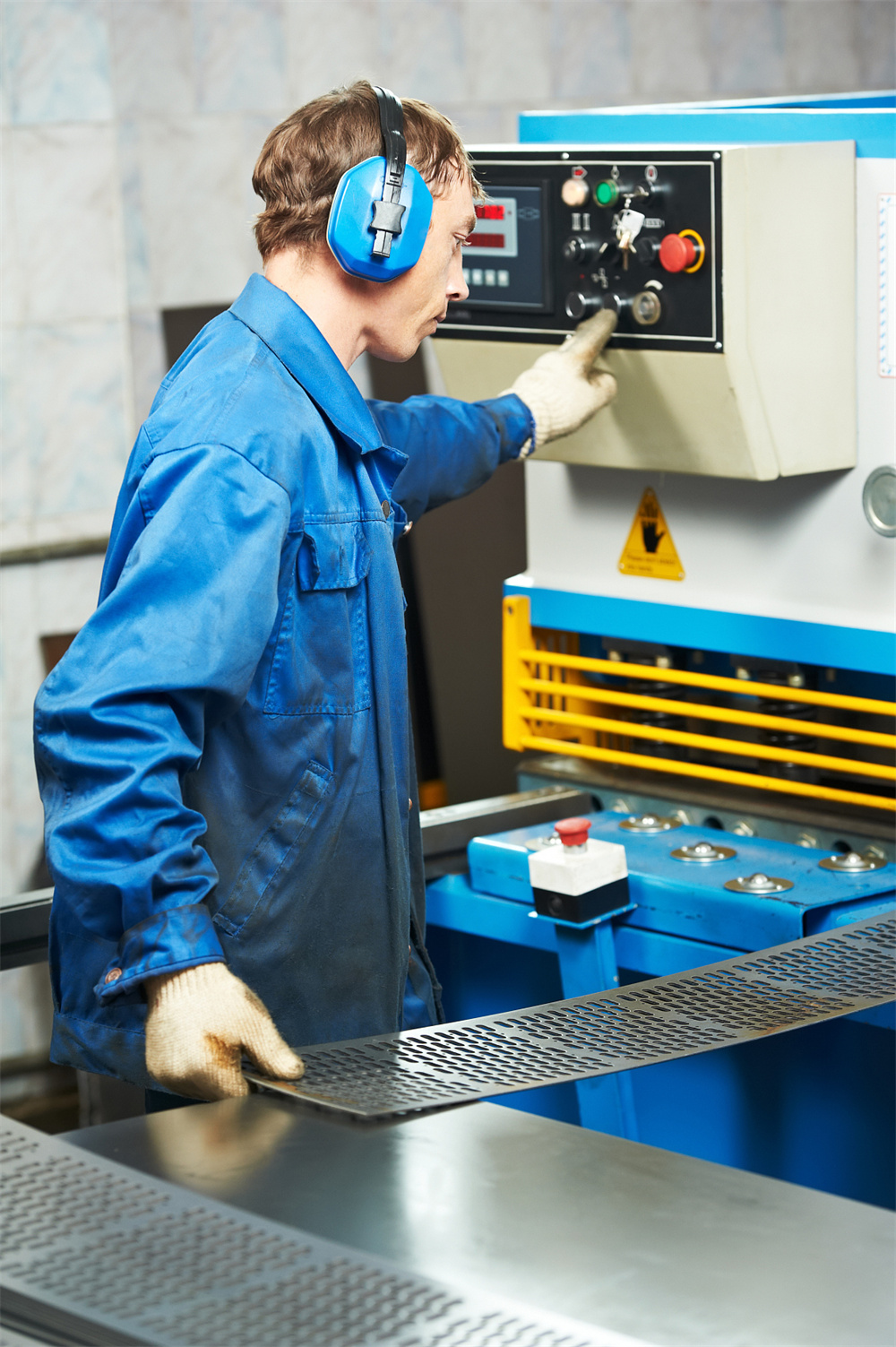
Key Considerations: Why Fabricators Rely On Shearing Machines Straight-Line Cutting
1. Unrivaled Speed and Throughput
One of the primary reasons fabricators rely on shearing machines for straight-line cutting is the sheer speed of the operation. Unlike a laser that must trace a path at a specific feed rate, a shearing machine completes a full-length cut in a single stroke. For a 10-foot or 12-foot sheet of metal, this takes only a few seconds. In high-production environments where thousands of rectangular blanks are needed daily, no other technology can match the linear output of a hydraulic or mechanical shear.
2. Cost-Effectiveness and Low Operational Overhead
Shearing is significantly more affordable than thermal cutting methods. There are no expensive gases (like oxygen or nitrogen) required, and the power consumption per cut is relatively low. Furthermore, the consumables—primarily the blades—have an exceptionally long lifespan and can be flipped or reground multiple times before replacement is necessary. This low cost-per-cut is a major factor in why fabricators rely on shearing machines for straight-line cutting when processing standard rectangular shapes.
3. Absence of Heat-Affected Zones (HAZ)
Thermal cutting methods like plasma or laser create a Heat-Affected Zone along the edge of the cut. This can harden the material, making subsequent operations like drilling, tapping, or bending more difficult and prone to cracking. Shearing is a mechanical process that maintains the original properties of the metal. This is particularly vital in industries like aerospace and food processing, where material consistency is non-negotiable.
4. Minimal Material Waste
In many cutting processes, a ‘kerf’ (the width of the material removed by the cutting tool) must be accounted for. In shearing, there is virtually zero kerf loss. The blades bypass each other to fracture the metal, meaning the fabricator gets exactly what they measured without losing millimeters of material to dust or slag. Over thousands of cuts, this material saving translates into significant bottom-line improvements.
Technical Details: The Mechanics of a Perfect Cut
Guillotine vs. Swing Beam Design
There are two primary designs in the world of hydraulic shears: the Guillotine and the Swing Beam. The Guillotine Shear moves the upper blade in a strictly vertical path. This allows for an adjustable rake angle (the angle of the blade relative to the sheet), which is essential for reducing ‘twist’ and ‘bow’ in thicker materials. The Swing Beam Shear, on the other hand, uses a pivot point to move the blade in an arc. While simpler and often faster for thinner gauges, it lacks the rake angle flexibility of the guillotine. Most high-end fabricators rely on shearing machines for straight-line cutting that utilize the guillotine design for its superior versatility across different material thicknesses.
The Importance of Blade Gap Adjustment
The ‘gap’ is the distance between the upper and lower blades as they pass each other. If the gap is too wide, the metal will ‘fold’ or burr; if it is too tight, the blades can be damaged, and the machine will require excessive force. Modern HARSLE machines often feature CNC-controlled blade gap adjustment, allowing operators to switch from 1mm aluminum to 10mm carbon steel in seconds. This precision is a core reason why fabricators rely on shearing machines for straight-line cutting to achieve clean, square edges.
Rake Angle and Its Impact on Quality
The rake angle is the slope of the upper blade from one end to the other. A higher rake angle reduces the force required to cut the metal but increases the likelihood of the cut piece twisting or ‘cambering.’ A lower rake angle produces a flatter cut but requires more hydraulic pressure. Advanced shearing machines allow the operator to find the ‘sweet spot’ for every job, ensuring that the resulting blanks are flat and ready for the next stage of production without needing secondary straightening.
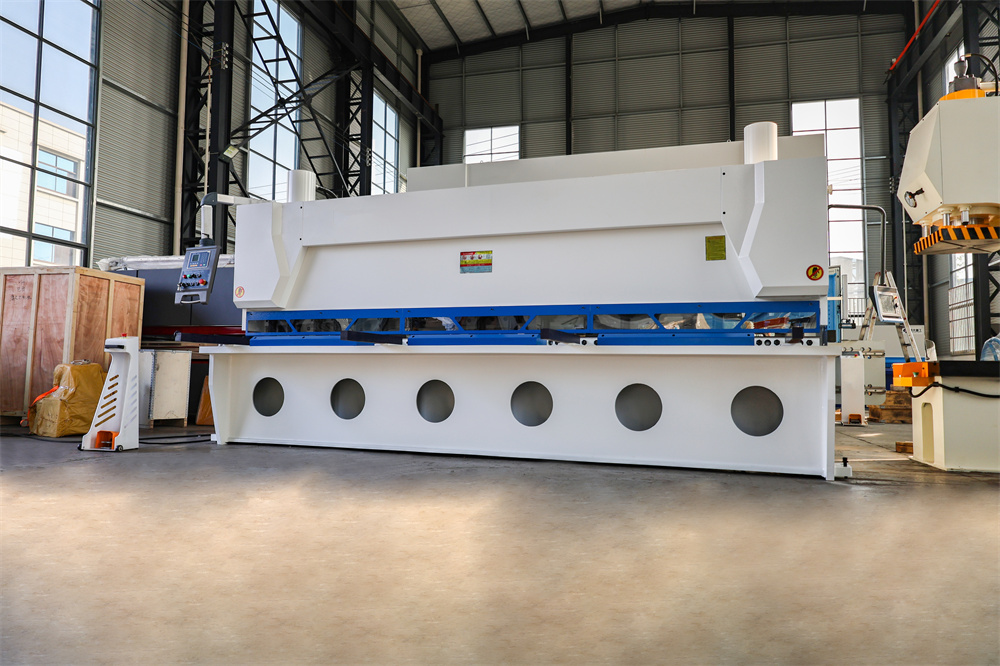
Backgauge Systems and Accuracy
A shearing machine is only as good as its backgauge. This is the stop that determines the length of the piece being cut. Modern CNC backgauges are driven by ball screws and servo motors, providing accuracies within 0.1mm. For fabricators, this means that every blank in a 500-piece run will be identical, which is crucial for downstream processes like robotic welding or automated bending.
Selection Advice: Choosing the Right Shearing Machine
When looking to invest in new equipment, fabricators must evaluate several factors to ensure they select a machine that meets their specific production needs. The market offers a wide range of capacities, from light-duty mechanical shears to heavy-duty hydraulic monsters capable of cutting 30mm plate.
- Material Capacity: Always choose a machine with a capacity slightly higher than your thickest material. If you frequently cut 6mm mild steel, a machine rated for 8mm or 10mm will experience less strain and last longer.
- Material Type: Remember that stainless steel has a much higher tensile strength than mild steel. A machine rated for 6mm mild steel may only be able to handle 3mm or 4mm stainless steel.
- Cutting Length: Standard lengths are 2500mm, 3200mm, and 4000mm. Consider the largest sheet size you typically purchase from your service center.
- Automation Features: Do you need a pneumatic sheet support system? For thin materials, the sheet can sag before it hits the backgauge, leading to inaccurate cuts. A support system holds the sheet level until the moment of the cut.
- Safety Protocols: Ensure the machine is equipped with light curtains, emergency stops, and finger guards. Safety is paramount in any industrial environment.
By carefully considering these factors, it becomes clear why fabricators rely on shearing machines for straight-line cutting—they are purpose-built tools that, when selected correctly, provide a decades-long return on investment. HARSLE experts often recommend looking at the total cost of ownership, including maintenance and energy consumption, rather than just the initial purchase price.
Maintenance Tips for Longevity
To ensure that fabricators rely on shearing machines for straight-line cutting for years to come, a strict maintenance schedule must be followed. The most critical aspect is blade maintenance. Blades should be inspected daily for chips or dullness. Most shearing blades have four cutting edges; when one becomes dull, the blade can be rotated to a fresh edge. This maximizes the utility of the component before a professional regrind is required.
Lubrication is another vital factor. The slides and pivot points of a shear endure massive forces. Using the correct grade of hydraulic oil and ensuring that grease points are serviced weekly will prevent premature wear of the mechanical components. Additionally, the hydraulic system should be checked for leaks and the filters changed according to the manufacturer’s specifications. A well-maintained HARSLE shear can easily remain in service for 20 to 30 years.
Frequently Asked Questions (FAQ)
Why is shearing better than laser cutting for straight lines?
Shearing is significantly faster and cheaper for straight lines. While a laser is better for complex shapes, a shear can process a 3-meter straight cut in a fraction of the time with no gas costs and no heat-affected zone.
What materials can be cut with a shearing machine?
Most ductile metals can be sheared, including mild steel, stainless steel, aluminum, copper, and brass. However, very brittle metals or extremely hard alloys may crack rather than shear cleanly.
How often should I sharpen my shearing blades?
This depends on the volume of work and the material type. Cutting stainless steel dulls blades faster than mild steel. Generally, blades should be rotated or sharpened when you notice increased burring on the edges of the cut pieces.
Can a shearing machine cut circles or curves?
No. Shearing machines are designed specifically for straight-line cutting. For curves or complex geometries, you would need a laser, plasma, or waterjet cutter.
What is the ‘shadow line’ feature on a shear?
The shadow line is a lighting feature that casts a precise shadow on the material where the blade will fall. This allows operators to align the sheet manually for ‘cut-to-mark’ operations where the backgauge cannot be used.
Conclusion: The Enduring Value of the Shearing Machine
In conclusion, the reason fabricators rely on shearing machines for straight-line cutting is a combination of mechanical efficiency, economic practicality, and the high quality of the finished edge. While the fabrication industry continues to evolve with the integration of Industry 4.0 and AI-driven processes, the fundamental need to quickly and accurately size metal sheets remains unchanged. The shearing machine provides a robust, reliable solution that serves as the foundation of the production line.
For any fabrication shop, from small custom garages to massive industrial plants, the shear is a workhorse. By choosing a high-quality machine from a reputable manufacturer like HARSLE, and by following proper maintenance and operational guidelines, businesses can ensure they remain competitive in an increasingly demanding market. The straight-line cut may seem simple, but in the world of metal fabrication, it is the start of every great project.