Case Study: Upgrading Old Cutting Equipment to a Modern Shearing Machine


Introduction: The Evolution of Metal Cutting Technology
In the fast-paced world of metal fabrication, the transition from legacy equipment to state-of-the-art technology is not just a luxury—it is a necessity for survival. This Case Study: Upgrading Old Cutting Equipment A Modern Shearing Machine examines the transformative journey of a mid-sized fabrication shop that replaced its aging mechanical shears with a high-performance HARSLE hydraulic shearing machine. For decades, mechanical shears were the workhorses of the industry, but as tolerances tightened and material costs rose, the limitations of these old machines became glaringly apparent.
Modern shearing machines represent a quantum leap in engineering. Unlike their mechanical predecessors, which relied on massive flywheels and complex clutch systems, modern hydraulic units offer programmable precision, variable rake angles, and integrated safety features. This article explores why companies are making the switch, the technical advantages of modern systems, and how a strategic upgrade can redefine a facility’s production capacity. By focusing on the Case Study: Upgrading Old Cutting Equipment A Modern Shearing Machine, we provide a roadmap for decision-makers looking to optimize their shop floor.

The shift toward modernization is driven by the need for higher throughput and lower waste. In the following sections, we will dissect the specific pain points of old equipment and the measurable benefits of adopting modern HARSLE technology. Whether you are dealing with inconsistent cuts, high maintenance costs, or safety concerns, understanding the impact of a modern shearing machine is the first step toward industrial excellence.
Key Considerations for Upgrading Cutting Equipment
When a fabrication business evaluates its current production line, several critical factors usually trigger the need for an upgrade. The most prominent issue is the decline in accuracy. Over years of operation, mechanical components in old shears wear down, leading to ‘bowing,’ ‘twisting,’ or ‘crooking’ of the cut pieces. These defects necessitate secondary processes like grinding or straightening, which add significant labor costs and slow down the entire production cycle.
Another vital consideration is safety. Older machines often lack the sophisticated light curtains, emergency stop protocols, and interlocking guards found on modern HARSLE machines. In today’s regulatory environment, maintaining an unsafe machine is a significant liability. Upgrading to a modern shearing machine ensures compliance with international safety standards (such as CE or OSHA), protecting both the workforce and the company’s reputation.
Operational Efficiency and Energy Consumption
Energy efficiency is a major driver in the Case Study: Upgrading Old Cutting Equipment A Modern Shearing Machine. Legacy mechanical shears often run their motors continuously to keep the flywheel spinning, consuming power even when not cutting. In contrast, modern hydraulic shearing machines utilize demand-based power systems. The motor only works hard during the actual shearing stroke, and many modern units feature inverter-driven motors that significantly reduce electricity bills.
Furthermore, the ease of setup on a modern machine cannot be overstated. Where an old machine might require manual blade gap adjustments using feeler gauges and hand tools—a process taking 15 to 30 minutes—a modern HARSLE CNC shear can adjust the blade gap automatically based on the material thickness entered into the controller. This reduces downtime between jobs from half an hour to mere seconds, allowing for more flexible production schedules and smaller batch sizes.
Technical Details: The Anatomy of a Modern Shearing Machine
To understand the success of the Case Study: Upgrading Old Cutting Equipment A Modern Shearing Machine, one must look at the technical innovations that define modern equipment. HARSLE shearing machines, such as the QC11K and QC12Y series, incorporate advanced hydraulics and electronics to ensure every cut is perfect. Below are the core technical components that differentiate modern shears from legacy models.
Hydraulic Swing Beam vs. Guillotine Design
Modern shears generally fall into two categories: Swing Beam (QC12Y) and Guillotine (QC11K). The swing beam design uses a circular arc movement for the upper blade, which is simple, robust, and ideal for thinner materials. The guillotine design, however, moves the blade in a straight vertical line. This allows for adjustable rake angles (the angle of the blade relative to the sheet), which is crucial for cutting thicker plates without causing the metal to twist or deform. In our case study, the transition to a guillotine shear allowed the client to handle a wider range of material thicknesses with a single machine.
CNC Control Systems
The brain of the modern shearing machine is the CNC controller. Systems like the E21S or the more advanced Delem DAC-360T provide operators with a digital interface to manage backgauge position, stroke length, and blade gap. These controllers can store hundreds of programs, ensuring that repeat jobs are executed with identical precision every time. This eliminates the “operator variability” that often plagues shops using older, manual equipment.
High-Quality Blade Materials
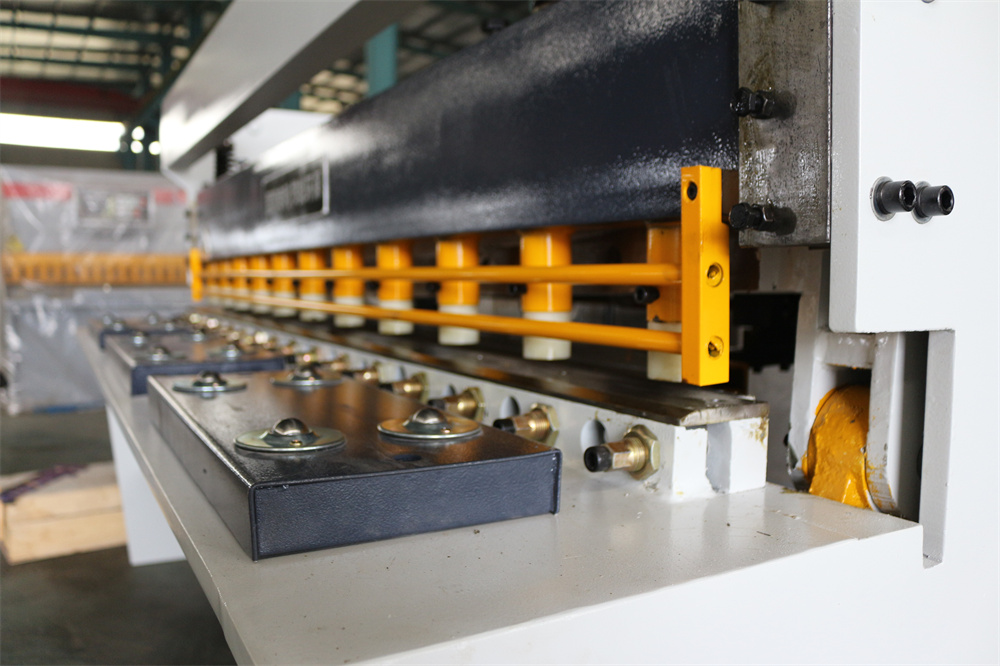
The cutting edge of a HARSLE machine is made from high-carbon, high-chrome steel (such as 9CrSi or Cr12MoV). These materials are heat-treated to maintain sharpness over thousands of cycles. Modern machines also feature four-sided blades on both the top and bottom, meaning the blades can be rotated four times before they need professional sharpening, effectively quadrupling the tool life compared to older two-sided designs.
Selection Advice: Choosing the Right Machine for Your Shop
Selecting the right equipment is the most critical phase of the Case Study: Upgrading Old Cutting Equipment A Modern Shearing Machine. It requires a deep dive into your current production needs and future growth projections. Here is a structured approach to selecting a modern HARSLE shearing machine:
- Material Type and Thickness: Always select a machine rated for your maximum thickness in stainless steel, even if you primarily cut mild steel. Stainless steel requires significantly more shearing force.
- Cutting Length: Ensure the bed length accommodates your largest sheets. Standard lengths range from 2500mm to 6000mm, but custom sizes are available for specialized applications.
- Backgauge Range: If you produce large panels, look for a machine with a long-travel backgauge (e.g., 1000mm) and a swing-up function that allows longer sheets to pass through the back of the machine.
- Automation Features: Consider whether you need pneumatic rear support systems. These prevent thin sheets from sagging before they hit the backgauge, ensuring accurate measurements for flexible materials.
| Feature | Old Mechanical Shear | Modern HARSLE Hydraulic Shear |
|---|---|---|
| Adjustment | Manual (Slow) | CNC/Automatic (Fast) |
| Accuracy | +/- 0.5mm to 1.0mm | +/- 0.1mm |
| Safety | Minimal/External Guards | Integrated Light Curtains & Interlocks |
| Noise Level | High (Constant Flywheel) | Low (Demand-based) |
| Maintenance | Frequent (Clutch/Brake) | Low (Hydraulic Manifold) |
When consulting with HARSLE experts, provide details about your most common jobs. For high-volume, repetitive tasks, a basic NC controller like the E21S might suffice. However, for complex shops handling various materials and thicknesses daily, a full CNC system with automatic rake angle and blade gap adjustment will provide a much faster return on investment.
FAQ: Common Questions About Upgrading Shearing Machines
1. How long does the transition to a new shearing machine take?
Typically, once the machine is delivered, installation and commissioning take 2-3 days. This includes leveling the machine, filling hydraulic fluids, and training operators on the CNC interface. Most shops are back to full production within a week.
2. Can a modern shearing machine cut materials other than steel?
Yes, modern HARSLE shears are highly versatile. By adjusting the blade gap and rake angle, they can cleanly cut aluminum, copper, brass, and even certain high-strength plastics or composites, provided the blade material is compatible.
3. What is the expected ROI for a new shearing machine?
Most customers see a full Return on Investment (ROI) within 18 to 24 months. This is achieved through reduced scrap rates, lower energy bills, the elimination of secondary finishing processes, and increased throughput.
4. Is maintenance more difficult on hydraulic systems?
Actually, it is often simpler. While mechanical shears have complex linkages and clutches that require constant lubrication and adjustment, modern hydraulic systems are centralized. Regular oil changes and filter replacements are the primary requirements, and most components are modular for easy replacement.
5. Does HARSLE provide training for the CNC controllers?
Yes, HARSLE provides comprehensive manuals, video tutorials, and on-site or remote technical support to ensure your team is proficient in using the CNC system to its full potential.
Conclusion: Future-Proofing Your Fabrication Business
The Case Study: Upgrading Old Cutting Equipment A Modern Shearing Machine demonstrates that the move to modern technology is more than just a hardware swap—it is a strategic business decision. By replacing outdated mechanical shears with modern HARSLE hydraulic systems, fabricators can achieve levels of precision and efficiency that were previously impossible. The reduction in material waste alone can save thousands of dollars annually, while the improved safety features protect the most valuable asset of any company: its people.
As the industry moves toward Industry 4.0, having equipment that can integrate with digital workflows and provide consistent, high-quality output is essential. Modern shearing machines offer the reliability, speed, and versatility needed to compete in a global market. If your shop is still struggling with the limitations of 20th-century machinery, now is the time to explore the possibilities of a HARSLE upgrade. The path to higher profitability starts with a single, precise cut.
In conclusion, the transition highlighted in this case study serves as a testament to the power of innovation. By investing in a modern shearing machine, you are not just buying a tool; you are investing in the future of your craftsmanship and the scalability of your operations. Contact HARSLE today to find the perfect shearing solution for your specific needs.