How to Evaluate Punching Machine Capacity for Your Material Thickness: A Complete Industrial Guide


Introduction to Punching Machine Capacity and Material Thickness
In the world of metal fabrication, precision and power must go hand-in-hand. One of the most critical decisions a shop manager or business owner faces is selecting a machine that matches their specific production needs. When we talk about how to evaluate punching machine capacity for your material thickness, we are essentially discussing the physics of shear stress, the limits of hydraulic or servo systems, and the longevity of your tooling. Choosing a machine with insufficient tonnage leads to stalled production and damaged components, while over-specifying can result in unnecessary capital expenditure.
HARSLE has spent decades refining the balance between machine force and material resistance. Whether you are working with thin aluminum sheets for electronics enclosures or heavy-duty structural steel plates, understanding the relationship between the perimeter of the cut, the thickness of the material, and its shear strength is paramount. This guide will walk you through the technical and financial aspects of making this evaluation, ensuring your investment in a HARSLE punching machine yields the highest possible return.
Price Range Overview: From Manual to High-Speed CNC
The market for punching machines is diverse, ranging from simple manual units to sophisticated CNC turret punch presses. Understanding the price tiers is the first step in evaluating which capacity fits your budget and your material requirements. Generally, the price of a punching machine scales exponentially with its tonnage capacity and its level of automation.
- Entry-Level Manual and Semi-Automatic Machines ($5,000 – $15,000): These machines are typically rated for lower tonnages (15-30 tons) and are suitable for prototype work or low-volume production of thinner materials (up to 3mm mild steel). They require manual positioning of the sheet, which limits speed but offers a low barrier to entry.
- Mid-Range CNC Single-Station Punching Machines ($20,000 – $50,000): These machines introduce computer numerical control, allowing for higher precision and repeatability. They often handle thicknesses up to 6mm and are ideal for shops transitioning from manual labor to automated workflows.
- High-Performance CNC Turret Punch Presses ($60,000 – $250,000+): This is where HARSLE’s flagship technology resides. These machines feature turrets with 16 to 40+ tool stations, allowing for complex geometries without manual tool changes. They are designed for high-speed production and can handle material thicknesses from 0.5mm up to 12mm or more, depending on the tonnage (typically 300kN to 500kN).
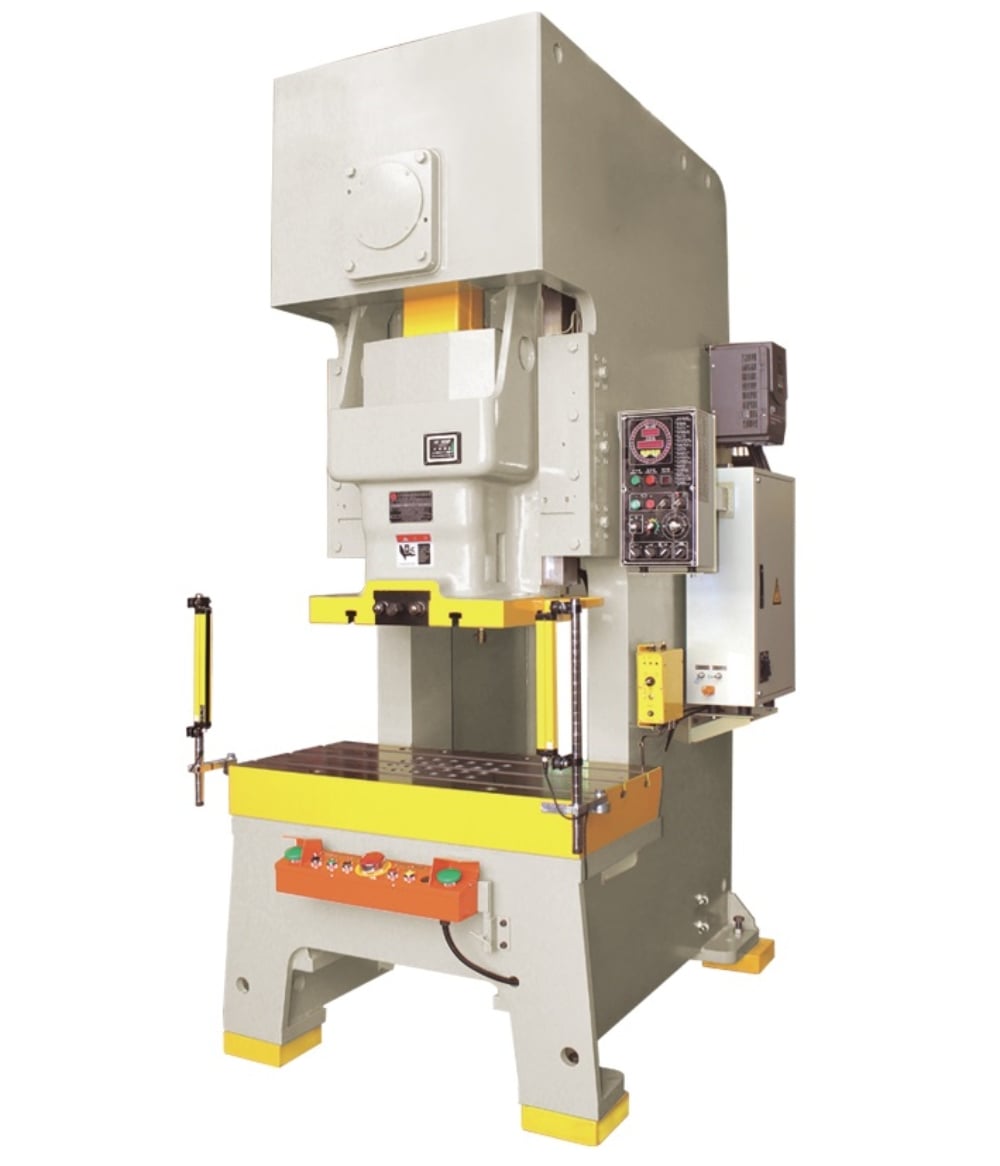
When you evaluate punching machine capacity for your material thickness, remember that the price doesn’t just reflect the ‘pushing power.’ It also reflects the frame’s ability to withstand the deflection caused by that power. A 30-ton machine built with a lightweight frame will lose accuracy much faster than a HARSLE O-frame or C-frame machine designed for heavy-duty industrial cycles.
Main Cost Drivers in Punching Capacity
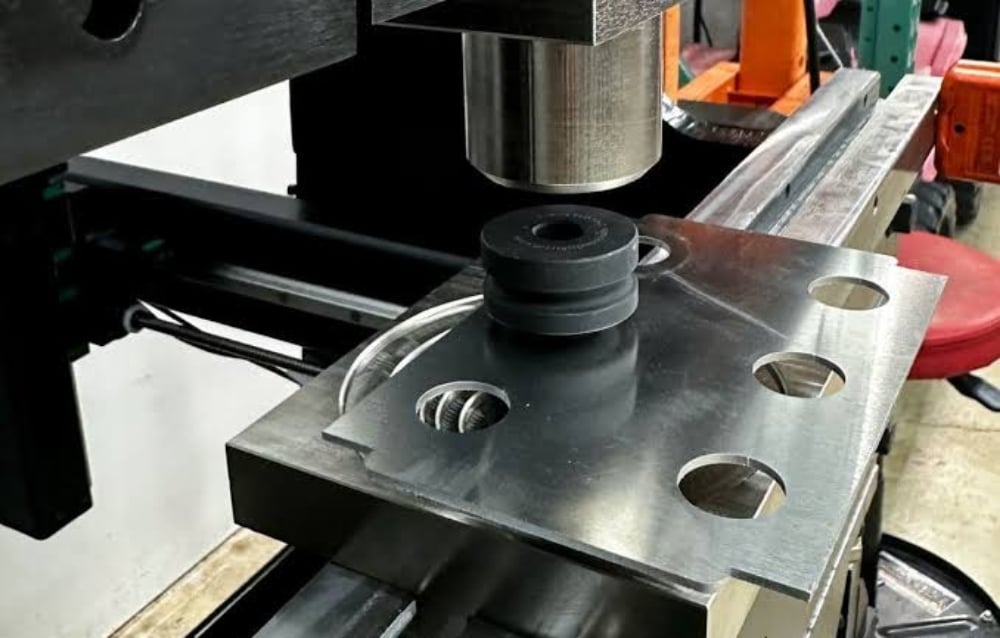
Several technical factors drive the cost of a punching machine. When you are looking to evaluate punching machine capacity for your material thickness, you must look beyond the sticker price and understand what components are doing the heavy lifting. The primary driver is, of course, the tonnage. Tonnage is the maximum force the ram can exert on the material. However, tonnage requirements change drastically based on the material type.
For example, punching a 50mm diameter hole in 3mm stainless steel requires significantly more force than punching the same hole in 3mm aluminum. This is due to the shear strength of the material. Stainless steel typically has a shear strength of 500-600 N/mm², while aluminum might only be 70-200 N/mm². Therefore, a machine that is ‘high capacity’ for aluminum might be ‘low capacity’ for stainless steel. This distinction is a major cost driver because higher shear strengths require more robust hydraulic systems, larger motors, and reinforced frames.
Another driver is the throat depth. The throat depth determines the maximum width of the sheet the machine can handle. A deeper throat allows for larger sheets but requires a much more massive frame to prevent ‘yawning’ or deflection during the punch cycle. If the frame deflects, the punch and die will not align perfectly, leading to premature tool wear or ‘slug pulling.’ HARSLE engineers focus on frame rigidity to ensure that even at maximum capacity, the alignment remains within microns.
Configuration Impact: Servo vs. Hydraulic Systems
The internal drive mechanism of the punching machine significantly impacts how it handles different material thicknesses. Traditionally, hydraulic systems have been the standard for high-tonnage applications. Hydraulic punching machines are known for their reliability and their ability to deliver full force throughout the entire stroke. This is particularly useful when working with thicker materials where a consistent ‘push’ is required to shear through the metal cleanly.
In recent years, servo-electric drive systems have gained popularity. Servo-driven punch presses offer incredible speed and energy efficiency. They allow for precise control over the ram’s position, which is beneficial for forming operations like louvers, lances, or countersinks. However, when you evaluate punching machine capacity for your material thickness, you may find that for extremely thick plates (over 8mm), a high-end hydraulic system still offers the most cost-effective raw power. Servo systems are often preferred for high-speed punching of thinner materials (under 4mm) where the ‘hit rate’ is the priority.
The turret configuration also plays a role. A machine with ‘Auto-Index’ stations allows the tool to rotate 360 degrees. This reduces the number of tools needed and allows for more efficient nesting of parts. While auto-index stations increase the initial cost, they drastically reduce the ‘capacity bottleneck’ caused by frequent tool changes. If your material thickness varies frequently, having a versatile turret configuration is essential for maintaining throughput.
Hidden Costs of High-Capacity Punching
When purchasing a machine, the ‘hidden’ costs can often surprise the uninitiated. To accurately evaluate punching machine capacity for your material thickness, you must account for the ongoing operational expenses. Tooling is the most significant hidden cost. Thicker materials require specialized ‘thick turret’ tooling made from high-grade tool steel (like M2 or D2). These tools must be sharpened regularly; using dull tools increases the required punching force, which can eventually overload the machine’s hydraulic system.
Electricity consumption is another factor. A machine rated for 50 tons will consume more power than a 20-ton machine, even when punching thin material, due to the larger pumps and motors involved. Furthermore, the foundation of your workshop might need reinforcement. A high-speed CNC turret punch press generates significant vibration and shock loads. If your floor is not thick enough or lacks the proper vibration dampening, you risk cracking the concrete or affecting the accuracy of nearby precision equipment like laser cutters or coordinate measuring machines (CMMs).
Finally, consider the cost of software. To utilize the full capacity of a CNC punch press, you need sophisticated CAD/CAM nesting software. This software calculates the optimal path for the tools and ensures that the ‘web’ (the material left between holes) is strong enough to support the sheet during movement. Without good software, you may find that your machine has the physical capacity to punch the material, but your process results in warped sheets or excessive scrap.
ROI Calculation: Is Higher Capacity Worth It?
Calculating the Return on Investment (ROI) for a punching machine involves more than just looking at the hourly rate. You must consider the total cost of ownership versus the revenue generated. If you frequently outsource the punching of 6mm plates because your current machine only handles up to 3mm, the ROI for a higher-capacity HARSLE machine is easy to see. You save on the markup of the subcontractor, the shipping costs, and the lead-time delays.
A useful formula for ROI in this context is:
(Annual Savings from In-sourcing + Revenue from Increased Throughput) / (Total Machine Cost + Annual Operating Costs).
Furthermore, higher capacity often leads to better material utilization. A machine that can handle larger, thicker sheets allows you to nest more parts into a single piece of raw material, reducing the percentage of scrap. In the current market, where raw material prices are volatile, saving even 5% on scrap can translate to thousands of dollars in annual profit. Additionally, modern HARSLE machines reduce secondary operations. If a machine can punch, form, and tap in one setup, you eliminate the labor costs associated with moving parts to a secondary drill press or tapping station.
Buying Advice: How to Calculate Tonnage Requirements
The most practical step to evaluate punching machine capacity for your material thickness is to master the tonnage calculation formula. You should never guess the capacity required for a job. The standard formula used by engineers is:
P = L × t × τ / 1000
Where:
- P is the punching force in kilonewtons (kN). To convert to tons, divide by approximately 9.8.
- L is the perimeter of the hole (mm). For a round hole, this is π × diameter. For a square, it is 4 × side length.
- t is the material thickness (mm).
- τ is the shear strength of the material (N/mm²).
For example, if you want to punch a 20mm round hole in 6mm mild steel (shear strength approx. 400 N/mm²):
L = 3.14 × 20 = 62.8mm
P = 62.8 × 6 × 400 / 1000 = 150.72 kN (approx. 15.4 tons).
Crucial Tip: Always add a safety factor of at least 20%. If your calculation says you need 15.4 tons, do not buy a 16-ton machine. The machine will be running at its absolute limit, leading to heat buildup and mechanical stress. A 20-ton or 30-ton machine would be the appropriate choice for this application to ensure longevity and the ability to handle slight variations in material hardness.
| Material Type | Shear Strength (τ) N/mm² | Multiplier vs. Mild Steel |
|---|---|---|
| Aluminum (Soft) | 70 – 150 | 0.25 – 0.4 |
| Mild Steel (Q235) | 350 – 450 | 1.0 |
| Stainless Steel (304) | 550 – 700 | 1.5 – 1.7 |
| Copper | 200 – 300 | 0.6 – 0.7 |
As shown in the table, stainless steel requires nearly 60% more force than mild steel. This is a common pitfall for buyers who see a machine rated for “6mm capacity” and assume it applies to all metals. Always verify the rating against the specific material you intend to process most frequently.
Frequently Asked Questions (FAQ)
1. Can I punch a hole smaller than the material thickness?
Generally, it is not recommended. The rule of thumb is that the hole diameter should be at least equal to the material thickness (1:1 ratio). If you try to punch a 3mm hole in 6mm steel, the pressure on the punch tip becomes so great that the tool is likely to break or deform. For high-strength materials, you might even need a 1.5:1 or 2:1 ratio.
2. What is the difference between tonnage and pressure?
Tonnage refers to the total force the machine can exert (e.g., 30 tons). Pressure is the force distributed over a specific area. In punching, we are concerned with the tonnage required to overcome the shear resistance of the metal along the perimeter of the cut.
3. How does tool clearance affect capacity?
Proper die clearance (the gap between the punch and the die) is vital. If the clearance is too tight, the required punching force increases, and tool wear accelerates. If it is too loose, the hole will have a large burr. Typically, clearance should be 15-20% of the material thickness for most industrial applications.
4. Why does my machine struggle with stainless steel even if it’s within the thickness rating?
This is usually due to the work-hardening properties of stainless steel. Stainless steel is much tougher to shear than mild steel. If your machine is rated for 6mm mild steel, its effective capacity for stainless steel is likely only 3mm to 4mm. Always check the shear strength of your specific alloy.
5. How often should I maintain the hydraulic system?
For a HARSLE hydraulic punch press, we recommend checking oil levels weekly and performing a full oil and filter change every 2,000 operating hours. Keeping the oil cool and clean is the best way to ensure the machine maintains its full tonnage capacity over years of service.
Conclusion
To effectively evaluate punching machine capacity for your material thickness, you must combine mathematical precision with an understanding of your long-term production goals. By calculating the required tonnage, accounting for material shear strength, and choosing a machine with a healthy safety margin, you protect your investment and your operators. HARSLE continues to lead the industry by providing transparent technical specifications and robust machinery designed to handle the rigors of modern metal fabrication. Whether you are upgrading an existing shop or starting a new venture, focusing on capacity evaluation today will prevent costly bottlenecks tomorrow.