How a Hydraulic Press Helped a Manufacturer Increase Tonnage Capacity


Introduction: The Challenge of Tonnage in Modern Manufacturing
In the competitive landscape of metal fabrication, the ability to handle diverse materials and complex geometries is often limited by a single factor: tonnage capacity. For many growing manufacturers, the transition from light-duty components to heavy-duty industrial parts requires a significant leap in force. This article explores a detailed case study of how a hydraulic press helped a manufacturer increase tonnage capacity, allowing them to break through production bottlenecks and secure higher-value contracts. By upgrading from traditional mechanical systems or lower-capacity units to a high-performance HARSLE hydraulic press, the manufacturer transformed their shop floor capabilities.
The concept of tonnage in metalworking refers to the total amount of pressure a press can exert on a workpiece. When a manufacturer reaches the limit of their existing equipment, they face issues such as incomplete forming, excessive tool wear, and the inability to work with thicker gauges or high-strength alloys. The shift to a modern hydraulic system is not just about raw power; it is about the precision, control, and versatility that hydraulic technology brings to the table. In the following sections, we will dissect the technical and strategic advantages that allowed this manufacturer to scale their operations effectively.
Key Considerations for Increasing Tonnage Capacity
When a manufacturer realizes that their current equipment is insufficient, several key considerations must be addressed before investing in new machinery. Increasing tonnage capacity is not merely a matter of buying a ‘bigger’ machine; it involves analyzing the specific needs of the production line. For the manufacturer in our case study, the primary driver was the shift toward Advanced High-Strength Steels (AHSS) in the automotive and aerospace sectors. These materials require significantly more force to deform than standard mild steel, necessitating a robust solution that could deliver consistent pressure throughout the entire stroke.
Another critical consideration is the footprint and infrastructure of the facility. High-tonnage presses, particularly those exceeding 500 or 1,000 tons, require substantial floor space and reinforced foundations. The manufacturer had to evaluate whether their current workshop could support the weight and vibration of a larger hydraulic press. Furthermore, the power requirements for high-tonnage hydraulic pumps are significant. Upgrading the electrical infrastructure is often a hidden cost that must be factored into the total investment. By choosing a HARSLE hydraulic press, the manufacturer benefited from energy-efficient motor designs that minimized the impact on their utility costs while maximizing output.
Versatility is also a major factor. A manufacturer rarely wants a machine that can only do one thing. The goal was to find a press that offered high tonnage for heavy stamping but could also be adjusted for lighter, more delicate precision work. Hydraulic presses are uniquely suited for this because their pressure can be regulated with extreme accuracy. Unlike mechanical presses, which deliver their maximum force only at the bottom of the stroke, a hydraulic press can provide full tonnage at any point in the ram’s travel. This flexibility was a deciding factor for the manufacturer, as it allowed them to use the same machine for deep drawing, punching, and straightening.
Technical Details: How the Hydraulic Press Delivers Superior Power
To understand how a hydraulic press helped a manufacturer increase tonnage capacity, one must look at the underlying physics and engineering. The core of the system is Pascal’s Law, which states that pressure applied to a confined fluid is transmitted undiminished in every direction. In a hydraulic press, a small amount of force applied to a small area (the pump piston) generates a massive amount of force over a larger area (the main ram). This mechanical advantage is what allows a HARSLE press to generate hundreds or even thousands of tons of force with relatively compact components.
The Role of the Hydraulic Circuit
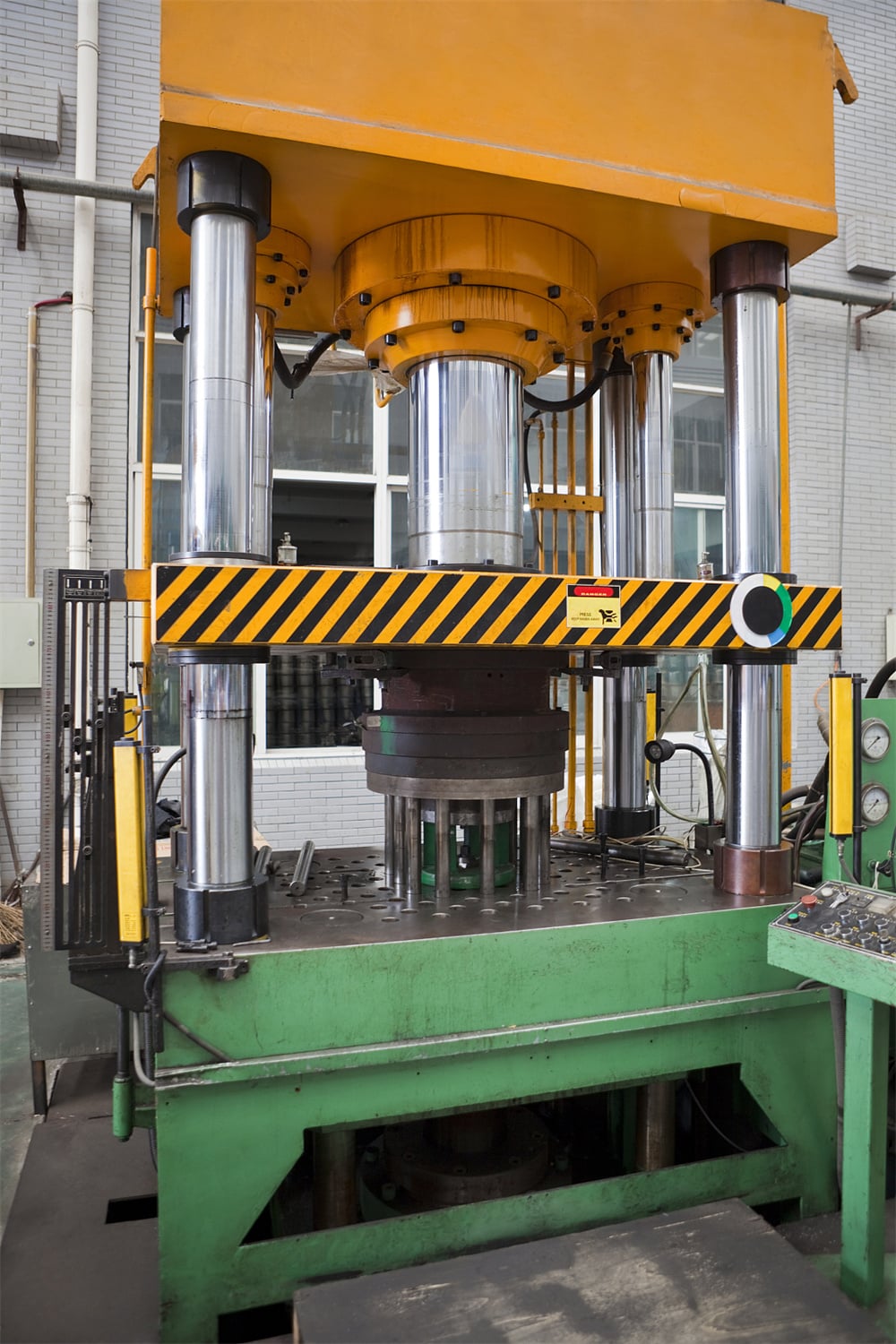
The hydraulic circuit is the heart of the machine. It consists of high-pressure pumps, directional control valves, and heavy-duty cylinders. In the case of the manufacturer we are discussing, the upgrade involved a multi-cylinder design. By using multiple cylinders to drive the bolster, the press ensures even pressure distribution across the entire surface of the die. This is crucial for large-scale parts where uneven pressure could lead to warping or structural weaknesses. The integration of proportional valves allows the operator to control the speed and pressure of the ram with millimetric precision, ensuring that the material flows correctly into the die without tearing.
Frame Construction and Rigidity
As tonnage increases, the frame of the press must be able to withstand the immense reactive forces generated during the forming process. The manufacturer opted for an H-frame (or four-column) design. H-frame presses are known for their exceptional rigidity and minimal deflection. When applying 800 tons of pressure, even a fraction of a millimeter of frame flex can ruin a precision part. HARSLE utilizes high-grade welded steel plates that are stress-relieved through heat treatment to ensure long-term structural integrity. This rigidity not only improves part quality but also extends the life of the expensive tooling used in high-tonnage applications.
PLC and CNC Integration
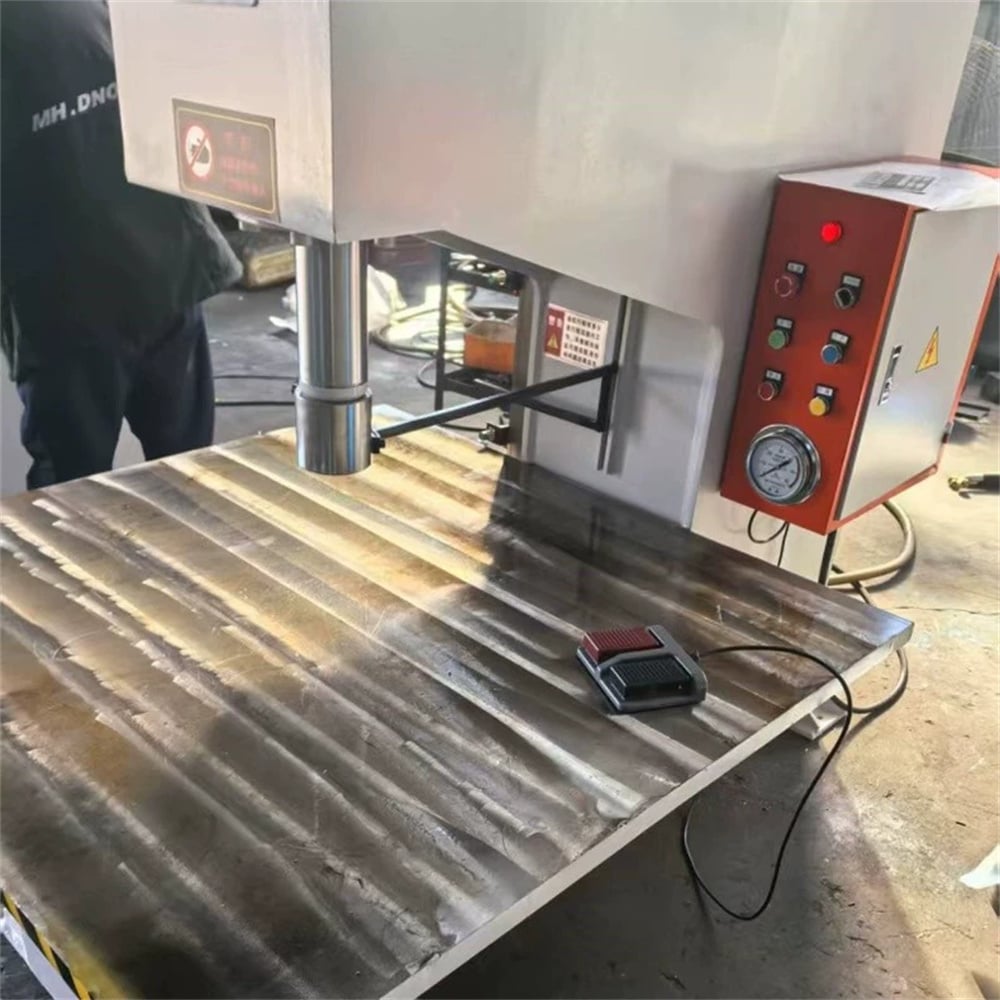
Modern hydraulic presses are no longer purely manual machines. The manufacturer’s new HARSLE press featured an integrated PLC (Programmable Logic Controller) with a touchscreen interface. This allows operators to save specific profiles for different jobs. For instance, a job requiring 400 tons of pressure with a slow draw speed can be saved and recalled instantly. This digital control over tonnage ensures repeatability, which is essential for high-volume manufacturing. The system also monitors real-time data, providing feedback on pressure spikes or deviations, which serves as an early warning system for potential maintenance issues.
Selection Advice: Choosing the Right Press for Tonnage Expansion
For manufacturers looking to follow in the footsteps of our case study, selecting the right equipment is a multi-step process. It begins with a thorough audit of current and future production needs. If you are currently operating at 80% of your machine’s capacity, you are likely experiencing accelerated wear and tear. It is generally recommended to invest in a press that offers 20-30% more tonnage than your heaviest current application. This “headroom” ensures that the machine is not constantly running at its absolute limit, which significantly extends its operational lifespan.
- Analyze Material Specifications: Determine the maximum thickness and tensile strength of the materials you plan to work with. Use tonnage calculation formulas (Length x Thickness x Tensile Strength / Factor) to find your baseline requirement.
- Evaluate Stroke and Daylight: Tonnage is useless if the part doesn’t fit in the machine. Ensure the daylight (the space between the bed and the ram) and the stroke length are sufficient for your largest dies and finished parts.
- Consider Speed Requirements: While hydraulic presses are generally slower than mechanical presses, modern high-speed valves and regenerative circuits have closed the gap. If cycle time is critical, look for models with fast approach and return speeds.
- Safety Features: High tonnage means high risk. Ensure the press is equipped with light curtains, dual-hand controls, and emergency stop systems that meet international safety standards (such as CE or OSHA).
Furthermore, the manufacturer should consider the reputation of the machinery provider. HARSLE provides not only the hardware but also the technical support and training necessary to integrate a high-tonnage press into an existing workflow. Choosing a partner who understands the nuances of metal forming—such as springback compensation and lubrication requirements—can make the difference between a successful upgrade and a costly mistake.
The Impact of Increased Tonnage on Tooling and Efficiency
One of the unexpected benefits the manufacturer discovered after the upgrade was a significant increase in tooling life. When a press is underpowered for a specific job, the operator often compensates by hitting the material harder or faster, which creates shockwaves that damage the die. By having a surplus of tonnage, the hydraulic press can perform the work with a smooth, controlled motion. This “soft touch” at high pressure reduces the stress on the die edges, leading to fewer sharpenings and replacements.
Efficiency also saw a dramatic improvement. With the old equipment, certain parts required multiple passes or secondary heating processes to achieve the desired shape. The high-tonnage HARSLE press allowed for single-hit forming of complex components. This reduction in the number of operations per part directly translated to lower labor costs and faster turnaround times. The manufacturer was able to take on jobs that were previously outsourced, keeping more profit in-house and improving their overall market competitiveness.
FAQ: Common Questions About Increasing Tonnage Capacity
1. How do I know if I need more tonnage?
Signs that you need more tonnage include frequent stalling of the press, inconsistent part dimensions, excessive vibration during the stroke, and the inability to fully form corners or deep draws in thicker materials. If you are turning away work because your current machines cannot handle the material thickness, it is time to upgrade.
2. Can I increase the tonnage of my existing hydraulic press?
Generally, no. The tonnage of a press is determined by the cylinder diameter and the maximum pressure the frame and hydraulic system can handle. Attempting to increase the pressure beyond the manufacturer’s specifications can lead to catastrophic frame failure or hydraulic leaks. It is always safer and more efficient to invest in a machine designed for the required load.
3. Is a hydraulic press better than a mechanical press for high tonnage?
For many applications, yes. Hydraulic presses offer full tonnage throughout the entire stroke, adjustable pressure, and better protection against overloading. Mechanical presses are faster for high-volume blanking, but for deep drawing and heavy forming, the control offered by a hydraulic system is superior.
4. What maintenance is required for a high-tonnage hydraulic press?
Regular maintenance includes monitoring oil levels and quality, checking for leaks in hoses and seals, inspecting the frame for cracks, and ensuring the cooling system is functioning. High-tonnage machines generate significant heat, so maintaining the hydraulic fluid’s temperature is critical for preventing seal degradation.
5. How does tonnage affect the accuracy of the finished part?
Sufficient tonnage ensures that the material is fully forced into the die cavity, reducing the effects of springback. When combined with a rigid frame, high tonnage allows for tighter tolerances and better repeatability across large production runs.
Conclusion: Scaling for the Future
The story of how a hydraulic press helped a manufacturer increase tonnage capacity is a testament to the importance of investing in the right technology at the right time. By recognizing the limitations of their old equipment and embracing the power and precision of a HARSLE hydraulic press, the manufacturer was able to expand their product line, improve part quality, and increase their bottom line. In the world of metal fabrication, tonnage is more than just a number; it is the key to unlocking new possibilities and staying ahead of the competition.
Whether you are a small shop looking to take the next step or a large-scale manufacturer aiming to optimize your production, understanding your tonnage requirements is essential. A high-capacity hydraulic press provides the foundation for growth, offering the versatility to handle today’s challenges and the power to tackle tomorrow’s innovations. As material science continues to evolve, having the capacity to form the next generation of alloys will be the defining factor of successful fabrication businesses worldwide.
| Feature | Benefit for Manufacturer |
|---|---|
| Constant Tonnage | Full power at any point in the stroke for deep drawing. |
| Adjustable Pressure | Ability to switch between heavy and light-duty tasks easily. |
| Overload Protection | Prevents damage to the machine and tooling if limits are exceeded. |
| Rigid H-Frame | Ensures precision and reduces tool wear during high-force operations. |
| PLC Control | Enables repeatable results and data tracking for quality control. |
In conclusion, the strategic acquisition of a high-tonnage hydraulic press is an investment in a company’s future. By removing the constraints of limited force, manufacturers can innovate, compete, and thrive in an ever-changing industrial environment. HARSLE remains committed to providing the robust, high-performance machinery needed to make these transitions possible, ensuring that every manufacturer has the power they need to succeed.