How a Laser Cutting Machine Reduced Rework in Precision Metal Manufacturing


Introduction: The Cost of Inaccuracy in Metal Fabrication
In the competitive landscape of modern industrial production, precision is not just a goal—it is a requirement for survival. For decades, metal fabrication shops relied on traditional methods such as mechanical shearing, plasma cutting, and manual punching. While these methods served their purpose, they often introduced a significant hidden cost: rework. Rework occurs when a part fails to meet specifications, requiring secondary operations like grinding, deburring, or even complete scrapping and restarting. This inefficiency drains labor resources, wastes expensive raw materials, and delays delivery schedules.
The shift toward high-precision industries, such as aerospace, medical device manufacturing, and high-end automotive components, has made the margin for error virtually non-existent. This is where the implementation of advanced technology becomes critical. Specifically, the adoption of A Laser Cutting Machine Reduced Rework In Precision Metal Manufacturing by providing a level of accuracy and consistency that mechanical methods simply cannot match. By utilizing a concentrated beam of light to melt and vaporize material with surgical precision, laser systems have transformed the factory floor from a place of constant correction to a streamlined environment of first-time-right production.
In this comprehensive guide, we will explore the technical mechanisms, economic benefits, and strategic considerations involved in integrating laser cutting technology. We will examine how HARSLE’s cutting-edge solutions empower manufacturers to eliminate the bottlenecks caused by rework and achieve a higher standard of quality in their metal fabrication processes.
Key Considerations: Why Rework Happens and How Lasers Solve It
To understand how A Laser Cutting Machine Reduced Rework In Precision Metal Manufacturing, we must first identify the primary causes of rework in traditional fabrication. Mechanical cutting tools exert physical force on the workpiece. This force can lead to material deformation, edge burrs, and micro-cracks. Furthermore, tool wear in mechanical systems means that the first part of a batch may look significantly different from the thousandth part, leading to inconsistency.
1. Elimination of Mechanical Stress
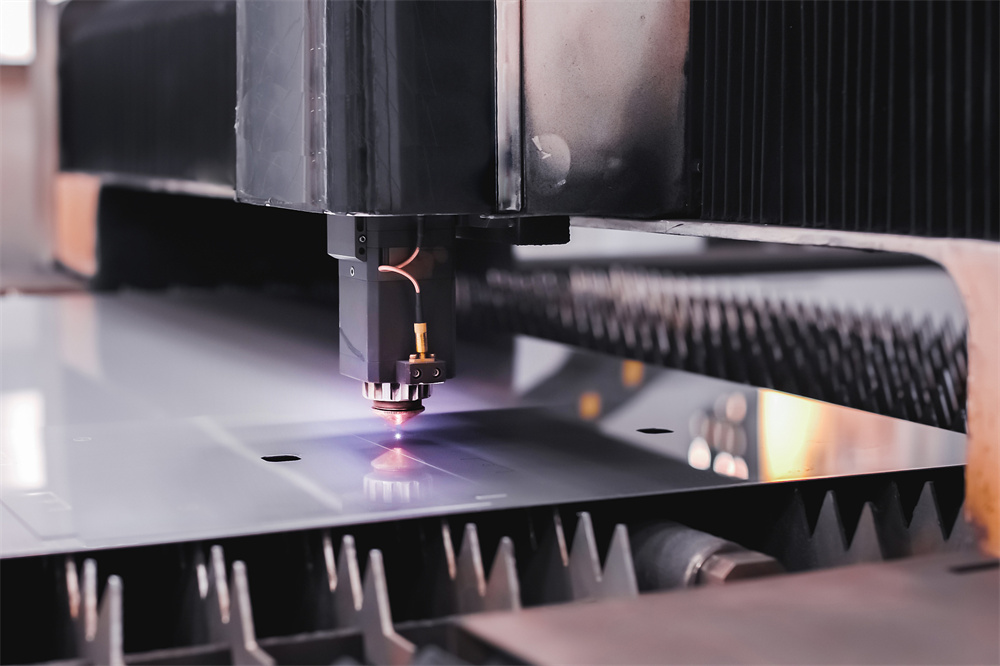
Unlike traditional punching or shearing, laser cutting is a non-contact process. There is no physical tool pressing against the metal. This eliminates the risk of mechanical distortion, especially in thin-gauge materials that are prone to bending or warping under pressure. Because the material remains flat and unstressed, the dimensions remain true to the CAD design, drastically reducing the need for straightening or corrective bending after the cut.
2. Minimizing the Heat-Affected Zone (HAZ)
While plasma cutting and oxy-fuel cutting use heat, they often create a large Heat-Affected Zone (HAZ). This area of the metal undergoes metallurgical changes due to excessive heat, often becoming brittle or discolored. Laser cutting, particularly with fiber laser technology, uses a highly focused beam that concentrates heat into a very small area. This results in a narrow kerf and a minimal HAZ, ensuring that the structural integrity of the metal is preserved and secondary heat treatment or surface cleaning is rarely required.
3. Superior Edge Quality
One of the most common reasons for rework is the presence of heavy dross or burrs on the underside of a cut. In traditional methods, workers must spend hours manually grinding these imperfections. A high-quality laser cutting machine, when properly calibrated with the correct assist gases (such as Nitrogen for stainless steel), produces a clean, mirror-like edge. In many cases, the parts can go directly from the laser bed to the assembly line or the next stage of fabrication without any manual intervention.
Technical Details: The Engineering Behind Precision
The reason A Laser Cutting Machine Reduced Rework In Precision Metal Manufacturing lies in its sophisticated technical architecture. Modern CNC (Computer Numerical Control) laser systems integrate hardware and software to maintain tolerances that were previously unthinkable. Below are the core technical components that contribute to this precision.
Fiber Laser Source vs. CO2
While CO2 lasers were the industry standard for years, Fiber laser technology has revolutionized the field. Fiber lasers use a solid-state gain medium, which allows for a much smaller focal spot size. This smaller spot increases power density, allowing for faster cutting speeds and higher precision on intricate geometries. For manufacturers, this means that even complex internal cutouts and sharp corners are executed with perfect fidelity to the digital blueprint.
CNC Control and Real-Time Feedback
The “brain” of the laser cutting machine is the CNC controller. Advanced systems, like those found in HARSLE machines, utilize high-speed processors that calculate the laser’s path thousands of times per second. These systems often include “closed-loop” feedback, where sensors monitor the distance between the cutting head and the material. If the sheet metal has a slight undulation, the head automatically adjusts its height (capacitive height sensing) to maintain a constant focal point. This prevents “tip-ups” and ensures a consistent cut across the entire surface of the sheet.
Nesting Software and Material Optimization
Rework isn’t just about fixing bad parts; it’s also about managing material efficiency. Advanced nesting software allows engineers to pack parts as tightly as possible on a single sheet. Because the laser kerf is so thin (often less than 0.2mm), parts can be placed closer together than with mechanical tools. This software also calculates the optimal “lead-in” and “lead-out” paths to prevent piercing damage to the finished part, further ensuring that every piece coming off the machine is usable.

Selection Advice: Choosing the Right Machine to Eliminate Rework
Investing in a laser cutting machine is a significant capital expenditure. To ensure that A Laser Cutting Machine Reduced Rework In Precision Metal Manufacturing for your specific facility, you must select a machine that aligns with your production requirements. Here are the critical factors to consider during the selection process.
1. Power Rating (Wattage)
The thickness of the material you process dictates the power you need. A 1kW to 3kW fiber laser is excellent for thin to medium-gauge sheets (up to 10mm). However, if you are consistently cutting 20mm carbon steel, you may need a 6kW or 12kW source. Using an underpowered machine for thick materials leads to poor cut quality and increased dross, which brings back the very rework you are trying to avoid.
2. Bed Size and Motion System
Consider the maximum sheet size you handle. A standard 3000mm x 1500mm bed is common, but larger formats are available. More importantly, look at the motion system. Linear motors offer higher acceleration and precision compared to traditional rack-and-pinion systems, though they come at a higher cost. For high-precision manufacturing, the stability of the machine frame (often made of cast iron or heavy-duty welded steel) is vital to dampen vibrations that could affect cut accuracy.
3. Assist Gas Integration
The choice of assist gas—Oxygen, Nitrogen, or Compressed Air—greatly impacts the finish. Oxygen is used for carbon steel to speed up the process through an exothermic reaction, but it leaves an oxide layer that must be removed before painting. Nitrogen provides a clean, oxide-free cut for stainless steel and aluminum, eliminating the need for chemical cleaning or grinding. Ensure your chosen machine has a reliable gas control system to switch between these efficiently.
| Feature | Impact on Rework | Recommended Specification |
|---|---|---|
| Positioning Accuracy | Ensures parts fit perfectly in assemblies. | ±0.03 mm or better |
| Repeatability | Guarantees consistency across large batches. | ±0.02 mm |
| Cooling System | Prevents laser fluctuations and beam instability. | Dual-circuit water chiller |
| Automatic Nozzle Cleaning | Maintains cut quality without manual intervention. | Standard on high-end models |
The Economic Impact: ROI of Reducing Rework
When calculating the Return on Investment (ROI) for a HARSLE laser cutting machine, manufacturers often focus on cutting speed. However, the reduction in rework is often a more significant contributor to the bottom line. Let’s break down the economic benefits:
- Labor Savings: If a shop spends 20 hours a week deburring and grinding parts, that is 1,040 hours of labor per year. At an average shop rate, eliminating this task can save tens of thousands of dollars annually.
- Material Savings: Scrapped parts are pure loss. By increasing the “first-pass yield,” manufacturers maximize the value of every sheet of metal purchased.
- Energy Efficiency: Modern fiber lasers are significantly more energy-efficient than older CO2 models or large-scale mechanical presses, reducing overhead costs.
- Increased Capacity: When parts don’t need to be reworked, they move through the shop faster. This increases the total throughput of the facility, allowing the business to take on more orders without increasing headcount.
By focusing on how A Laser Cutting Machine Reduced Rework In Precision Metal Manufacturing, businesses can transition from a reactive maintenance mindset to a proactive production mindset. The reliability of HARSLE equipment ensures that the machine remains an asset rather than a source of downtime.
FAQ: Common Questions About Laser Cutting and Rework
How does a laser cutting machine handle different material types?
Laser cutting machines are highly versatile. Fiber lasers are particularly effective at cutting reflective materials like copper and brass, which were traditionally difficult for CO2 lasers. By adjusting the frequency, power, and gas pressure, the same machine can switch from cutting thin aluminum to thick carbon steel with minimal setup time, maintaining high precision across all material types.
Does laser cutting eliminate the need for all secondary processes?
While it significantly reduces the need for grinding and deburring, some secondary processes like powder coating, bending (using a press brake), or welding may still be required. However, because the laser-cut parts are so accurate, these subsequent steps become much easier and more predictable. For example, a perfectly cut part fits better into a welding jig, resulting in stronger and cleaner welds.
What maintenance is required to keep the machine accurate?
To ensure that A Laser Cutting Machine Reduced Rework In Precision Metal Manufacturing over the long term, regular maintenance is essential. This includes cleaning the optics (if using a CO2 laser), checking the nozzle for wear, ensuring the chiller is functioning correctly, and lubricating the guide rails. Fiber lasers require significantly less maintenance than CO2 lasers because they do not have complex mirror paths or gas-filled laser tubes.
Can laser cutting help with small-batch production?
Absolutely. One of the greatest advantages of laser cutting is its flexibility. Unlike stamping, which requires expensive custom dies, laser cutting only requires a CAD file. This makes it ideal for prototyping and small-batch production where the cost of rework or specialized tooling would otherwise be prohibitive.
Conclusion: The Future of Precision Manufacturing
The evidence is clear: the integration of A Laser Cutting Machine Reduced Rework In Precision Metal Manufacturing by addressing the root causes of error at the source. By eliminating mechanical stress, minimizing heat distortion, and providing unparalleled CNC accuracy, laser technology allows manufacturers to produce complex parts with confidence. The reduction in manual labor, material waste, and production delays directly translates to increased profitability and a stronger competitive edge.
As we look toward the future, the role of automation and artificial intelligence in laser cutting will only grow. Features like automatic material loading, real-time kerf monitoring, and predictive maintenance will further refine the process, making the goal of “zero rework” a reality for shops of all sizes. For those looking to upgrade their capabilities, HARSLE offers a range of fiber laser cutting machines designed to meet the rigorous demands of modern industry. Investing in precision today is the best way to ensure the success of your manufacturing business tomorrow.
In summary, if your facility is struggling with high scrap rates or excessive secondary processing, it is time to evaluate your cutting technology. A transition to high-precision laser cutting is not just an equipment upgrade; it is a fundamental shift toward a more efficient, profitable, and precise future in metal fabrication.