How Much Does A Hydraulic Press Cost? A Complete Price Guide For Manufacturers


Introduction to Hydraulic Press Investment
For manufacturers looking to upgrade their production capabilities, one of the most pressing questions is: Much Does A Hydraulic Press Cost? A Complete Price Manufacturers need to understand that the answer isn’t a single number, but a range influenced by technology, capacity, and customization. A hydraulic press is a cornerstone of metal fabrication, used for everything from simple bending to complex deep drawing and forging. Investing in the right machine requires a deep dive into the financial and technical variables that dictate the market price.
At HARSLE, we recognize that purchasing a hydraulic press is a significant capital expenditure. Whether you are a small workshop or a large-scale industrial plant, understanding the total cost of ownership is vital for long-term profitability. This guide aims to break down the pricing structures of modern hydraulic presses, helping you navigate the complexities of the market and make an informed decision that aligns with your production goals and budget constraints.
Price Range Overview: From Shop Presses to Industrial Giants
The price of a hydraulic press can vary wildly based on its intended use. To provide a clear picture, we categorize these machines into three primary tiers: entry-level/shop presses, mid-range industrial presses, and high-capacity custom solutions. Understanding where your needs fall within these tiers is the first step in budgeting.
- Entry-Level Shop Presses ($1,000 – $10,000): These are typically manual or air-over-hydraulic machines with capacities ranging from 10 to 50 tons. They are ideal for small repair shops, automotive work, or light-duty hobbyist applications. While affordable, they lack the speed and precision required for high-volume manufacturing.
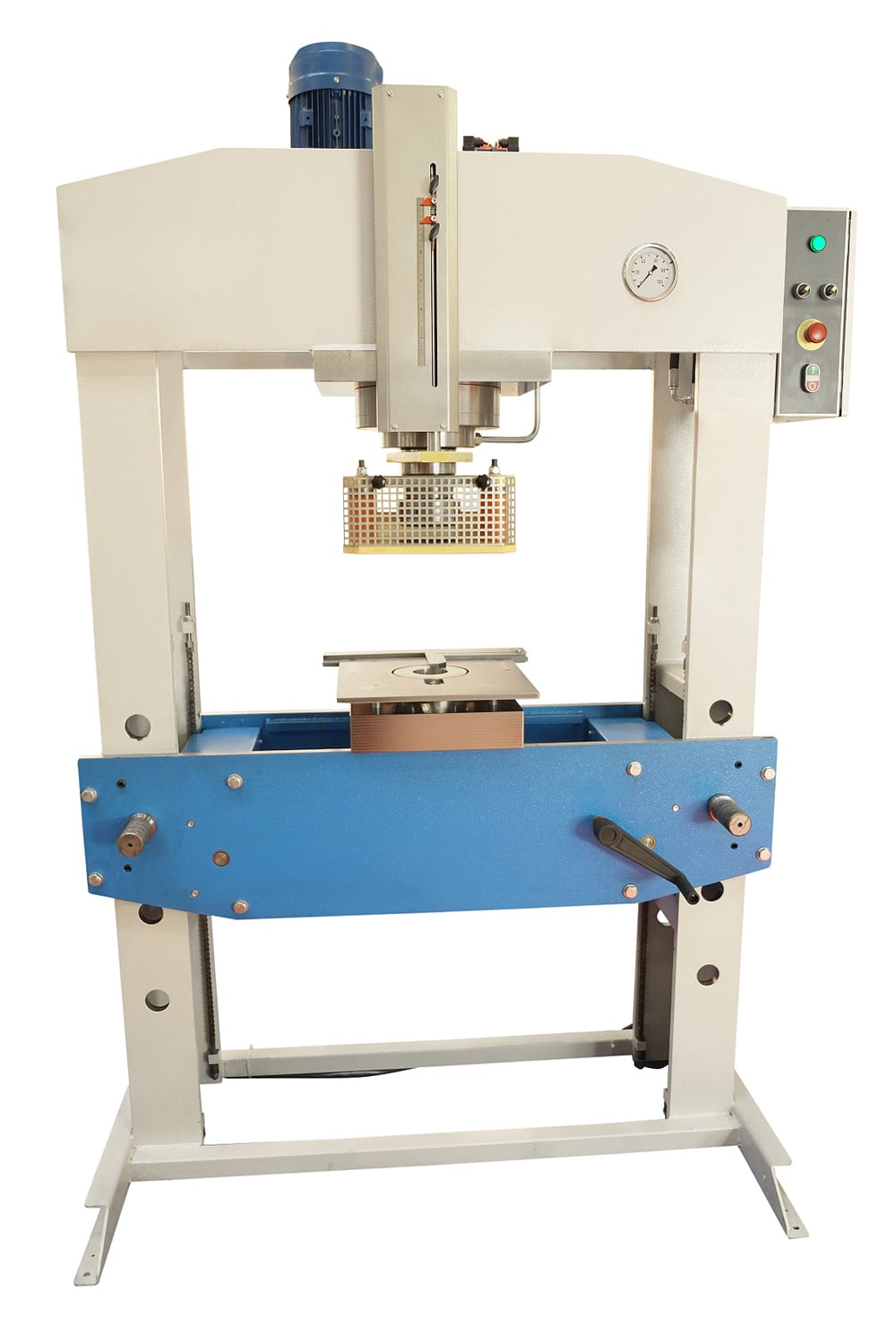
- Mid-Range Industrial Presses ($15,000 – $150,000): This category includes C-frame and smaller H-frame presses, often ranging from 60 to 300 tons. These machines feature motorized hydraulic units, basic PLC controls, and safety features like light curtains. They are the workhorses of the metal fabrication industry, used for punching, bending, and assembly.
- High-Capacity & Custom Presses ($200,000 – $1,000,000+): These are heavy-duty 4-column or large H-frame presses with capacities exceeding 500 tons, reaching up to several thousand tons. They often include advanced CNC systems, high-speed hydraulics, and specialized bolsters for deep drawing or heavy forging.
Main Cost Drivers: What Are You Paying For?
When asking Much Does A Hydraulic Press Cost? A Complete Price Manufacturers must look under the hood. Several technical factors directly influence the manufacturing cost and, consequently, the retail price of the machine. The most significant driver is Tonnage. The higher the force required, the larger the hydraulic cylinders, the thicker the steel frame, and the more robust the hydraulic pump must be. A 500-ton press requires significantly more raw material and engineering than a 100-ton model.
Frame Construction is another critical factor. C-frame (or Gap frame) presses are generally more affordable because they use less steel and offer three-sided access. However, they are prone to ‘yaw’ or deflection under high pressure. H-frame and 4-column presses are more expensive due to their rigid construction, which ensures superior parallelism and precision, making them essential for high-accuracy die work.
The Hydraulic System and Speed also play a role. Standard hydraulic systems are slower and cheaper. If your production requires high-speed approach and pressing cycles, you will need advanced valves and high-flow pumps, which can add 20-40% to the base price. Furthermore, the origin of the components (e.g., Rexroth valves vs. generic brands) will impact both the initial cost and the long-term reliability of the machine.
Configuration Impact: Customization and Control Systems
The level of automation and control significantly shifts the price point. A basic manual control system is the cheapest option, but it limits productivity and safety. Most modern manufacturers opt for PLC (Programmable Logic Controller) or CNC (Computer Numerical Control) systems. These systems allow for precise control over stroke length, pressure dwell time, and speed profiles. A full CNC integration can add $10,000 to $50,000 to the price but is indispensable for complex forming operations.
Customizations such as increased daylight (the distance between the bed and the ram) or larger bolster areas also increase the cost. If your parts are voluminous, you need a larger frame to accommodate them, even if the tonnage requirement is low. Additionally, specialized features like heated platens for composite molding or die cushions for deep drawing are premium add-ons that require specific engineering and hydraulic integration.
Safety is non-negotiable in modern manufacturing. While basic safety guards are standard, advanced systems like laser light curtains, dual-hand monitors, and safety PLCs are often priced as add-ons. While they increase the initial cost, they are essential for compliance with OSHA or CE standards and protect your most valuable asset: your operators.
Hidden Costs: Beyond the Sticker Price
When calculating Much Does A Hydraulic Press Cost? A Complete Price Manufacturers often overlook the “hidden” expenses associated with commissioning a new machine. The first is Freight and Logistics. Hydraulic presses are incredibly heavy and often oversized. Shipping a 200-ton press across the country or importing it from overseas can cost thousands of dollars, requiring specialized flatbed trailers or heavy-lift maritime containers.
Installation and Rigging are the next hurdles. You cannot simply plug in a 50-ton machine. You may need a professional rigging crew with heavy-duty forklifts or cranes to position the machine. Furthermore, large presses require a reinforced foundation. Standard factory floors may crack under the concentrated weight and vibration of a high-tonnage press. Excavating and pouring a dedicated concrete pad can add $5,000 to $20,000 to your project budget.
Finally, consider Training and Maintenance. Your staff needs to be trained on the specific control system and safety protocols of the new HARSLE machine. While HARSLE provides excellent documentation and support, onsite training sessions may involve additional fees. Long-term maintenance, including hydraulic oil changes, seal replacements, and filter upgrades, should be factored into your annual operating budget to ensure the machine’s longevity.
ROI Calculation: Justifying the Investment
To determine if the cost is justified, manufacturers must perform a Return on Investment (ROI) analysis. A more expensive, high-speed hydraulic press might have a higher upfront cost but can significantly reduce the cycle time per part. If a $100,000 machine produces 20% more parts per hour than a $70,000 machine, the higher-priced unit may pay for itself within the first two years through increased throughput.
Another factor is Material Savings and Quality. Precision CNC-controlled presses reduce scrap rates by ensuring consistent pressure and depth. In industries like aerospace or medical device manufacturing, where raw materials are expensive, reducing waste by even 5% can result in massive annual savings. Additionally, the versatility of a well-configured hydraulic press allows a shop to take on a wider variety of contracts, opening up new revenue streams.
| Factor | Impact on Cost | Impact on ROI |
|---|---|---|
| High Tonnage | High Increase | Enables heavier work |
| CNC Controls | Moderate Increase | Reduces labor & scrap |
| Automation/Robotics | Significant Increase | Massive throughput boost |
| Energy Efficient Pumps | Slight Increase | Lowers monthly utility bills |
Buying Advice: How to Get the Best Value
When you are ready to purchase, don’t just look for the lowest price. Look for the best value. Brand Reputation matters. Companies like HARSLE have years of experience in engineering reliable machinery that holds its value over time. A cheaper, off-brand machine might save you $5,000 today but cost you $20,000 in downtime and unavailable spare parts next year.
Always request a Detailed Quote that breaks down the specifications. Ensure the quote includes the motor horsepower, pump flow rate, frame thickness, and the specific brand of electrical and hydraulic components. If a manufacturer is vague about these details, it’s a red flag. Furthermore, inquire about the Warranty and After-Sales Service. Does the manufacturer have technicians in your region? How quickly can they ship replacement seals or valves?
Consider the Used vs. New debate. While a used hydraulic press can be 30-50% cheaper, it comes with risks. Hydraulic systems degrade over time, and finding parts for a 20-year-old machine can be a nightmare. For most production environments, a new machine with a manufacturer’s warranty and modern safety features is the safer and more cost-effective choice in the long run.
Frequently Asked Questions (FAQ)
1. How much does a 100-ton hydraulic press cost?
A standard industrial 100-ton C-frame hydraulic press typically costs between $20,000 and $45,000, depending on the control system and speed requirements. A 4-column version may cost slightly more due to the increased frame rigidity.
2. Why are CNC hydraulic presses so much more expensive?
CNC systems require specialized sensors (linear scales, pressure transducers), a sophisticated controller, and proportional hydraulic valves. These components allow for sub-millimeter precision and automated recipe storage, which adds significant value and cost.
3. Can I customize a hydraulic press for my specific application?
Yes, HARSLE specializes in custom configurations. You can specify the bolster size, stroke length, daylight, and even the hydraulic circuit design to meet the unique needs of your production line.
4. What is the typical lifespan of a hydraulic press?
With proper maintenance, a high-quality industrial hydraulic press can last 20 to 30 years. The frame itself is virtually indestructible; most maintenance involves replacing seals, filters, and occasionally upgrading the electronics or hydraulic pumps.
5. Does the price include shipping and installation?
Usually, no. Most quotes are EXW (Ex-Works) or FOB (Free On Board). Shipping, rigging, and onsite installation are typically quoted separately based on your location and facility requirements.
Conclusion
Understanding Much Does A Hydraulic Press Cost? A Complete Price Manufacturers can use to plan their growth is essential in today’s competitive landscape. While the initial investment can range from tens of thousands to hundreds of thousands of dollars, the right hydraulic press is an asset that drives efficiency, precision, and capability. By focusing on the key cost drivers—tonnage, frame type, and control systems—and accounting for hidden costs like logistics and foundations, you can ensure a successful acquisition.
At HARSLE, we are committed to providing high-performance hydraulic presses that offer the perfect balance of price and technology. Our team of experts is ready to help you navigate these choices and find a solution that fits your budget while exceeding your production expectations. Contact us today for a personalized quote and take the first step toward transforming your manufacturing process.