Hydraulic Press Price Guide 2026: What Affects Cost and How to Compare Models


Introduction to the 2026 Hydraulic Press Market
As we move into 2026, the landscape of metal fabrication is undergoing a significant transformation. The demand for precision, energy efficiency, and automation has reached an all-time high, directly influencing the Hydraulic Press Price 2026: Affects Cost Compare Models. For manufacturers looking to upgrade their facilities or start new production lines, understanding the nuances of pricing is no longer just about the sticker price; it is about evaluating long-term value, technological integration, and operational efficiency.
The global supply chain for industrial components has stabilized, yet the cost of raw materials like high-grade steel and advanced electronic controllers continues to fluctuate. Furthermore, the shift toward ‘Industry 4.0’ means that even entry-level hydraulic presses are now expected to feature some level of digital monitoring. This guide aims to provide a comprehensive breakdown of what you can expect to pay for a hydraulic press in 2026, the variables that drive those costs, and a strategic framework for comparing different models to ensure you get the best return on investment.
Whether you are in the automotive, aerospace, or consumer electronics sector, the hydraulic press remains a cornerstone of production. However, the gap between a budget-friendly machine and a high-end, servo-driven precision press has widened. Navigating this gap requires a deep dive into technical specifications, frame designs, and the hidden costs that often catch buyers off guard. In the following sections, we will explore the price ranges, cost drivers, and selection criteria essential for a successful purchase in 2026.
Hydraulic Press Price Range Overview for 2026
In 2026, the price of a hydraulic press is primarily dictated by its tonnage, frame style, and level of automation. To provide a clear picture, we can categorize these machines into three main tiers: Entry-Level/Workshop, Mid-Range Industrial, and High-End Specialized systems. Each tier serves a different market segment and comes with a distinct price bracket.
Entry-Level and Workshop Presses (10 – 100 Tons)
These machines are typically used for light-duty tasks such as assembly, bending, or small-scale stamping. In 2026, an entry-level C-frame or small 4-column press in the 20 to 50-ton range typically starts between $5,000 and $15,000. If you require basic CNC controls or enhanced safety light curtains, the price can climb toward $25,000. These are ideal for repair shops or small manufacturing units where high-speed production is not the primary concern.
Mid-Range Industrial Presses (100 – 500 Tons)
The mid-range segment is the workhorse of the metal fabrication industry. These machines, often H-frame or robust 4-column designs, are used for deep drawing, heavy stamping, and molding. For a standard 200-ton hydraulic press with modern PLC controls and standard hydraulic components, prices in 2026 range from $40,000 to $85,000. Adding features like servo-motor drives for energy efficiency can push the price toward the $100,000 mark, but the operational savings often justify the initial outlay.
High-End and Heavy-Duty Systems (500 – 5000+ Tons)
For large-scale automotive body panels or heavy forging applications, the investment is substantial. A 1000-ton high-precision press with full automation integration can start at $250,000 and easily exceed $1,000,000 for custom-engineered solutions. These machines feature advanced synchronization, high-speed approach and return, and comprehensive data logging capabilities. The Hydraulic Press Price 2026: Affects Cost Compare Models in this category is heavily influenced by the degree of customization required for specific production lines.
| Press Category | Tonnage Range | Estimated Price (USD) | Primary Applications |
|---|---|---|---|
| Workshop/Small Scale | 10 – 60 Tons | $5,000 – $18,000 | Bushing, Small Bending, Lab Testing |
| Standard Industrial | 100 – 300 Tons | $35,000 – $75,000 | Stamping, Punching, Shallow Drawing |
| Heavy Industrial | 500 – 1000 Tons | $120,000 – $350,000 | Deep Drawing, Forging, Large Parts |
| Custom/Specialized | 1500+ Tons | $500,000+ | Automotive Panels, Aerospace Components |
Main Cost Drivers: What Dictates the Final Quote?
Understanding why one 200-ton press costs $40,000 while another costs $90,000 is crucial for any procurement officer. Several key factors drive these price differences, and in 2026, technology plays a larger role than ever before. The first major driver is the Frame Construction. A C-frame (or gap frame) press is generally more affordable due to its simpler design and smaller footprint, but it is prone to ‘yaw’ or deflection under high pressure. In contrast, an H-frame or 4-column press offers superior rigidity and bed parallelism, which is essential for high-precision work, thereby commanding a higher price.
The second driver is the Hydraulic System Complexity. Traditional hydraulic systems rely on constant-speed motors and proportional valves. While reliable, they are less energy-efficient. Modern servo-hydraulic systems, which use servo motors to drive the pumps only when pressure is needed, can add 20-30% to the initial cost. However, they reduce noise, heat, and electricity consumption significantly. In 2026, many regions have implemented energy efficiency rebates, making these higher-priced models more attractive in the long run.
Thirdly, the Quality of Components significantly impacts the price. A press built with premium components from brands like Rexroth, Siemens, or Schneider will always be more expensive than one using generic or local-market parts. The premium pays for itself through reduced downtime and easier sourcing of replacement parts. When you Compare Models, always ask for a detailed component list to ensure you aren’t paying a premium price for budget internals.
Configuration Impact: Customization vs. Standard Models
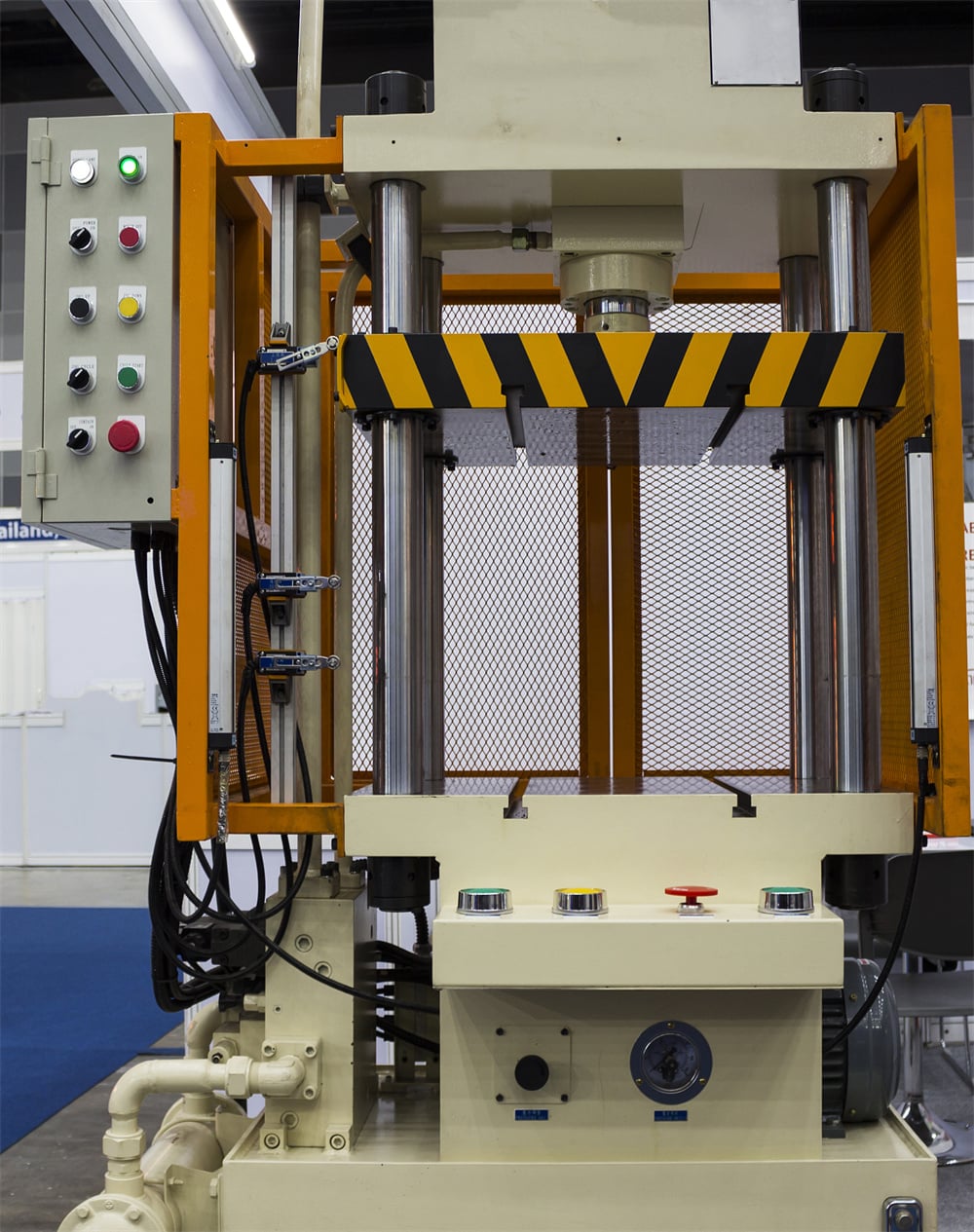
In the 2026 market, the ‘standard’ model is becoming a rarity as manufacturers demand more specific configurations to fit their unique workflows. The configuration of the press—including bolster size, stroke length, and daylight—directly affects the amount of material and engineering required. A ‘long-stroke’ press requires larger cylinders and more hydraulic fluid, increasing the cost. Similarly, a larger bed size requires a heavier, more reinforced frame to maintain structural integrity under load.
Automation Integration is another significant configuration factor. In 2026, most buyers are looking for ‘robot-ready’ machines. This means the press must have the necessary I/O ports, safety interlocks, and PLC logic to communicate with robotic arms or automated feeding systems. While a standalone manual press is cheaper, the labor costs of 2026 make automation a necessity for many. Adding a 3-axis transfer system or an automated coil feeder can double the total project cost but triple the output capacity.
Furthermore, specialized features like Heated Platens for composite molding or Damping Systems for high-speed blanking add layers of cost. Damping systems are particularly important for extending tool life by absorbing the ‘breakthrough’ shock in punching operations. When evaluating the Hydraulic Press Price 2026: Affects Cost Compare Models, consider whether these specialized configurations are ‘nice-to-haves’ or essential for your specific material types and production volumes.
Hidden Costs of Purchasing a Hydraulic Press
The purchase price is just the beginning. To accurately budget for a hydraulic press in 2026, you must account for several ‘hidden’ or secondary costs. Shipping and Logistics have become more complex. For heavy machinery, specialized flat-bed transport and potentially ocean freight (if importing) can add thousands of dollars. Furthermore, the cost of a crane rental for offloading and positioning the machine within your facility is a significant one-day expense that is often overlooked.
Installation and Commissioning are critical phases. Most reputable manufacturers, like HARSLE, offer technician services to ensure the machine is leveled, calibrated, and integrated correctly. This service usually involves daily rates plus travel expenses. Skipping professional installation can lead to premature wear or even void the warranty. Additionally, Foundation Requirements must be considered. A 500-ton press cannot simply sit on a standard 6-inch factory floor; it may require a reinforced concrete pit or pad, which involves significant civil engineering costs.
Finally, consider Training and Maintenance. Modern CNC hydraulic presses have a learning curve. Budgeting for operator training ensures that your team can use the machine safely and efficiently from day one. In terms of maintenance, the cost of high-quality hydraulic oil (which can be hundreds of gallons for large presses) and regular filter changes should be factored into the annual operating budget. In 2026, many machines also offer ‘Remote Diagnostics’ subscriptions, which provide a direct line to factory engineers for troubleshooting, adding a small but vital recurring cost.
ROI Calculation: Balancing Initial Cost with Productivity
Calculating the Return on Investment (ROI) is the most effective way to justify the Hydraulic Press Price 2026: Affects Cost Compare Models. To do this, you must look beyond the capital expenditure (CAPEX) and focus on the operational expenditure (OPEX) and throughput. A cheaper machine with a slower cycle time may seem like a bargain, but if it produces 20% fewer parts per hour than a more expensive, high-speed model, the ‘savings’ vanish within the first year of operation.
Consider the Energy Savings of servo-driven models. In many industrial hubs, electricity prices in 2026 have risen. A servo-hydraulic press can reduce energy consumption by up to 50% compared to traditional valve-regulated systems. Over a 5-year period, these savings can often cover the price difference between a standard and a premium model. Additionally, reduced heat generation in servo systems means the hydraulic oil lasts longer and the cooling system requirements are lower, further reducing costs.
Scrap Reduction is another ROI factor. High-precision presses with digital stroke control and pressure monitoring ensure that every part is formed within tight tolerances. This reduces the number of rejected parts and saves on raw material costs. When you combine higher throughput, lower energy bills, and less waste, a machine that costs $20,000 more upfront might actually be $50,000 cheaper over its lifespan. Use a 3-to-5-year projection to truly compare the value of different models.
Buying Advice: How to Compare Models Effectively
When you begin receiving quotes, the variety of specifications can be overwhelming. To compare models effectively, start by creating a Technical Requirement Document (TRD). This should list your absolute minimums for tonnage, bed size, stroke, and speed. By forcing every supplier to quote against the same baseline, you can more easily spot where one manufacturer is cutting corners or where another is providing extra value.
Don’t just look at the tonnage; look at the Approach, Pressing, and Return Speeds. A press that approaches at 200mm/s but presses at only 5mm/s will have a much slower cycle time than one that can press at 15mm/s. Also, check the Parallelism Tolerances. For deep drawing or precision molding, a deviation of even 0.1mm across the bed can result in uneven parts and tool wear. High-quality manufacturers will provide these tolerance specs in their official documentation.
Finally, vet the After-Sales Support. In 2026, the ability of a supplier to provide parts and service quickly is more important than ever. Ask for references in your region and inquire about the availability of spare parts. Does the manufacturer have a local service center? Do they offer video-call support for minor troubleshooting? A machine that is down for three weeks waiting for a valve from overseas is a massive liability, regardless of how little you paid for it initially. Choosing a partner like HARSLE ensures a balance between advanced technology and reliable support.
Frequently Asked Questions (FAQ)
1. Why is there such a large price gap between C-frame and H-frame presses?
The price gap is due to structural integrity and material usage. H-frame presses use more steel and are designed to distribute force more evenly, preventing the ‘spring back’ or deflection common in C-frames. This makes H-frames more expensive but necessary for high-precision or heavy-duty work.
2. Is a servo-hydraulic press worth the extra 20% cost in 2026?
In most cases, yes. The 20% higher initial cost is typically recovered within 18 to 24 months through energy savings, reduced oil maintenance, and faster cycle times. Additionally, servo systems offer much better control over the pressing cycle, improving part quality.
3. How does the 2026 economy affect hydraulic press lead times?
While supply chains have improved, high demand for specialized electronics and high-grade steel means lead times for custom presses can still range from 12 to 24 weeks. Standard models are often available in 4 to 8 weeks. Planning your purchase at least six months in advance is recommended.
4. Can I retrofit an older hydraulic press to save money?
Retrofitting with new PLC controls or a servo-pump system is possible and can cost 30-50% of a new machine. However, you are still limited by the old frame’s physical condition and wear. For many, the reliability and warranty of a new machine outweigh the savings of a retrofit.
5. What safety standards should I look for in 2026?
Ensure the machine is CE compliant (for Europe) or meets OSHA/ANSI standards (for the US). In 2026, look for integrated safety PLCs, dual-channel light curtains, and redundant hydraulic safety valves as standard features rather than optional add-ons.
6. Does the bed size significantly change the price?
Yes. Increasing the bed size requires a larger frame and a thicker bolster plate to prevent bending under pressure. Even if the tonnage remains the same, a significantly larger bed can increase the price by 15-25% due to the extra material and machining required.