Increasing Product Quality with a Hydraulic Press for Precision Forming


Introduction to Precision Forming in Modern Manufacturing
In the competitive landscape of modern metal fabrication, the drive toward increasing product quality a hydraulic press precision forming has become a cornerstone for manufacturers seeking to maintain a competitive edge. As industries such as aerospace, automotive, and electronics demand tighter tolerances and more complex geometries, the role of the hydraulic press has evolved from a simple force-delivery tool into a sophisticated instrument of precision engineering. HARSLE, a leader in the production of high-performance metalworking machinery, understands that the synergy between advanced hydraulic technology and precision control is essential for achieving superior finished goods.
Hydraulic presses utilize Pascal’s Law to generate massive amounts of force through fluid pressure. Unlike mechanical presses, which rely on a fixed stroke determined by a crankshaft, hydraulic presses offer a variable stroke length and constant pressure throughout the entire movement. This flexibility is the primary driver behind increasing product quality a hydraulic press precision forming. By allowing operators to fine-tune the speed, pressure, and dwell time, these machines ensure that every part produced meets exact specifications, reducing scrap rates and enhancing overall production efficiency.
The transition to high-precision forming is not merely about the machine itself but also about the integration of smart technologies. Modern hydraulic presses are now equipped with CNC systems, linear encoders, and proportional valves that allow for sub-millimeter accuracy. This level of control is vital when working with high-strength alloys or delicate materials that are prone to cracking or springback. In this comprehensive guide, we will explore how leveraging the right hydraulic press technology can fundamentally transform your manufacturing output.
Key Considerations for Increasing Product Quality
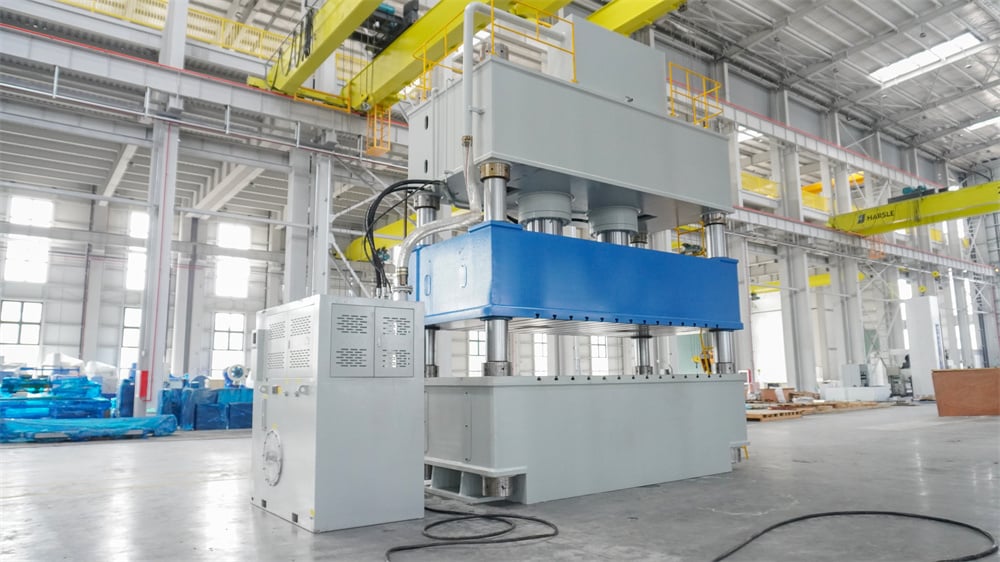
When focusing on increasing product quality a hydraulic press precision forming, several critical factors must be addressed. The first is the rigidity of the press frame. A press that experiences significant deflection under load will inevitably produce parts with dimensional inaccuracies. HARSLE utilizes high-grade steel and advanced welding techniques to ensure that our H-frame and four-column presses maintain absolute parallelism between the bolster and the slide, even at maximum tonnage.
Another vital consideration is the control of the hydraulic circuit. Traditional hydraulic systems often suffered from pressure spikes or inconsistent flow rates, which could lead to surface defects on the workpiece. Modern precision presses utilize servo-driven pumps and closed-loop feedback systems. These technologies allow the machine to monitor its own performance in real-time, making micro-adjustments to the pressure and flow to compensate for variations in material thickness or temperature. This consistency is the hallmark of high-quality precision forming.
Material behavior also plays a significant role. Different metals react uniquely to the speed of deformation. For instance, deep drawing applications require a slow, steady draw to prevent tearing, while stamping might benefit from a faster cycle. A high-quality hydraulic press allows for multi-stage programming, where the slide speed can change at different points in the stroke. This capability ensures that the material flows correctly into the die, resulting in a part with uniform wall thickness and excellent surface finish.
Finally, the interface between the operator and the machine cannot be overlooked. User-friendly CNC interfaces allow for the storage of thousands of unique part programs. This reduces the risk of human error during setup and ensures that the exact parameters used for a successful run six months ago can be replicated perfectly today. By standardizing these processes, manufacturers can achieve a level of repeatability that was previously impossible, directly contributing to increasing product quality a hydraulic press precision forming.
Technical Details of Precision Hydraulic Systems
To understand how increasing product quality a hydraulic press precision forming is achieved, one must look under the hood at the technical components. The heart of a precision press is the proportional valve system. Unlike standard on/off valves, proportional valves can vary the flow of hydraulic fluid in direct proportion to an electrical signal. This allows for incredibly smooth acceleration and deceleration of the ram, which is critical for avoiding shock loads that can damage both the machine and the tooling.
Frame Types and Their Impact on Quality
The architecture of the press significantly influences its precision capabilities. There are three primary types used in high-quality forming:
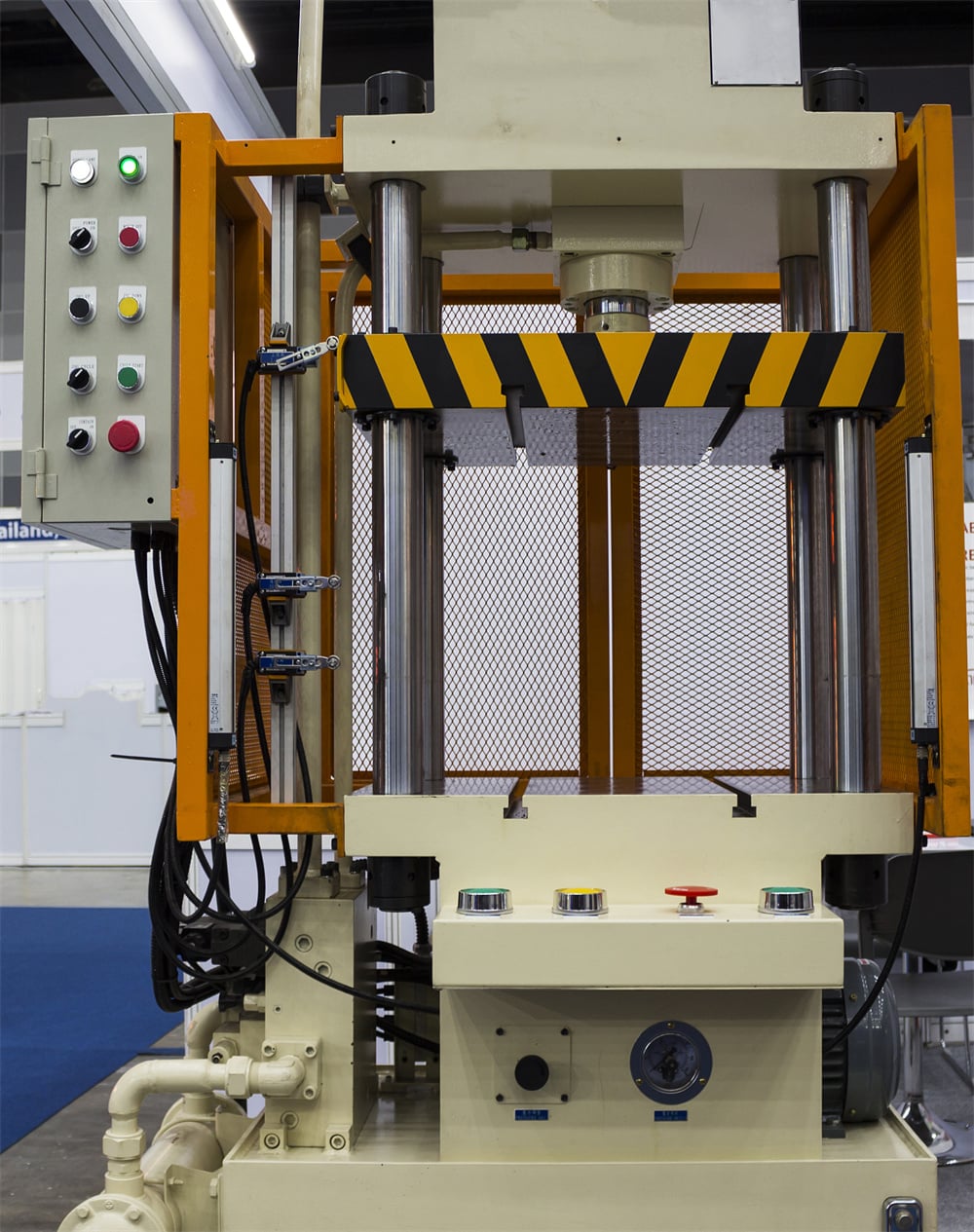
- Four-Column Presses: These offer the best accessibility for die changes and are excellent for ensuring even pressure distribution across large surface areas. They are ideal for molding and deep drawing.
- H-Frame (Side-Housing) Presses: Known for maximum rigidity, these presses minimize “yaw” or lateral movement, making them the preferred choice for heavy-duty stamping and high-tonnage precision work.
- C-Frame (Gap) Presses: While offering the best access from three sides, they are generally used for lower tonnage applications where slight frame deflection is manageable or compensated for by the tooling.
The Role of Linear Encoders and Sensors
Precision is measured in microns. To achieve this, modern presses utilize high-resolution linear encoders mounted on the frame. These sensors provide constant feedback to the PLC (Programmable Logic Controller) regarding the exact position of the ram. If the ram deviates by even a fraction of a millimeter from the programmed path, the system corrects it instantly. This level of “active leveling” is essential for complex forming operations where unbalanced loads might otherwise cause the ram to tilt.
Selection Advice: Choosing the Right Press for Your Needs
Selecting the appropriate machinery is the first step in increasing product quality a hydraulic press precision forming. The process begins with a thorough analysis of your part requirements. You must consider the maximum tonnage required, but more importantly, you must consider the “work energy.” A press might have the tonnage to hit a part, but does it have the hydraulic capacity to maintain that force over a long stroke? For deep drawing, this is a critical distinction.
Bed size and bolster dimensions should be chosen not just for your current dies, but with future growth in mind. A larger bed provides more versatility but requires a more robust frame to prevent deflection. Additionally, consider the “daylight” (the distance between the bolster and the slide in the open position). Insufficient daylight can make die installation difficult and limit the height of the parts you can produce.
Another factor is the speed of the press. While hydraulic presses are generally slower than mechanical presses, modern “fast-acting” hydraulic systems use regenerative circuits to speed up the approach and retraction phases of the cycle. This allows you to maintain the precision of a hydraulic press while approaching the production speeds of mechanical alternatives. When evaluating a machine, ask for the “fast-forward,” “pressing,” and “return” speeds to ensure they align with your production targets.
Finally, look at the support and serviceability of the machine. A precision press is a long-term investment. Choosing a manufacturer like HARSLE ensures that you have access to high-quality components (such as Rexroth valves or Siemens electronics) that are easily sourced and serviced. A machine that is easy to maintain will stay in peak operating condition longer, ensuring that your efforts in increasing product quality a hydraulic press precision forming remain consistent over the years.
Buyer’s Checklist for Precision Hydraulic Presses
| Feature | Importance for Quality | What to Look For |
|---|---|---|
| Parallelism Control | High – Prevents uneven part thickness | Active leveling or high-precision guiding systems |
| Pressure Repeatability | Critical – Ensures consistent part strength | Servo-proportional control valves |
| CNC Integration | Medium – Reduces setup errors | Touch-screen interface with recipe storage |
| Frame Rigidity | High – Reduces dimensional drift | Finite Element Analysis (FEA) optimized frames |
| Cooling System | Medium – Maintains oil viscosity | Industrial oil coolers for 24/7 operation |
Frequently Asked Questions (FAQ)
How does a hydraulic press improve part consistency compared to manual methods?
A hydraulic press removes the variability of human force application. By using programmable logic and consistent hydraulic pressure, the machine applies the exact same force and stroke depth every time. This automation is the primary method for increasing product quality a hydraulic press precision forming, as it eliminates the “feel” factor and replaces it with measurable, repeatable data.
Can I use a hydraulic press for both thin and thick materials?
Yes, one of the greatest advantages of hydraulic presses is their versatility. Because the pressure is adjustable, you can use a 500-ton press to perform a task that only requires 50 tons without damaging the tooling or the material. This makes them ideal for shops that handle a wide variety of contracts and material gauges.
What maintenance is required to keep a press performing at high precision?
Regular maintenance is vital. This includes monitoring oil cleanliness (using high-quality filters), checking for leaks in the hydraulic lines, and ensuring the guiding system is properly lubricated. Over time, worn bushings or contaminated oil can lead to “stiction” or jerky movements, which will negatively impact the precision of your forming operations.
Is CNC control necessary for precision forming?
While not strictly necessary for simple tasks, CNC control is highly recommended for increasing product quality a hydraulic press precision forming in complex parts. CNC allows for precise control over the ram’s position and speed at every millisecond of the cycle, which is essential for modern manufacturing standards and complex die sets.
Conclusion: The Future of Precision Forming
In conclusion, increasing product quality a hydraulic press precision forming is a multi-faceted endeavor that requires the right equipment, technical knowledge, and a commitment to precision. By investing in high-quality hydraulic presses from reputable manufacturers like HARSLE, fabricators can achieve levels of accuracy and efficiency that drive business growth. The ability to control every aspect of the forming process—from the initial approach speed to the final dwell pressure—allows for the creation of superior products that meet the rigorous demands of today’s global market.
As we move toward Industry 4.0, the integration of IoT and data analytics into hydraulic presses will further enhance these capabilities. Predictive maintenance will alert operators to potential issues before they affect part quality, and real-time data logging will provide a complete birth certificate for every part produced. For any metal fabrication business, the hydraulic press is no longer just a piece of heavy machinery; it is a precision instrument that serves as the foundation for quality, reliability, and innovation.