Press Brake Setup and Calibration Guide for Accurate Sheet Metal Bending


Technical Overview of Press Brake Precision
In the world of modern metal fabrication, achieving high-precision results is not merely a matter of having the right machine; it is a matter of mastering the Press Brake Setup Calibration Accurate Sheet Metal Bending process. A press brake is a sophisticated piece of industrial equipment designed to bend sheet metal by clamping it between a matching punch and die. While the concept seems simple, the physics involved—ranging from material elasticity to hydraulic pressure distribution—requires a meticulous technical approach to ensure every bend meets tight tolerances.
HARSLE press brakes, known for their robust engineering, utilize advanced CNC (Computer Numerical Control) systems to manage the complex variables of the bending process. Calibration is the heartbeat of this operation. Without proper calibration, even the most expensive machine will produce inconsistent parts, leading to material waste and increased production costs. Calibration involves aligning the mechanical components, such as the ram (Y-axis) and the backgauge (X, R, and Z axes), with the software’s digital commands to ensure that a programmed 90-degree bend actually results in a 90-degree angle on the workpiece.
The technical evolution of press brakes has moved from mechanical flywheels to hydraulic systems, and now toward high-speed servo-electric models. Regardless of the power source, the fundamental requirement for Press Brake Setup Calibration Accurate Sheet Metal Bending remains the same: the synchronization of force and position. This guide delves into the granular details of how to set up your HARSLE machine for peak performance, ensuring that your fabrication shop maintains a competitive edge through superior accuracy.
Understanding the relationship between the machine’s structural integrity and the material’s behavior is crucial. When the ram descends, the frame of the press brake naturally experiences a degree of deflection. High-quality machines like those from HARSLE incorporate crowning systems—either hydraulic or mechanical—to compensate for this deflection. Proper setup ensures that the crowning system is calibrated to provide a uniform bend along the entire length of the workpiece, preventing the common “canoe effect” where the center of the bend is less acute than the ends.
Core Parameters for Press Brake Setup
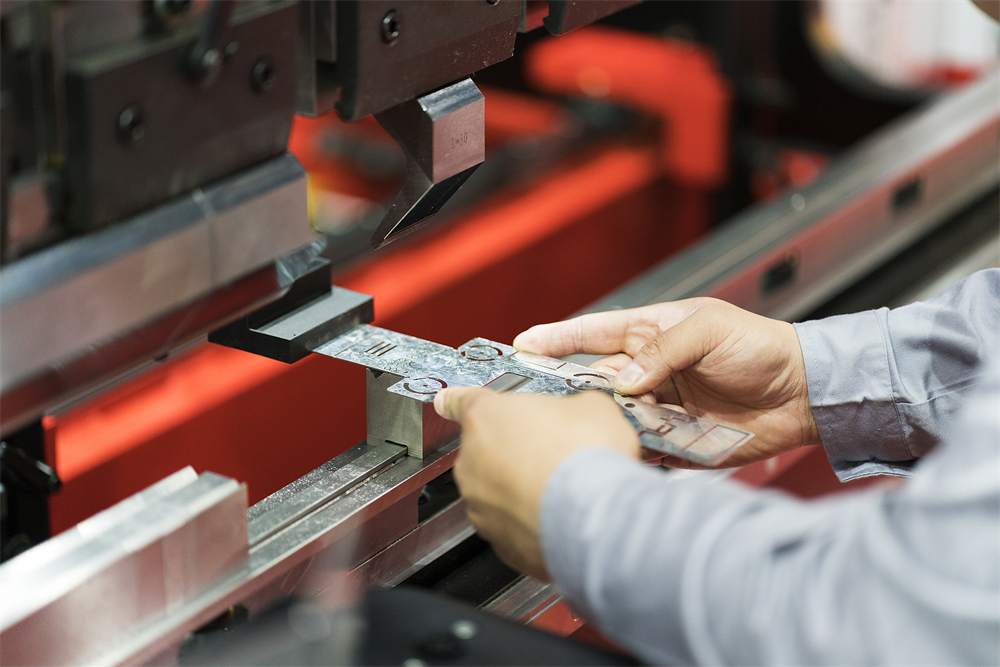
To achieve Press Brake Setup Calibration Accurate Sheet Metal Bending, operators must understand and configure several core parameters. The first and most critical is Tonnage. Tonnage is the amount of pressure the press brake applies to perform a bend. Calculating the required tonnage depends on the material type, thickness, bend length, and the V-opening of the die. Overloading the machine can damage the tooling and the frame, while underloading will result in incomplete bends.
The second parameter is the Stroke Length and Speed. The stroke refers to the distance the ram travels from its top position to the bottom of the bend. In a CNC environment, this is controlled with micron-level precision. The speed of the stroke is divided into the approach speed, the pressing speed, and the return speed. Calibrating these speeds is vital for both safety and efficiency; a pressing speed that is too high can cause material “whip-up,” which poses a risk to the operator and can deform the part.
Backgauge Positioning is the third pillar of setup. The backgauge ensures the metal sheet is positioned correctly before the punch makes contact. Modern HARSLE machines feature multi-axis backgauges (X1, X2, R1, R2, Z1, Z2). Calibration of the backgauge involves verifying that the physical stop matches the digital readout. If the backgauge is off by even 0.1mm, the flange length of the finished part will be out of specification, leading to assembly issues downstream.
Finally, Tooling Selection and Condition must be considered. The punch radius and the die’s V-opening width directly influence the inside bend radius of the part. Using worn or mismatched tooling is a primary cause of calibration failure. Operators must ensure that the tools are seated correctly in the holders and that the CNC controller has the exact dimensions of the tools programmed into its library. This synergy between hardware and software is what defines a successful Press Brake Setup Calibration Accurate Sheet Metal Bending routine.
Calculation Method for Bending Accuracy
Accuracy in sheet metal bending is governed by mathematical formulas that account for the physical properties of the metal. The most important calculation for any operator is the Bending Force formula. For mild steel, the standard formula is: P = (650 x S² x L) / V, where P is the force in kilonewtons, S is the material thickness in mm, L is the length of the bend in meters, and V is the V-opening width in mm. Understanding this formula allows the operator to set the machine’s pressure limits correctly.
Another critical calculation is the Bend Allowance (BA) and Bend Deduction (BD). When metal is bent, the outer surface stretches and the inner surface compresses. The “Neutral Axis” is the layer within the metal that remains unchanged in length. To calculate the flat length of a part before bending, engineers use the K-factor, which is the ratio of the neutral axis position to the material thickness. A standard K-factor for mild steel is often 0.44 to 0.48, but this must be calibrated based on actual test bends.
To perform a calibration test, an operator should bend a sample piece of material at a programmed 90 degrees. If the actual result is 92 degrees, the operator must adjust the “depth” or “Y-axis offset” in the CNC controller. This adjustment accounts for “Springback”—the tendency of the metal to return to its original shape after the pressure is released. Different materials have different springback rates; for instance, stainless steel has significantly more springback than aluminum or mild steel.
The final step in the calculation method is verifying the “Crowning” value. For long workpieces, the center of the bed may deflect more than the sides. By calculating the expected deflection based on the tonnage applied, the CNC system can automatically adjust the crowning table to push up the center of the die, ensuring a perfectly straight bend. This level of mathematical precision is what separates professional Press Brake Setup Calibration Accurate Sheet Metal Bending from amateur guesswork.
Parameter Table for Standard Bending
The following table provides a reference for bending mild steel (Tensile Strength approx. 450 MPa). These values are intended as a starting point for Press Brake Setup Calibration Accurate Sheet Metal Bending. Always consult your HARSLE manual for machine-specific limits.
| Material Thickness (mm) | Recommended V-Opening (mm) | Inside Radius (mm) | Min. Flange Length (mm) | Required Force (Tons/Meter) |
|---|---|---|---|---|
| 1.0 | 8 | 1.3 | 5.5 | 8 |
| 1.5 | 12 | 2.0 | 8.5 | 11 |
| 2.0 | 16 | 2.6 | 11.5 | 17 |
| 3.0 | 24 | 4.0 | 16.5 | 25 |
| 4.0 | 32 | 5.3 | 22.0 | 34 |
| 6.0 | 50 | 8.0 | 35.0 | 52 |
Note: The V-opening is typically chosen as 6 to 8 times the material thickness for materials up to 6mm. For thicker plates, the ratio may increase to 10 or 12 times the thickness to reduce the required tonnage and prevent cracking.
Common Engineering Mistakes in Setup
Even experienced operators can fall into traps that compromise Press Brake Setup Calibration Accurate Sheet Metal Bending. One of the most common mistakes is neglecting the “Grain Direction” of the sheet metal. Metal is rolled at the mill, creating a grain structure. Bending parallel to the grain can lead to cracking and inconsistent springback, whereas bending perpendicular to the grain provides the strongest and most predictable results. Failing to account for this in the setup phase leads to high scrap rates.
Another frequent error is the use of dirty or damaged tooling. Small bits of scale or debris trapped between the die and the bed can throw off the angle by several fractions of a degree. Over time, this debris can even cause permanent indentations in the machine’s mounting surfaces. Regular cleaning and stone-polishing of the tools are essential parts of the calibration routine. Furthermore, using a punch with a radius that is too small for the material thickness can cause “creasing” rather than bending, which weakens the structural integrity of the part.
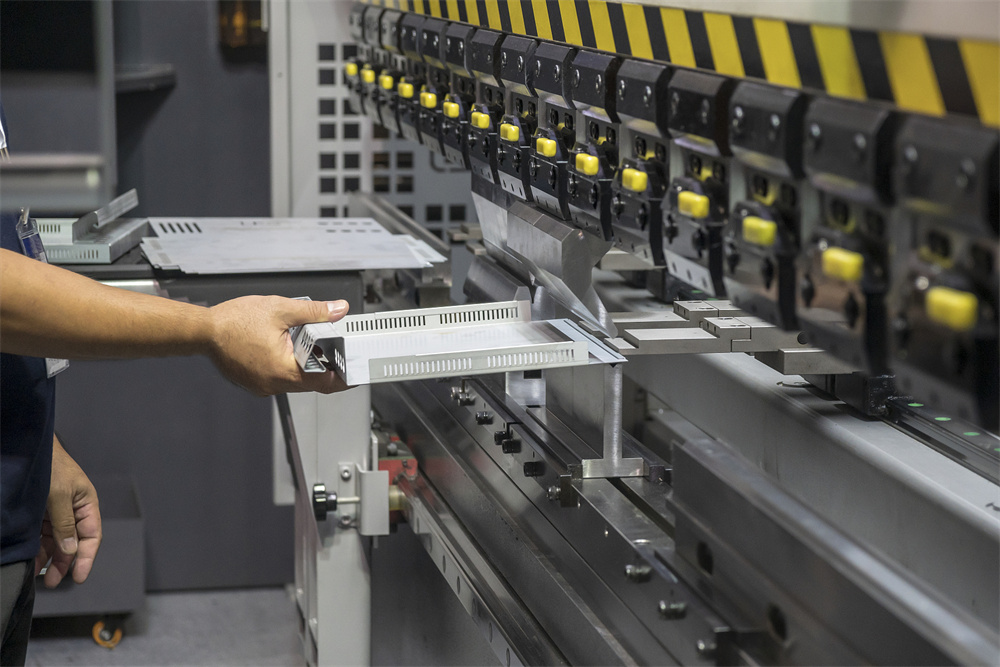
Inconsistent material thickness is an external factor that often gets blamed on the machine. Sheet metal is produced with a thickness tolerance; for example, a “3mm” sheet might actually be 2.9mm or 3.1mm. If the CNC system is not equipped with a thickness detection sensor, the operator must manually measure the material and adjust the calibration. A difference of 0.1mm in thickness can result in a significant angular error in air bending, as the punch will not descend to the correct depth relative to the material’s actual volume.
Finally, improper crowning adjustment is a major pitfall. Many operators set the crowning once and forget it. However, crowning needs to be adjusted based on the length of the part and the tonnage applied. If the crowning is too high, the center of the part will be over-bent; if it is too low, the center will be under-bent. Modern HARSLE CNC controllers automate this, but the operator must still verify that the mechanical components of the crowning system are functioning smoothly and are not seized due to lack of lubrication.
Selection Checklist for Press Brake Equipment
Choosing the right machine is the first step toward achieving Press Brake Setup Calibration Accurate Sheet Metal Bending. When evaluating HARSLE or other industrial press brakes, use the following checklist to ensure the equipment meets your precision requirements:
- Frame Rigidity: Does the machine have a heavy-duty, heat-treated frame to minimize deflection under load?
- CNC Control System: Is the controller capable of handling multi-axis movements and complex bending sequences? (e.g., Delem, Cybelec, or ESA systems).
- Crowning System: Does the machine feature an automatic hydraulic or mechanical crowning system to ensure bend consistency?
- Backgauge Speed and Precision: What are the tolerance levels for the backgauge axes? High-speed servo motors are preferred for productivity.
- Tooling Compatibility: Does the machine use standard European or American style tooling, or is it restricted to proprietary designs?
- Safety Features: Are laser guards (like DSP or Lazersafe) included to protect the operator without slowing down production?
- Hydraulic System Quality: Are the valves and pumps from reputable brands (like Bosch-Rexroth or Hoerbiger) to ensure long-term reliability?
- After-Sales Support: Does the manufacturer provide calibration services and spare parts availability?
By following this checklist, fabrication shops can ensure they invest in a machine that is not only capable of high-force operations but is also designed for the fine-tuned calibration necessary for high-tolerance aerospace, medical, or automotive components. HARSLE machines are specifically engineered to check all these boxes, providing a reliable platform for any Press Brake Setup Calibration Accurate Sheet Metal Bending task.
Frequently Asked Questions (FAQ)
1. How often should I calibrate my press brake?
For high-precision shops, a daily check of the Y-axis and X-axis zero points is recommended. A full system calibration, including checking the level of the bed and the alignment of the ram, should be performed every six months or whenever the machine is moved or undergoes major maintenance.
2. Why is my bend angle inconsistent across the length of the part?
This is usually due to improper crowning. If the center is open, you need more crowning; if the center is over-bent, you need less. It can also be caused by uneven wear on the punch or die, or the machine not being properly leveled on the shop floor.
3. What is the difference between Air Bending and Bottoming?
In air bending, the workpiece only touches the two edges of the die and the tip of the punch. The angle is determined by the depth of the punch. In bottoming, the punch presses the material fully into the die. Air bending requires less force and is more versatile but requires more precise Press Brake Setup Calibration Accurate Sheet Metal Bending to manage springback.
4. How does material temperature affect bending accuracy?
Extreme temperature changes can affect the viscosity of the hydraulic oil, which may lead to slight variations in ram positioning in older machines. Modern HARSLE machines use oil heaters/coolers and sophisticated electronics to compensate for these environmental factors.
5. Can I bend different materials using the same calibration settings?
No. Every material (Aluminum, Stainless, Mild Steel) has a different Yield Strength and Springback coefficient. You must create separate programs and calibration offsets for each material type and thickness to maintain accuracy.
6. What is the role of the R-axis in the backgauge?
The R-axis controls the vertical height of the backgauge fingers. This is crucial when bending parts with pre-existing flanges that would otherwise hit the backgauge bar. Proper R-axis calibration ensures the part stays flat during the gauging process.
7. How do I minimize tool marks on sensitive materials like polished stainless steel?
To prevent marking, you can use urethane die inserts, specialized “no-mar” tape, or increase the V-opening to reduce the contact pressure. Ensuring the die radius is smooth and polished is also a key part of the setup for aesthetic parts.