How Shearing Machine Capacity Affects Cutting Performance and Production Efficiency


Technical Overview: Understanding Shearing Machine Capacity
In the realm of metal fabrication, the term ‘capacity’ is often used as a shorthand for a machine’s maximum capabilities. However, understanding how shearing machine capacity affects cutting performance and production efficiency requires a deeper dive into the mechanical and hydraulic principles at play. At its core, capacity is the intersection of structural rigidity, hydraulic force, and blade geometry. When a machine is rated for a specific thickness—for example, 10mm mild steel—it implies that the frame, the cylinders, and the blades are engineered to withstand the resultant forces of that specific shear without excessive deflection or component failure.
The physics of shearing involves two primary stages: plastic deformation and fracture. As the upper blade descends, it first pushes the material into a state of plastic flow. Once the internal stress exceeds the material’s ultimate tensile strength, a fracture occurs, completing the cut. The capacity of the machine determines how effectively it can navigate these stages. If a machine is underpowered for the material thickness, the plastic deformation stage is prolonged, leading to increased heat, blade wear, and a poor-quality ‘crushed’ edge rather than a clean shear.
Furthermore, capacity is not a static value. It is heavily influenced by the material’s shear strength. A machine rated for 12mm mild steel (with a shear strength of approximately 450 N/mm²) will struggle or fail when tasked with 12mm stainless steel (which can exceed 700 N/mm²). Therefore, understanding capacity requires a nuanced view of material properties. HARSLE engineering focuses on providing a robust safety margin, ensuring that when we specify a capacity, the machine can handle it consistently without compromising the structural integrity of the hydraulic system or the swing beam assembly.
Production efficiency is directly tied to this technical threshold. A machine operating at 90-100% of its rated capacity will naturally experience more vibration and slower cycle times compared to a machine operating at 60-70% capacity. This ‘headroom’ is essential for maintaining high-speed operations in industrial environments where the shearing machine is a primary bottleneck in the production line. By selecting a machine with the appropriate capacity, manufacturers ensure that the cutting performance remains crisp and the production flow remains uninterrupted by mechanical strain or frequent maintenance intervals.
Core Parameters Influencing Shearing Performance
1. Maximum Cutting Thickness and Material Type
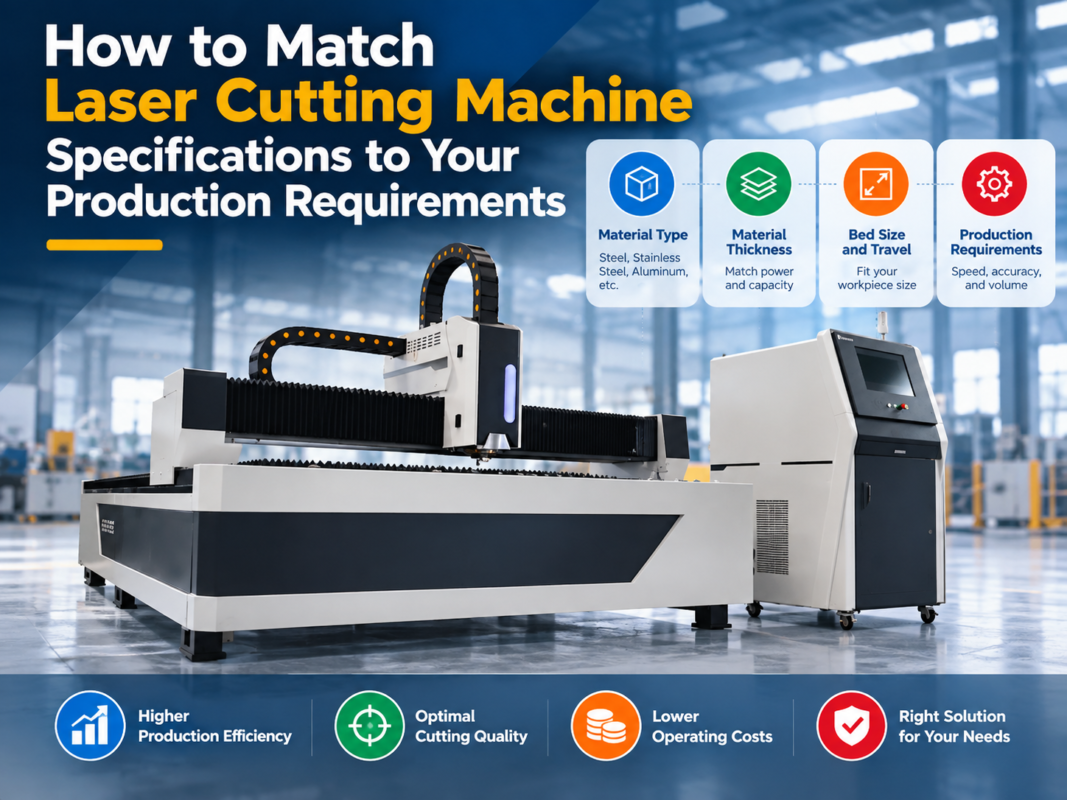
The most prominent parameter is the maximum cutting thickness. This is typically calculated based on mild steel with a tensile strength of 450MPa. It is critical for operators to understand that as material hardness increases, the effective capacity of the machine decreases. For instance, cutting stainless steel usually requires a 50% reduction in the rated thickness capacity. If the machine capacity is mismatched with the material, the cutting performance suffers, resulting in burrs, edge deformation, and potential damage to the blade seats.
2. Cutting Length and Throat Depth
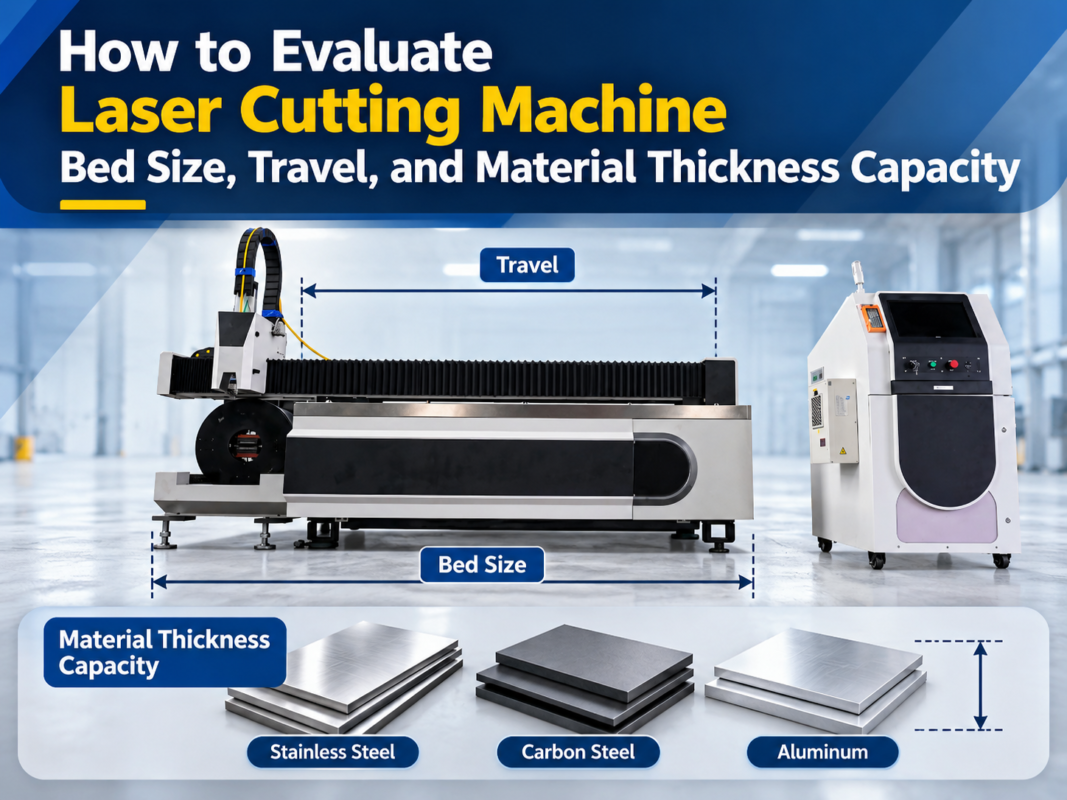
Cutting length defines the maximum width of the sheet that can be processed in a single stroke. However, the throat depth (the gap in the side frames) is equally important for production efficiency. A deep throat allows for ‘slitting’—cutting sheets longer than the blade length by feeding the material through the side frames. Without sufficient capacity in terms of length and throat depth, operators are forced to perform multiple setups, which drastically reduces throughput and increases the margin for human error.
3. Rake Angle (Cutting Angle)
The rake angle is the angle of the upper blade relative to the lower blade. A higher rake angle reduces the required shearing force, effectively increasing the machine’s thickness capacity. However, a high rake angle also increases the ‘twist’ or ‘bow’ in the cut piece, especially on narrow strips. Modern CNC shearing machines from HARSLE often feature adjustable rake angles, allowing the operator to balance the need for force (capacity) against the need for part flatness (performance).
4. Strokes Per Minute (SPM)
Efficiency is measured in parts per hour. The SPM is determined by the hydraulic flow rate and the return stroke speed (often accelerated by nitrogen accumulators). A machine with a higher capacity often has larger cylinders, which might result in slower SPM unless the hydraulic system is specifically designed for high-speed cycling. Balancing tonnage with speed is the hallmark of a high-performance shearing machine.
Calculation Method for Shearing Force
To accurately determine how shearing machine capacity affects cutting performance, engineers use specific formulas to calculate the required force. The standard formula for shearing force (F) is:
F = 0.5 × L × t² × τ / tan(α)
Where:
L = Length of the cut (mm)
t = Thickness of the material (mm)
τ = Shear strength of the material (N/mm²)
α = Rake angle of the blade
From this formula, it is evident that thickness (t) has a squared relationship with force. Doubling the thickness of the material doesn’t just double the force required; it quadruples it. This is why exceeding the rated capacity by even a small margin can lead to catastrophic hydraulic failure or frame cracking. Furthermore, the rake angle (α) is in the denominator; as the angle decreases (to improve part flatness), the required force increases significantly. This calculation highlights why a machine’s ‘rated capacity’ is always a compromise between force, angle, and material type.
In practical application, HARSLE recommends using the ‘80% Rule’ for optimal production efficiency. By operating at 80% of the calculated maximum force, the machine experiences significantly less thermal stress in the hydraulic oil, and the blades maintain their sharpness for up to 40% longer. This buffer ensures that variations in material hardness (which are common in recycled or lower-grade steels) do not push the machine into an overload state, thereby maintaining consistent cutting performance across different batches of raw material.
Shearing Machine Capacity Parameter Table
The following table illustrates the relationship between capacity, power, and speed for standard HARSLE QC11Y (Guillotine) and QC12Y (Swing Beam) series machines. These values demonstrate how increasing capacity necessitates changes in motor power and affects the overall cycle speed.
| Model Type | Max Thickness (Mild Steel) | Max Cutting Length | Rake Angle (Adjustable) | Strokes Per Minute | Motor Power (kW) |
|---|---|---|---|---|---|
| QC12Y-4×2500 | 4 mm | 2500 mm | 1° 30′ (Fixed) | 12 – 15 | 5.5 kW |
| QC12Y-8×3200 | 8 mm | 3200 mm | 1° 30′ (Fixed) | 10 – 12 | 11 kW |
| QC11Y-12×4000 | 12 mm | 4000 mm | 0.5° – 2.5° | 8 – 10 | 18.5 kW |
| QC11Y-16×6000 | 16 mm | 6000 mm | 0.5° – 3.0° | 5 – 8 | 30 kW |
| QC11Y-25×3200 | 25 mm | 3200 mm | 1.0° – 3.5° | 4 – 6 | 37 kW |
As seen in the table, as the thickness capacity increases from 4mm to 25mm, the motor power must scale from 5.5kW to 37kW to provide the necessary hydraulic pressure. Simultaneously, the strokes per minute decrease because moving larger volumes of oil and shearing thicker plates requires more time per cycle. This trade-off is a critical consideration for production planning.
Common Engineering Mistakes in Capacity Management
One of the most frequent mistakes in metal fabrication is the ‘Capacity Overestimation’ error. Operators often assume that if a machine can cut 10mm mild steel, it can easily handle 8mm stainless steel. However, due to the high work-hardening rate of stainless steel, the shear resistance is much higher, often leading to ‘blade stalling’ or chipped edges. This not only ruins the workpiece but also degrades the cutting performance for subsequent jobs.
Another common mistake is neglecting the ‘Blade Gap’ adjustment relative to the material thickness. Capacity and blade gap are inextricably linked. If the gap is too wide for a thin sheet (using a high-capacity setting for a low-capacity job), the material will ‘fold’ between the blades rather than shear. Conversely, if the gap is too tight for a thick plate, the excessive friction generates immense heat, potentially welding the material to the blade edge and causing the hydraulic system to bypass due to overpressure. Proper capacity management requires the operator to synchronize the blade gap with the material thickness for every single job.
Ignoring the ‘Duty Cycle’ is a third major error. A shearing machine might be capable of cutting its maximum rated thickness, but it may not be designed to do so 24 hours a day. Continuous operation at maximum capacity leads to hydraulic oil overheating. As oil temperature rises, its viscosity drops, leading to internal leakage in valves and cylinders. This results in a loss of ‘hold-down’ pressure, causing the sheet to slip during the cut, which destroys accuracy and reduces production efficiency through increased scrap rates.
Selection Checklist: Choosing the Right Capacity for Your Needs
When investing in a new shearing machine, use this checklist to ensure the capacity aligns with your production goals:
- Material Assessment: Identify the thickest and hardest material you will cut. Always calculate capacity based on your hardest material (e.g., Stainless 304/316) rather than just mild steel.
- Future-Proofing: Purchase a machine with 20-25% more capacity than your current maximum requirement. This extends the machine’s lifespan and allows for future project expansion.
- Volume Requirements: If you require high-volume output of thin gauges, prioritize a machine with high SPM and a smaller capacity, rather than a slow, heavy-duty machine.
- Accuracy Needs: For high-precision parts, look for a Guillotine shear (QC11Y) with an adjustable rake angle. This allows you to minimize distortion on different thicknesses.
- Automation Integration: Ensure the machine’s CNC system can handle the backgauge speeds required to keep up with the shearing capacity. A fast shear is useless if the backgauge is slow to position.
- Blade Quality: Ensure the blades provided are suitable for the intended capacity. High-chrome blades are necessary for heavy-duty shearing to prevent frequent regrinding.
Frequently Asked Questions (FAQ)
Q1: How does a larger capacity affect the maintenance schedule?
A: Machines consistently used at high capacity require more frequent lubrication of the guideways and more regular hydraulic oil filtration. The stress on the main pivot points (in swing beam models) or the gibs (in guillotine models) is significantly higher, necessitating monthly inspections for play or wear.
Q2: Can I increase my machine’s capacity by changing the blades?
A: No. Capacity is determined by the hydraulic pressure and the structural strength of the frame. While higher-quality blades (like Cr12MoV) will stay sharp longer and provide better cutting performance, they do not allow the machine to safely cut material thicker than its factory rating.
Q3: Why does my machine struggle to cut thin sheets even though it has a high capacity?
A: This is usually due to an incorrect blade gap. High-capacity machines are often set with a wider default gap. When cutting thin material, the gap must be reduced (often to 0.05mm – 0.1mm) to ensure a clean shear. Without this adjustment, the material will simply bend.
Q4: Does the rake angle affect the life of the machine?
A: Yes. Using a higher rake angle reduces the load on the hydraulic system and the frame, which can extend the life of these components. However, it increases the ‘twist’ in the material. Finding the right balance is key to maintaining both machine health and part quality.
Q5: How does hydraulic oil temperature affect cutting efficiency?
A: As the machine works near its capacity, the oil heats up. If it exceeds 60°C, the efficiency of the hydraulic pump drops, and the response time of the valves slows down. This leads to inconsistent cutting speeds and can eventually trigger a thermal shutdown, halting production.