Hydraulic Press Brake vs CNC Press Brake: Technical Comparison for Modern Workshops


Technical Overview: Understanding the Core Mechanics
In the realm of modern metal fabrication, the choice between a conventional hydraulic press brake and a high-precision CNC press brake is one of the most critical decisions a workshop manager can make. While both machines serve the fundamental purpose of bending sheet metal, their internal architectures, control systems, and operational efficiencies differ significantly. A standard hydraulic press brake, often referred to as a torsion bar press brake, relies on a mechanical shaft to link both ends of the ram. This ensures that the ram moves downward in a relatively synchronized manner. However, this mechanical linkage has inherent limitations in terms of precision and the ability to handle off-center loading.
Conversely, a CNC (Computer Numerical Control) press brake—specifically the electro-hydraulic synchronous type—utilizes advanced proportional valves and linear encoders to monitor and adjust the position of the ram in real-time. In a CNC system, the Y1 and Y2 cylinders are controlled independently. This allows the machine to compensate for any tilt or deflection instantly, ensuring that the bend angle remains consistent across the entire length of the workpiece. For modern workshops aiming for high-volume production or complex geometries, the CNC press brake offers a level of automation that traditional hydraulic machines simply cannot match.
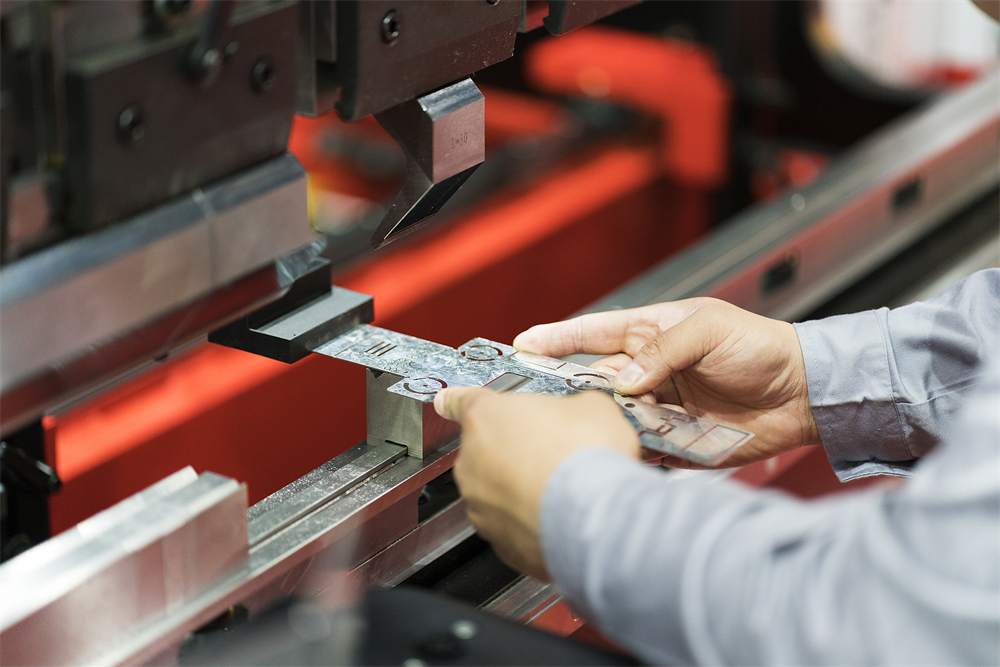
The evolution from manual hydraulic systems to fully integrated CNC solutions has been driven by the demand for tighter tolerances and reduced setup times. In a traditional hydraulic setup, the operator must manually adjust the backgauge and the stroke depth for every different bend angle or material thickness. This process is time-consuming and prone to human error. In contrast, a CNC press brake stores hundreds of programs, allowing the operator to switch between complex multi-bend sequences with the touch of a button. This technical leap not only increases throughput but also significantly reduces material waste caused by trial-and-error adjustments.
Furthermore, the integration of hydraulic systems with electronic controls has led to the development of ‘Hybrid’ systems. These systems use servo motors to drive hydraulic pumps, providing the power of hydraulics with the precision and energy efficiency of electric drives. When comparing Hydraulic Press Brake Vs CNC Press Brake: Technical Comparison Modern Workshops, it is essential to recognize that the ‘Hydraulic’ label often refers to the power source, while ‘CNC’ refers to the control and synchronization method. Modern workshops must weigh the lower initial investment of a torsion bar machine against the long-term productivity gains of a CNC-controlled electro-hydraulic system.
Core Parameters: Tonnage, Stroke, and Axis Control
When evaluating press brakes, the core parameters define the machine’s capability and its suitability for specific tasks. The most fundamental parameter is Tonnage. Tonnage represents the maximum pressure the machine can exert. It is calculated based on the material type, thickness, and the length of the bend. A common mistake in workshops is underestimating the required tonnage for high-tensile materials like stainless steel, which requires significantly more force than mild steel. CNC press brakes often feature ‘Tonnage Calculation’ software that automatically suggests the required pressure based on the input material data, preventing machine overload.
Stroke Length and Daylight (Open Height) are equally vital. The stroke length determines how far the ram can move, while the daylight defines the maximum space between the upper beam and the lower table. For workshops producing deep boxes or complex four-sided shapes, a larger daylight and stroke are necessary to allow for the removal of the finished part. CNC machines often provide more flexibility in stroke adjustment, allowing for faster cycle times by limiting the ram’s return travel to the minimum necessary distance.
The concept of Axis Control is where the CNC press brake truly outshines its manual hydraulic counterpart. A basic hydraulic press brake might only have two axes: Y (ram depth) and X (backgauge front-to-back). A sophisticated CNC press brake can have up to 8 or more axes, including:
- X1, X2: Independent front-to-back movement for tapered bends.
- R: Vertical movement of the backgauge fingers.
- Z1, Z2: Lateral movement of the backgauge fingers across the width of the machine.
- C: Crowning compensation to counteract machine deflection.
Throat depth is another parameter that affects the versatility of the machine. It refers to the distance from the center of the tools to the back of the machine frame. A deeper throat allows for larger flanges to be bent without hitting the side frames. While both hydraulic and CNC machines come in various throat depths, CNC models are more frequently customized with deep throats to accommodate specialized industrial applications. In the context of Hydraulic Press Brake Vs CNC Press Brake: Technical Comparison Modern Workshops, the ability to control multiple axes simultaneously is the primary factor that enables the production of complex, high-precision components.
Calculation Method: The Physics of Bending
To achieve a perfect bend, engineers must understand the mathematical relationship between the machine, the tool, and the material. The most common formula used to calculate the required bending force (P) is:
P = (650 * S² * L) / V
Where:
- P: Bending force in Kilonewtons (kN).
- S: Material thickness in millimeters (mm).
- L: Length of the sheet in meters (m).
- V: Bottom die opening width in millimeters (mm).
This formula assumes a standard tensile strength for mild steel (approx. 450 MPa). If you are working with stainless steel, the result must be multiplied by a factor of approximately 1.5. Aluminum, being softer, requires about 0.5 times the force. CNC press brakes integrate these calculations into their controllers. The operator simply enters the material type and thickness, and the CNC system adjusts the hydraulic pressure accordingly. This automation is a key differentiator in the Hydraulic Press Brake Vs CNC Press Brake: Technical Comparison Modern Workshops, as it eliminates the need for manual look-up tables and reduces the risk of damaging the machine or the tooling.
Another critical calculation is the Bend Allowance and K-Factor. When metal is bent, the outer surface stretches and the inner surface compresses. The ‘Neutral Axis’ is the layer where no change in length occurs. The K-factor is the ratio of the position of the neutral axis to the material thickness. Accurate K-factor calculation is essential for flat pattern development in CAD software. CNC press brakes often allow for the input of these factors directly into the controller, which then automatically adjusts the backgauge position to ensure the final dimensions of the part are accurate after the bend is completed.
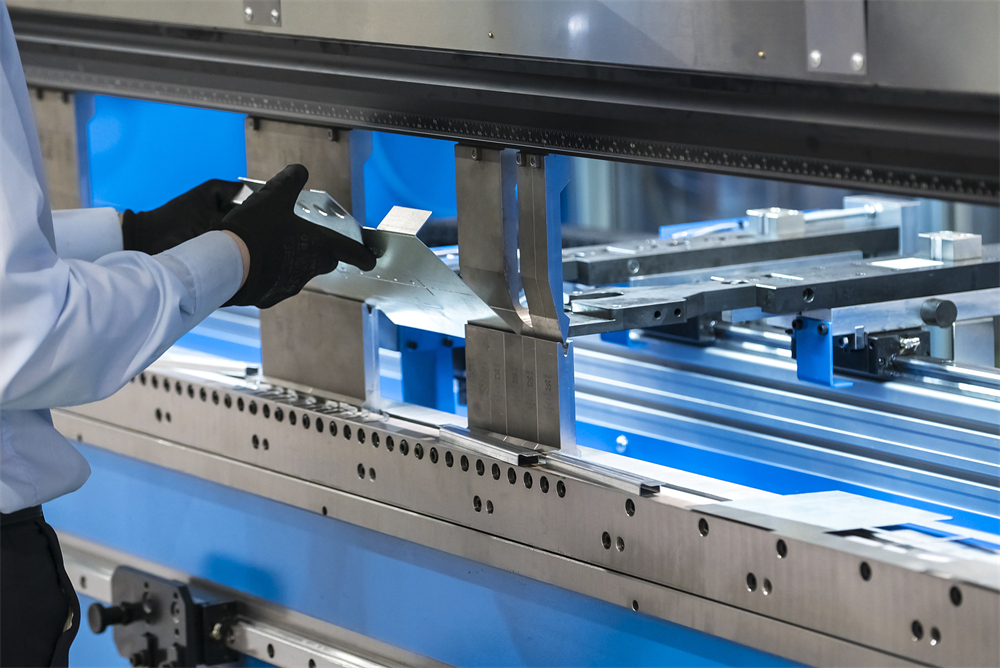
Finally, Springback must be accounted for. Every material has an elastic limit; when the pressure is released, the metal will slightly return toward its original shape. A CNC press brake can be equipped with angle sensors that measure the bend in real-time and apply ‘over-bending’ to compensate for springback. In a manual hydraulic press brake, the operator must manually adjust the stroke depth through multiple test bends to find the correct angle, which is significantly less efficient for small batch production.
Parameter Table: Hydraulic vs. CNC Comparison
The following table provides a direct technical comparison between a standard Torsion Bar Hydraulic Press Brake and a high-end Electro-Hydraulic CNC Press Brake.
| Feature | Hydraulic (Torsion Bar) | CNC (Electro-Hydraulic) |
|---|---|---|
| Synchronization | Mechanical Torsion Bar | Dual Proportional Valves & Encoders |
| Accuracy | ± 0.1mm to 0.5mm | ± 0.01mm to 0.05mm |
| Axis Control | Usually 2-axis (X, Y) | 3 to 8+ axes (Y1, Y2, X, R, Z1, Z2, etc.) |
| Crowning | Manual or none | Automatic CNC Hydraulic/Mechanical |
| Setup Time | High (Manual adjustments) | Low (Program loading) |
| Off-center Loading | Poor (Can damage torsion bar) | Excellent (Automatic compensation) |
| Energy Efficiency | Standard (Continuous pump) | High (Servo-hybrid options available) |
| Operator Skill | High skill required for precision | Lower skill for operation; high for programming |
Common Engineering Mistakes in Press Brake Operation
One of the most frequent mistakes in metal fabrication is incorrect die selection. The rule of thumb for the bottom die opening (V) is 8 times the material thickness (8T). Using a V-opening that is too small increases the required tonnage exponentially, which can lead to ‘coining’ the material and putting excessive stress on the machine frame. Conversely, a V-opening that is too large results in inaccurate bend radii and inconsistent angles. CNC controllers help mitigate this by suggesting the optimal die for the programmed bend, but the operator must still ensure the physical tool matches the software setting.
Another common error is ignoring machine deflection. When a press brake applies force, the bed and the ram naturally bow slightly in the center. This results in a ‘canoe effect’ where the bend angle is correct at the ends but obtuse in the middle. In a standard hydraulic press brake, operators often use ‘shimming’ (placing thin strips of paper or metal under the die) to compensate. This is a tedious and imprecise method. Modern CNC press brakes utilize automatic crowning systems—either hydraulic cylinders in the lower bed or a motorized wedge system—that apply a counter-curve to the bed to ensure a perfectly straight bend across the entire length.
Over-tonnage is a critical safety and maintenance issue. Exerting too much force on a small area of the bed (concentrated loading) can cause permanent deformation of the ram or the bed, known as ‘ram upset.’ This usually happens when bending short, thick pieces on a high-tonnage machine. Engineers must always check the machine’s linear tonnage limit (e.g., tons per meter). CNC machines often have built-in alarms that prevent the machine from executing a bend if the calculated tonnage exceeds the safe limit for the current tool setup.
Lastly, poor maintenance of the hydraulic system can lead to catastrophic failures. Contaminated oil can clog proportional valves in CNC machines, leading to synchronization errors. In torsion bar machines, lack of lubrication on the mechanical linkages can cause uneven wear and loss of precision. Regular oil filtration, checking for leaks, and ensuring the cooling system is functional are essential tasks that are often overlooked in busy workshops. Understanding the nuances of Hydraulic Press Brake Vs CNC Press Brake: Technical Comparison Modern Workshops includes recognizing that CNC machines, while more capable, require a more disciplined maintenance regime to protect their sensitive electronic and hydraulic components.
Selection Checklist: Choosing the Right Machine
Choosing between a hydraulic and a CNC press brake requires a thorough analysis of your current production needs and future growth. Use the following checklist to guide your decision-making process:
- Precision Requirements: Does your work involve tolerances tighter than ±0.5mm? If yes, a CNC press brake is mandatory.
- Production Volume: Are you running high-volume batches or frequent small runs? CNC machines excel at quick changeovers, saving hours of setup time daily.
- Part Complexity: Do your parts require multiple bends at different angles and depths? A multi-axis CNC backgauge can handle complex sequences in a single handling.
- Budget Constraints: A torsion bar hydraulic machine is significantly cheaper upfront. If you only perform simple 90-degree bends on thick plate where precision is secondary, it may be the more cost-effective choice.
- Operator Skill Level: Do you have experienced operators who can ‘feel’ the machine, or do you need a system that guides the operator through the process with a 3D interface?
- Material Variety: If you work with various materials (Aluminum, Stainless, Mild Steel), the automatic springback compensation of a CNC system will drastically reduce scrap.
- Floor Space and Power: Consider the footprint and the power requirements. Modern CNC hybrid machines can reduce electricity consumption by up to 60%.
Ultimately, the Hydraulic Press Brake Vs CNC Press Brake: Technical Comparison Modern Workshops highlights that while the torsion bar machine is a reliable workhorse for basic tasks, the CNC press brake is the engine of modern industrial efficiency. Investing in CNC technology is often an investment in the ability to take on more complex, higher-margin work that manual machines simply cannot produce consistently.
FAQ: Frequently Asked Questions
1. Can a manual hydraulic press brake be upgraded to CNC?
While some basic retrofitting is possible (such as adding a CNC backgauge), it is nearly impossible to convert a torsion bar machine into a true electro-hydraulic synchronous CNC machine. The fundamental hydraulic architecture and the way the ram is synchronized are different. It is usually more cost-effective to purchase a new CNC machine than to attempt a full conversion.
2. How long does a typical CNC press brake last?
With proper maintenance, a high-quality CNC press brake can last 15 to 20 years or more. The mechanical frame is built for longevity, but the electronic components (controllers, encoders, and valves) may require updates or replacement after 10-12 years to keep up with modern software standards.
3. Is a CNC press brake harder to maintain than a hydraulic one?
It is not necessarily ‘harder,’ but it is ‘different.’ A CNC machine requires clean hydraulic oil and a stable power supply to protect its electronics. While a torsion bar machine has more mechanical wear points, a CNC machine has more electronic sensors. Both require regular lubrication and inspection of the hydraulic seals.
4. What is the most important axis on a CNC press brake?
Aside from the Y1/Y2 axes for ram control, the X-axis (front-to-back) is the most critical for accuracy. However, for workshops doing complex work, the R-axis (height adjustment of the backgauge) is often considered the most important ‘extra’ axis because it allows for bending flanges of different heights without manual adjustment.
5. Does HARSLE provide training for CNC press brake operation?
Yes, HARSLE provides comprehensive technical support and training for all their machinery. Because the transition from manual to CNC can be a learning curve for some operators, professional training is highly recommended to maximize the ROI of the new equipment.