Best Practices for Bending Stainless Steel on a Press Brake: A Comprehensive Technical Guide


Technical Overview of Stainless Steel Bending
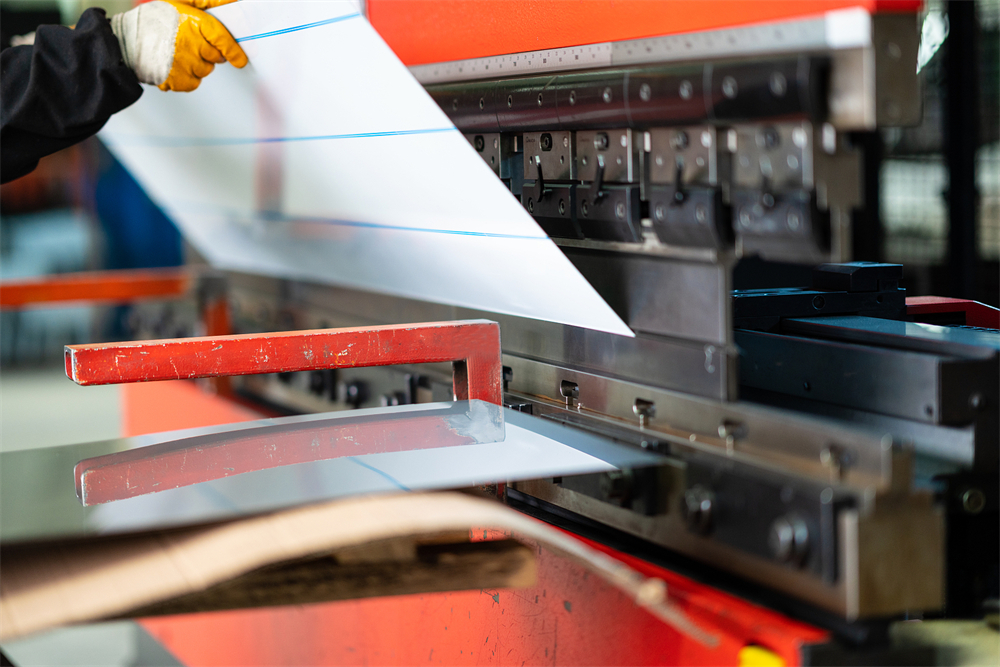
Stainless steel is a cornerstone of modern industrial manufacturing, prized for its corrosion resistance, aesthetic appeal, and high strength-to-weight ratio. However, when it comes to metal fabrication, specifically bending on a press brake, stainless steel presents a unique set of challenges compared to mild steel or aluminum. Understanding the Best Practices Bending Stainless Steel On A Press Brake requires a deep dive into the material’s physical properties, including its high yield strength and significant work-hardening characteristics.
Unlike carbon steel, stainless steel (particularly the 300-series austenitic grades like 304 and 316) possesses a high rate of work hardening. This means that as the metal is deformed during the bending process, it becomes significantly harder and stronger in the bend zone. This phenomenon necessitates higher bending forces and specialized tooling to achieve precision. Furthermore, stainless steel has a higher elastic modulus, leading to more pronounced springback—the tendency of the metal to return to its original shape after the bending force is removed.
From a technical standpoint, the success of a stainless steel bending operation depends on the synergy between the machine’s capabilities, the operator’s expertise, and the quality of the tooling. HARSLE CNC press brakes are engineered to handle these high-stress applications, providing the rigidity and precision control needed to manage the complexities of stainless steel. In this guide, we will explore the critical parameters and engineering strategies required to master this process.

Core Parameters for Successful Bending
To achieve a perfect bend in stainless steel, several core parameters must be meticulously managed. The first and most critical is the tonnage requirement. Because stainless steel is much stronger than mild steel, it typically requires 50% to 60% more pressure to bend the same thickness. If an operator attempts to use mild steel settings for stainless steel, the result will likely be an incomplete bend or potential damage to the press brake’s hydraulic system and frame.
The second parameter is the V-opening of the die. For mild steel, a common rule of thumb is a V-opening 8 times the material thickness (8t). For stainless steel, it is often recommended to increase this to 10t or even 12t for thicker plates. A wider V-opening reduces the required bending force and helps minimize the risk of cracking on the outer radius of the bend. However, a wider V-opening also results in a larger internal bend radius, which must be accounted for in the part design.
Thirdly, the internal bend radius is a vital consideration. Stainless steel is susceptible to “orange peeling” or cracking if the bend radius is too tight. As a best practice, the internal bend radius should be at least equal to the material thickness (1t) for 304 stainless and potentially larger for higher-strength alloys or 400-series ferritic grades. Using a punch with a radius that is too small can concentrate stress and lead to structural failure of the part.
Finally, surface protection is a parameter often overlooked in technical manuals but essential in practice. Stainless steel is frequently used for its finish. To prevent die marks and scratches, fabricators should use protective films on the sheet or specialized urethane die covers. This ensures that the aesthetic integrity of the material is maintained throughout the fabrication process.
Calculation Method for Bending Force and Springback
Accurate calculations are the backbone of the Best Practices Bending Stainless Steel On A Press Brake. The standard formula for calculating the bending force (P) in kilonewtons or tons is: P = (k * S * L * t²) / V. In this formula, ‘k’ is a constant (usually 1.42 for mild steel, but increased to 2.0 or higher for stainless), ‘S’ is the tensile strength of the material, ‘L’ is the length of the bend, ‘t’ is the thickness, and ‘V’ is the V-die opening.
When calculating for stainless steel, you must adjust the tensile strength value. For instance, while mild steel might have a tensile strength of 450 MPa, 304 stainless steel can range from 500 to 700 MPa. This difference is why the ‘k’ factor or the ‘S’ value must be scaled up. Failure to calculate this correctly can lead to “bottoming out” the machine prematurely or failing to reach the desired angle.
Springback calculation is equally complex. Stainless steel typically exhibits 3 to 5 degrees of springback, whereas mild steel might only show 1 to 2 degrees. The exact amount depends on the material grade, the ratio of the bend radius to thickness, and the bending method (air bending vs. bottoming). In air bending, which is the preferred method for stainless steel, the CNC controller must be programmed to over-bend the part. For example, to achieve a 90-degree angle, the machine might need to bend the material to 85 degrees to allow it to spring back to the target 90.
The Role of CNC Crowning
Because of the high forces involved in bending stainless steel, the press brake bed and ram will inevitably deflect slightly. This deflection can cause the bend angle to be inconsistent across the length of the part (the “canoe effect”). Modern HARSLE CNC press brakes utilize automatic hydraulic or mechanical crowning systems. These systems compensate for deflection in real-time, ensuring that the pressure is distributed evenly across the entire workpiece, which is essential for maintaining the tight tolerances required in stainless steel fabrication.
Parameter Table for Stainless Steel Bending
The following table provides a general reference for bending 304-grade stainless steel. Note that these values are estimates and may vary based on specific material batches and machine conditions.
| Material Thickness (mm) | Recommended V-Opening (mm) | Min. Internal Radius (mm) | Approx. Tonnage per Meter (T/m) | Springback Estimate (Degrees) |
|---|---|---|---|---|
| 1.0 | 8 – 10 | 1.0 | 12 – 15 | 3° – 4° |
| 1.5 | 12 – 14 | 1.5 | 18 – 22 | 3° – 4° |
| 2.0 | 16 – 18 | 2.0 | 25 – 30 | 4° – 5° |
| 3.0 | 24 – 30 | 3.0 | 40 – 50 | 4° – 5° |
| 4.0 | 32 – 40 | 4.0 | 60 – 75 | 5° – 6° |
| 6.0 | 50 – 60 | 6.0 | 100 – 120 | 5° – 6° |
Common Engineering Mistakes to Avoid
One of the most frequent mistakes in stainless steel bending is ignoring the grain direction of the metal. Like wood, rolled metal has a grain. Bending parallel to the grain increases the likelihood of cracking on the outer radius. Whenever possible, bends should be made transverse (perpendicular) to the rolling direction to maximize ductility and strength.
Another common error is using contaminated tooling. If a press brake has been used to bend carbon steel, small particles of carbon can become embedded in the surface of the stainless steel during the bending process. This leads to “carbon contamination,” which causes the stainless steel to rust at the bend points, defeating the purpose of using the material. Always clean dies thoroughly or use dedicated tooling for stainless steel projects.
Over-tonnage is a significant risk when working with thick stainless plates. Operators may feel that the machine is struggling and attempt to force the bend. This can lead to permanent deformation of the press brake’s bed or ram. It is vital to consult the machine’s load chart and ensure that the required tonnage for the specific V-die and material thickness does not exceed the machine’s rated capacity per foot or meter.
Finally, many engineers fail to account for the “minimum flange length.” Because stainless steel requires wider V-dies, the minimum flange length (the distance from the edge of the sheet to the bend line) must be larger to ensure the material sits securely across the V-opening. Attempting to bend a flange that is too short will result in the material slipping into the die, causing inaccurate angles and potential safety hazards.
Selection Checklist for Stainless Steel Bending Equipment
When selecting a press brake specifically for stainless steel applications, consider the following checklist to ensure long-term productivity and accuracy:
- Tonnage Capacity: Ensure the machine has at least 50% more capacity than what you would need for the same thickness in mild steel.
- Frame Rigidity: Look for heavy-duty, stress-relieved frames that can withstand the high-pressure cycles characteristic of stainless steel work.
- CNC Control System: A high-end controller (like Delem or ESA) is necessary for managing complex springback calculations and multi-step bending sequences.
- Crowning System: Automatic CNC-controlled crowning is non-negotiable for long stainless steel parts to prevent angle deviation.
- Tooling Material: Invest in high-quality, hardened tool steel (HRC 45-50) to resist the abrasive nature of stainless steel and the high pressures involved.
- Backgauge Precision: Multi-axis backgauges (X, R, Z1, Z2) allow for the complex positioning often required in high-end stainless steel components.
- Safety Systems: Laser-based safety guards are essential, as the high forces involved in stainless bending increase the risk of material fracture or movement.
Frequently Asked Questions (FAQ)
Why does my stainless steel crack during bending?
Cracking is usually caused by a bend radius that is too sharp or bending parallel to the material’s grain. Increasing the V-die opening and using a punch with a larger nose radius will typically solve this issue. Additionally, ensure the material is at room temperature, as cold stainless steel is more brittle.
How do I prevent scratches on the surface of the stainless steel?
To maintain a pristine finish, use protective vinyl film on the stainless steel sheet. You can also use “no-mar” die tape or urethane inserts in the bottom die. Ensuring that the dies are polished and free of carbon steel debris is also critical.
Is air bending or bottoming better for stainless steel?
Air bending is almost always preferred for stainless steel. It requires less tonnage and allows the CNC controller to compensate for springback by adjusting the depth of the stroke. Bottoming requires significantly more force and can lead to work-hardening issues and machine strain.
What is the best grade of stainless steel for bending?
Type 304 is the most common and generally offers good formability. Type 316 is also highly formable but requires slightly more pressure. The 400-series (like 430) is more brittle and has a higher risk of cracking, requiring larger bend radii and careful handling.
How does work hardening affect the bending process?
Work hardening means the material gets tougher as it is bent. If you need to re-bend a part to correct an angle, it will be much harder the second time. This is why getting the calculation right the first time with a high-quality CNC press brake is so important.
Can I use the same tools for mild steel and stainless steel?
While physically possible, it is not recommended. Cross-contamination of carbon particles from mild steel tools can cause stainless steel to corrode. If you must use the same tools, they must be meticulously cleaned before switching to stainless steel.