Hydraulic Press Safety Guide: Essential Operating Procedures and Maintenance Tips


Technical Overview of Hydraulic Press Safety and Operation
The hydraulic press is a cornerstone of modern metal fabrication, utilizing Pascal’s Principle to exert massive amounts of force for forging, punching, deep drawing, and molding. However, the sheer power of these machines necessitates a rigorous approach to safety. At HARSLE, we emphasize that Hydraulic Press Safety : Essential Operating Procedures Maintenance Tips are not just recommendations but requirements for a productive and accident-free workshop. A hydraulic press operates by transmitting pressure through an incompressible fluid, typically oil, from a small pump piston to a larger ram piston. This mechanical advantage allows for the controlled application of hundreds or even thousands of tons of force.
Modern hydraulic presses are integrated with sophisticated Control Systems (PLCs) that monitor everything from oil temperature to the position of the ram. Safety is built into the architecture of the machine through redundant valves, emergency stop circuits, and physical barriers. Understanding the technical synergy between the hydraulic circuit and the mechanical frame is the first step in ensuring safety. The frame must be rigid enough to withstand the reactionary forces without deflection, while the hydraulic system must be equipped with relief valves to prevent over-pressurization. When these systems are understood and respected, the hydraulic press becomes an incredibly efficient tool.
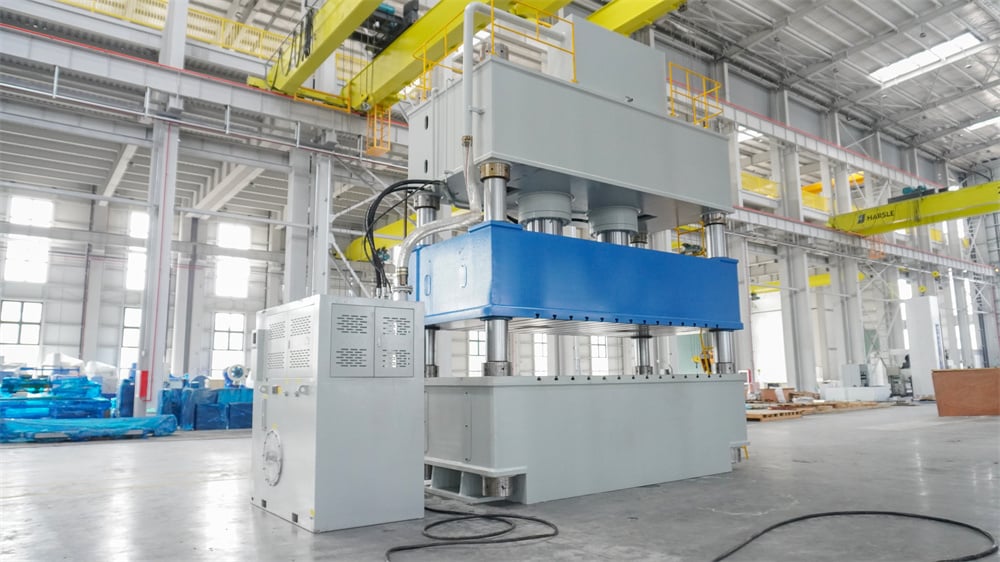
Safety protocols begin with the environment. A hydraulic press should be installed on a level, reinforced concrete floor capable of supporting its static and dynamic weight. Adequate lighting and clear floor markings around the ‘danger zone’ are essential. Furthermore, the integration of light curtains and two-hand control stations ensures that the operator’s limbs are well away from the moving bolster during the downward stroke. These technical safeguards are the primary line of defense against mechanical failure or human error.
Beyond the physical machine, the hydraulic fluid itself is a critical technical component. It serves as the medium for power transmission, a lubricant for moving parts, and a coolant. Using the wrong viscosity or allowing contamination can lead to erratic ram movement or ‘spongy’ controls, both of which pose significant safety risks. Therefore, technical safety involves a holistic view of the machine’s fluid dynamics, electrical logic, and structural integrity.
Core Parameters of Hydraulic Press Operation
To operate a hydraulic press safely, one must master its core parameters. These specifications define the machine’s capabilities and its limits. The most prominent parameter is Nominal Pressure (Tonnage). This is the maximum force the press can exert. Exceeding this limit can lead to catastrophic frame failure or hydraulic seal blowouts. Operators must always ensure that the required force for a specific job does not exceed 80% of the machine’s rated capacity to provide a safety buffer.
Stroke Length is another vital parameter. It defines the total distance the ram can travel from its highest point to its lowest. Safety hazards often arise when the stroke is not properly limited for a specific die set, leading to ‘bottoming out’ the cylinder, which can damage the internal piston and seals. Daylight (or Open Height) refers to the maximum distance between the bed and the ram when fully retracted. This space must be sufficient to accommodate the tooling and the workpiece safely, allowing for easy loading and unloading without the operator reaching into hazardous areas.
Approach and Pressing Speeds are critical for both productivity and safety. High approach speeds reduce cycle times but require responsive braking systems and light curtains to prevent accidents. The pressing speed must be controlled to allow the material to flow correctly within the die; too fast a speed can cause material fracturing or unexpected tool breakage, sending debris flying. Finally, Bolster Dimensions dictate the size of the tooling that can be safely mounted. An oversized die on a small bolster can lead to uneven pressure distribution and eventual cracking of the press bed.
Calculation Method for Hydraulic Press Force
Calculating the required force for a specific operation is a fundamental aspect of Hydraulic Press Safety : Essential Operating Procedures Maintenance Tips. Using a press that is underpowered leads to stalling and overheating, while an overpowered press used incorrectly can crush tooling. The basic formula for the force (F) exerted by a hydraulic cylinder is:
F = P × A
Where F is the force (in Newtons or Tons), P is the hydraulic pressure (in PSI or Bar), and A is the effective area of the piston (in square inches or square centimeters). For example, if a press has a piston with an area of 50 square inches and the system pressure is set to 3,000 PSI, the theoretical force is 150,000 lbs, or 75 tons. However, real-world calculations must account for friction and the weight of the upper bolster.
When performing metal forming tasks like deep drawing, the calculation becomes more complex. You must consider the material’s tensile strength, thickness, and the perimeter of the cut or bend. The formula for shearing force, for instance, is F = L × t × τ, where L is the length of the cut, t is the thickness, and τ is the shear strength of the material. Always add a 20% safety factor to these calculations to ensure the machine operates within its ‘comfort zone’. Accurate calculations prevent the ‘over-tonnage’ condition, which is a leading cause of structural fatigue in hydraulic presses.
Standard Parameter Table for Hydraulic Presses
The following table outlines typical parameters for various classes of HARSLE hydraulic presses. These values serve as a reference for selecting the right machine for your safety and production requirements.
| Model Type | Nominal Force (kN) | Max Pressure (MPa) | Stroke (mm) | Daylight (mm) | Table Size (mm) |
|---|---|---|---|---|---|
| H-Frame 100T | 1000 | 25 | 500 | 800 | 800 x 600 |
| C-Frame 63T | 630 | 22 | 400 | 600 | 560 x 450 |
| Four-Column 200T | 2000 | 25 | 600 | 1000 | 1000 x 900 |
| Deep Drawing 500T | 5000 | 31.5 | 800 | 1250 | 1200 x 1200 |
Common Engineering Mistakes in Press Operation
Even experienced engineers can fall into traps that compromise Hydraulic Press Safety : Essential Operating Procedures Maintenance Tips. One of the most common mistakes is Off-Center Loading. Hydraulic presses are designed for the load to be centered under the ram. When a die is placed off-center, it creates a side-load on the ram and bushings. This leads to uneven wear on the seals, potential scoring of the cylinder walls, and in extreme cases, the ram can jam or the frame can twist, leading to catastrophic failure.
Another frequent error is Neglecting Hydraulic Fluid Health. Many operators assume that as long as the machine moves, the oil is fine. However, microscopic contaminants can act like sandpaper, eroding valves and pumps. Furthermore, hydraulic oil breaks down over time due to heat (oxidation). Operating with degraded oil leads to sluggish response times and unpredictable behavior, which is a major safety hazard during precision operations. Regular oil analysis is a technical necessity, not an option.
Bypassing Safety Interlocks is a critical human error that often stems from a desire to increase production speed. Disabling light curtains or tying down two-hand controls is a leading cause of industrial amputations. Modern engineering designs make this difficult, but a culture of safety must be enforced to prevent ‘workarounds’. Additionally, failing to properly secure the dies to the bolster can result in the die ‘spitting out’ under pressure, which can be fatal to the operator or bystanders.
Finally, Ignoring Minor Leaks is a mistake that leads to major problems. A small puddle of oil is not just a slip hazard; it indicates a loss of pressure and potential air ingress into the system. Air in a hydraulic system causes ‘cavitation’, which can destroy pumps and cause the ram to drop unexpectedly. Every leak is a symptom of a failing component that must be addressed immediately to maintain the integrity of the safety system.
Selection Checklist for Buying a Hydraulic Press
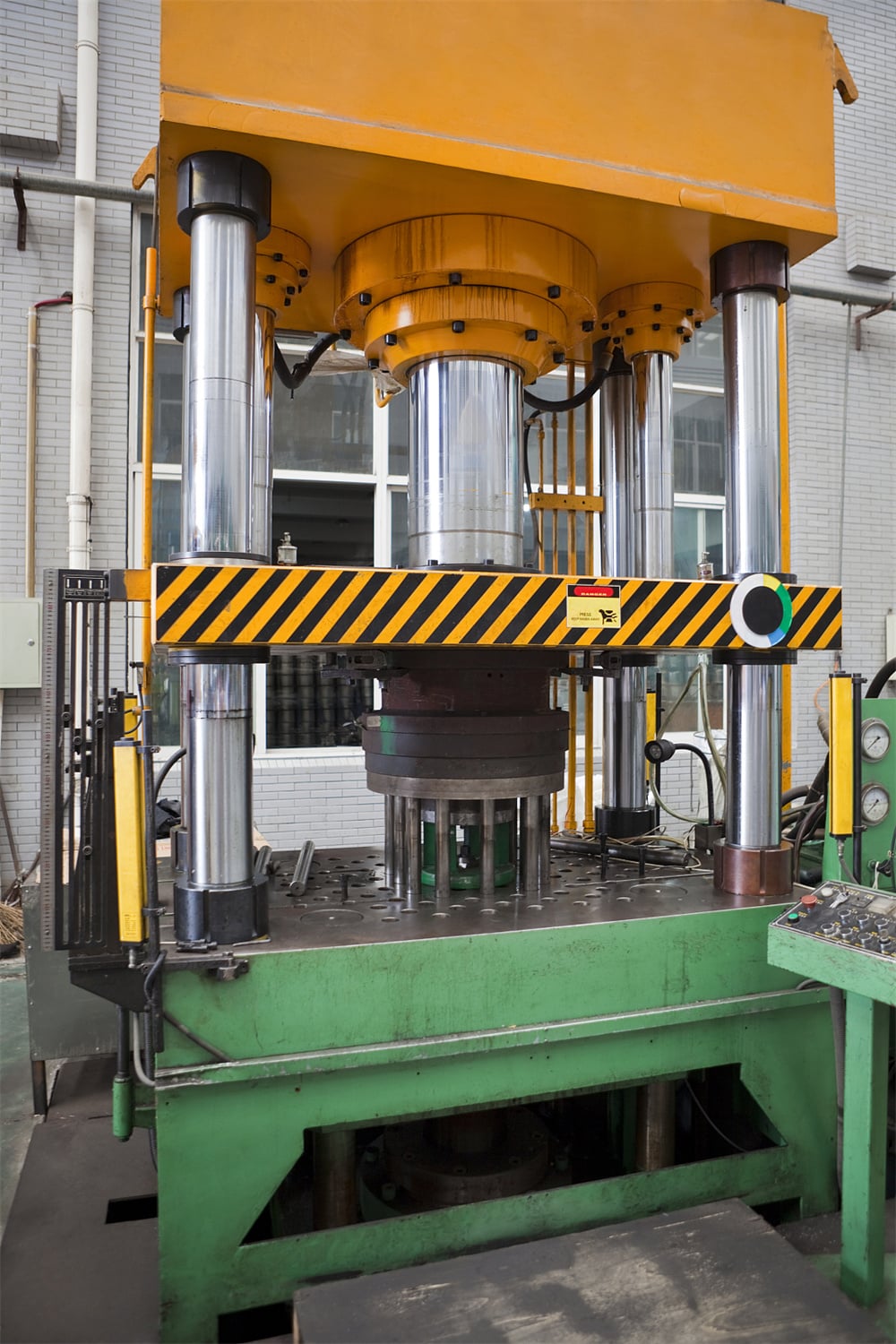
When selecting a hydraulic press, safety and technical compatibility should be your top priorities. Use the following checklist to ensure you are making a sound investment:
- Tonnage Requirement: Does the press offer at least 20% more tonnage than your heaviest job requires?
- Safety Certifications: Does the machine meet CE, OSHA, or local safety standards? Look for documented compliance.
- Integrated Safety Features: Are light curtains, emergency stops, and dual-hand controls standard? Are there physical guards for the rear and sides?
- Frame Rigidity: Is the frame constructed from high-quality welded steel with stress-relieving treatments? A rigid frame is a safe frame.
- Hydraulic Component Quality: Are the pumps and valves from reputable brands (e.g., Rexroth, Vickers)? Reliable components prevent unexpected movements.
- Control System: Does the PLC offer diagnostic feedback? Can it store ‘recipes’ to ensure consistent and safe pressure settings for different jobs?
- Maintenance Accessibility: Are the filters, oil reservoirs, and grease points easily accessible? If it’s hard to maintain, it won’t be maintained.
- Manufacturer Support: Does HARSLE or your supplier provide comprehensive manuals, training, and spare parts support?
Essential Maintenance Tips for Longevity and Safety
Maintenance is the backbone of Hydraulic Press Safety : Essential Operating Procedures Maintenance Tips. A well-maintained machine is predictable, and predictability is the key to safety. Maintenance should be categorized into daily, monthly, and annual tasks. Daily checks should include inspecting for leaks, checking oil levels, and testing the emergency stop and light curtains. If a safety device fails the morning test, the machine must be locked out immediately.
Monthly maintenance involves a deeper dive. Inspect the ram for scoring or signs of uneven wear. Check the tightness of all mounting bolts, especially those securing the dies and the main cylinder. Vibration during operation can loosen these over time. Lubricate all moving parts, such as the guide rails or four-column bushings, using the manufacturer-recommended grease. Clean the cooling system (heat exchanger) to ensure the hydraulic oil stays within the optimal temperature range (usually 30-50°C).
Annually, a comprehensive system audit is required. This includes changing the hydraulic oil and replacing all filters. Perform a ‘drift test’ on the ram to ensure the valves are holding pressure correctly; if the ram creeps down when the pump is off, the holding valves or seals are failing. Check the electrical cabinet for loose wires or signs of overheating in the contactors. By following a strict maintenance schedule, you not only extend the life of your HARSLE press but also ensure that every safety system functions exactly when needed.
Frequently Asked Questions (FAQ)
1. How often should I change the hydraulic oil in my press?
Generally, hydraulic oil should be changed every 2,000 to 4,000 hours of operation, or at least once a year. However, you should perform oil analysis every six months to check for contamination and oxidation. If the oil appears milky (water contamination) or smells burnt, change it immediately regardless of the hours logged.
2. Why is my hydraulic press vibrating excessively?
Excessive vibration is usually caused by air trapped in the hydraulic system, loose mounting bolts, or off-center loading. Check for leaks in the suction line that might be drawing in air, and ensure your workpiece is centered. If the vibration persists, it may indicate pump cavitation or internal valve failure.
3. Can I use a hydraulic press for high-speed punching?
While hydraulic presses can perform punching, they are generally slower than mechanical presses. If you intend to use a hydraulic press for punching, ensure it is equipped with ‘shock absorbers’ or ‘damping cylinders’ to handle the sudden breakthrough of the material, which can cause hydraulic shock and damage the system.
4. What is the most important safety device on a hydraulic press?
There is no single ‘most important’ device; safety relies on a redundant system. However, the Two-Hand Control and Light Curtains are the primary tools for preventing operator injury. The Pressure Relief Valve is the most critical for preventing machine failure. All must be functional for safe operation.
5. How do I know if my press is overloaded?
Signs of overloading include the frame ‘groaning’ or visibly deflecting, the hydraulic pump laboring or making a high-pitched whine, and the ram slowing down significantly before reaching the set pressure. Most modern HARSLE presses will trigger a PLC alarm and stop the cycle if an over-pressure condition is detected.