Hydraulic Press vs Mechanical Press: Technical Differences for Industrial Buyers


Technical Overview of Press Technologies
In the modern metalworking landscape, the decision between a hydraulic press and a mechanical press is one of the most critical capital investment choices an industrial buyer will face. Both machines serve the fundamental purpose of deforming metal through force, yet their underlying physics, operational efficiencies, and application suitability differ vastly. At HARSLE, we recognize that understanding these nuances is the key to optimizing production lines and ensuring long-term ROI.
A hydraulic press operates on the principle of Pascal’s Law, which states that pressure applied to a confined fluid is transmitted undiminished in every direction. This allows for a consistent application of force throughout the entire stroke. In contrast, a mechanical press utilizes a motor-driven flywheel that stores energy, which is then released through a crankshaft or eccentric gear mechanism to move the slide. This results in a force profile that peaks at the bottom of the stroke, making it inherently different in how it interacts with the workpiece.
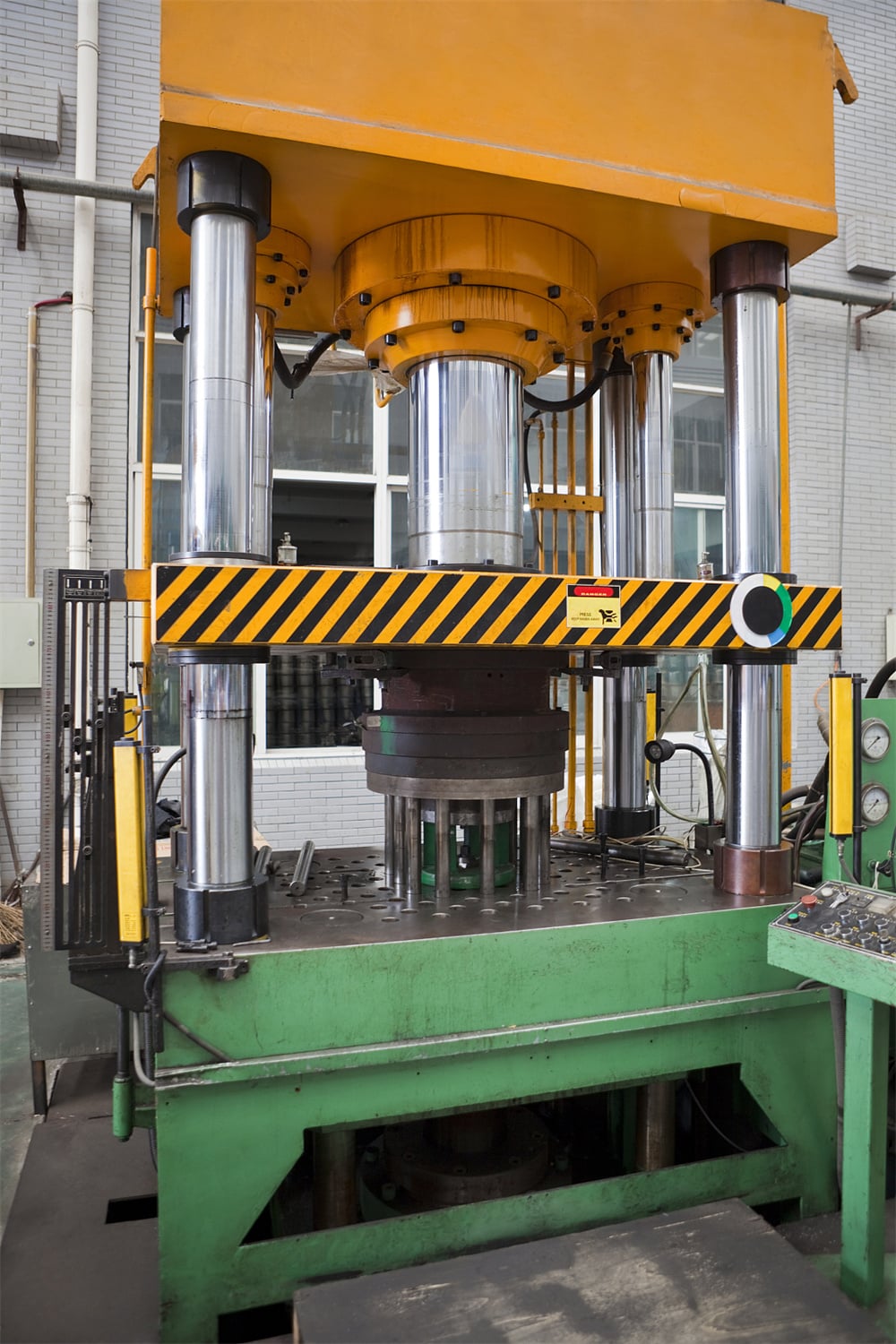
The evolution of these machines has seen hydraulic presses become more sophisticated with the integration of servo-proportional valves and PLC controls, allowing for variable speed and pressure profiles. Mechanical presses, meanwhile, have evolved into high-speed stamping powerhouses, often reaching hundreds of strokes per minute. For industrial buyers, the choice isn’t just about power; it’s about the specific kinematics required for the part being manufactured. Whether you are performing deep drawing, blanking, or forging, the technical differences between these two categories will dictate your scrap rate, tool life, and cycle times.
Furthermore, the structural design of these machines—ranging from C-frame to H-frame (four-column) configurations—adds another layer of complexity. Hydraulic presses are often preferred for their versatility and ability to handle off-center loading better in certain configurations, while mechanical presses are the gold standard for high-volume, repetitive tasks where speed is the primary KPI. Understanding the Hydraulic Press Vs Mechanical Press: Technical Differences Industrial Buyers must consider is the first step toward a successful procurement strategy.
Core Parameters and Performance Metrics
When evaluating the Hydraulic Press Vs Mechanical Press: Technical Differences Industrial Buyers should focus on several core parameters: tonnage capacity, stroke length, speed, and precision. Tonnage is perhaps the most misunderstood metric. In a hydraulic press, the rated tonnage is available at any point during the stroke. This means if you have a 200-ton hydraulic press, you can exert 200 tons of force at the very top, the middle, or the bottom of the ram’s travel. This is ideal for deep drawing where constant pressure is required to flow the metal into the die.
In a mechanical press, the tonnage is rated at a specific distance above the “Bottom Dead Center” (BDC). Because the force is generated by the mechanical advantage of a linkage or crankshaft, the available force is significantly lower at the top of the stroke and reaches its maximum only as the ram nears the bottom. If an industrial buyer attempts to perform a deep draw on a mechanical press without accounting for this force curve, they risk stalling the press or damaging the drive train. This fundamental difference in force delivery is a primary separator in application suitability.
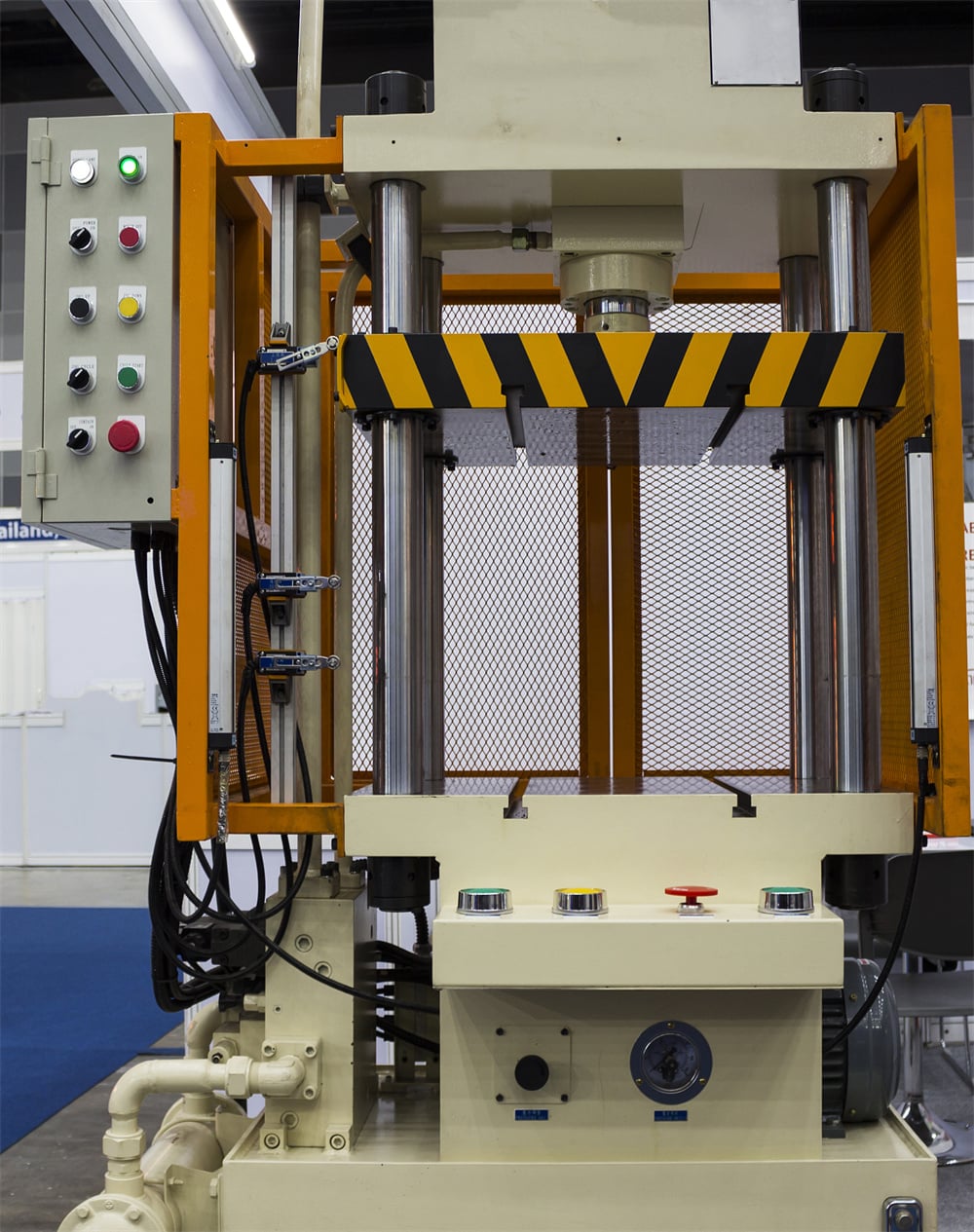
Stroke length and adjustability also vary significantly. Hydraulic presses offer fully adjustable stroke lengths. You can set the ram to travel only two inches or the full twenty inches, depending on the part height. This flexibility reduces cycle times for shallow parts. Mechanical presses typically have a fixed stroke length determined by the throw of the crankshaft. While some high-end mechanical presses offer adjustable strokes, they are mechanically complex and limited in range compared to their hydraulic counterparts.
Speed is where the mechanical press shines. The flywheel system allows for rapid acceleration and deceleration of the ram, making it capable of high-speed blanking and stamping that a hydraulic system—limited by fluid flow rates—simply cannot match. However, the hydraulic press offers “dwell” capability, where the press can hold a specific pressure at the bottom of the stroke for a set duration. This is essential for processes like heated molding or complex composite forming, where the material needs time to set under pressure.
Calculation Method for Press Selection
To accurately choose between these machines, engineers must calculate the required force for their specific application. The most common calculation is for blanking or shearing, which determines the minimum tonnage required to punch a hole or cut a shape from a sheet of metal. The formula is generally expressed as:
P = L × t × τ
Where:
– P is the required force (Tons or Kilonewtons).
– L is the total length of the cut perimeter (mm).
– t is the thickness of the material (mm).
– τ is the shear strength of the material (N/mm²).
Once the theoretical force is calculated, a safety factor of 20-30% should be added to account for tool wear and material variations. For a hydraulic press, this calculated value can be used directly. However, for a mechanical press, you must also consult the “Tonnage Curve” provided by the manufacturer. Since the mechanical press only reaches full tonnage near BDC, you must ensure that the force required at the point of initial contact (which might be 1 inch above BDC) does not exceed the press’s capacity at that specific point in the stroke.
For deep drawing applications, the calculation becomes more complex, involving the drawing ratio and the blank holder force. Hydraulic presses are almost always preferred here because the blank holder force can be independently controlled and maintained throughout the draw. In a mechanical press, providing consistent blank holder force often requires expensive pneumatic or nitrogen die cushions, which adds to the initial investment and maintenance complexity.
Comparative Parameter Table
The following table summarizes the key technical differences that industrial buyers should evaluate when comparing HARSLE hydraulic and mechanical solutions.
| Feature | Hydraulic Press | Mechanical Press |
|---|---|---|
| Force Delivery | Full tonnage throughout the entire stroke. | Full tonnage only near Bottom Dead Center (BDC). |
| Stroke Length | Fully adjustable and customizable. | Typically fixed (adjustable on specialized models). |
| Production Speed | Slower; limited by hydraulic flow. | Very high; ideal for mass production. |
| Overload Protection | Built-in via relief valves; cannot be overloaded. | Requires shear plates or hydraulic monitors; risk of jamming. |
| Maintenance | Focus on seals, oil, and valves. | Focus on bearings, bushings, and lubrication. |
| Dwell Capability | Excellent; can hold pressure indefinitely. | None; ram must return immediately. |
| Initial Cost | Generally lower for high-tonnage requirements. | Higher for high-tonnage/high-speed requirements. |
Common Engineering Mistakes in Press Selection
One of the most frequent mistakes industrial buyers make is over-specifying tonnage without considering the energy requirements. In a mechanical press, tonnage is about the strength of the frame and linkages, but “work energy” is about the flywheel’s ability to maintain speed during the hit. If a buyer selects a press based solely on tonnage but runs a high-energy job (like thick plate blanking) at high speeds, the flywheel may slow down too much, causing the motor to overheat or the press to stall. This is less of an issue in hydraulic presses, but they face their own challenge: heat generation. Continuous high-speed cycling of a hydraulic press can overheat the oil, leading to seal failure and loss of precision.
Another common error is ignoring the “Off-Center Loading” limits. Hydraulic presses, particularly four-column models, are susceptible to frame deflection if the load is not centered. While modern HARSLE hydraulic presses include sophisticated leveling systems, consistently running off-center loads will lead to premature wear on the bushings and ram. Mechanical presses are generally more rigid but can suffer from “crankshaft wind-up” or frame stretching if the load is unbalanced, which results in inconsistent part thickness and accelerated tool wear.
Buyers also frequently overlook the importance of the “Pressing Speed” versus “Approach Speed.” A hydraulic press allows for a fast approach to the workpiece and then a controlled, slower pressing speed. This is vital for materials that are sensitive to strain rates. Mechanical presses have a velocity profile that follows a sine wave; the ram is moving fastest at the middle of the stroke and slows down as it reaches BDC. If the material requires a slow, constant speed for proper grain flow, a standard mechanical press might cause the material to fracture or tear.
Finally, neglecting the long-term cost of ownership is a significant pitfall. While a mechanical press might have a higher upfront cost, its energy efficiency per part in high-volume stamping is usually superior to a hydraulic press. Conversely, the hydraulic press offers lower tooling costs because the controlled pressure and built-in overload protection extend the life of the dies. Buyers must weigh the cost of electricity and maintenance against the flexibility and tool protection offered by each technology.
Industrial Buyer’s Selection Checklist
To ensure you select the right machine for your facility, use this checklist during your evaluation process:
- Material Specifications: What is the material type, thickness, and shear strength? (Crucial for tonnage calculation).
- Part Complexity: Does the part require deep drawing, or is it a simple blanking operation? (Deep drawing favors hydraulic).
- Production Volume: Are you running 500 parts per day or 50,000? (High volume favors mechanical).
- Stroke Requirements: Do you need a variable stroke for different part heights? (Variable favors hydraulic).
- Precision and Tolerances: What are the required tolerances for part thickness and flatness?
- Floor Space and Height: Mechanical presses often require more vertical clearance for the flywheel and crown.
- Energy Efficiency: Have you calculated the KWh per part for both machine types?
- Future-Proofing: Will this press be integrated into an automated cell or Industry 4.0 network? (HARSLE offers smart PLC integration for both).
- Maintenance Capability: Does your internal team have more experience with fluid power or mechanical drive systems?
Frequently Asked Questions
1. Which press is better for deep drawing stainless steel?
The hydraulic press is generally superior for deep drawing stainless steel. Stainless steel work-hardens quickly and requires a constant, controlled drawing speed and consistent blank holder pressure to prevent tearing and wrinkling. The hydraulic press’s ability to maintain full tonnage throughout the stroke and provide a dwell period makes it the ideal choice for this application.
2. Can a mechanical press be used for assembly tasks?
While possible, it is not recommended for precision assembly. Mechanical presses are difficult to stop mid-stroke and lack the fine pressure control needed for delicate assembly. A hydraulic press, or even a servo-electric press, is much better suited for assembly because you can set precise stop-on-force or stop-on-distance parameters to avoid damaging components.
3. Why are mechanical presses faster than hydraulic presses?
Mechanical presses rely on the kinetic energy of a spinning flywheel. The conversion of rotary motion to linear motion via a crankshaft is mechanically direct and allows for very rapid cycles. Hydraulic presses are limited by the time it takes to pump oil into the cylinder and the speed at which valves can shift, which is inherently slower than a mechanical linkage.
4. How does HARSLE ensure the durability of its hydraulic systems?
HARSLE utilizes high-quality forged cylinders, chrome-plated piston rods, and world-class seal kits (such as those from NOK or Trelleborg). Additionally, our systems include integrated oil cooling and filtration units to maintain optimal oil temperature and cleanliness, which are the two most important factors in hydraulic longevity.
5. Is it true that hydraulic presses are cheaper to maintain?
It depends on the environment. Hydraulic presses have fewer moving parts than mechanical presses (no flywheels, clutches, or massive gears), which can simplify some aspects of maintenance. However, they require strict adherence to oil cleanliness standards. Mechanical presses require regular lubrication of heavy-duty bearings and adjustment of the clutch/brake system, which can be labor-intensive but is very predictable.