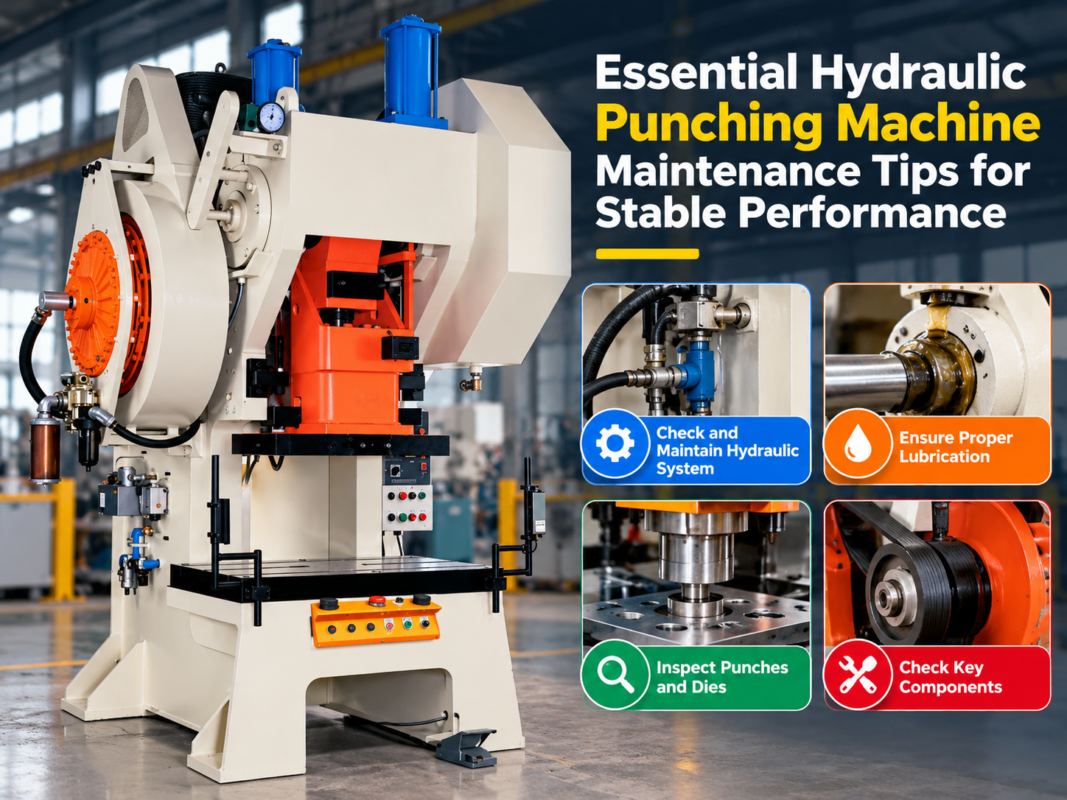
Single-Acting vs Double-Acting Hydraulic Press: Which One Fits Your Application?


Comparison Summary: Understanding the Core Differences
In the world of industrial metal fabrication, the hydraulic press stands as a cornerstone of production efficiency. However, when selecting a machine for a specific manufacturing line, engineers and facility managers often face a fundamental choice: Single-Acting vs Double-Acting Hydraulic Press. While both machines utilize Pascal’s Law to generate immense force through pressurized fluid, their mechanical execution and operational versatility differ significantly. A single-acting hydraulic press is designed to apply force in only one direction, typically the downward stroke, relying on external forces like gravity or internal springs for the return. Conversely, a double-acting hydraulic press utilizes hydraulic fluid to power both the extension and retraction of the ram, offering superior control and speed.
Choosing between these two is not merely a matter of budget; it is a matter of application requirements. For simple tasks like punching or basic bending, the simplicity of a single-acting system is often sufficient. However, for complex processes such as deep drawing, where the material must be held under specific tension while being formed, the double-acting press is indispensable. This article provides a comprehensive deep dive into the mechanics, advantages, and ideal use cases for both types of machinery, helping you determine which HARSLE solution aligns with your production goals.
Single-Acting Hydraulic Press: Simplicity and Efficiency
The single-acting hydraulic press is the workhorse of many small to medium-sized fabrication shops. Its primary characteristic is that the hydraulic cylinder has only one port for fluid entry. When the pump forces oil into this port, the piston extends, performing the work. Once the pressure is released, the piston must return to its starting position via an alternative method. This is usually achieved through a heavy-duty internal spring (spring-return) or the weight of the ram and tooling itself (load-return or gravity-return).
One of the most significant advantages of the single-acting press is its mechanical simplicity. Because there is only one hydraulic line and a simpler valve configuration, there are fewer points of failure. This translates to lower initial acquisition costs and reduced long-term maintenance requirements. For operations that do not require high-speed cycling or precise control over the return stroke, the single-acting press offers an excellent return on investment. It is particularly favored in manual or semi-automated environments where the operator has more direct control over the pace of production.
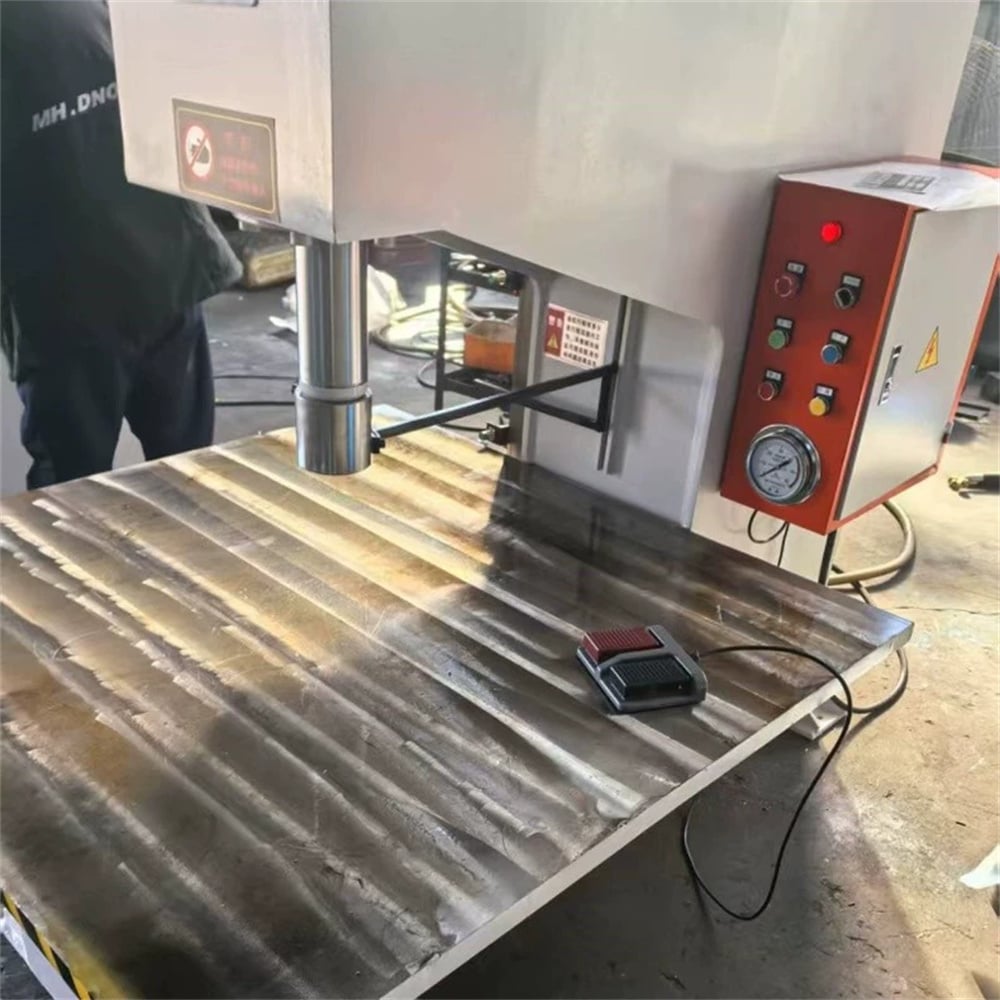
However, the single-acting design does have limitations. The return stroke is generally slower than the power stroke because it relies on passive forces. Furthermore, because the return force is fixed (by the spring constant or gravity), it cannot be used to perform work in the upward direction, such as stripping a part from a die that has become stuck. This makes it less suitable for high-volume, fully automated production lines where every second of the cycle time is critical. Despite these limitations, for applications like jewelry making, simple metal stamping, and assembly pressing, the single-acting hydraulic press remains a top choice.
Double-Acting Hydraulic Press: Precision and Versatility
The double-acting hydraulic press represents a step up in terms of engineering complexity and operational capability. In this system, the hydraulic cylinder features two ports—one at the top and one at the bottom. This allows the hydraulic system to apply force in both directions. When fluid enters the top port, the ram extends; when fluid is diverted to the bottom port, the ram retracts under hydraulic power. This dual-direction control allows for much faster cycle times and the ability to apply significant force during the retraction phase.
The primary benefit of a double-acting press is the level of control it affords the operator. Modern HARSLE double-acting presses are often equipped with advanced PLC (Programmable Logic Controller) systems that allow for precise adjustment of speed, pressure, and position throughout both the downward and upward strokes. This is critical for processes like deep drawing, where the press must manage both the main ram and a hydraulic cushion (blank holder) simultaneously. The ability to pull the tool out of the workpiece with hydraulic force also prevents damage to delicate dies and ensures consistent part quality.
Furthermore, double-acting presses are better suited for heavy-duty industrial applications where the weight of the tooling might be too great for a simple spring-return mechanism. In large-scale automotive or aerospace manufacturing, the double-acting system ensures that the ram returns to its home position quickly and reliably, regardless of the weight of the attached die. While the initial cost is higher due to the more complex hydraulic circuits, pumps, and valves, the increase in productivity and the ability to handle complex geometries often justify the investment for high-output facilities.
Specification Comparison Table
To help you visualize the technical differences, the following table compares the key specifications and performance metrics of single-acting versus double-acting hydraulic presses.
| Feature | Single-Acting Hydraulic Press | Double-Acting Hydraulic Press |
|---|---|---|
| Fluid Ports | Single port (One-way flow) | Dual ports (Two-way flow) |
| Return Mechanism | Spring, Gravity, or External Load | Hydraulic Pressure |
| Cycle Speed | Slower (Dependent on return force) | Faster (Controlled hydraulic return) |
| Control Precision | Moderate (Mainly on downward stroke) | High (Full control of both strokes) |
| Complexity | Low (Fewer valves and seals) | High (Complex circuitry and valving) |
| Cost | Lower Initial Investment | Higher Initial Investment |
| Maintenance | Simple and Infrequent | Requires specialized hydraulic care |
| Best For | Punching, Bending, Simple Assembly | Deep Drawing, Complex Forming, High-Volume |
Best-fit Applications for Each Press Type
Understanding where each machine excels is crucial for optimizing your shop floor. Single-acting hydraulic presses are the go-to solution for “straightforward” metalworking. For instance, in the production of simple brackets or washers, where the material is thin and the forming process is a single-step punch, the single-acting press provides the necessary force without the overhead of complex hydraulics. They are also widely used in laboratory settings for material testing and in repair shops for pressing bearings or bushings into housings.
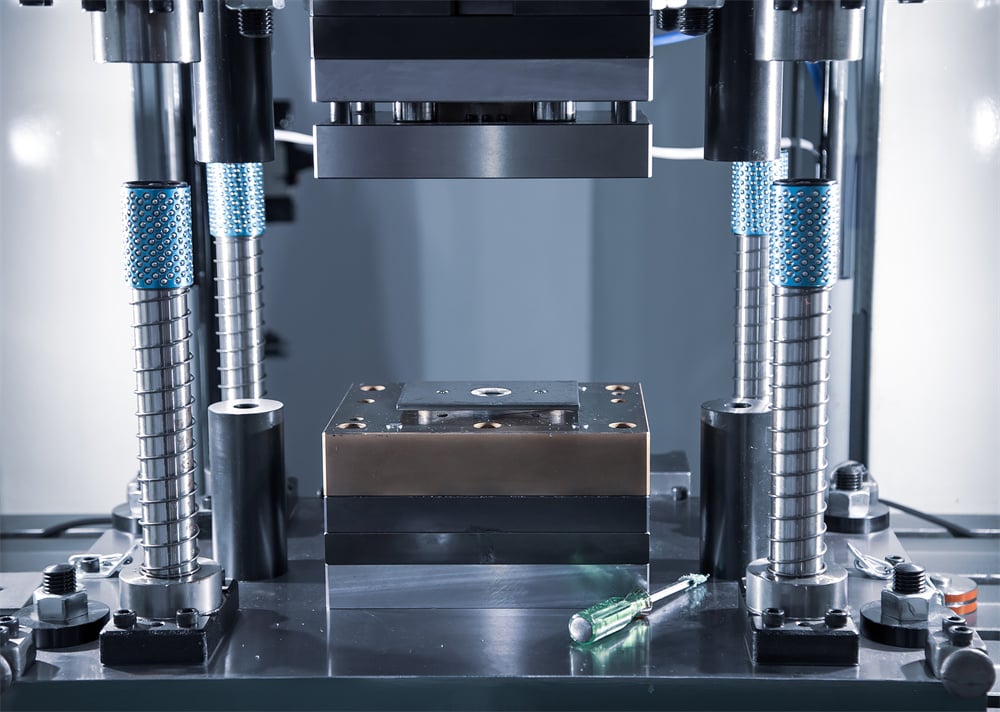
Double-acting hydraulic presses, on the other hand, are the kings of the automotive and appliance industries. Consider the manufacturing of a car door panel or a stainless steel kitchen sink. These parts require “deep drawing,” a process where the metal is stretched into a mold. A double-acting press allows for a blank holder to apply a specific amount of pressure to the edges of the metal sheet, preventing wrinkles, while the main ram pushes the material into the die. The hydraulic return then ensures the finished part is cleanly ejected from the mold, even if it has a tight fit.
Beyond deep drawing, double-acting presses are preferred for any application requiring “stripping force.” If your manufacturing process involves a die that tends to grip the workpiece after forming, the hydraulic power of the return stroke on a double-acting press will pull the die free without hesitation. This prevents mechanical strain on the press frame and extends the life of your expensive tooling. Additionally, for high-speed stamping lines where parts are produced by the thousands per hour, the rapid retraction of a double-acting cylinder is the only way to maintain the required cadence.
Cost and Maintenance Comparison
When evaluating the total cost of ownership (TCO), the single-acting press is almost always the winner in terms of upfront price. Its hydraulic circuit is basic, requiring a simple pump and a 3-way valve. Maintenance is also relatively easy; since there are fewer seals and no complex directional control valves for the return stroke, there are fewer places for leaks to develop. For a small business or a startup, the single-acting press offers a low barrier to entry into the world of hydraulic metal forming.
However, the double-acting press, while more expensive to buy and maintain, offers a lower cost *per part* in high-volume scenarios. The increased speed and reduced scrap rate (due to better control) mean that the machine pays for itself faster in a 24/7 production environment. Maintenance for a double-acting system requires a more skilled technician. The hydraulic fluid must be kept extremely clean to prevent damage to the more sensitive 4-way valves and the dual-acting seals within the cylinder. Regular oil analysis and filter changes are mandatory to ensure the longevity of the system.
It is also worth noting that double-acting presses generate more heat because the hydraulic fluid is working during both halves of the cycle. This often necessitates the inclusion of an oil cooling system, which adds to both the initial cost and the ongoing energy consumption. When choosing, you must weigh these operational costs against the potential for increased revenue from higher throughput and the ability to take on more complex, higher-margin projects.
Recommendation: Which One Should You Choose?
The decision ultimately comes down to three factors: the complexity of your part, your required production volume, and your budget. If you are performing simple tasks like flattening, bending, or punching, and you do not have a strict requirement for high-speed cycles, a HARSLE single-acting hydraulic press is likely the most cost-effective and reliable choice for your facility. It will provide years of service with minimal maintenance and a very straightforward learning curve for operators.
If, however, your business involves deep drawing, complex multi-stage forming, or high-volume production where every second counts, the double-acting hydraulic press is the superior choice. The precision control over both the extension and retraction strokes allows for better part quality, less waste, and the ability to handle a wider variety of materials and geometries. For those looking to future-proof their operations, the double-acting press offers the versatility to adapt to new product designs that may be more demanding than your current workload.
At HARSLE, we recommend conducting a thorough analysis of your most common workpieces. Measure the required stroke length, the necessary stripping force, and the desired cycle time. If you find that your tools are frequently sticking or that your operators are waiting for the ram to return, it is a clear sign that a double-acting press is needed. Conversely, if your press sits idle for long periods between simple jobs, the simplicity of a single-acting model will serve you best.
Frequently Asked Questions (FAQ)
1. Can a single-acting press be converted to a double-acting press?
Generally, no. Converting a single-acting press to double-acting would require replacing the entire hydraulic cylinder, adding a more complex valve system, and potentially upgrading the pump and reservoir. It is almost always more cost-effective to purchase the correct machine from the start.
2. Is a double-acting press safer than a single-acting press?
Both machines are safe when operated correctly with proper guarding and light curtains. However, a double-acting press offers more control over the ram’s movement, which can be an advantage in certain emergency stop scenarios where the ram needs to be retracted quickly under power.
3. Which type of press is better for thick materials?
The thickness of the material is more related to the total tonnage of the press rather than whether it is single or double-acting. However, thick materials often require more stripping force to remove the tool, which makes a double-acting press more practical for heavy-duty applications.
4. Does HARSLE provide training for double-acting hydraulic presses?
Yes, HARSLE provides comprehensive technical support and documentation for all our machinery. Because double-acting presses involve more complex PLC programming and hydraulic adjustments, we ensure your team is fully trained on the control systems to maximize productivity and safety.
5. How do I know if I need a hydraulic cushion?
If you are performing deep drawing and experiencing wrinkling or tearing of the material, you likely need a hydraulic cushion. This feature is almost exclusively found on double-acting presses, as it requires coordinated hydraulic control to manage the blank holder pressure during the draw.
6. What are the common signs of seal failure in a double-acting cylinder?
Common signs include “drifting” (where the ram moves when it should be stationary), a loss of power in one direction, or visible oil leaking from the piston rod. Because double-acting cylinders have seals that must hold pressure from both sides, they are slightly more prone to wear than the simpler seals in a single-acting cylinder.